“In the Dark” Reports on the Lack of Accountability for a U.S. War Crime
The podcast investigates the events in Haditha, Iraq, and compiles a database to show the inherent problem of the military judging its own members. By Willing Davidson
Are Your Morals Too Good to Be True?
Scientists have shattered our self-image as principled beings, motivated by moral truths. Some wonder whether our ideals can survive the blow to our vanity. By Manvir Singh
Russia’s Espionage War in the Arctic
For years, Russia has been using the Norwegian town of Kirkenes, which borders its nuclear stronghold, as a laboratory, testing intelligence operations there before replicating them across Europe. By Ben Taub
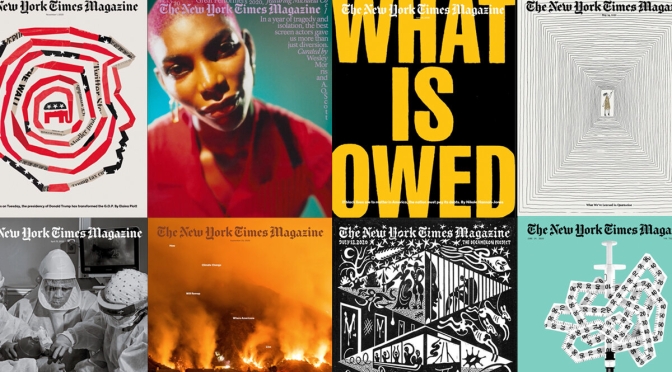
THE NEW YORK TIMES MAGAZINE (September 7, 2024): The latest issue features Caity Weaver on the tyranny of the American penny; Jordan Kisner on the future of the Shakers; Dan Kaufman on NAFTA and politics; and more.
Since its passage in 1993, the trade agreement has played an outsize role in presidential elections — which now often hinge on the three Rust Belt states it helped to hollow out.
Bali: A long-distance hike through the Indonesian island’s forested interior Ireland: Exploring the ancient landscapes of the Burren, County Clare New Mexico: Meet the rangers protecting the US state’s wealth of parks and monuments Morocco: Itineraries to experience the country’s bohemian cities, desert villages and more Athens: A layer cake of ancient and modern, the Greek capital overflows with intrigue Oxford: Rambling gardens and cosy bookshops in England’s ‘city of dreaming spires’ Cascais: Historic mansions, museums and moreish seafood on the Portuguese Riviera Ticino: Mediterranean and Alpine cuisines intermingle in this southerly Swiss canton Jamaica: The island’s best hotels, from secluded mountain cabins to intimate beachside escapes
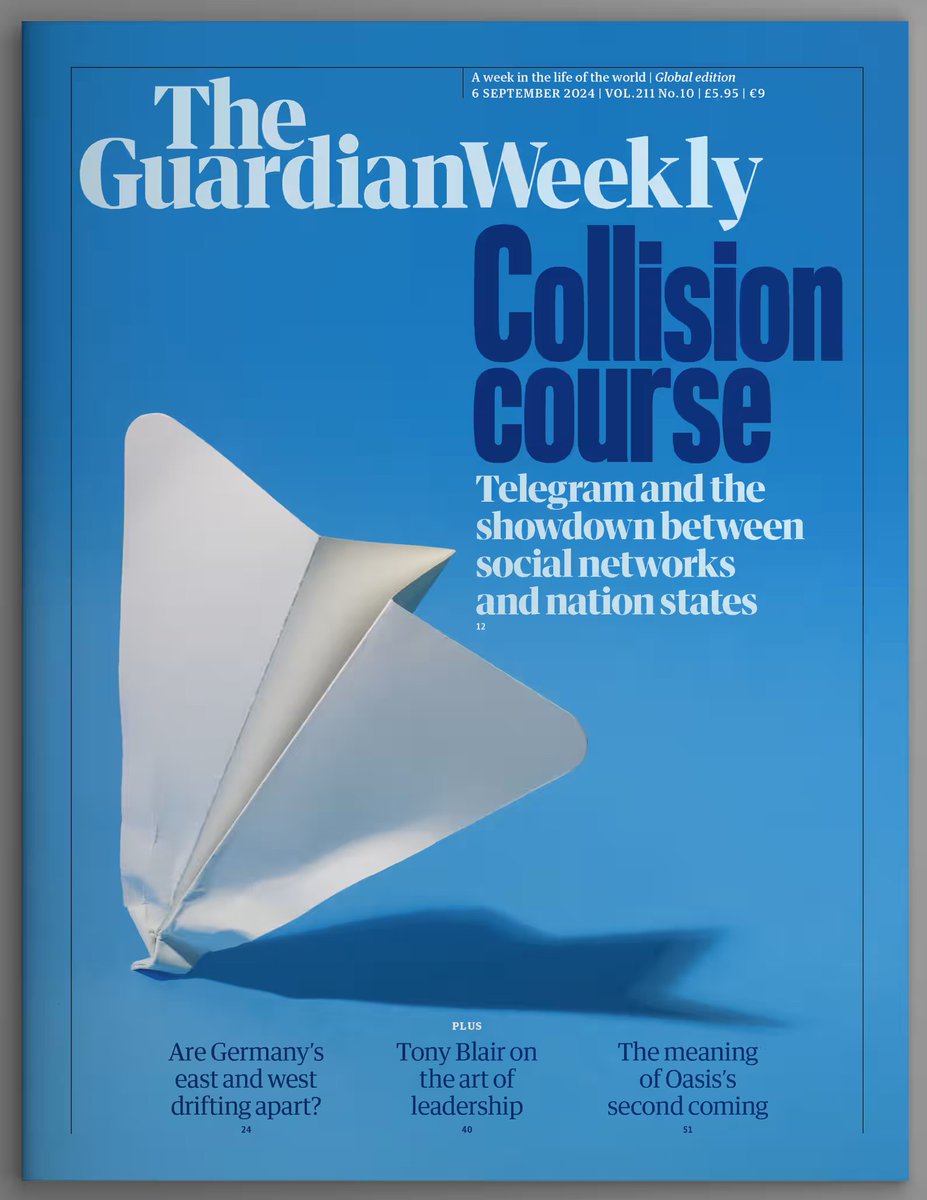
1 Spotlight | Ukraine’s troops on their audacious incursion into Russia Soldiers say they had no warning of what they were undertaking before the morale-boosting attack began, finds Shaun Walker in Sumy.
2 Science | The flying scientists showing migrating birds the way home Extinct in central Europe for 300 years, a flock of northern bald ibis is following a light aircraft on a migration route from Austria to Spain, reports Phoebe Weston.
3 Feature | Tony Blair on the art of leadership The former UK prime minister speaks to Andrew Rawnsley about relinquishing power, why he wouldn’t be fazed by a second Trump term – and why he’s an AI evangelist.
4 Opinion | Why does Macron insist on playing king? The French president’s refusal to appoint a new PM from the left displays breathtaking arrogance – and undermines democracy, argues Rokhaya Diallo.
5 Culture | Look who’s back in anger Will an Oasis reunion be a success? Definitely. Will it be worth it? Maybe, say Guardian arts writers.
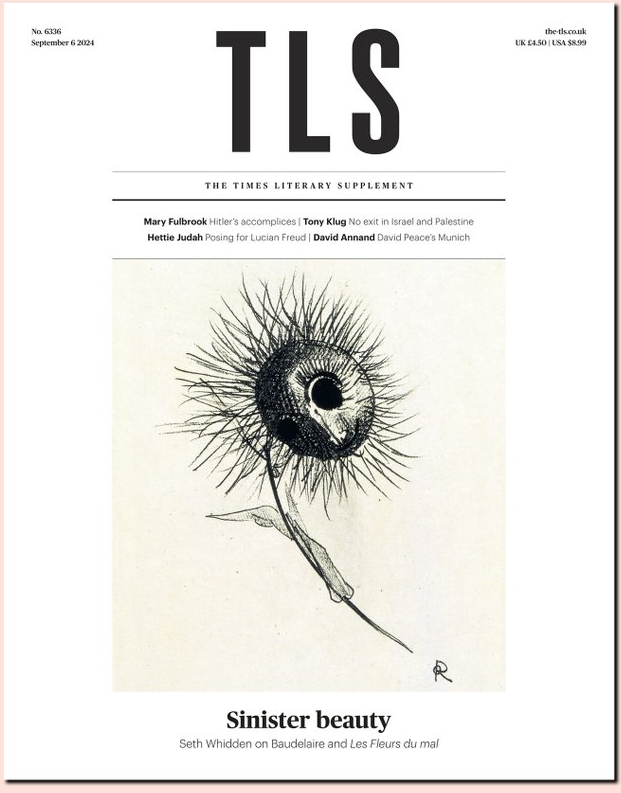
Times Literary Supplement (September 4, 2024): The latest issue features‘Sinister Beauty’ – Baudelaire and Les Fleurs du Mal; Hitler’s accomplices; No exit in Israel and Palestine; Posing for Lucian Freud and David Peace’s Munich…







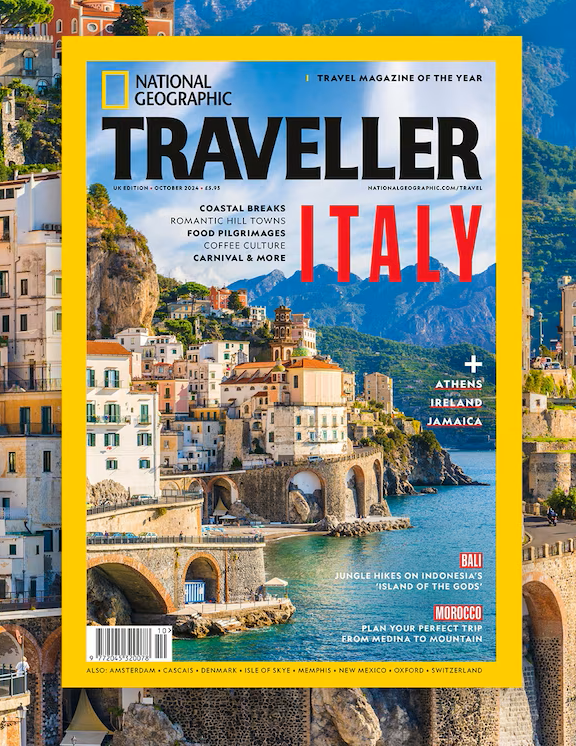
 National Geographic Traveller Magazine (September 6, 2024): The October 2024 issue













 Boomers Daily