Known best as the author of Paul Signac’s first catalog raisonné, Gaston Lévy was perhaps the most remarkable art collector in pre-war Paris. After the Nazi regime seized his properties and dispersed his paintings, masterpieces were thought to have been lost to the Lévy family forever.
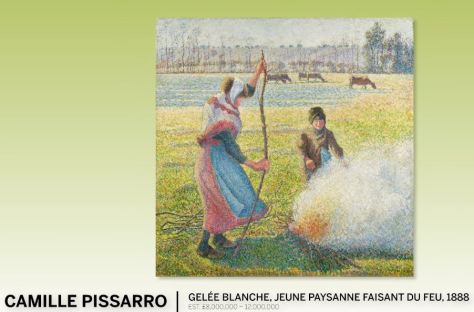
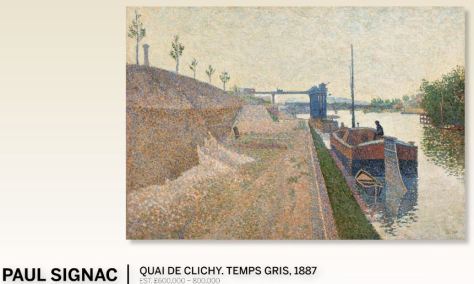
However, This February Sotheby’s is proud to offer three recently restituted masterworks from the Lévy collection in our Impressionist & Modern Art Evening Sale. In this episode of Expert Voices, Sotheby’s Head of Restitution Lucian Simmons chronicles the story of Gaston Lévy’s collection and explores the extraordinary talent of Paul Signac and Camille Pissarro through their works Gelee Blache, Quai de Clichy and La Corne D’or.
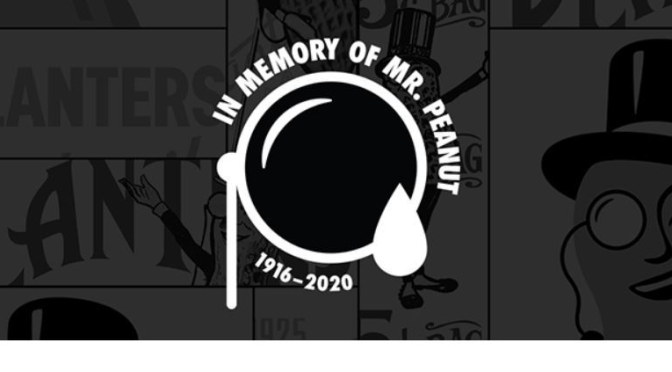
“It’s with heavy hearts that we confirm Mr. Peanut has passed away at 104 years old,” said Samantha Hess, brand manager for Planters, in a statement. “He will be remembered as the legume who always brought people together for nutty adventures and a good time. We encourage fans to tune in to Mr. Peanut’s funeral during the third quarter of the Super Bowl to celebrate his life.”
In a shocking move, Planters, the Kraft-Heinz-owned snack brand, has killed off its iconic mascot in a teaser for its Big Game spot. Mr. Peanut’s untimely demise began with a Nutmobile crash, followed by falling off a cliff and ending in an explosion.
In the 30-second teaser, Mr. Peanut is driving his signature Nutmobile around a winding cliff with actors Matt Walsh (Veep) and Wesley Snipes in the front and back seat, respectively. Walsh spots an armadillo in the road, and Mr. Peanut swerves—right off the cliff.
The Polaroid camera bypassed the entire process of film development, thus providing photographers an immediate look at their work. Released for sale in 1948, the first version was an “instant” hit. Now, the museum at the Massachusetts Institute of Technology is showcasing the intersection of technology and art. Special correspondent Jared Bowen of WGBH reports.
As one of the leading figures in the field of international relations, Joseph S. Nye, Jr., Harvard University Distinguished Service Professor Emeritus, has had a major influence on the way that policymakers think American foreign policy.
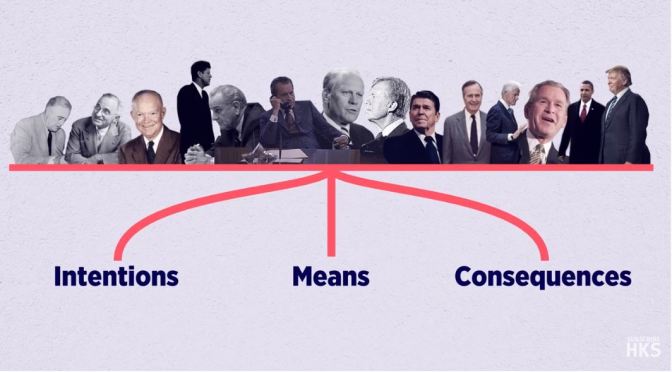
In his new book, “Do Morals Matter: Presidents and Foreign Policy from FDR to Trump,” Professor Nye explores the question of how heavily moral questions weigh on the decisions of U.S. presidents since the end of World War II. On this episode of Behind The Book, produced by Library and Knowledge Services at Harvard Kennedy School, we take a look at Professor Nye’s new book and how he assesses the legacy of past presidents based on the morality of their foreign policy.
“Do Morals Matter: Presidents and Foreign Policy from FDR to Trump” is published by Oxford University Press.
Joseph S. Nye Jr., is the University Distinguished Service Professor, Emeritus and former Dean of the Harvard’s Kennedy School of Government. He has served as Assistant Secretary of Defense for International Security Affairs, Chair of the National Intelligence Council, and Deputy Under Secretary of State for Security Assistance, Science and Technology.
His most recent books include The Power to Lead; The Future of Power; Presidential Leadership and the Creation of the American Era; and Is the American Century Over. He is a fellow of the American Academy of Arts and Sciences, the British Academy, and the American Academy of Diplomacy.
In a recent survey of international relations scholars, he was ranked as the most influential scholar on American foreign policy, and in 2011, Foreign Policy named him one of the top 100 Global Thinkers.
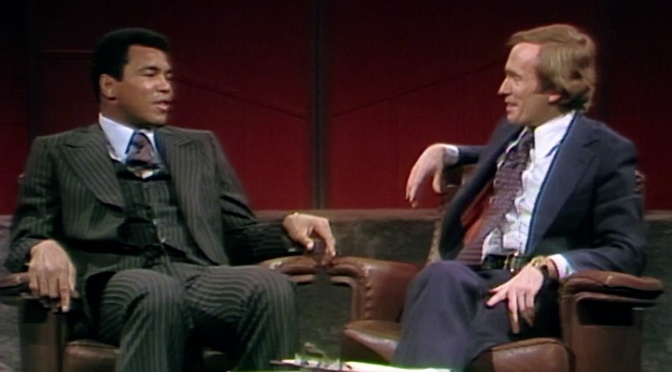
Eye-opening documentary explores the life of boxing legend Muhammad Ali through the lens of his many appearances on Dick Cavett’s iconic, long-running talk show. Ali & Cavett: The Tale of the Tapes premieres Feb. 11 at 9pm on HBO.
On January 15, 1970, First Lady of the United States Pat Nixon christened Pan Am’s first 747, at Dulles International Airport (later Washington Dulles International Airport) in the presence of Pan Am chairman Najeeb Halaby. Instead of champagne, red, white, and blue water was sprayed on the aircraft.
The 747 entered service on January 22, 1970, on Pan Am’s New York–London route; the flight had been planned for the evening of January 21, but engineoverheating made the original aircraft unusable. Finding a substitute delayed the flight by more than six hours to the following day when Clipper Victor was used.
Artist and socialite Gertrude Vanderbilt Whitney, who founded the Whitney Museum of American Art, had homes in New York, Paris, the Adirondacks, and Long Island. In 1912, she commissioned the Gilded Age architect William Adams Delano, of Delano & Aldrich, to build her a neoclassical studio on the grounds of the Whitney estate in Old Westbury.
After her death in 1942, the villa lay empty for 40 years until her granddaughter Pamela LeBoutillier decided to renovate it as a home for her family. Today, her son John LeBoutillier lives there, while keeping the family legacy alive.
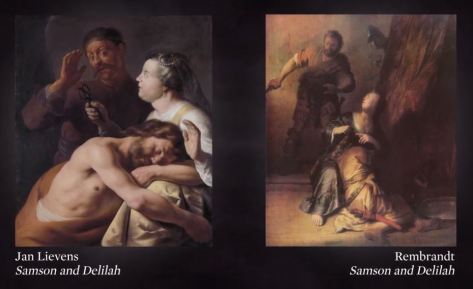
In this episode of Expert Voices, Otto Naumann explores their friendship and budding rivalry through Lievens’ masterwork Woman Embraced by a Man, Modelled by the Young Rembrandt. From the outset of his career, Lievens was at times bolder than Rembrandt, and the two constantly learned from one another during this critical period in their development.
In early 17th century Holland, a young Rembrandt spent his days studying and working with fellow artist Jan Lievens. After apprenticing together in Amsterdam, the two likely shared a studio in their hometown of Leiden and even depicted each other in their compositions.
This signature audacity is on full display in in Woman Embraced by a Man, which will be offered as a highlight of Sotheby’s Master Painting Evening Sale. (29 January | New York)
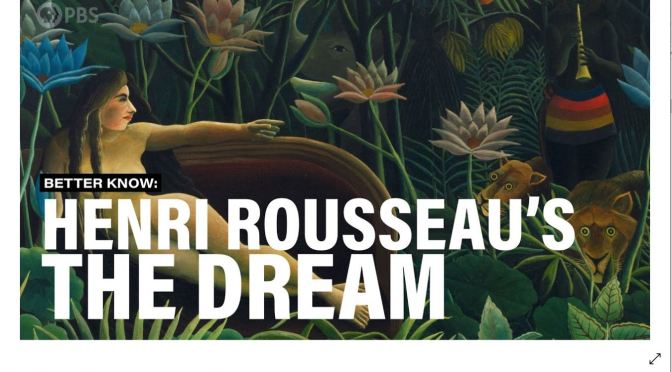
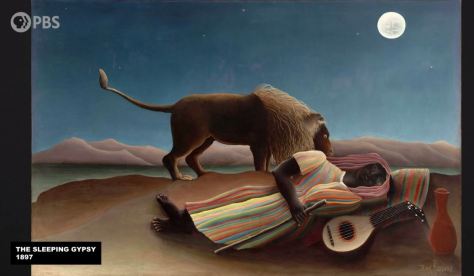
Artist Henri Rousseau painted The Dream in 1910, and it’s imagery of a woman lounging on a sofa in the middle of a jungle was as surreal then as it is today. What is it about this artwork that captivated audiences then and now?
The Sleeping Gypsy 1897 Henri Rousseau
Thanks to our Grandmasters of the Arts Tyler Calvert-Thompson, Divide by Zero Collection, David Golden, and Ernest Wolfe, and all of our patrons, especially Rich Clarey, Iain Eudaily, Frame Monster Design Laboratory, Patrick Hanna, Nichole Hicks, Andrew Huynh, Eve Leonard, David Moore, Gabriel Civita Ramirez, Constance Urist, Nicholas Xu, and Roberta Zaphiriou.
Bagels have roots in 17th-century Poland, but it’s American wheat—along with Jewish immigration to New York, labor organizing, and an epic battle between bakers—that made them what they are today. Jacob Remes, a clinical associate professor at NYU’s Gallatin School who has studied this history, says nobody has had a real New York bagel since 1967.
News, Views and Reviews For The Intellectually Curious


 “It’s with heavy hearts that we confirm Mr. Peanut has passed away at 104 years old,” said Samantha Hess, brand manager for Planters, in a statement. “He will be remembered as the
  legume who always brought people together for nutty adventures and a good time. We encourage fans to tune in to Mr. Peanut’s funeral during the third quarter of the Super Bowl to celebrate his life.”


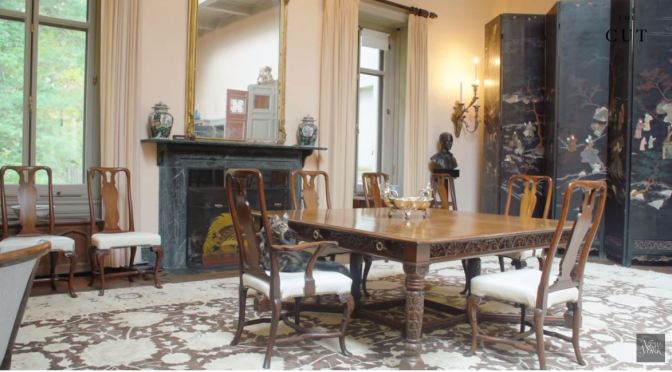
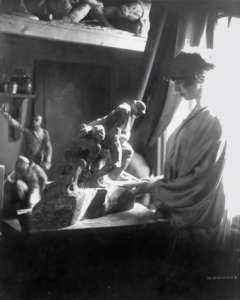 Long Island. In 1912, she commissioned the Gilded Age architect William Adams Delano, of Delano & Aldrich, to build her a neoclassical studio on the grounds of the Whitney estate in Old Westbury.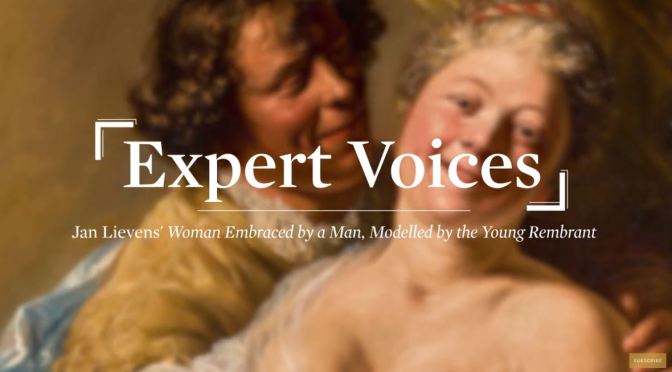

 Boomers Daily