
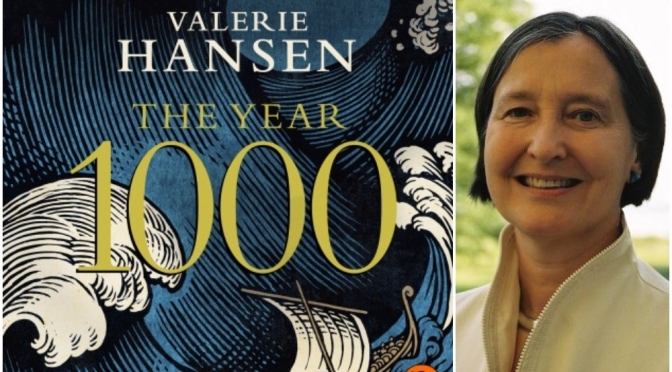
 Valerie Hansen explores these early economic and cultural exchanges and their long-term impact in her new book “The Year 1000: When Explorers Connected the World―and Globalization Began”, which originated as a college course co-taught with Mary Miller, director of the Getty Research Institute. In this episode, Hansen and Miller discuss the state of the world around the year 1000.
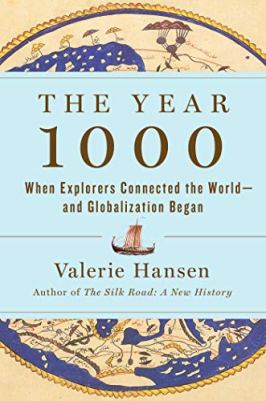 From celebrated Yale professor Valerie Hansen, a groundbreaking work of history showing that bold explorations and daring trade missions connected all of the world’s great societies for the first time at the end of the first millennium.
People often believe that the years immediately prior to AD 1000 were, with just a few exceptions, lacking in any major cultural developments or geopolitical encounters, that the Europeans hadn’t yet reached North America, and that the farthest feat of sea travel was the Vikings’ invasion of Britain. But how, then, to explain the presence of blonde-haired people in Maya temple murals at Chichén Itzá, Mexico? Could it be possible that the Vikings had found their way to the Americas during the height of the Maya empire?
Valerie Hansen, an award-winning historian, argues that the year 1000 was the world’s first point of major cultural exchange and exploration. Drawing on nearly thirty years of research, she presents a compelling account of first encounters between disparate societies, which sparked conflict and collaboration eerily reminiscent of our contemporary moment.
For readers of Jared Diamond’s Guns, Germs, and Steel and Yuval Noah Harari’s Sapiens, The Year 1000 is an intellectually daring, provocative account that will make you rethink everything you thought you knew about how the modern world came to be. It will also hold up a mirror to the hopes and fears we experience today.


 …what perhaps absorbed him most was a suite of 10 paintings of one of the weeping willows he had planted on the shores of his pond in 1893, when he had purchased the property to construct his aquatic paradise. The tree had grown in girth and grandeur over the intervening years, its leafy arms now extending out over the dappled waters like an impassioned conductor energizing an orchestra.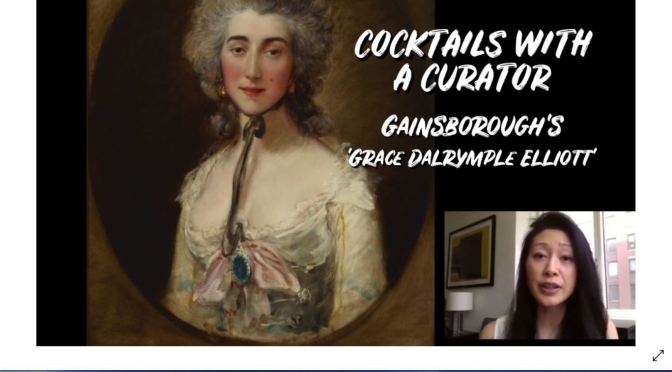
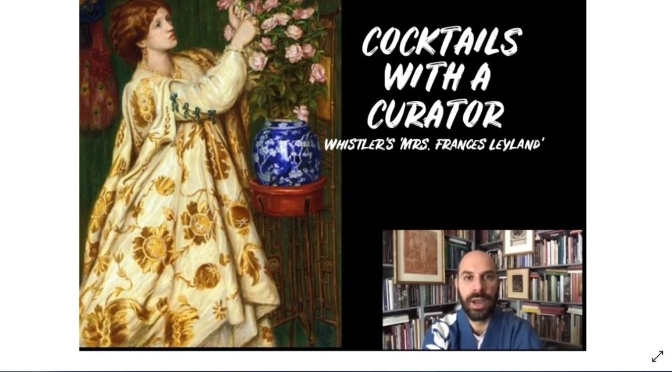
 In this week’s episode of “Cocktails with a Curator,” Curator Aimee Ng studies Thomas Gainsborough’s scandalous portrait of Grace Dalrymple Elliott. Discover why this painting met with a negative reception when it was shown at the Royal Academy in 1782. Mrs. Elliott later moved to France, where she lived through the Reign of Terror and died in 1823 in the outskirts of Paris. This week’s complementary cocktail is the Pimm’s Cup, a traditional summer drink in Britain.
 Boomers Daily