Category Archives: Culture

Profiles: Remembering English Art Critic John Berger (1926-2017)

From an Aeon online article:

Ways of Seeing John BergerTime brings new colour to old materials, and what makes Ways of Seeing so enduring might not be the same as what made it so electrically influential when it first appeared. We are now more aware of the fissures in the show, in its slight hesitations and indecisions, and in the hedges to what was otherwise such a freight train of an argument. The pictorial tradition of the female nude, Berger argues throughout the second episode, was not a celebration of humanist virtue but a fantasy of the acquisitive ‘male gaze’ (the term was coined a year later by Laura Mulvey).

At the start of the first TV episode of Ways of Seeing, John Berger takes a scalpel to Botticelli’s Venus and Mars. The opening beat of the programme is the audio of the incision – the blade’s rough abrasion on canvas – before the soundtrack settles into voiceover. ‘This is the first of four programmes,’ Berger says, ‘in which I want to question some of the assumptions usually made about the tradition of European painting. That tradition which was born about 1400, died about 1900.’

Ways of Seeing first aired on Sunday evenings on BBC2 at the start of 1972. It attracted few initial viewers but, through rebroadcasts and word of mouth, the show gathered steam. By the end of 1972, it had gone viral. People in London and New York argued about Berger’s ideas. When Penguin commissioned a paperback adaptation, the first two print runs sold out in months. Regularly assigned in art schools and introductory art history courses, Berger’s project has never really waned in popularity. That first episode now has close to 1.4 million views on YouTube, and the paperback regularly sits atop Amazon’s Media Studies bestseller list.

To read more: https://aeon.co/essays/john-bergers-ways-of-seeing-and-his-search-for-home?utm_source=Aeon+Newsletter&utm_campaign=5932250078-EMAIL_CAMPAIGN_2019_12_01_11_33&utm_medium=email&utm_term=0_411a82e59d-5932250078-70852327

“BuildingBridges” Is A Spectacular Short Film Tribute To German-American Friendship (2019)

Directed by JOHANNES OLSZEWSKI

Written by JOHANNES OLSZEWSKI & CODY CHRISTENSEN
Produced by MIRKO PROHASKA & JOHANNES OLSZEWSKI
Director of Photography FELIX REICHERT
B Camera Operator & Animation VALENTIN RAPP
Production Designer BARBARA PEISL

BuildingBridges Cinematic Poem Short Film Directed by JOHANNES OLSZEWSKI 2019

CAST
Pilot of German ballon TIM TAYLOR
Pilot of American Ballon ZACHARY BRAMBLE
Hitchhiker Girl BARBARA PEISL
Hitchhiker Boy LEVI ALLEN

BuildingBridges Cinematic Poem Short Film Directed by JOHANNES OLSZEWSKI 2019

CREW
Production Supervisor LISA GHIO
Production Assistant ALEXANDER SCHULZ
Property Master RONNY BIARD

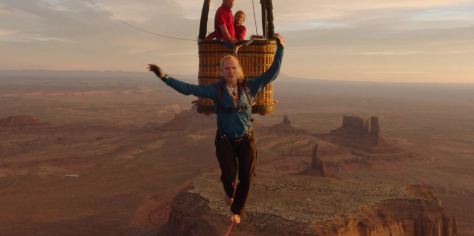
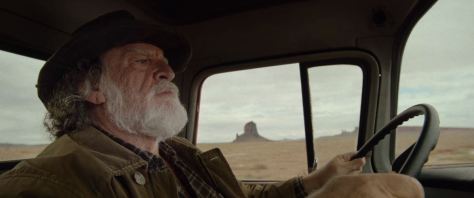
High above the sacred Navajo land of Monument Valley, two hot air balloons float, circling each other as if in a dance. One carries the German flag, the other that of the United States. A closer look reveals that the balloons are not only tethered together, but that a person is walking on this thin, connecting line.

BuildingBridges Cinematic Poem Short Film Directed by JOHANNES OLSZEWSKI 2019

This is the sight that the protagonist of the short film #buildingbridges beholds, as he steps out of his humble Utah home and looks up at the sky. An old and lonely man, he finds his own courage through the actions of these strangers.

This balancing act in movie form by the young creative agency One Inch Dreams (oneinchdreams.com) was commissioned by the German Embassy as a tribute to German-American friendship.

BuildingBridges Cinematic Poem Short Film Directed by JOHANNES OLSZEWSKI 2019

watch the documentary of BuildingBridges here: vimeo.com/376121031

Investigative Debate: “Journalists Who Broke Harvey Weinstein Story” (Oxford Union Video)

On 5 October 2017, Twohey and Kantor, already respected investigative journalists, published a story in the New York Times that lit the world ablaze. The article, which detailed decades of sexual harassment and abuse perpetrated by Harvey Weinstein, launched the #MeToo movement into the mainstream and began an ongoing dialogue about the relationship between power and sexual exploitation. The article was the product of months of investigation by Twohey and Kantor, and was awarded the Pulitzer Prize for Public Service in 2018.

Politics: “Baby Boomers Versus Millennials” Battle Brewing In Great Britain

From a The Atlantic online article:

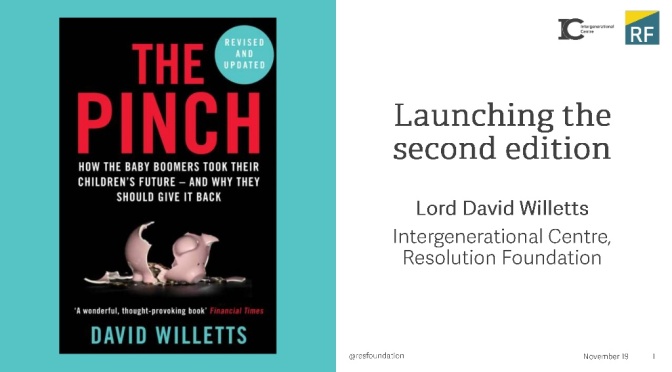
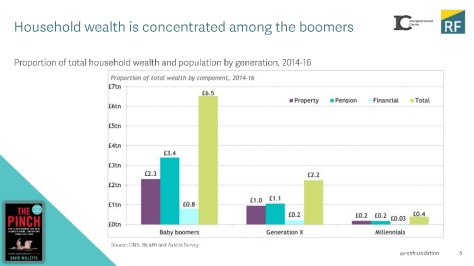
Willetts had stumbled onto one of the great divides of modern politics: young versus old. In Britain, age is now a better predictor of voting intention than social class. Overall, the Boomers voted for Brexit in 2016 and the Conservatives in 2017; their Millennial children voted Remain and Labour. The single biggest error that Theresa May, the prime minister in the lead-up to the 2017 election, made during that process was to float the idea that older people might have to contribute more to the spiraling costs of their own retirement care. The “dementia tax” prompted an immediate, ferocious response, and May backed down.


That is not an isolated example. A guiding principle of politics in Britain, and elsewhere in the West, is: What Boomers want, Boomers get. Working-age benefits, for example, have been frozen since the 2015 budget, but the state pension has consistently risen. (At this election, Britain’s two main parties have both promised to keep increasing pensions; Jeremy Corbyn’s Labour has also pledged £58 billion ($74.7 billion) to Boomer women affected by the rise in the female state pension age from 60 to 66.

generation-pinched-book-launch-for-the-second-edition-of-the-pinch-5-1024


The debate is also about so much more than abstract disagreements over policy and government funding. Caring for the elderly, for example, becomes wrapped up in assertions of “just deserts”—I’ve worked hard all my life and paid my taxes—and fears about money-grubbing children selling off their parents’ houses. It is also, like taxes on inheritance, a subject that prods at many people’s deep desire to pass something on to their offspring.

To read more: https://www.theatlantic.com/international/archive/2019/11/britain-election-boomers/602680/

Short Films: “Being British – A Film By The People Of Great Britain” Directed By Simon Mulvaney (2019)

Directed by: Simon Mulvaney

Produced by: Simon Mulvaney & Emily Brinnand
VFX Artist: Michael Nixon
Music: Borrtex (“Snowflake”)

Being British - A Film By The People Of Great Britain Directed By Simon Mulvaney (2019)

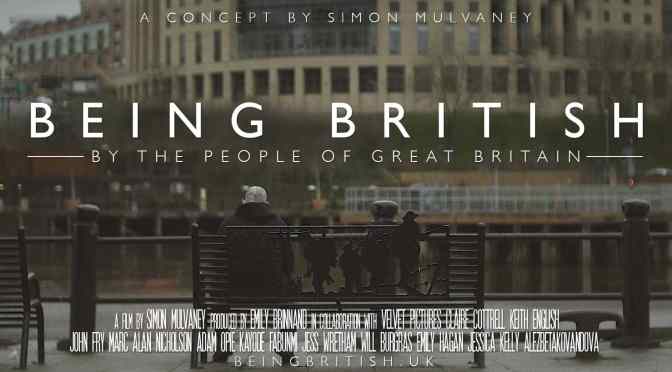
BEING BRITISH is a short-form documentary created independently by the filmmakers of Great Britain, to answer the question, ‘WHAT DOES IT MEAN TO BE BRITISH?’

Website: https://www.smulvaney.tv/

New Interviews: Scholar Steven Greenblatt On Stories, History & Culture (Mindscape Podcast)

Stephen Greenblatt Harvard ScholarAn infinite number of things happen; we bring structure and meaning to the world by making art and telling stories about it. Every work of literature created by human beings comes out of an historical and cultural context, and drawing connections between art and its context can be illuminating for both. Today’s guest, Stephen Greenblatt, is one of the world’s most celebrated literary scholars, famous for helping to establish the New Historicism school of criticism, which he also refers to as “cultural poetics.” We talk about how art becomes entangled with the politics of its day, and how we can learn about ourselves and other cultures by engaging with stories and their milieu.


Website: https://www.preposterousuniverse.com/podcast/2019/11/25/74-stephen-greenblatt-on-stories-history-and-cultural-poetics/


Art Videos: Mary Osborn’s “Nameless And Friendless” Captured Women’s Rights Movement In 1850’s (Tate)

‘Nameless and Friendless’ was painted in 1857 by Emily Mary Osborn. It captures a single woman trying, and failing, to earn a living as an artist in Victorian England. In a trade traditionally occupied by men, she becomes nameless and friendless.

How This Painting Campaigned for Women’s Rights TateShots

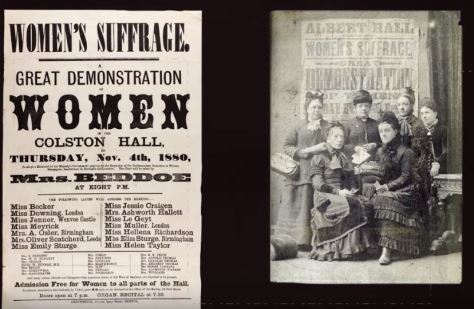
Osborn was actively involved in the campaign for women’s rights during the mid-19th century. She was supported by wealthy patrons, including Queen Victoria. But she used her position of power to help improve the lives of women like those depicted in her paintings.

Website: https://www.tate.org.uk/

Book Review Podcasts: Nicholas Buccola (“The Fire Is Upon Us”) Discusses A Great Intellectual Debate In 1965 (NY Times)

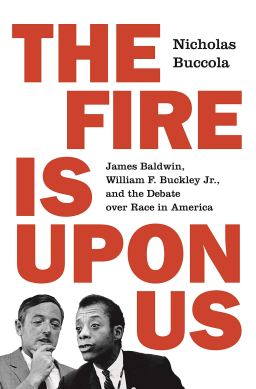
The Fire Is Upon Us Nicholas BuccolaIn 1965, James Baldwin, by then internationally famous, faced off against William F. Buckley Jr., one of the leading voices of American conservatism, in a debate hosted by the Cambridge Union in England. The debate proposition before the house was: “The American dream is at the expense of the American Negro.”
Nicholas Buccola’s “The Fire Is Upon Us” tells the story of that intellectual prizefight as well as the larger story of Buckley’s and Baldwin’s lives.


Celebrity Documentaries: “Very Ralph” On HBO Profiles 50 Years Of Ralph Lauren Fashion (HBO)

From a The Cut online review:

Lauren lived his life as a character in his own movie, and his clothes allowed his customers to do the same. Some days he was Rick from Casablanca, dressed in a double-breasted white dinner jacket, and other days he was a cowboy, wearing jeans and cowboy boots with a blazer.

Ralph Lauren is “zee American designer,” says Karl Lagerfeld in Very Ralph, a new HBO documentary on the Bronx-born fashion icon. Coming from zee most prolific French designer of the 20th and 21st centuries, that’s saying a lot. But the film, which premiers today, supports that statement, illustrating with interviews and archival footage how he’s successfully sold an American fantasy to a global audience for over 50 years.

To read more: https://www.thecut.com/2019/11/ralph-lauren-documentary-very-ralph-hbo.html

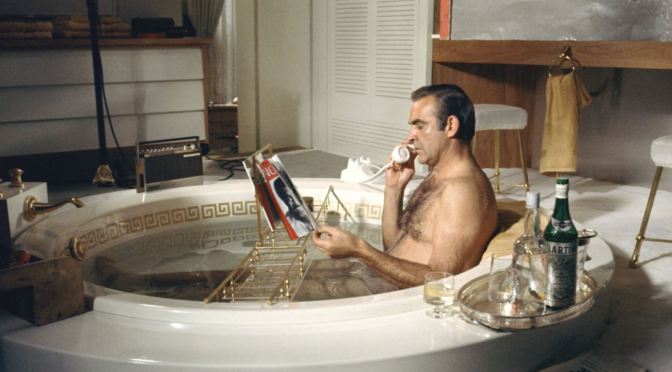
Movie Nostalgia: The Grooming Habits Of James Bond 007 In The Early Films

From a Gentleman’s Journal online article:

79b6e821de28787d8d2f7cff79febddc“He went into the bathroom and had an ice-cold shower and washed his hair with Pinaud Elixir, that prince among shampoos, to get the dust of the roads out of it…”

“There was everything in the bathroom — Floris Limes Bath Essence for men and Guerlain bathcubes for women.”

In Ian Fleming’s From Russia, With Love, there is a terrific exchange between James Bond and Tatiana Romanova — a Soviet corporal who takes up with the British agent. On a sleeper train out of Turkey, the two are readying themselves for the day ahead and Romanova, noticing that 007 doesn’t wear cologne, asks him why this is.

“We wash,” replies Bond, drier than a martini. And this clean-cut, neatly clipped and slightly stinging response sums up the superspy’s attitude to his grooming routine. It’s a thoroughly English approach; leaning on trusted, heritage brands — and not preoccupied with overly strong scents or convoluted bits of kit. So this got us thinking: if a pared-back, simple grooming routine was good enough for MI6’s finest, surely it should be good enough for us?

To read more: https://www.thegentlemansjournal.com/article/we-followed-james-bonds-grooming-routine-for-a-week-this-is-what-happened/