After witnessing a Mafia murder, slick saxophone player Joe (Tony Curtis) and his long-suffering buddy, Jerry (Jack Lemmon), improvise a quick plan to escape from Chicago with their lives. Disguising themselves as women, they join an all-female jazz band and hop a train bound for sunny Florida. While Joe pretends to be a millionaire to win the band’s sexy singer, Sugar (Marilyn Monroe), Jerry finds himself pursued by a real millionaire (Joe E. Brown) as things heat up and the mobsters close in.
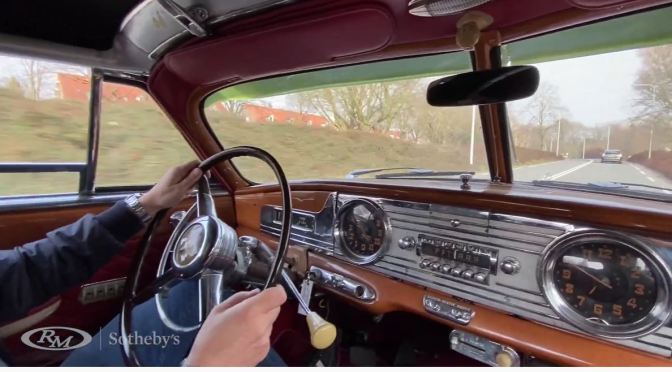
Hudson’s step-down cars for 1948 marked a new direction for the company, as it had a partially unitary design, with the floor pan on the bottom of the frame rather than on the top, resulting in one literally stepping down to enter a Hudson. There was an all-new six-cylinder engine, but the legacy straight eight, which had been continually updated since its introduction in the 1930s, was also carried over. Its low center of gravity made for excellent handling, for which step-downs are still revered.
The new cars bowed on December 7, 1947. “You’re face to face with tomorrow,” said the ads, and “this time it’s Hudson.” Both dealers and the public were elated. The roof was low, but there was still plenty of room inside. Sales jumped nearly 50 percent over 1947, and Hudson rose from 13th to 11th place in the market.
Incremental internal improvements were made to the engines for 1949, and for 1950 the grilles and taillights were updated. Genuine leather was used on convertible interiors, and an electro-hydraulic power top and windows were standard.
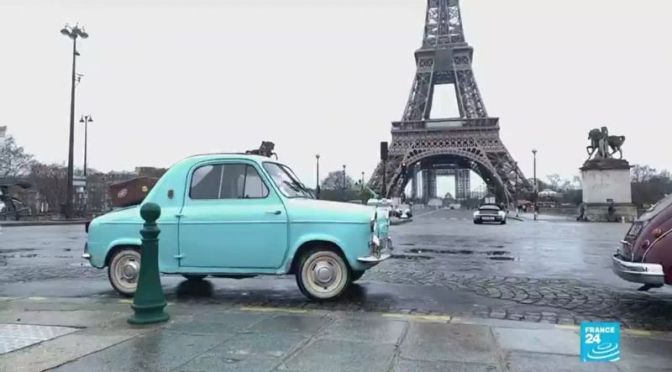
Classic and #vintage cars brought a touch of extra style and nostalgia to #Paris on Sunday, Jan. 31. Around 700 vehicles of various eras took part in the 21st winter crossing of the French capital. A variety of vehicles including #cars, buses, motorcycles, mopeds and even tractors could be seen driving across the city.
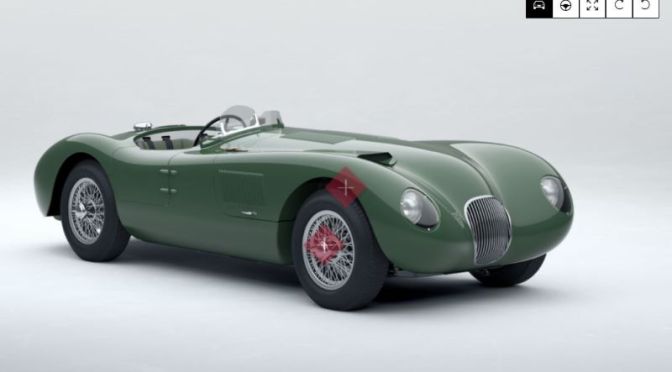
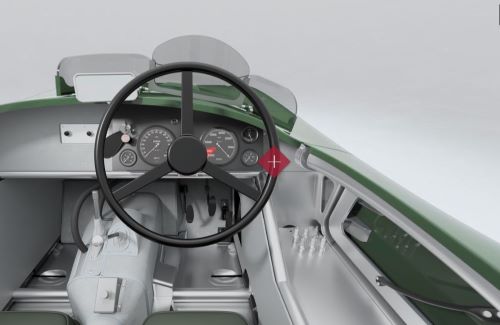
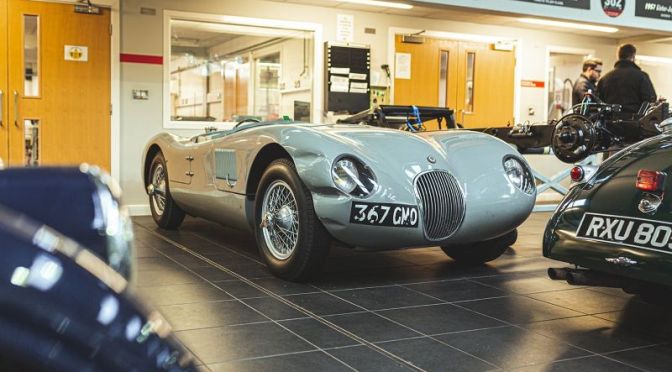
Jaguar Classic will be creating a limited number of new hand-built examples of the ultimate 1953 Le Mans 24 Hours-winning C-Type for the first time with fully- authentic new disc-brakes. Eight new C-Type Continuation cars will be built ahead of a racing-inspired celebration event for their owners in 2022.
Building from their experience with the Lightweight E-Type, XKSS and D-Type continuations, Jaguar Classic engineers have consulted Jaguar’s archives and cross-referenced scan data taken from an original C-Type in conjunction with the latest computer aided design technology to create the most authentic car possible.
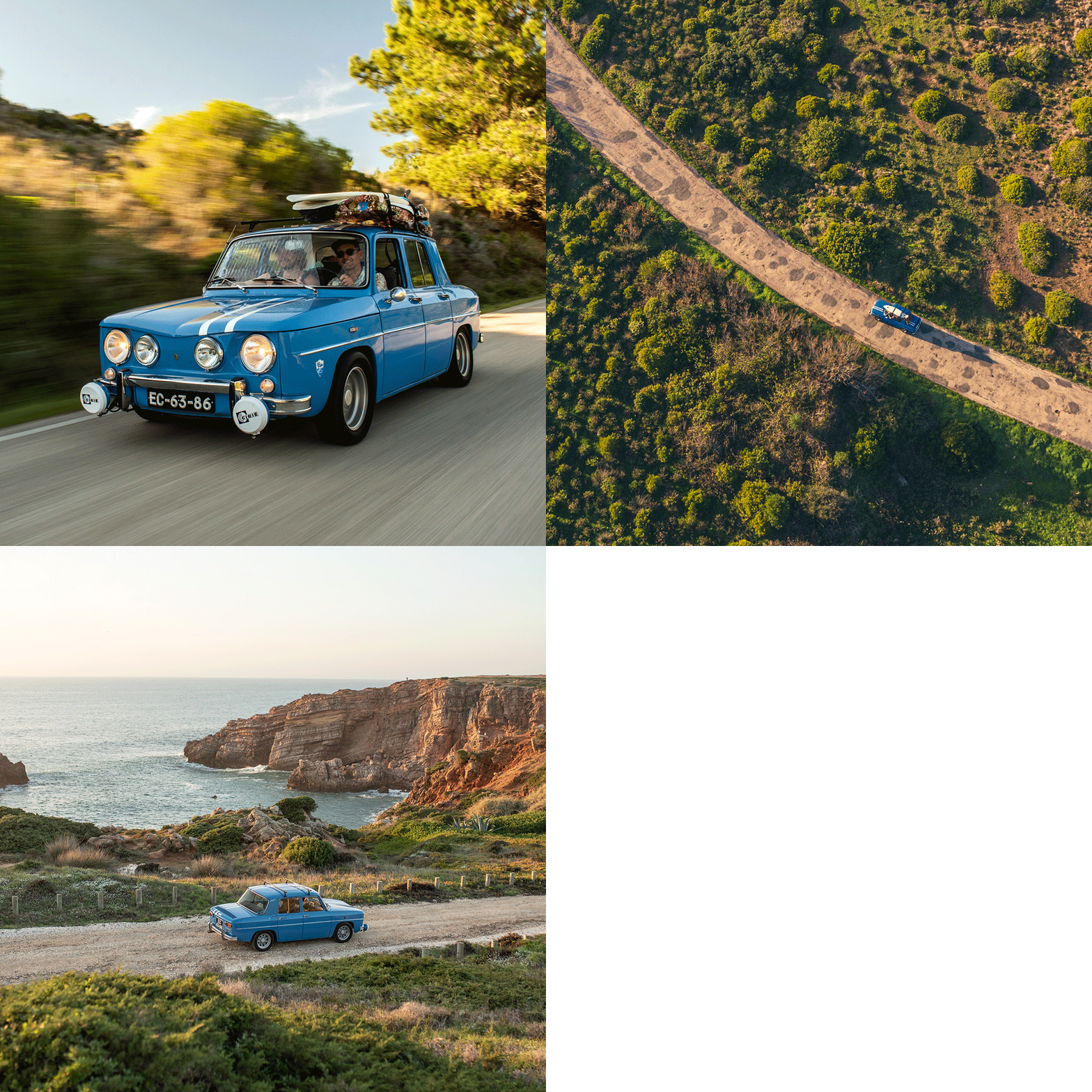
In the late 1960s, Portuguese racing driver Heitor de Moraes took his Renault 8 Gordini from Corsica to Poland, rallying all across Europe. Now, the ocean blue car has found a new owner and a new sportive duty – carrying surfboards in style from Lisbon to the Algarve.
22 January 2021
The year was 1968: six years before the so-called ‘Carnation Revolution’. Life in Portugal at that time could be tough. Not for Heitor de Moraes, though: this was the year he became the first owner of a pretty special blue car. Fast-forward to 2020, and another chapter of the car’s history was written, with its third owner also driving it along the curving roads of southern Portugal. Only this time, with surfboards on the roof.
The car was purchased from Timeless Garage in Lisbon (which had carried out a full restoration) and that’s why the story you see in the pictures starts there. A few days later, after some small mechanical corrections and a surfboard roof rack installation, the real mission began: the blue car hit the curves of the Algarve once again. It quickly became clear that even after more than 50 years, Amédée Gordini’s great engineering talent still shines through.
“It’s a privilege to work with these fantastic cars,” enthuses James “and we benefit from incredible craftsmen and Chris’ vast experience. These are important cars, looked after sympathetically. When we restore cars, we’re careful and fastidious in retaining the soul, but we also understand that cars evolve”.
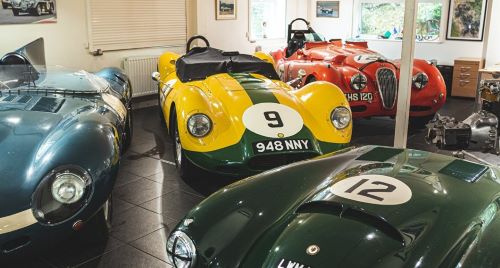
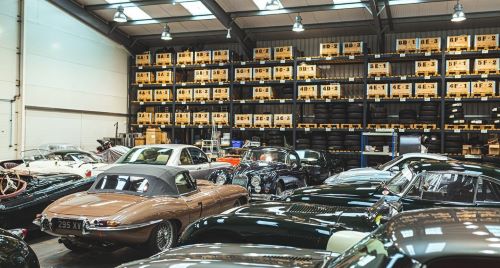
In keeping with the colour British Racing Green, CKL Developments prides itself on being understated, not flashy. Inside a pristine brace of high-roofed, modern industrial units near Hastings, in Britain’s East Sussex countryside, you’ll find cars that are maintained to be enjoyed, driven and raced.
CKL is not, the team is at pains to point out, a museum. It’s the absolute authority on Jaguar-engined sports cars of the ’50s and ’60s and looks after some of the most historic and important British cars of that era, sympathetically restored, preserved of soul and performing at their zenith. The team can service, restore, repair, prepare, race, build, sell, store and transport your pride and joy as required.
NPR’s Scott Simon reflects on the legacy of F. Scott Fitzgerald’s The Great Gatsby. The literary classic’s copyright expired on the first day of 2021.
The copyright on F. Scott Fitzgerald’s The Great Gatsby expired on the first stroke of 2021 and the book entered the public domain.
The classic 1925 novel of love foiled, ambitions foisted, class and betrayal sold fewer than 25,000 copies before Fitzgerald died. It has since sold nearly 30 million. I gave our daughter the copy I had in high school when she read it last year. The Great Gatsby has been turned into stage productions, an opera, five film versions, a Taylor Swift song and inspired innumerable prequels, spinoffs and variations.
In the public domain, Gatsby may now become even more familiar. Two new editions are about to come out and who knows what kind of projects — a Gatsby rom-com? Gatsby joins The Avengers? — might now get a green light, which recalls the imperishably eloquent last passage of the book: “Gatsby believed in the green light, the orgastic future that year by year recedes before us.”
Gatsby’s Jazz Age Long Island may not look like a microcosm of contemporary America. Neither does Don Quixote, The Scarlet Letter, Macbeth or Their Eyes Were Watching God. We want young readers to be able to see themselves in stories; but literature can also show us that people we don’t think are much like us at all turn out to have some of the same heart, blood and dreams. That can be the power of empathy in art.
From 0 to 100 km/h in 2.4 seconds – that’s how fast the Elektrus can accelerate, making it one of the fastest electric cars in the world. It’s just one of the many exceptional cars in Michael Fröhlich’s collection. The German multi-millionaire collects and designs cars of all types; from vintage vehicles to curious custom-builds that more resemble works of art. He even owns one of the Queen’s old Rolls Royces, but he’s deliberately letting that fall apart…
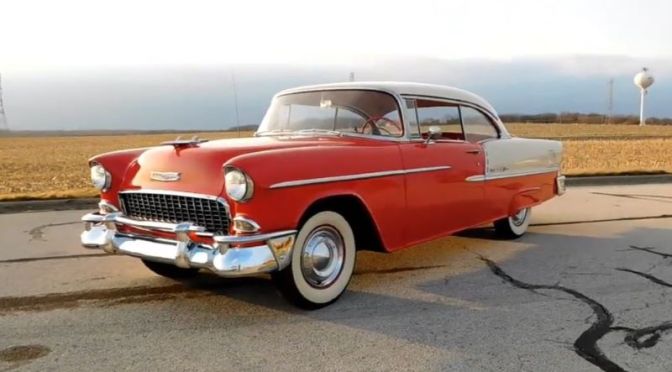
The 1955 Chevrolet (sometimes referred to as ‘55 Chevy) is an automobile which was introduced by Chevrolet in Autumn 1954 for the 1955 model year. It is considered a huge turning point for the manufacturer and a major success. It was available in three models: the 150, 210, and Bel Air.
The ’55’s top trim offering was the Bel-Air, which had more chrome than the 150 or 210. The Bel-Air, 210 and 150 model could be bought as a four-door, or could be bought as a two door with a post between the front and rear passenger windows, known as the two-door sedan.
The Bel-Air or 210 model could also be had as a two door with no post between the side windows. This was known as the sport coupe, or better known by collectors as “the two door hardtop”. Since this model had no post between the two side windows, it had a shorter roof and longer rear deck than the two door sedan had. Chevy also offered a convertible, with the same shorter roof and longer rear deck as the sport coupe, and it was offered in Bel-Air trim only.
1955 also saw the introduction of the Bel Air Nomad, a sporty two-door station wagon which featured frameless door glass and elongated side windows. The unique roof design of the Nomad came directly from the 1954 Corvette Nomad, a “dream car” designed to be shown at auto shows as a concept sport wagon. Although regarded as one of the most beautiful station wagon designs of Fifties, the Nomad sold poorly, partly due to its price tag (one of the most expensive models in the Bel Air lineup) as well as its lack of four doors. Also the Nomad’s two-piece tailgate design was prone to let excess rainwater leak through to the interior.
The ’55 offered a wide array of colors. One solid color, which was standard for the 150, could be had for the 210 or Bel Air…or nineteen different two-tone color combinations were also available.
Have you ever seen a car spreading its wings? Now you do.
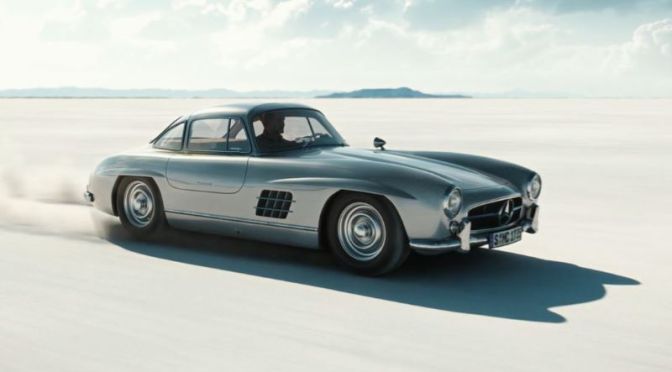
This is a full cgi shortfilm featuring the most iconic car of all time, the Mercedes-Benz 300SL Gullwing, at least in my opinion… I always loved this car, and when I first started this project, I didn’t just wanna make a car rolling by in the desert, I knew there was a bigger story to make, it had to fly. Following its name legacy, I dived deep in this crazy rollercoaster of assembling car parts, raging though the desert of Bonneville salt flats, in order to build a full chassis so the flying body kit could land. After this, the rest is music. A symphony of a few animated shots of this beauty gloriously riding through the desert, creating clouds of smoke through the landscape while hearing that amazing engine roaring.
This is “Gullwing”.
Music: Evan Macdonald. Sound design: João Elias
The Mercedes-Benz 300 SL (chassis code W 198) is a two-seat sports car that was produced by Mercedes-Benz as a gullwingedcoupe (1954–1957) and roadster (1957–1963). It was based on the company’s 1952 racer, the W194, with mechanical direct fuel-injection which boosted power almost 50% on its 3-litre overhead camshaftstraight-6 engine. Capable of reaching a top speed of up to 263 km/h (163 mph), it was both a sports car racing champion[4] and the fastest production car of its time.
Max Hoffman, Mercedes-Benz’s authorized United States importer at the time, inspired the 300 SL and correctly perceived an American market for such a car. The company introduced the 300 SL in February 1954 at the International Motor Sports Show in New York City instead of in Europe to get it into U.S. buyers’ hands sooner.
SL is the short form for “super-light” in German, Mercedes’ first use of the designation, referring to the car’s racing-bred light tubular frame construction.
The 300 SL was voted the “sports car of the century” in 1999.
News, Views and Reviews For The Intellectually Curious










 Boomers Daily