Andrew Tuck brings you a special interview with Jan Gehl, perhaps the world’s best-known urban designer. Now 83, he’s waiting this pandemic out while isolating at home, enjoying spring from his garden.
Jan Gehl Hon. FAIA is a Danish architect and urban design consultant based in Copenhagen whose career has focused on improving the quality of urban life by re-orienting city design towards the pedestrian and cyclist. He is a founding partner of Gehl
Donald G. McNeil Jr., a science and health reporter for The New York Times, discusses how the Coronavirus lockdown might end what it would look like.
While the economy is likely to reopen slowly, there is hope that society will adapt to manage the uncertainty of our new circumstances. Here’s what experts say the next year (or more) will look like.
Comprised of 21 units of OPod Tube Houses, stack on 2 levels, the project is deployed on an unused urban plot in To Kwa Wan District of Hong Kong. Being a modular and flexible architecture, OPod Housing No.1 is able to be set up in less than 3 months, providing accommodation to 20 sets of residents with shared common kitchen and a co-living courtyard.
OPod Housing No.1 is social housing project providing accommodation to citizens of Hong Kong struggling to afford housing.
Each OPod Tube House is 140 sq.ft in size with private toilet and shower, food preparation area and living room with sofa bed. To facilitate a modern sustainable lifestyle, the OPod Tube Houses are equiped with wifi and home automation for better management of resources. The project is scheduled to complete construction and open in 2020.
We ask our housebound editors and correspondents across the globe to reflect on what they cherish about the places in which they live and to pen a love letter to their cities: London, Hong Kong, Rio de Janeiro, Toronto and Milan.
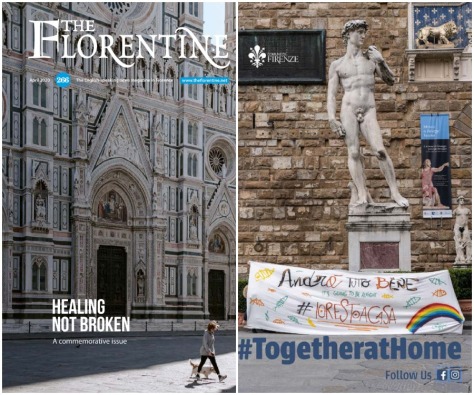
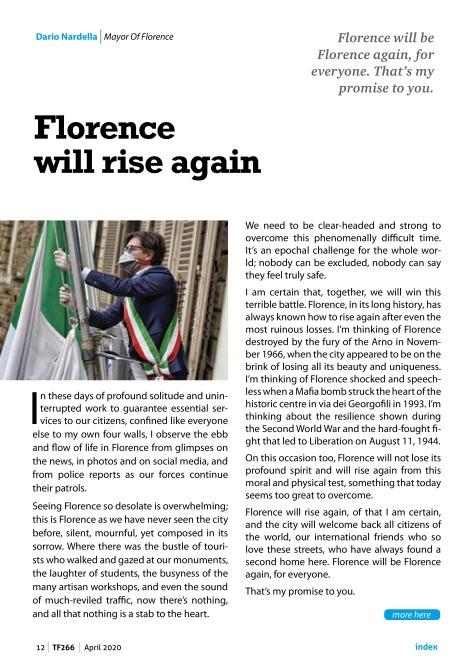
In this special Covid-19 edition of The Florentine, rejoice in a renewed humanism from Florence, of learning, words, thoughts and creativity, with articles, poems and short stories penned by the city’s international community, plus ideas and considerations for the future from Tuscany’s leaders and institutional figures, all interspersed with iconic photography of Florence at its most restful.
“After 96 years on this earth, Yona has moved up to build a Spatial City and install some Space Chains in the sky. The Fonds de Dotation Denise and Yona Friedman, which he founded last year, will continue his work.”
From an Instagram post (02/21/20)
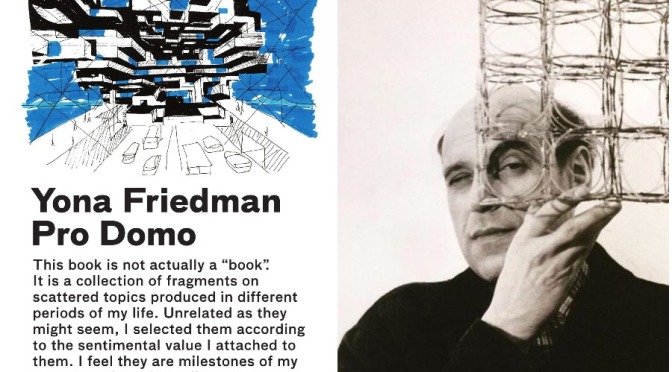
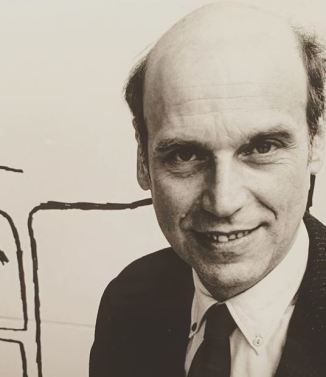
Yona Friedman (5 June 1923 – 21 February 2020) was a Hungarian-born French architect, urban planner and designer. He was influential in the late 1950s and early 1960s, best known for his theory of mobile architecture.
In 1958, Yona Friedman published his first manifesto : “Mobile architecture”. It described a new kind of mobility not of the buildings, but for the inhabitants, who are given a new freedom.
Mobile architecture is the “dwelling decided on by the occupant” by way of “infrastructures that are neither determined nor determining”. Mobile architecture embodies an architecture available for a “mobile society”. To deal with it, the classical architect invented “the Average Man”. The projects of architects in the 1950s were undertaken, according to Friedman, to meet the needs of this make-believe entity, and not as an attempt to meet the needs of the actual members of this mobile society.
The teaching of architecture was largely responsible for the “classical” architect’s under-estimation of the role of the user. Furthermore, this teaching did not embrace any real theory of architecture. Friedman proposed then teaching manuals for the fundamentals of architecture for the general public.
The spatial city, which is a materialization of this theory, makes it possible for everyone to develop his or her own hypothesis. This is why, in the mobile city, buildings should :
touch the ground over a minimum area
be capable of being dismantled and moved
and be alterable as required by the individual occupant.
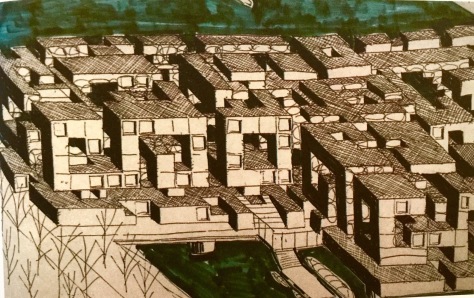
The Spatial City is the most significant application of “mobile architecture”. It is raised up on piles which contains inhabited volumes, fitted inside some of the “voids”, alternating with other unused volumes, making it look aesthetically pleasant. The basis of its design is that of trihedral elements which operate as “neighbourhoods” where dwellings are distributed without a price.
This structure introduces a kind of merger between countryside and city (compare to Paolo Soleri’s Arcology concept) and may span:
certain unavailable sites,
areas where building is not possible or permitted (expanses of water, marshland),
areas that have already been built upon (an existing city),
above farmland.
This spanning technique which includes container structures ushers in a new development in town-planning. Raised plans increase the original area of the city becoming three-dimensional. The tiering of the spatial city on several independent levels, one on top of the other, determines “spatial town-planning” both from the functional and from the aesthetic viewpoint. The lower level may be earmarked for public life and for premises designed for community services as well as pedestrian areas. The piles contain the vertical means of transport (lifts, staircases). The superposition of levels should make it possible to build a whole industrial city, or a residential or commercial city, on the same site. In this way, the Spatial City forms what Yona Friedman would call an “artificial topography”. This grid suspended in space outlines a new cartography of the terrain with the help of a continuous and indeterminate homogeneous network with a major positive outcome: this modular grid would authorize the limitless growth of the city.
The spaces in this grid are rectangular and habitable modular “voids”, with an average area of 25–35 square meters. Conversely, the form of the volumes included within the grid depends solely on the occupant, and their configuration set with a “Flatwriter” in the grid is completely free. Only one half of the spatial city would be occupied. The “fillings” which correspond to the dwellings only actually take up 50% of the three-dimensional lattice, permitting the light to spread freely in the spatial city. This introduction of elements on a three-dimensional grid with several levels on piles permits a changeable occupancy of the space by means of the convertibility of the forms and their adaptation to multiple uses.
In Yona Friedman’s own words “The city, as a mechanism, is thus nothing other than a labyrinth : a configuration of points of departure, and terminal points, separated by obstacles”.
Hotel Torni (“Hotel Tower”) is a historical hotel located in Helsinki, Finland, and a part of the Sokos Hotels hotel chain. When opened in 1931, it became the tallest building in Finland, a position it maintained until the completion of the new Neste headquarters in neighboring Espoo in 1976.
It remained the tallest building in Helsinki until 1987. The interior of the building was completely renovated in 2005. It is located in central Helsinki, the so-called Helsinki Design District.
The hotel was designed by architects Jung & Jung in 1928, and has 14 stories. It is allegedly the place where the murder of the Mata Hari-like Minna Craucher was planned in 1932.
The hotel served the needs of air defense during the Second World War, when members of the Finnish women’s paramilitary organization Lotta Svärd kept watch for enemy bombers. Immediately after the cessation of the war, Hotelli Torni served as the headquarters of the Allied Control Commission monitoring Finnish compliance with the obligations of the Moscow Armistice. It became known as a center of culinary excellence.
As more and more Americans move south, Lake Wylie, a suburb of Charlotte, has tripled in size. Now, the town is saying no more. WSJ’s Valerie Bauerlein explains.
LAKE WYLIE, S.C.—This lakefront suburb of Charlotte, N.C., is among the Sunbelt’s strongest magnets for young families.
Since 2000, Lake Wylie has tripled in population to 12,000 on the strength of its good schools, low taxes and proximity to Charlotte’s jobs in the financial and technology sectors. But those schools are filling up, the water system frequently fails under increased demand and 20-mile commutes are stretching to 90 minutes.
Now, the town that grew too fast wants to stop growth.

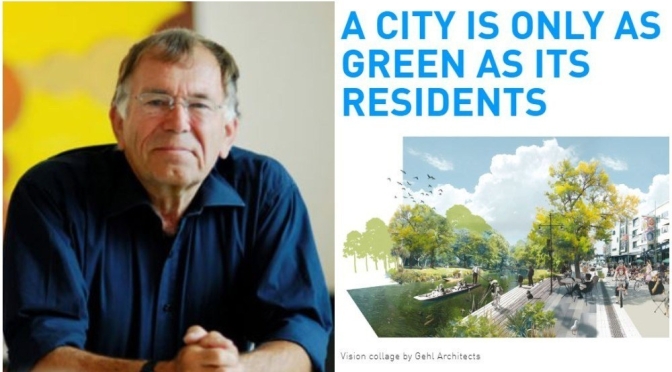
 Andrew Tuck brings you a special interview with Jan Gehl, perhaps the world’s best-known urban designer. Now 83, he’s waiting this pandemic out while isolating at home, enjoying spring from his garden.
 Donald G. McNeil Jr.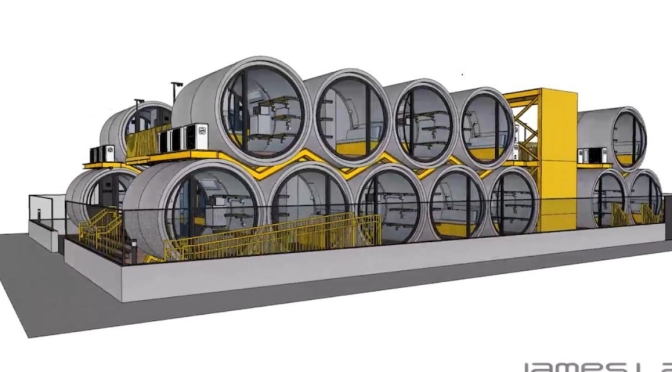
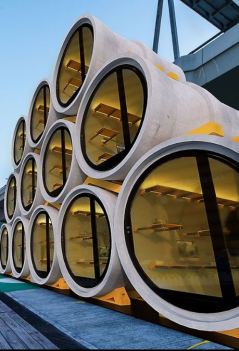 Comprised of 21 units of OPod Tube Houses, stack on 2 levels, the project is deployed on an unused urban plot in To Kwa Wan District of Hong Kong. Being a modular and flexible architecture, OPod Housing No.1 is able to be set up in less than 3 months, providing accommodation to 20 sets of residents with shared common kitchen and a co-living courtyard.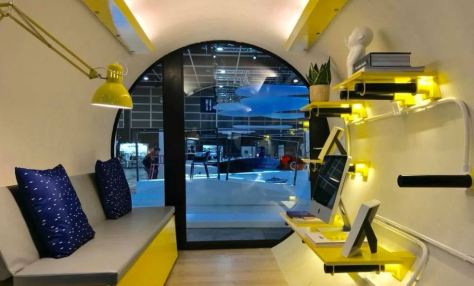

 We ask our housebound editors and correspondents across the globe to reflect on what they cherish about the places in which they live and to pen a love letter to their cities: London, Hong Kong, Rio de Janeiro, Toronto and Milan.


 Hotel Torni (“Hotel Tower”) is a historical hotel located in Helsinki, Finland, and a part of the Sokos Hotels hotel chain. When opened in 1931, it became the tallest building in Finland, a position it maintained until the completion of the new Neste headquarters in neighboring Espoo in 1976.
 LAKE WYLIE, S.C.—This lakefront suburb of Charlotte, N.C., is among the Sunbelt’s strongest magnets for young families.
 Boomers Daily