
Category Archives: Arts & Literature

The New York Review Of Books – May 25, 2023

Image

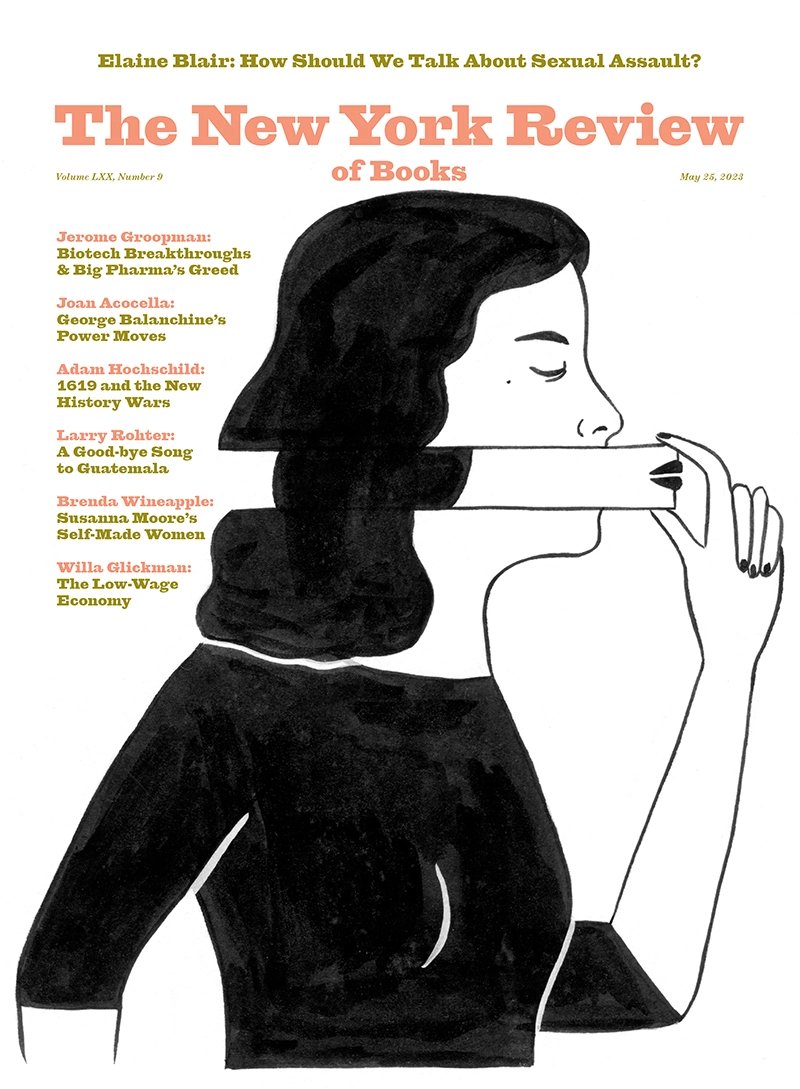
The New York Review of Books – May 25, 2023 issue: Michael Hofmann on Goethe’s last years, Jerome Groopman on the business of biotech, Joan Acocella on Balanchine, Jed S. Rakoff on William O. Douglas’s environmentalism, Adam Hochschild on 1619 and 1776, Willa Glickman on grassroots labor unions, Brenda Wineapple on Susanna Moore, Ian Johnson on art looters, Jenny Uglow on Samuel Pepys and the wreck of the HMS Gloucester, Nicholas Guyatt on financing the Civil War, Elaine Blair on how we talk about sexual assault, poems by Eugene Ostashevsky, D. Nurske, and Ama Codjoe, and much more.

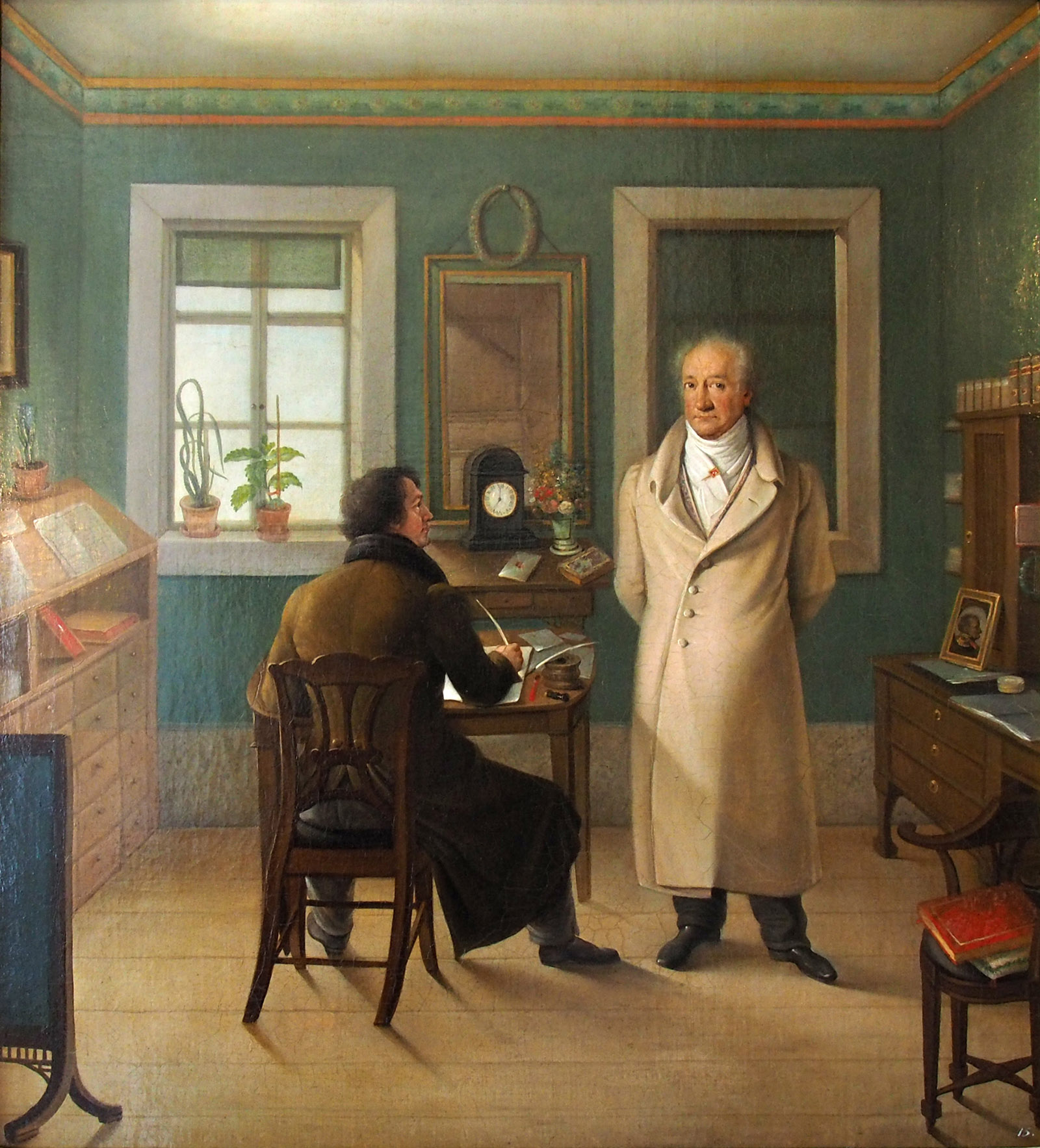
Bewitched by Goethe

In Johann Eckermann, Goethe found an amanuensis made in heaven.

Conversations with Goethe: In the Last Years of His Life by Johann Peter Eckermann, translated from the German by Allan Blunden, with an introduction and notes by Ritchie Robertson

A strange time to publish—strange time to publish anything—a translation of Eckermann’s  Conversations with Goethe (or should that be Goethe’s Conversations with Eckermann?), in six hundred static, major-key pages that can easily feel like twice as many. The big man, himself by now somewhat fallen on hard times, recorded by the little acolyte.

Saving Lives and Making a Killing

A new book reveals the split personality of the biotech industry: an altruistic enterprise that creates breakthrough treatments for patients in need, and a bare-knuckle business that seeks to generate astronomic profits and stop competitors from developing better treatments.

For Blood and Money: Billionaires, Biotech, and the Quest for a Blockbuster Drug by Nathan Vardi

A research scientist for Pharmacyclics working in a lab, Sunnyvale, California

A research scientist for Pharmacyclics, Sunnyvale, California, 2013. In For Blood and Money, Nathan Vardi writes that when Pharmacyclics—which developed ibrutinib, a treatment for chronic lymphocytic leukemia—was bought by the pharmaceutical giant AbbVie in 2015 for $21 billion, ‘the deal…set the new high-water mark for success in the biotechnology industry.’
Artist Views: ‘Regards du Louvre – Marine Serre’

Musée du Louvre (May 4, 2023) – As part of its contemporary programs, the Louvre has invited twenty young creative figures to present their take on the museum in the form of a 3:30 min film.

The “Louvre Looks” initiative brings together creatives under forty – whether they come from the visual arts, poetry, film, experimental music, or fashion. They created new films in the palace itself and thus reconnect with the past of the Louvre – which hosted artist studios even before it became a museum. These films go live every Thursday on YouTube. Over the course of twenty weeks, you will be given the opportunity to discover many fresh insights into the Louvre.

The fourteenth film was conceived by stylist Marine Serre. Addressing the upcycling of clothes, she has reinterpreted Quentin Metsys’ Mary Magdalen wearing a new dress, thereby creating a bridge between time periods.

  • Painter: Jean François Grébert
  • Marine Serre for Regards du Louvre
  • Creative Direction: Marine Serre
  • A Film Directed by: Beau Rivage Film
  • Music: Vivaldi, The four Seasons 3rd Movement by Wilfred Symphony Orchestra

Hong Kong Art Exhibits: ‘Zhang Xiaogang – Lost’

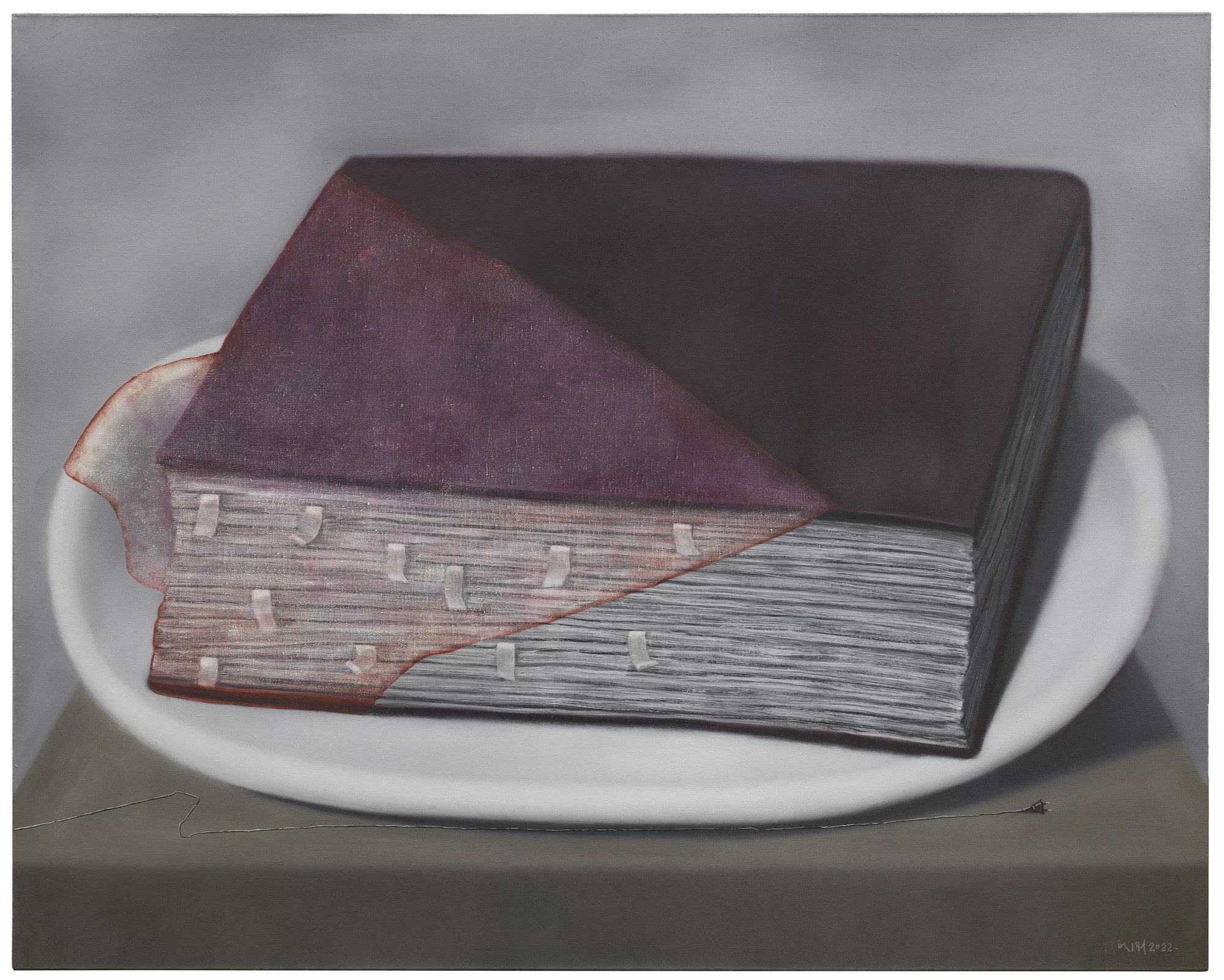
Pace Gallery (May 3, 2023) – In our new film, Zhang Xiaogang discusses his unique approach to representing light in his paintings, as seen in his solo exhibition, “Lost,” on view at our Hong Kong gallery through May 18.

Zhang Xiaogang: Lost

Mar 21 – May 18, 2023

Light No. 9 by Zhang Xiaogang

The artist has been refining his expressive depictions of light for some 30 years, since the 1980s and 1990s. As such, light has become a key subject in its own right in Zhang’s practice.

Zhang Xiaogang, Light No. 9, 2022

Zhang Xiaogang is a contemporary Chinese symbolist and surrealist painter. Paintings in his Bloodline series are predominantly monochromatic, stylized portraits of Chinese people, usually with large, dark-pupiled eyes, posed in a stiff manner deliberately reminiscent of family portraits from the 1950s and 1960s. 

Art: Vincent Became “Van Gogh” With ‘Jardin Devant le Mas Debray’ In 1887

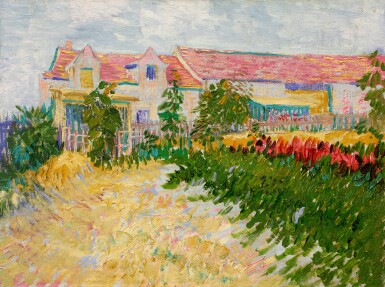
Sotheby’s (May 3, 2023) – ‘Jardin devant le Mas Debray’ captures this pivotal moment in summer of 1887 where color, subject and paint handling crystallized into Van Gogh’s mature style, one that would flourish in the three years remaining of his life in Paris, Arles, Saint-Rémy-de-Provence and Auvers-sur-Oise.

Jardin devant le Mas Debray | Modern Evening Auction | 2023 | Sotheby's
Jardin devant le Mas Debray by Vincent Van Gogh

It was during this period of time, from 1887 to 1890, that Van Gogh’s greatest masterpieces were created, forever changing in the history of modern art. Surrounded by artists, dancers, musicians, actors and writers in Montmartre, Van Gogh abandoned the dark palette that dominated many of his early paintings in Holland and replaced it with a newfound love of color.

Arts/Books: Times Literary Supplement – May 5, 2023

Image

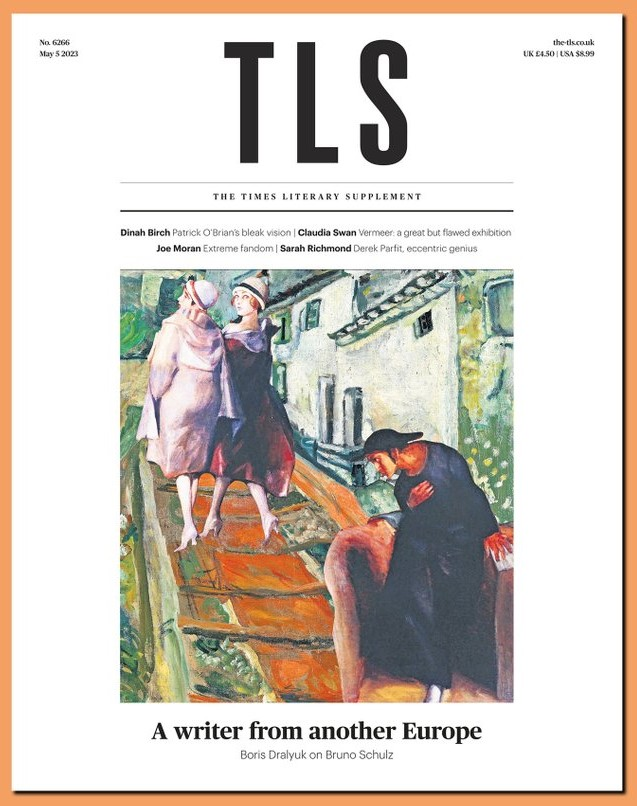
Times Literary Supplement @TheTLS (May 5, 2023) – This week’s @TheTLS features Bruno Schulz – a writer from another Europe; Patrick O’Brian’s bleak vision; Vermeer – a great but flawed exhibition; extreme fandom and Derek Parfit, eccentric genius.

 Man of Margins

How Bruno Schulz found freedom on the periphery of life By Boris Dralyuk

It’s more than a little discomfiting to read the great Polish novelist Witold Gombrowicz’s description, in his diary from the early 1960s, of his not-quite-friend Bruno Schulz: “A tiny gnome with enormous head, appearing too scared to dare exist, he was rejected by life and slouched along its peripheries”. Written for publication two decades after Schulz was gunned down by a Nazi just outside the ghetto of his occupied native town of Drohobych in November 1942, these words cannot help but seem impious. 

Classical Music Concerts: The Entos Guitar Quartet Play ‘Parvane’ By Ravel

SiccasGuitars Films (May 2, 2023) – Entos Guitar Quartet play Pavane pour une infante défunte by Maurice Ravel as part of our Siccas Media program.

Guitarists: Dante Bignoli, Tarcisia Bonacina, Davide Crenna, Gianluigi Ubezio

To compose this piece in 1899, Maurice Ravel was inspired by the Princess of Polignac. The title refers to Ravel’s idea of describing “a pavana that a little princess may have danced in the old times at the Spanish court”. But It is also said that Ravel chose the title because he was fascinated by the sound of its pronunciation.

The piece is original for piano but the composer made an orchestral version too. We present our own transcription for guitar quartet, performed at the “Salone dell’Arengo” (Novara), a magical hall dating back to the 12th century. We hope you like It.

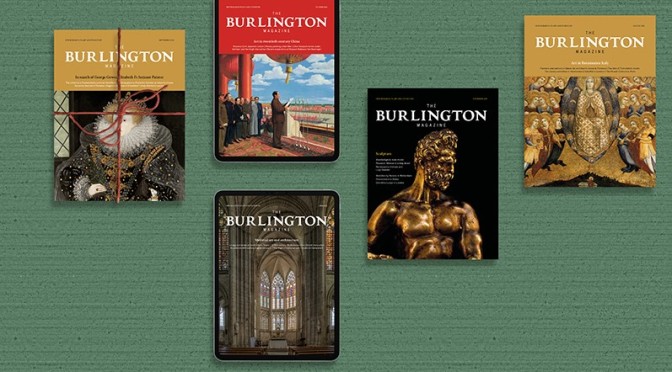
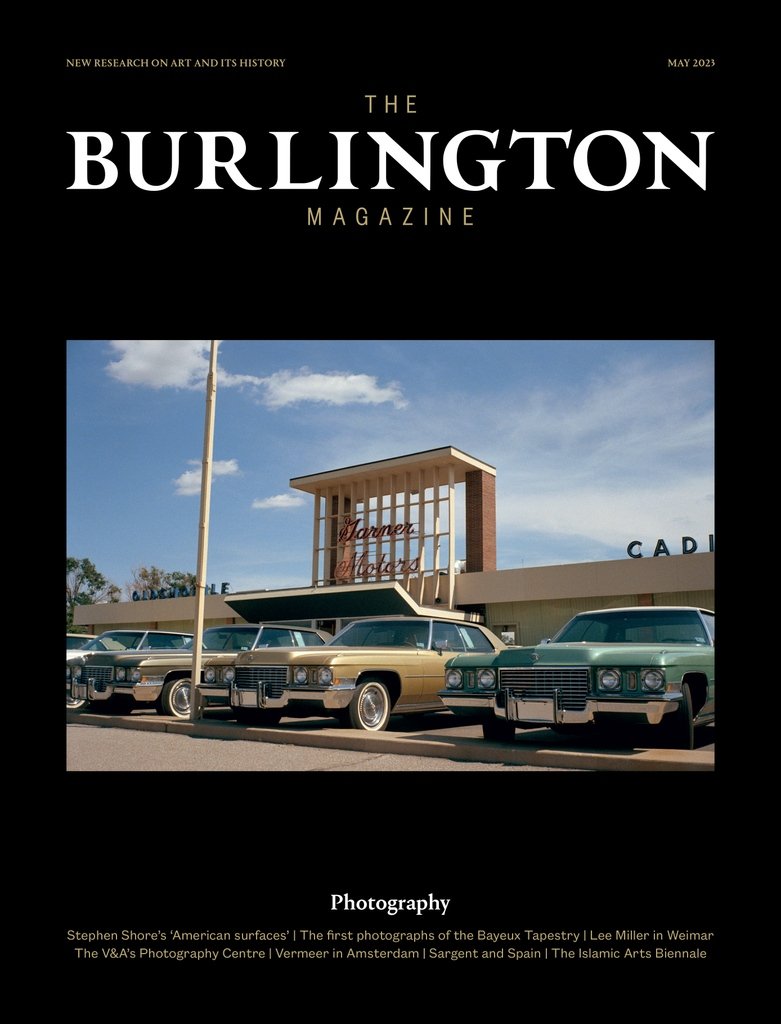
Fine Art: The Burlington Magazine – May 2023 Issue

Image

The Burlington Magazine – May 2023: Anxiety about the future of the two great photographic libraries housed in the Courtauld Institute of Art, London, can be traced back at least thirty years. In October 1992 we published an Editorial, ‘The Witt and Conway libraries under threat’, which was prompted by a demand from the University of London that the Courtauld – not yet a self-governing and self-financing entity – produce a business plan that would show how the libraries could develop commercial opportunities to offset a threatened reduction in university funding. 

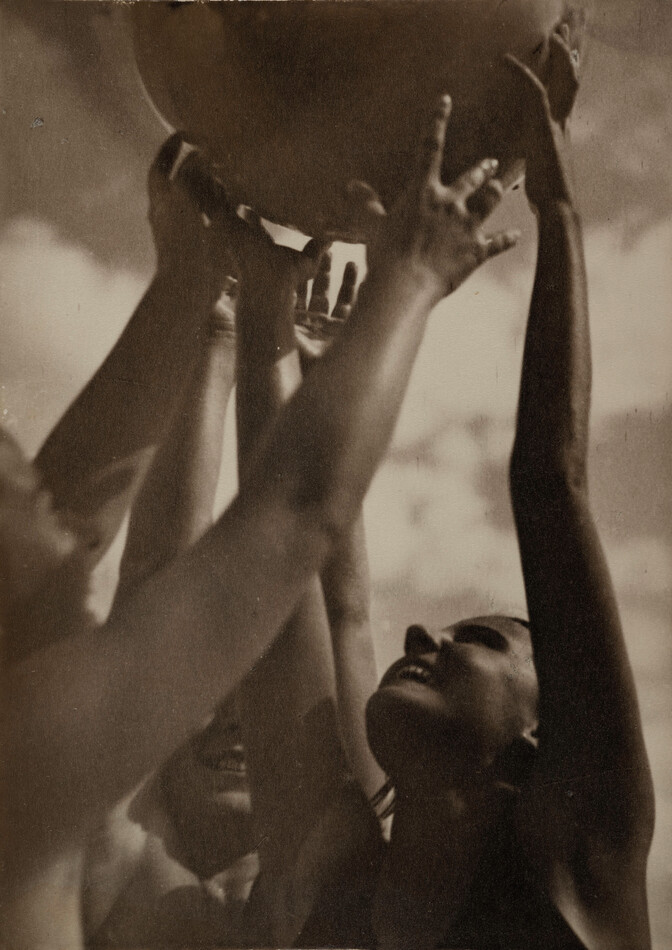
Mey Rahola (1897–1959): The new photographer

Mey Rahola: Desire for Horizons

Although Mey Rahola (1897–1959) was one of the first women to become renowned for art photography in Spain, she remains a little-known figure today. Two linked exhibitions with a single catalogue dedicated to the Catalan photographer set out to rectify this and liberate an overlooked artist from the shadow of anonymity. Working with Rahola’s family, the curators, Lluís Bertran Xirau and Roser Martínez Garcia, have assembled 550 items from her collection, including 250 negatives and a number of photograph albums. That this material had been handed down and divided between the artist’s friends and family is testimony to her interest in her posterity. The fact that, nonetheless, Rahola has remained largely unknown, one is reminded in the exhibition catalogue, is a result partly of her status as a female photographer operating in the early twentieth century and partly of the events of the Spanish Civil War, which ruptured her burgeoning career.

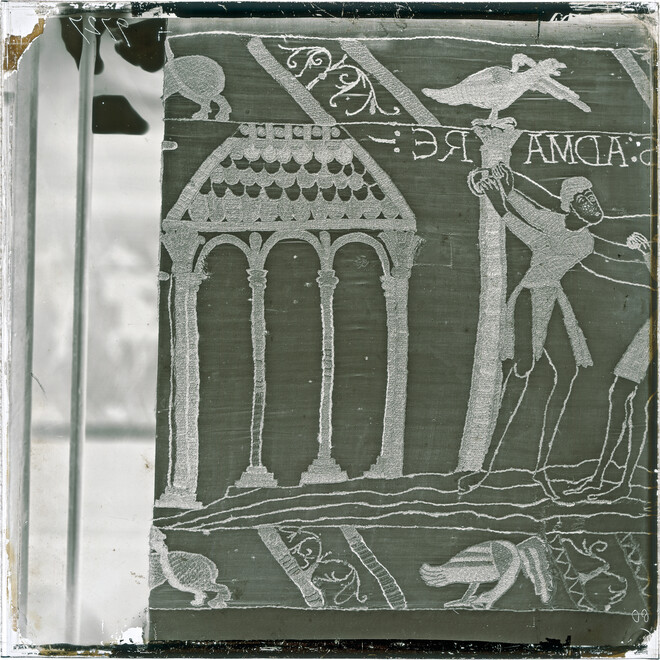
Glass-plate negative of a detail from the Bayeux Tapestry

The Bayeux Tapestry photographed

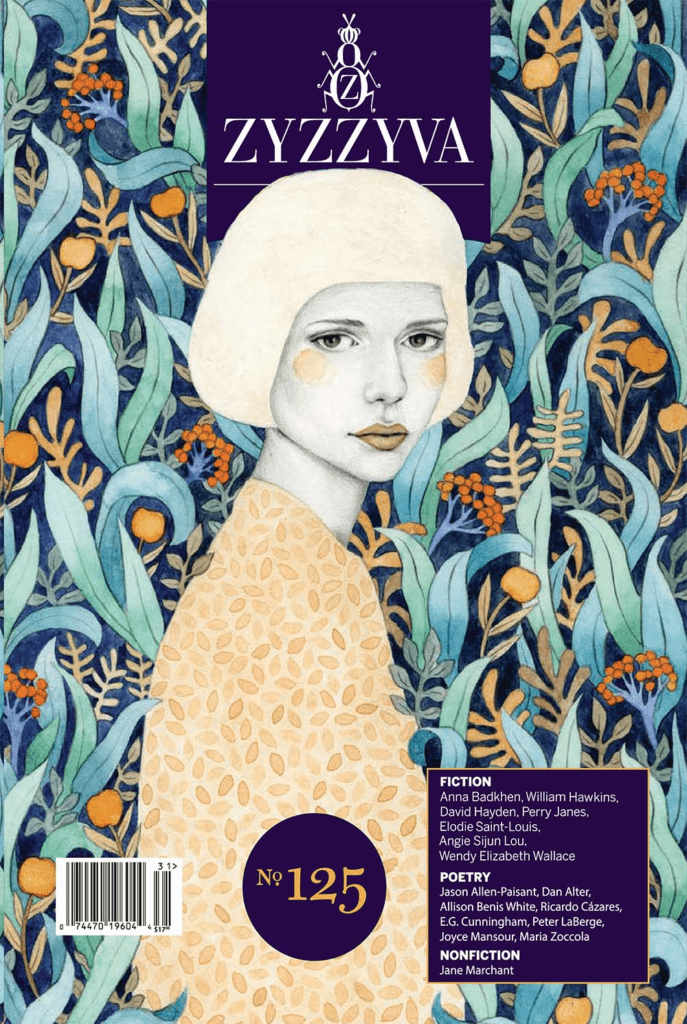
Literary Arts: Zyzzyva Magazine – Spring 2023

ZYZZYVA Magazine Spring 2023:

Fiction

  • The Mysteries of the Universe by Anna Badkhen:
    “I see now what this is about. I’m a professor and author in America, she’s in a war zone: to her, I’m rich and happy. How is she supposed to know about the cancer, the medical debt, Ksyusha’s student loans? So, I try to deflect.”
  • Encyclopedia of Botany by Jane Marchant:
    A daughter’s closely observed catalog of the flora around her Bay Area home, and of her family’s complex history of identity.
  • Glint of Sport by Angie Sijun Lou:
    “I don’t know if this story is true. You can’t divide truth from kitsch in this place…”
  • Eulogy by William Hawkins:
    In the wake of a funeral, a dead father’s legacy hangs over his surviving adult sons as they trudge into the lukewarm waters of the lake by the family pier.
  • The Eye by Elodie Saint-Louis:
    “When Theo spoke, she thought, you could see all of these places on his body. Vyros, Hymettus, Loutro, Parnitha. The land was in him. It was the river running out of his mouth. The words that bumped into each other gently but never spilled over, petering out into a gentle sway.”
  • Plus more fiction by Perry Janes, David Hayden (there be strange happenings in a dilapidated insurance building in Chicago), and Wendy Elizabeth Wallace.

Nonfiction

  • Jane Marchant on the flora around her Bay Area home—and her family’s complex history of identity.

Poetry

  • Jason Allen-Paisant, Dan Alter, Allison Benis White, Ricardo Cázares, E.G. Cunningham, Peter LaBerge, Joyce Mansour, Maria Zoccola

Art

  • Sofia Bonati

Art Insider: A Review Of ‘Cobbs Barn, South Truro’ By Edward Hopper (1931)

Sotheby’s (May 1, 2023) – Returning each season to live and paint in Truro elevated Hopper’s art, allowing him to concentrate on the simplification of forms and the depth of both light and color woven into the surrounding landscape.

Expert Voices: Edward Hopper's Cobbs Barn, South Truro and Three Water  Colors | The New York Sales | Sotheby's

Both his technical approach to painting and his perception of the world from 1930 onwards are greatly informed by the Cape. Cobb’s Barns, South Truro derives its bright palette and topographical features from Hopper’s immediate environment, and is emblematic of the profound influence that life in South Truro had on his manner of painting.

Group of Houses, dated 1923-24, stems from a pivotal stage in the development of Edward Hopper’s career. Residential homes occupy much of Hopper’s subject matter in these early watercolors, and Group of Houses is no exception. These charming saltbox houses are typical for the Cape Ann region, whose architectural style reflects its coastal New England atmosphere.

The Battery, Charleston, S.C., dated 1929, is the result of Hopper’s three-week stay in the charming southern city, which is renowned for its Georgian-style architecture and cobblestone streets lined with lush palm trees. His Charlestown pictures possess an inherently tropical feeling, which sets them apart from his otherwise New England-focused oeuvre.

Red Barn in Autumn Landscape is among the limited number of watercolors that Hopper completed during the fall of 1927 in Vermont, and embodies the rustic quality of the New England scenery that drew Hopper to this region in the first place. Hopper routinely sketched his surroundings in coastal towns on the Cape or along the Maine shore, but Red Barn in Autumn Landscape is quite unique in that it captures a specific fall moment as the leaves gradually fade from green to burnt orange and red. The present work is emblematic of the simplicity and charm that characterize Hopper’s New England watercolors.

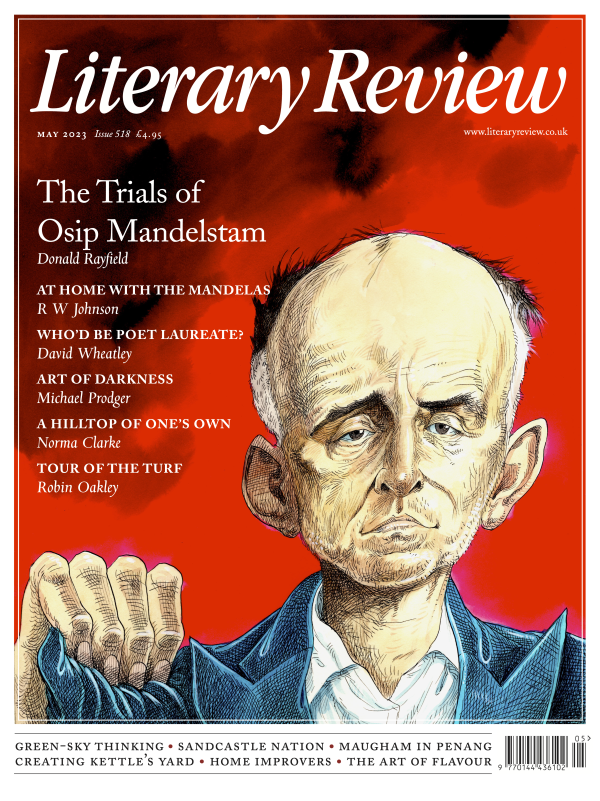
Books: Literary Review Magazine – May 2023

Image

Literary Review – May 2023 issue: Donald Rayfield surveys the life and work of the Russian poet Osip Mandelstam and R W Johnson reviews the Mandela’s…

The Poet & the Tyrant

Osip Mandelstam: A Biography’ By Ralph Dutli

When in 1960 I first came across Osip Mandelstam’s poetry, nobody in the USSR had enjoyed access to his work since the early 1930s and few even knew of his existence, let alone of his death, as he had predicted, in Stalin’s Gulag. His books had been removed from libraries and bookshops.

Heroism & Homicide

Winnie and Nelson: Portrait of a Marriage’ By Jonny Steinberg

Under apartheid, aspiring South African writers frequently marketed themselves to the world as committed and heroic anti-apartheid activists. The enormous success of Alan Paton’s Cry, the Beloved Country (fifteen million copies sold and counting) showed the way, though Paton was the real McCoy, a committed liberal who suffered for his beliefs.