Katherine Rundell reads her study of the Greenland shark, which can live for 500 years.
‘I am glad not to be a Greenland shark; I don’t have enough thoughts to fill five hundred years. But I find the very idea of them hopeful. They will see us pass through our current spinning apocalypse.’
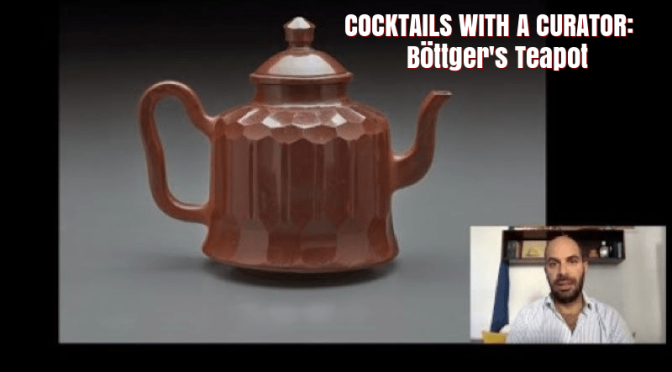
In this week’s episode of “Cocktails with a Curator,” Deputy Director and Peter Jay Sharp Chief Curator Xavier F. Salomon delves into the significance of a deceptively simple teapot designed by Johann Friedrich Böttger and given to the Frick by the great German-born collector Henry H. Arnhold (1921–2018). Enjoy a Saxon cocktail while exploring the complicated history behind Böttger’s quest to discover the formula for porcelain in a clifftop fortress outside Dresden in the early 18th century.
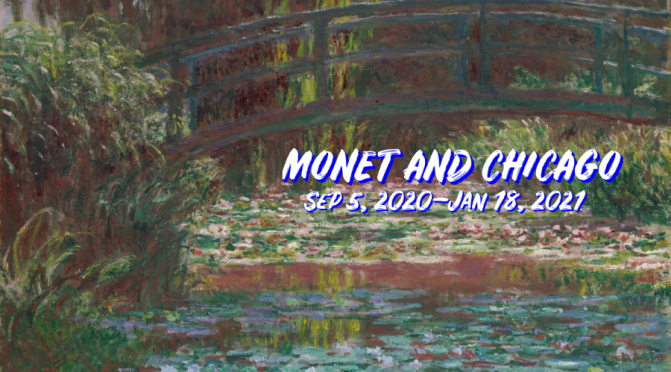
Learn how the changes Monet made to this painting captured the seaside town he remembered from his youth rather than the tourist destination it had since become.
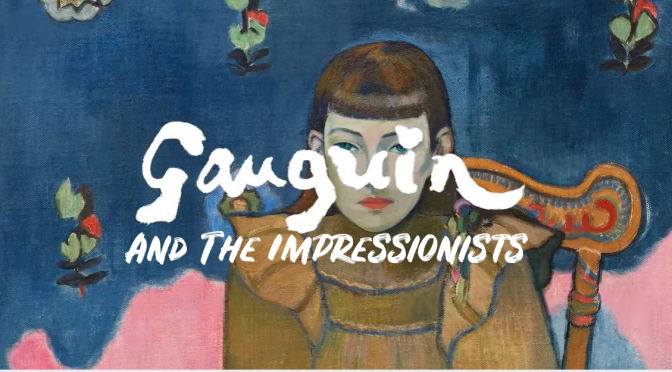
Step into our galleries to experience ‘Gauguin and the Impressionists: Masterpieces from the Ordrupgaard Collection’. Explore the carefully curated collection of Wilhelm and Henny Hansen, who utilised their exceptional eye for quality to assemble works by Renoir, Monet, Degas, Morisot, Manet and Pissarro among many others.
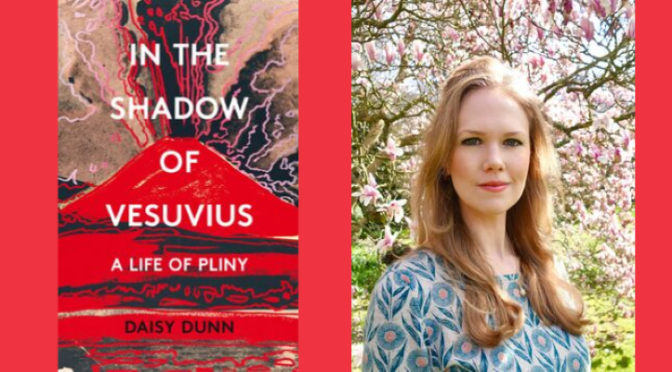
In the year 79 CE, Pliny the Elder set out to investigate a large cloud of ash rising in the sky above the Bay of Naples. It was the eruption of Vesuvius, and Pliny did not survive.
“I think we can all empathize with someone who’s like a son, or in this case, an adopted son, trying to kind of make his own mark and escape the shadow of his father, and leave something on the world of his own.”
A trailblazing naturalist, he is best remembered today for his multivolume encyclopedia of Natural History,and we are able to retrace his final hours thanks to a vivid account by his nephew, Pliny the Younger. Inspired by his beloved uncle, the young Pliny became a lawyer, senator, poet, and representative of the emperor. His published letters are fascinating reflections on life and politics in the Roman Empire.
In this episode, Daisy Dunn, classicist and author of The Shadow of Vesuvius: A Life of Pliny,and Kenneth Lapatin, curator of antiquities at the Getty Museum, discuss the two Plinys and their profound impact on our understanding of ancient Rome.
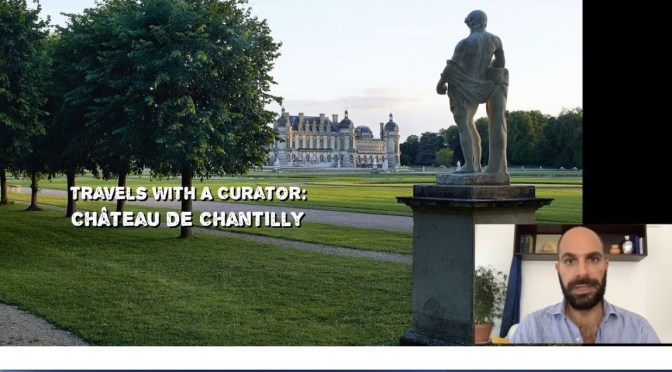
In this week’s episode of “Travels with a Curator,” Deputy Director and Peter Jay Sharp Chief Curator Xavier F. Salomon takes viewers on a journey through the grand halls of the Château de Chantilly, one of his favorite places in France. Like the Frick, Chantilly began as an opulent residence and was once the home of the Grand Condé, a cousin of Louis XIV. Today, the château houses one of the best collections of European paintings in France as well as the world-famous illuminated manuscript “Très Riches Heures du Duc de Berry.” Watch closely for a guest appearance by Jadwiga, Xavier’s kitten.
The Château de Chantilly is a historic French château located in the town of Chantilly, Oise, about 50 kilometres north of Paris.
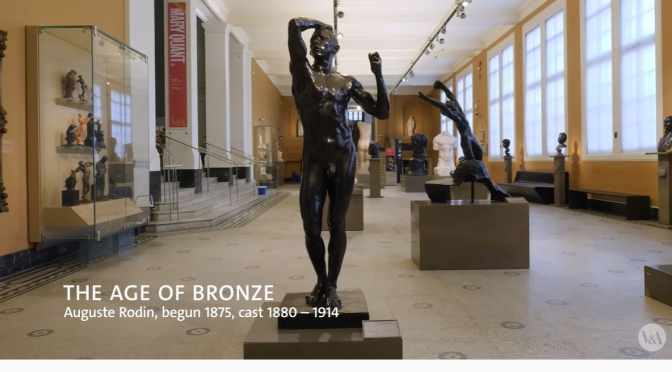
The V&A holds 23 sculptures by French sculptor Auguste Rodin. Between the 1870s and the 1890s he came to challenge traditional notions of beauty and appropriateness – and paved the way for modern sculpture.
This film, presented by V&A curator Alicia Robinson, shows in detail 6 works by Rodin – exploring his earlier work inspired by classical sculpture, Michelangelo and Donatello, and his development into spectacular explorations of patina, light and emotion.
In 1914 Rodin gave his work to the V&A as a symbol of the friendship between the people of France and Great Britain.
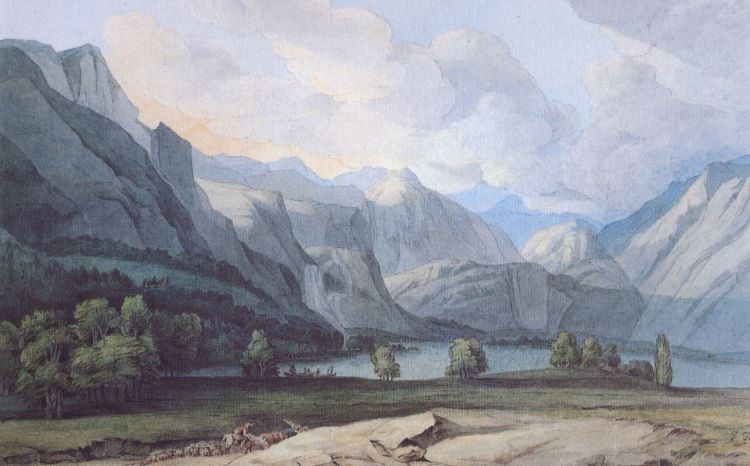
NEWSTATESMAN (August 26, 2020) – Towne (1739-1816) was born on the fringes of London and apprenticed to a coach painter, a skill that demanded the type of precise brushwork that was to become evident in all his later work. He went on to study at William Hogarth’s St Martin’s Lane Academy, Britain’s foremost school of art prior to the establishment of the Royal Academy in 1768. By a quirk of geography, the greatest British landscapist and fellow chronicler of the Lake District, JMW Turner, would be born just 100 yards away in 1775.
In 1780 he made a lengthy drawing trip to the Continent but it wasn’t until 1786 that he visited the Lake District. He proved indefatigable, making 100 drawings and watercolours over the course of two weeks: he often put brief details on the back of his work (“½ past 7 O clock/The sky a Clear warm light/mountains a solemn purple tint/the Lake reflecting the sky, the/Sun in the picture”) and so we know that on 17 August alone, for example, he made seven drawings.
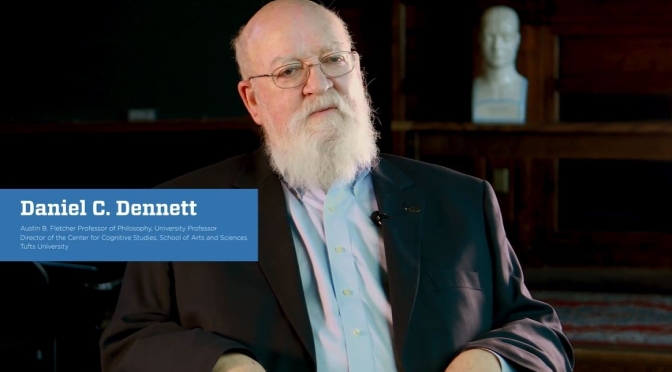
World-renowned philosopher Daniel C. Dennett argues that our inner worlds and religious ideas can all be explained as evolutionary functions of the brain.
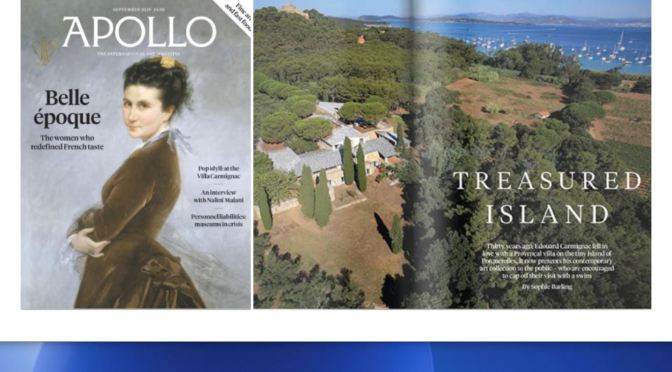
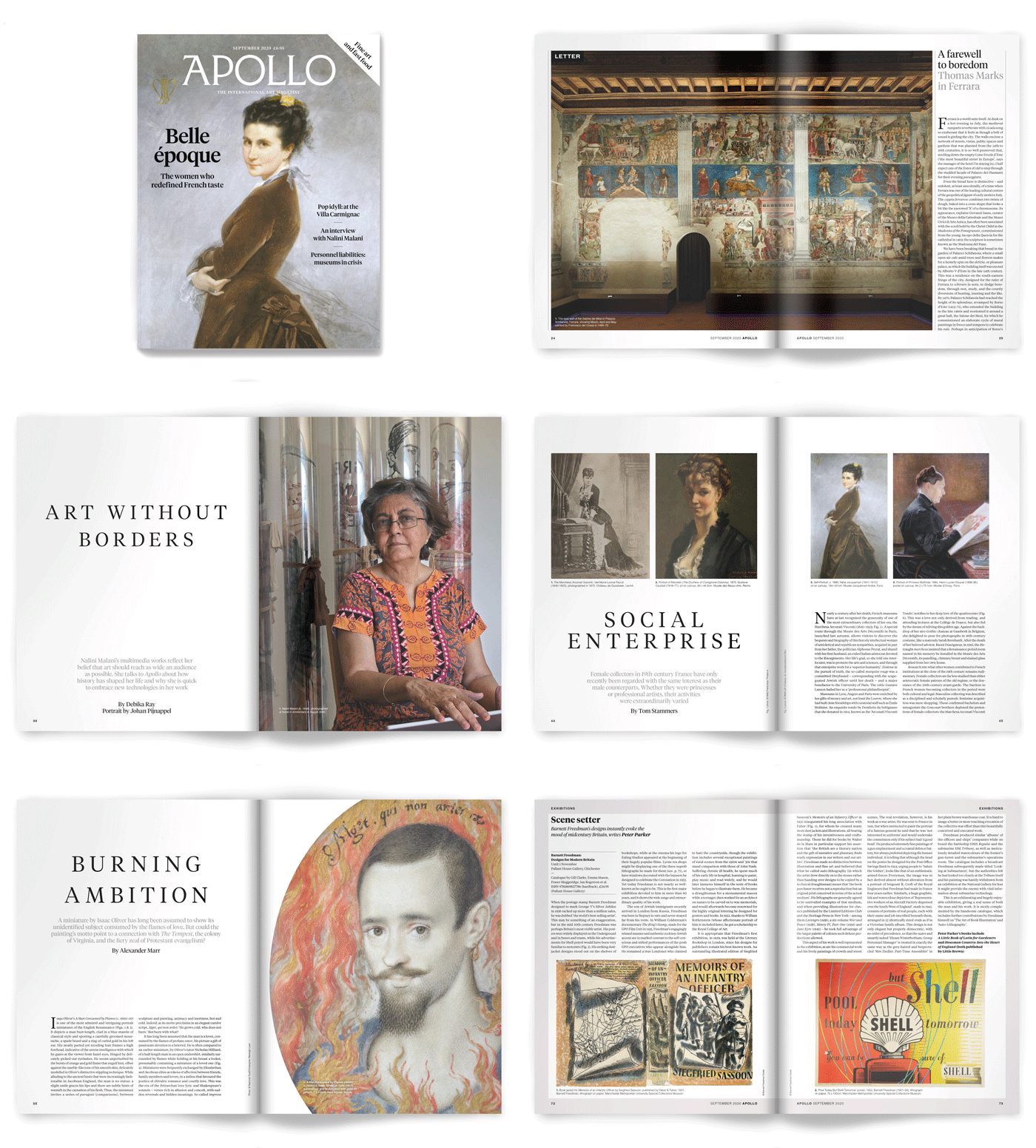
FEATURES | Tom Stammers on women collectors in 19th-century France; Nalini Malani interviewed by Debika Ray; Alexander Marr puzzles over Isaac Oliver’s most mysterious portrait; Sophie Barling visits the Villa Carmignac; Thomas Marks on fast food and fine art
REVIEWS | Peter Parker on Barnett Freedman at Pallant House;Caroline Bugler on Cranach at Compton Verney; Tom Fleming on Bill Brandt and Henry Moore at Hepworth Wakefield; Michael Hall on Edwardian houses; Clare Bucknell on visual traces of the English Civil War; Cora Gilroy-Ware on neoclassical style
MARKET | Jo Lawson-Tancred on museums and online shopping; and the latest art market columns from Emma Crichton-Miller, Susan Moore and Samuel Reilly







 Boomers Daily