Category Archives: Arts & Literature

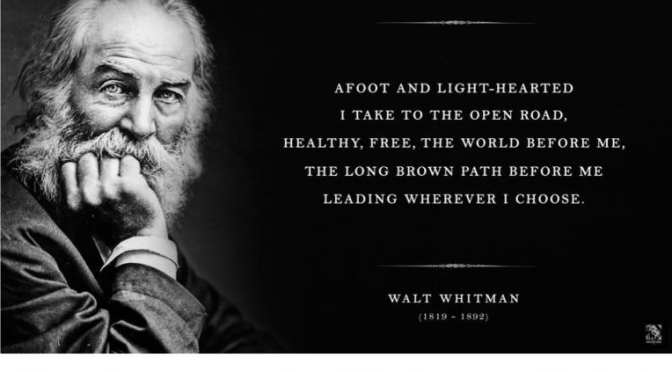
Poetry: ‘Song Of The Open Road’ By Walt Whitman

Read by Dave Luukkonen and Music by Tony Anderson

Walt Whitman is America’s world poet – a latter-day successor to Homer, Virgil, Dante, and Shakespeare, whose verse collection ‘Leaves of Grass’ marked a new era in the history of American literature.

Within Leaves of Grass, Whitman’s ‘Song of the Open Road’ engages with important themes of freedom, the self and nature. The poem begins with the speaker setting out on a long brown path “Afoot and light-hearted,” for he is done with the routines, customs, and safe behaviours of his previous life, “done with indoor complaints, libraries, querulous criticisms.”

Here, Whitman renounces a life devoted to the conventional pursuit of material success and embarks on the open road, the world before him. –

If you’d like to read the full poem, go here: https://www.poetryfoundation.org/poem…

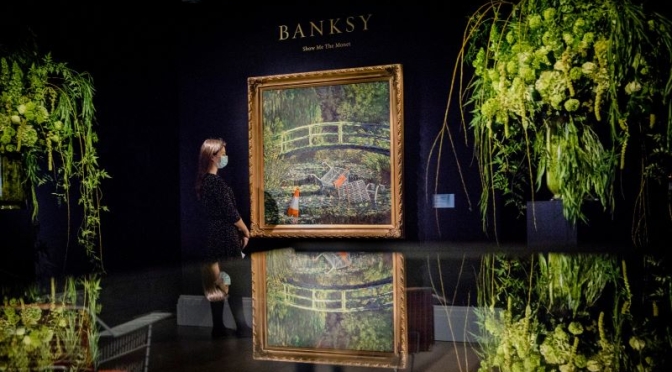
Arts & Culture: ‘Paris Vs London – A Tale Of Two Capitals’ (Sotheby’s Video)

Pick your favourite between Paris and London as we pit Europe’s premier art capitals against each other in a tongue-in-cheek battle. Compare and contrast the allure of each location as we build-up to our marquee evening auctions on Modernités/Contemporary (21 October | Paris/London).

Discover some of defining moments of the 20th and 21st centuries by the greatest artists working in Europe and beyond. From the birth of the avant-garde and modernism, to seminal contemporary works, the artists represented all forged a distinct path.

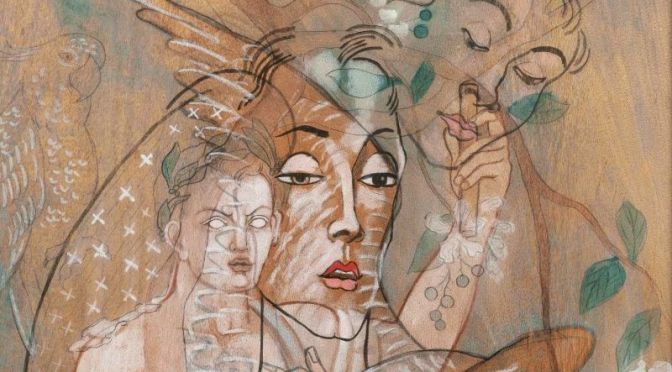
Art History Video: ‘French Surrealist Painter Francis Picabia’ – “Minos” (1929)

Master Surrealist Francis Picabia created complex-dream like paintings for his series, “Transparencies”. In this episode of Anatomy of an Artwork, discover the hidden inspirations for his painting, Minos, and learn about the meaning behind each transparent layer.

Francis Picabia (1879 – 1953) was a French avant-garde painter, poet and typographist. After experimenting with Impressionism and Pointillism, Picabia became associated with Cubism. His highly abstract planar compositions were colourful and rich in contrasts.

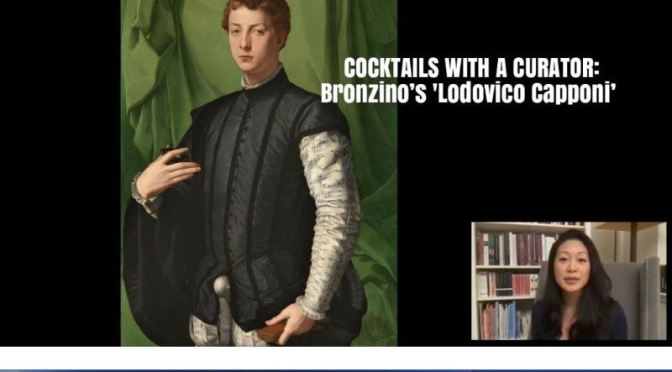
Cocktails With A Curator: Bronzino’s ‘Lodovico Capponi’ (Frick Video)

In this week’s episode of “Cocktails with a Curator,” Curator Aimee Ng explores the life of Lodovico Capponi, the subject of a 16th-century portrait at the Frick by Agnolo Bronzino. A page at the Medici court, Lodovico had the misfortune of falling in love with a Florentine noblewoman whom Duke Cosimo I intended to marry to one of his cousins. Join Aimee with an Aperol Spritz as she discusses one of her favorite works in the museum and examines what some of the details—from his black-and-white outfit to the partially obscured cameo in his right hand—may tell us about the young man and his life.

To view this painting in detail, please visit our website: https://www.frick.org/agnolobronzino

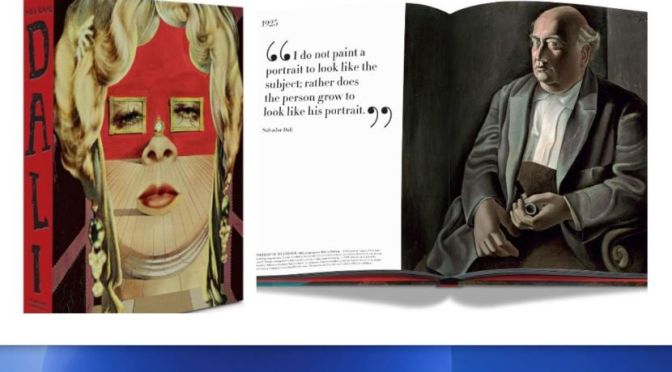
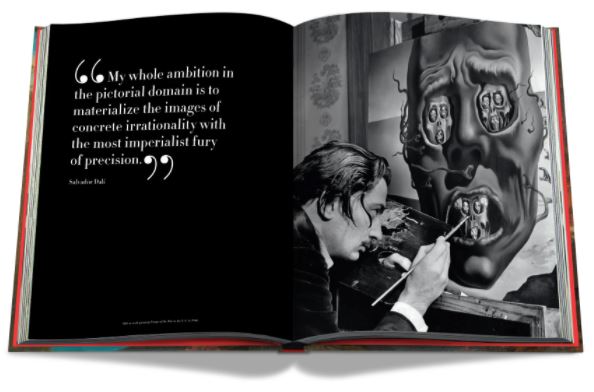
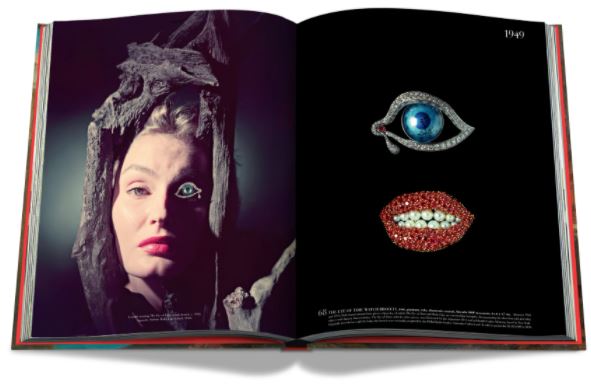
Top New Art Books: ‘Salvador Dalí : The Impossible Collection’

In the popular imagination, possibly no other artist’s work is more recognizable than that of Salvador Dalí. Indeed, for many he is the ultimate mad artist, whose singular vision remorselessly probed his own psychological depths. His nightmarish visions and bizarre landscapes express the angst and turbulence of the twentieth century.

Dalí’s creativity embraced many different modes of expression and was never constrained by any one style. Over eight decades, the prodigious range of Dalí’s activity spanned every conceivable medium, from painting and drawing to sculpture, film, furniture, books, stage design and jewelry, not to mention his highly eccentric public persona, which could be considered an art form in itself.

Selected by curator and art historian Paul Moorhouse, Assouline presents Salvador Dalí: The Impossible Collection, spotlighting 100 works by this extraordinary creative mind, exploring Dalí’s inspirations and array of influences, from Old Masters to realism, Impressionism, Fauvism and Cubism as well as experimental approaches that delved into his obsessions with religion, science and stereoscopy.

Paul Moorhouse is a London-based art historian and curator. Currently chief executive of the Anthony Caro Studio, he was senior curator and head of displays at the National Portrait Gallery, London (2005–17) and senior curator at the Tate (1985–2005), where he was closely involved with the creation of Tate Modern and Tate Britain. He has curated numerous exhibitions internationally and published extensively, with books and exhibition catalogues on major modern and contemporary artists, including Anthony Caro, Salvador Dalí, Alberto Giacometti, Howard Hodgkin, Hans Hofmann, Richard Long, Gerhard Richter, Bridget Riley, Cindy Sherman and Andy Warhol.

Read more

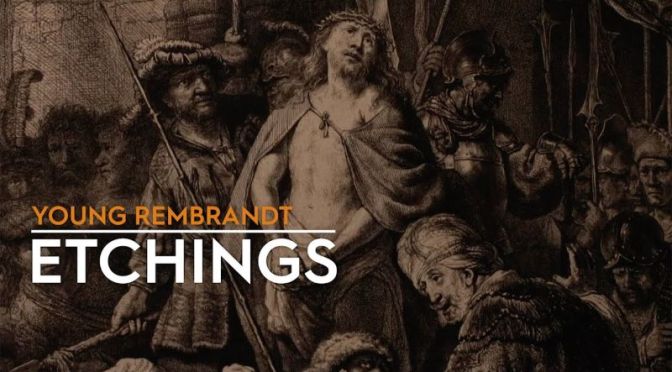
Art History Video: ‘Young Rembrandt’s Etchings’

Curator An Van Camp explains Rembrandt’s use of a printmaking technique known as etching, and what his early experiments tell us about the young artist’s working process.

The Young Rembrandt exhibition is open at the Ashmolean until 1 Nov 2020: https://www.ashmolean.org/youngrembrandt

Top Museum Tour Video: ‘The Getty Villa’ – Malibu

The Getty Villa is devoted to the study and display of art from the ancient world. Housed in a spectacular recreation of an ancient Roman villa, its collection celebrates the culture and artistry of ancient peoples and draws connections to our world today.

Located near the Pacific shore in Malibu, California, the Getty Villa serves a varied audience through exhibitions, conservation, scholarship, research, and public programs. The Villa houses approximately 44,000 works of art from the Museum’s extensive collection of Greek, Roman, and Etruscan antiquities, of which over 1,200 are on view.

Website

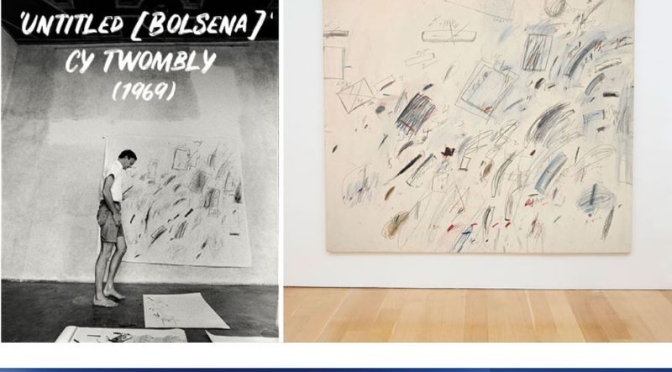
Art Videos: American Painter Cy Twombly’s ‘Apollo 11’ Homage (1969)

In the summer of 1969, Cy Twombly made a series of paintings inspired by the Apollo 11 space mission.

Born in Lexington, Virginia, in 1928, Edwin Parker ‘Cy’ Twombly studied art in Boston and at the avant-garde Black Mountain College in North Carolina. After graduating, he served as a cryptologist in the US Military — an experience that left a distinctive mark on his artistic style.

Learn more: https://www.christies.com/features/Mo…

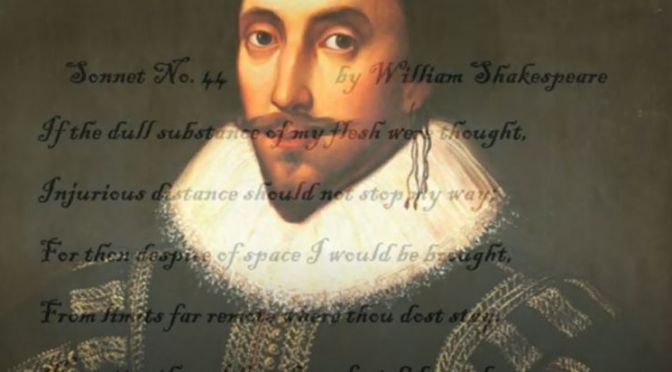
Poetry: ‘Sonnet 44’ By William Shakespeare

Read by: A Poetry Channel

Sonnet 44 is one of 154 sonnets written by the English playwright and poet William Shakespeare. It is a member of the Fair Youth sequence, in which the poet expresses his love towards a young man. Sonnet 44 is continued in Sonnet 45. 

Sonnet XLIV

If the dull substance of my flesh were thought,
Injurious distance should not stop my way;
For then despite of space I would be brought,
From limits far remote, where thou dost stay.
No matter then although my foot did stand
Upon the farthest earth removed from thee;
For nimble thought can jump both sea and land
As soon as think the place where he would be.
But ah! thought kills me that I am not thought,
To leap large lengths of miles when thou art gone,
But that, so much of earth and water wrought,
I must attend time’s leisure with my moan,
   Receiving nought by elements so slow
   But heavy tears, badges of either’s woe.