

Often called the Father of Impressionism, Claude Monet inspired the term that defined this movement. Born in Paris, Monet would later live in Giverny, where he purchased a property, planted sprawling gardens, and painted his famous water lilies. https://www.philamuseum.org/collectio…
Category Archives: Arts & Literature
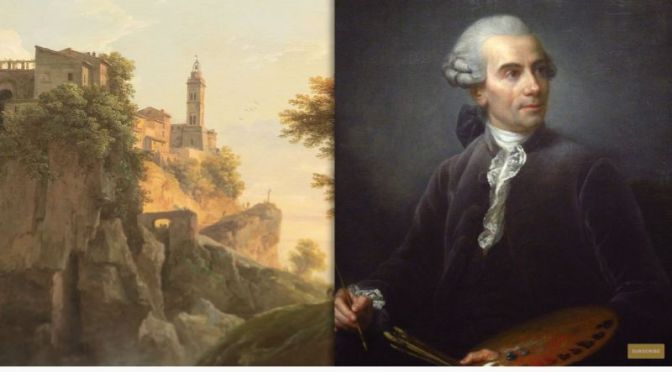
Artist Profile: French Landscape Painter Joseph Vernet – ‘View Of Tivoli’
In the 18th century, Joseph Vernet was uncontestably the greatest landscape painter of his generation. In this episode of Anatomy of an Artwork, discover how the ambitious and poetic landscape of ‘View of Tivoli’ pays tribute to the Italy Vernet loved so dearly.
Claude-Joseph Vernet was the leading French landscape painter (with Hubert Robert) of the later 18th century. He achieved great celebrity with his topographical paintings and serene landscapes. He was also one of the century’s most accomplished painters of tempests and moonlight scenes.
Vernet was born at Avignon and trained there with his father, Antoine, and with the history painter Philippe Sauvan. He spent the years 1734 to 1752 in Rome, where he studied classical landscapes in the tradition of Claude and Gaspard Dughet, as well as the dramatic paintings of Salvator Rosa. In Rome he was influenced by the contemporary Roman topographical painter Giovanni Paolo Panini. He had many English clients and admirers in Rome, including Richard Wilson, whom Vernet is thought to have encouraged as a landscape painter.

Poetry: Robert Frost’s ‘Stopping By Woods On A Snowy Evening’ (Video)
A short poem told from the perspective of a traveler who stops to watch the snow fall, and, in doing so, reflects on the conflict between man and nature and the wishes and obligations we face in our lives.
Written by Robert Frost, 1922.
Read by Shane Morris.
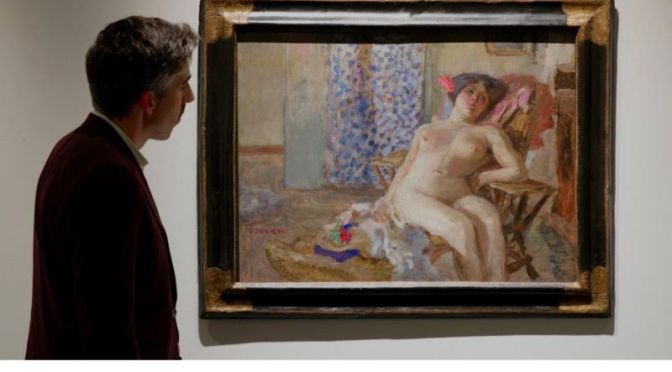
Artist Profile Video: French Painter Pierre Bonnard (1867-1947)
In this episode of Expert Voices, Scott Niichel examines three captivating works by Pierre Bonnard. Bonnard explores variations in colors and light in a way no other artist can; in effect, the artist builds a bridge between Impressionism and Modernism.
Pierre Bonnard was a French painter, illustrator, and printmaker, known especially for the stylized decorative qualities of his paintings and his bold use of color.

Ancient Arts: ‘Lost-Wax Bronze Casting’ (Video)
See the process involved in casting a bronze figure – from the creation of a wax model through to the final sculpture. Find out more about sculpture: https://www.vam.ac.uk/collections/scu…
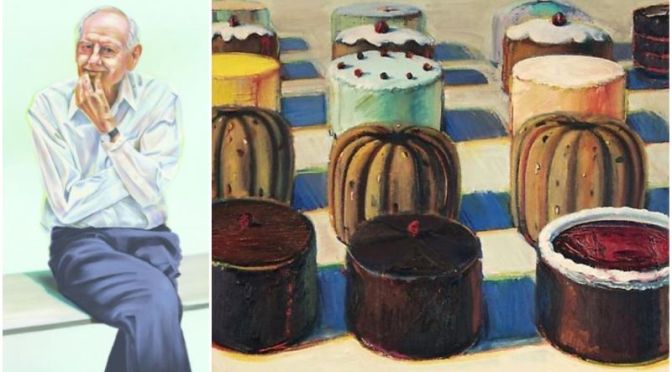
Top Online Exhibitions: The ‘Wayne Thiebaud 3D Viewing Experience’ At The Berggruen Gallery (2020)
A monumental survey, Wayne Thiebaud features over fifty paintings, works on paper, and limited-edition prints—many of which are rarely exhibited works from private collections and museums. Among the early works in the exhibition is the iconic Three Machines (1963)—courtesy of the Fine Arts Museums of San Francisco—a dynamic painting of three gumball machines filled with colorful candy orbs in which “tangible reality and abstraction intermix as one.”
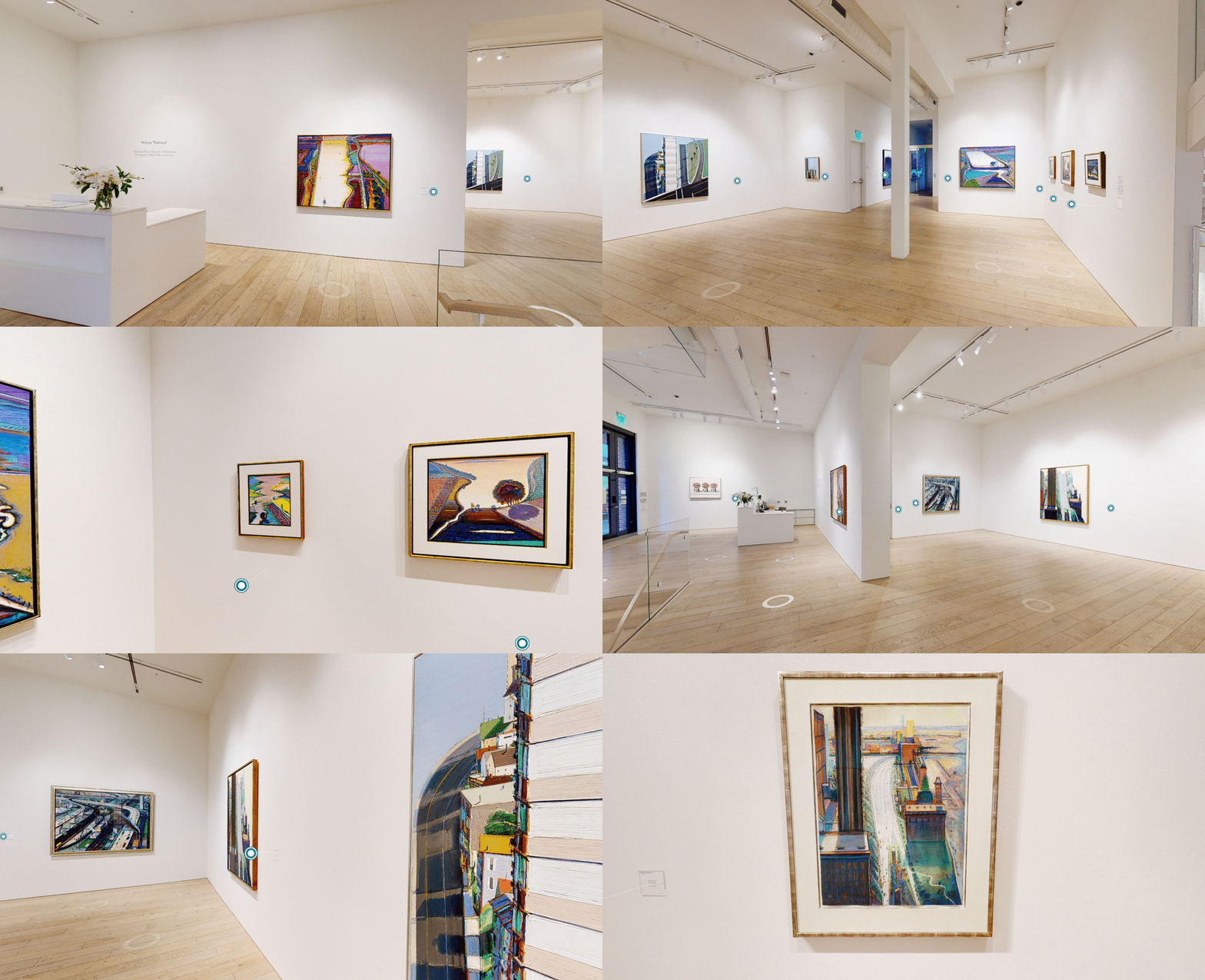
Click Here to Launch 3D Online Exhibition
Berggruen Gallery is honored to present Wayne Thiebaud, an exhibition of paintings, works on paper, and prints from 1961 to present by one of the preeminent living American artists, Wayne Thiebaud. This show marks the gallery’s seventh solo exhibition of Thiebaud’s work since his first show with John Berggruen Gallery in 1973. The gallery is especially proud to hold this exhibition in honor of two very special occasions: Wayne Thiebaud’s 100th birthday and Berggruen Gallery’s 50th anniversary. Wayne Thiebaud will be on view October 16 through November 28, 2020.
Spanning six decades, Wayne Thiebaud highlights the artist’s most quintessential, significant, and compelling work from the near entirety of his career. Thiebaud is most often recognized for his delectable still life paintings of confections, from slices of pie arranged in rows to bakery cases filled with intricately decorated cakes to dishes of colorful lollipops and candies. With paint as thick as frosting, Thiebaud’s illustrative depictions emphasize his subject matter’s physicality. Ornately decorated, densely outlined, and starkly shadowed, Thiebaud’s treats sit for the viewer masterfully rendered and enticing. Though the artist rose to prominence for such paintings, Thiebaud is now renowned for a vast breadth of subject matter—steep and winding cityscapes, saturated expanses of the Sacramento Valley, and attentive portraiture of friends or everyday figures. Art critics have connected his work to a breadth of art movements, analogizing his figurative work to that of esteemed American painter Edward Hopper and his aptitude for still life painting to that of 18th century French artist Jean-Baptiste-Siméon Chardin. Yet overall, Thiebaud’s prolific career defies singular movements and art historical references. Altogether, he simply reflects something authentically, emotionally, and uniquely American.CNiMdewz
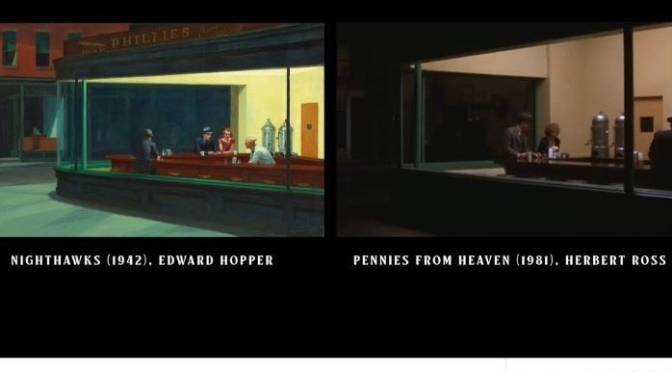
Art & The Movies: Paintings That Inspired Great Films
This video is a visual representation on how film directors create movies or movie scenes influenced by famous paintings.
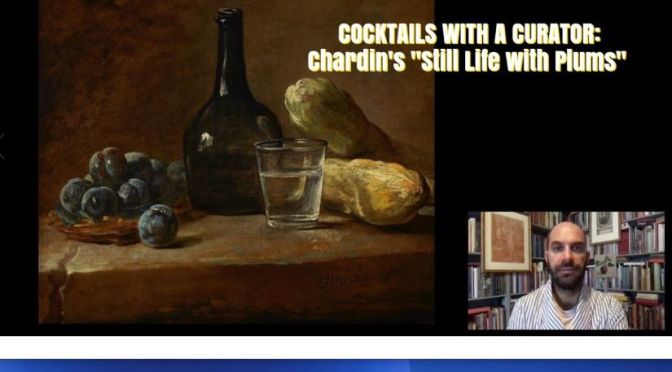
Cocktails With A Curator: ‘Chardin’s “Still Life With Plums”‘ (The Frick Video)
In this week’s episode of “Cocktails with a Curator,” join Deputy Director and Peter Jay Sharp Chief Curator Xavier F. Salomon as he explores the magical brushstrokes of the first still life painting to enter The Frick Collection—one that will be very familiar to devotees of this series. Acquired at the end of World War II by the museum’s trustees, Jean-Siméon Chardin’s “Still Life with Plums” is a beautiful example of the artist’s skilled portrayal of light refracted and reflected by everyday objects. Xavier has paired this episode with a Gin Martini with a twist.
To view this painting in detail, please visit our website: https://www.frick.org/chardinstilllife

Museum Video Tours: The Royal Academy Of Arts, London – Summer 2020
Experience the Summer Exhibition like never before with this interactive tour. Visit each gallery with the click of a button and browse or buy the works online.
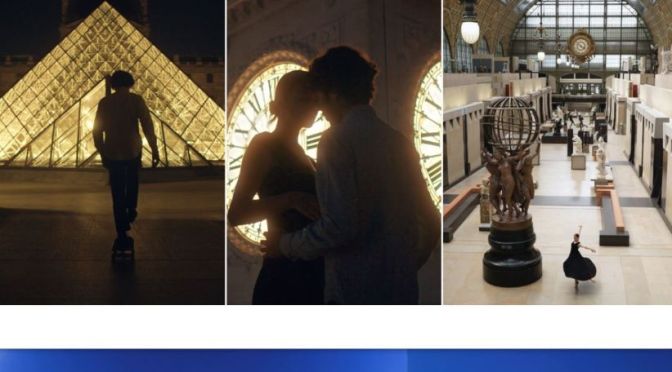
New Art Films: ‘MUSEUM’ – Ballet & Skateboarding At The Louvre And Musée d’Orsay In Paris (Video)
A love story between a ballet dancer and a Parisian skateboarder in empty French museums. The union of two bodies in motion through time and history of art. Two souls intimately linked, each one appropriating their own space to revive the works of art. Museum : an epic and lyrical journey between shadows and lights combining classical ballet and skateboarding.
Directed by Marin Troude & Tristan Helias
Produced by Tristan Helias
Ballet dancer : Victoria Dauberville
Skateboarder : Tristan Helias
Musée d’Orsay : Laurence Des Cars, Amélie Hardivillier, Marion Guillaud, Fanny Livet
CMN : Philippe Béleval, Jill Ickowicz
Script : Tristan Helias, Marin Troude
Art direction : Marin Troude, Tristan Helias
Ballet choreography : Victora Dauberville
Cinematography : Killian Lassablière & Marin Troude
 Boomers Daily