

Israel is allowing vaccinated citizens to access gyms, restaurants and live concerts. As the country races to immunize all adults against Covid-19 and reopen fully, it is even offering free drinks and pizza to entice those who are hesitant to get the shot. Photo: Tamir Elterman
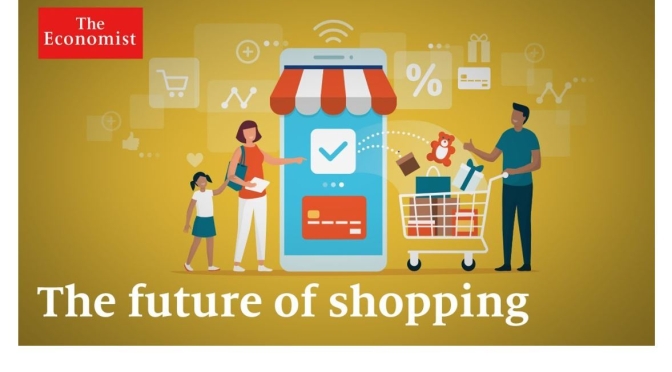
The pandemic has upended the way people buy—online retail has soared as high-street shops and malls close. Brands are now racing to exploit one of the most important weapons in the battle for buyers: their customers’ data.
Read special report on the future of shopping here: https://econ.st/2Q8XQC2
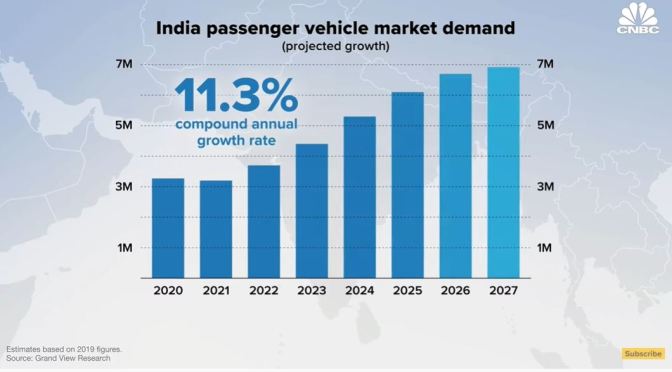
As Tesla looks to expand to new markets, rumors are circulating that India could be next. While the 5th largest auto market could be big for the ev manufacturer, it’s filled with challenges and increasing competition.
There is an electric vehicle revolution sweeping the world, but India is lagging behind. Elon Musk has said that Tesla will enter India this year, but it’s not clear if that will actually happen. On January 8th, Tesla took its first step towards launching in the country, registering Tesla Motors India and Energy Private Limited in Bengaluru.
But when Tesla does eventually come to India, it won’t be easy. The electric vehicle industry is in its infant stages there, lacking much of the infrastructure needed for widespread adoption. And the most popular vehicles are motorcycles, rickshaws and budget passenger cars. Watch the video to find out what Tesla will be up against in India.
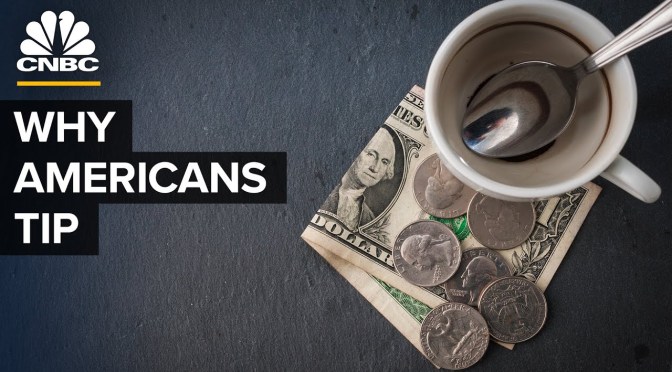
Tipping is a quintessential American custom. In the U.S. consumers tip for services ranging from baggage handlers at the airport to housekeepers at hotels. But according to some analysts, tipping has created an environment where restaurant servers are subjected to sexual harassment and low pay.
About 70% of tipped workers in the restaurant industry are women and about 45% are people of color. In a recent study by One Fair Wage and UC Berkeley’s Food Labor Research Center over 78% of restaurant workers reported witnessing hostile behavior from customers who were asked to follow Covid-19 safety protocols, more than 40% noticed a change in the frequency of unwanted sexual comments from customers and 83% said their tips had declined during the pandemic.
With Covid-19 leaving millions to do essential work for low pay there have been renewed calls for a $15 minimum wage and the elimination of the tipped minimum wage — the base salary for many restaurant workers. Forty three states, including Georgia, North Carolina and Texas, have a tipped minimum wage for workers who in some cases are paid as little as $2.13 an hour by their employer.
But many in the full-service restaurant industry oppose the proposed changes, saying they would lead to higher menu prices and fewer hours for workers. According to the National Restaurant Association, the pandemic has already enacted a devastating toll on the industry, wiping out 2.5 million restaurant jobs and more than 110,000 eating and drinking establishments in 2020 alone. Watch the above video to find out what the $15 minimum wage and the elimination of the tipped minimum wage would mean for restaurants and their employees.
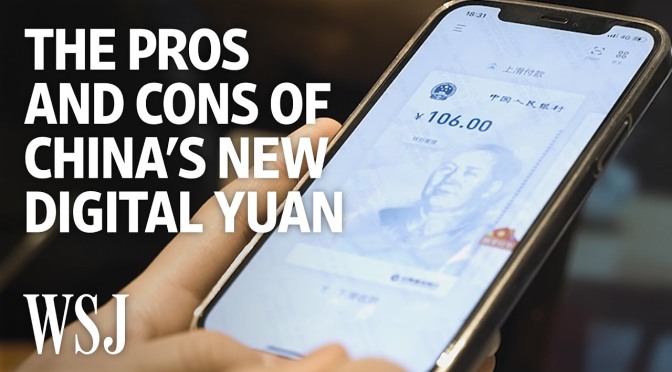
As China moves closer to rolling out its new digital cash, there are concerns the government will track every transaction––not just of citizens but of foreign companies in the country. WSJ travels to Chengdu to see this money revolution in action. Photo: Lorenz Huber for The Wall Street Journal
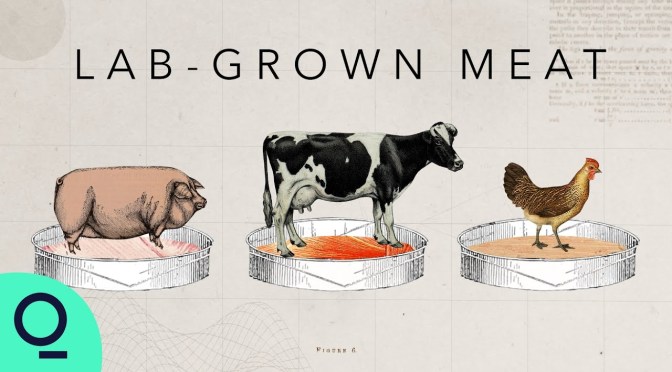
Companies around the world are beginning to commercialize “cultured” meat products, developed by growing animal cells in a lab rather than killing living creatures.
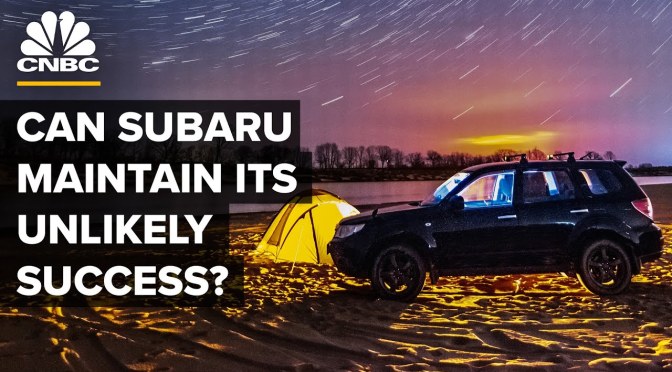
Subaru started as a small scrappy Japanese brand, brought to the states by a couple of American businessmen in the 1960s, and was quickly met with ridicule. But it persisted, and over the decades has gone from being a small niche player to one of the most successful brands in America.
Subaru has weathered economic recessions far better than much larger competitors, and it is positioned near the top of consumer satisfaction surveys. But the ever-changing auto market presents some challenges for them, and they need to adapt to keep up.
When Subaru entered the United States in the 1960s it was panned by critics, and actually advertised its own cheap ugliness. Over the next several decades it would become a highly successful brand through a combination of offbeat but practical cars and a relentless focus on understanding its own customers.
The scrappy brand enjoyed a 93-month sales increase streak that ended in 2019, and it has found ways to survive during the coronavirus pandemic. But it is not without challenges. The intense demand for its vehicles has at times brought growing pains — quality issues and recalls gave led to an unusual quarterly loss in 2018.
There is also pressure on the company, like all automakers, to develop some kind of electrification strategy. Subaru does have a partnership with the much larger Japanese automaker Toyota, which is expected to soon produce an electric vehicle jointly made by the two companies.
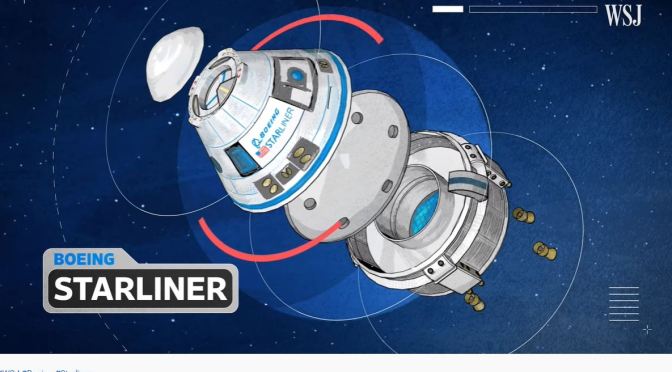
After years of cost overruns, errors and delays, Boeing’s space program is facing a major test: Later this year it will likely make its second attempt to launch its Starliner crew capsule to the International Space Station. WSJ looks at the company’s path to this crucial moment, and what’s riding on the test flight’s success. Illustration: Alex Kuzoian/WSJ
A look at how Russian President Vladimir Putin maintains control over the country and critics like Alexey Navalny.
READ MORE: https://abcn.ws/3eGgAmH


 Boomers Daily