
The IRS sent roughly 90 million stimulus checks to Americans in March. WSJ’s chief economics commentator Greg Ip explains why stimulus checks alone are unlikely to spur inflation. Photo Illustration: Carlos Waters
Category Archives: Analysis
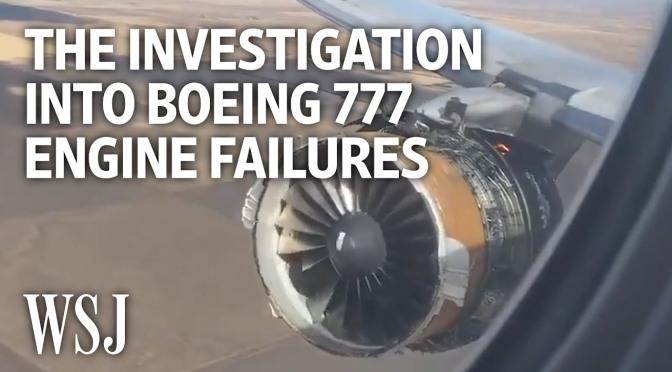
Analysis: The Catastrophic Failures Of The Boeing 777 Aircraft Engines (Video)
A type of Pratt & Whitney engine on Boeing 777s has failed catastrophically three times in a three-year span. Federal investigators are trying to figure out why.
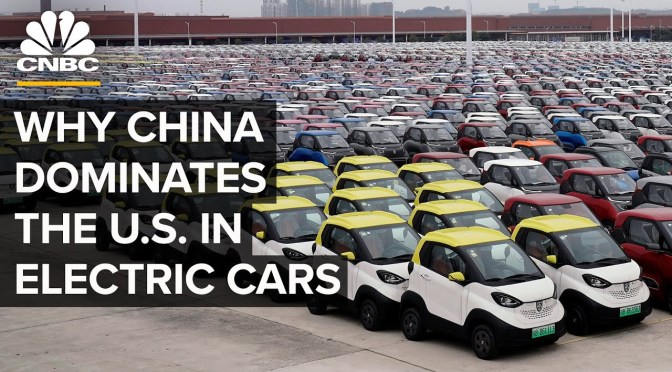
Analysis: Why China Is Dominating The U.S. In Electric Cars (Video)
The global electric vehicle market is heating up and China wants to dominate. The country has invested at least $60 billion to support the EV industry and it’s pushing an ambitious plan to transition to all electric or hybrid cars by 2035. Tesla entered the Chinese market in 2019 and has seen rapid growth.
China sold roughly one million more EVs than the U.S. in 2020. But there are signs the U.S. is getting more serious about going electric. President Joe Biden announced a goal to reach net-zero emissions by 2050 and investments in green infrastructure. Watch the video to find out how China came to dominate the market and whether it’s too late for the U.S. to catch up.
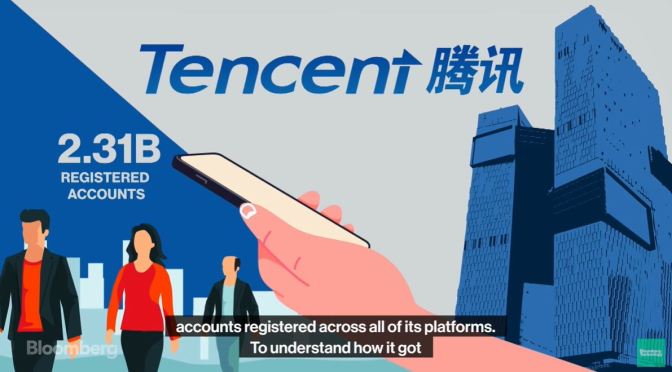
Analysis: ‘Tencent – China’s Most Valuable Company’
Mar.23 — In the space of two decades, Tencent Holdings Ltd. has become China’s most valuable company and Asia’s largest conglomerate. But with Chinese authorities stepping up scrutiny of the internet sector and cracking down on monopolies. it’s not clear if the WeChat owner will still have the same freedom to expand. Bloomberg Television’s David Ingles reports.

Analysis: ‘A New Space Race – USA Vs China Vs Russia’
In the skies above our heads, humanity’s titanic geopolitical superpowers are yet again duking it out for supremacy among the stars. Only this time, unlike the 1960s, there’s three of them. Or is there? It’s complicated. Join us today as we helmet up and examine the new space race unfolding right now between the US, China and Russia.
What you might call the oldschool or ‘classic’ space race started in the 1950s, peaked during the 60s, and petered out by the mid 70s. It was, to be sure, an unofficial race. Nobody waved a novelty green flag to set things off. But the two largest economic and technological powers of the day – the United States of America and the Soviet Union – fought bitterly to be the first to make meaningful headway into the cosmos.

Covid-19: How Risky Are School Classrooms?
A year into the coronavirus pandemic, many schools are only partially open for fear they could fuel the spread of the virus. Experts explain what the actual risks are for spreading Covid-19 in schools and how proper controls can change that equation. Illustration: Preston Jessee for The Wall Street Journal

Analysis: Global Battles For ‘Water’ – A Necessity Or Commodity? (Video)
Water is fundamental to life, yet it’s also a scarce commodity. In many cases, greed and mismanagement are causing this life-giving essential to run dry. What happens when water is monetized? From Australia to California, from New York to London and Brussels, this investigative documentary tells the story of the global struggle over water.
Following rushes to secure gold and oil, the age of the water rush is now here. As well as growing populations and expanding agriculture, there are the problems of environmental degradation and climate change. Global demand for water is skyrocketing. By 2050, at least one in four people will live in a country with a chronic water shortage. The situation has awakened the greed of giant financial institutions, which are going on the offensive, investing billions in the sector. Goldman Sachs, HSBC, UBS, Allianz, Deutsche Bank and BNP are among those pouncing on the commodity known as “blue gold.”
But can fresh water really be considered a commodity on par with oil, coal or wheat? Should the players in these markets – banks and investment funds – be allowed to bet on the value of water? Will concern for profits undermine water’s essential function? Or should this precious resource be declared off-limits to financial speculators? A battle has broken out between those who advocate the monetization of water, and those who defend it as a human right. It’s a battle being fought on many fronts: ideological, political, environmental and, of course, economic. And the fate of the nearly ten billion inhabitants of our planet hinges on its outcome.
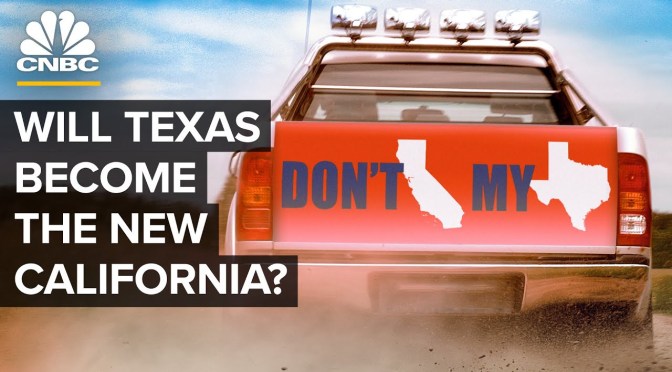
Analysis: Is Texas Now The New California? (Video)
Tesla’s gigafactory and Apple’s second-largest campus aren’t the only big businesses coming to Texas. From Oracle to Hewlett Packard Enterprise, Elon Musk to Joe Rogan, Texas has lured an increasing number of big businesses and billionaires away from California since the pandemic began. While California’s population and job growth both slowed to a trickle, Texas added more residents than any other state in 2020. CNBC talks to those moving and longtime Texans about the reasons behind the trend and what it could mean for the future of the Lone Star State.
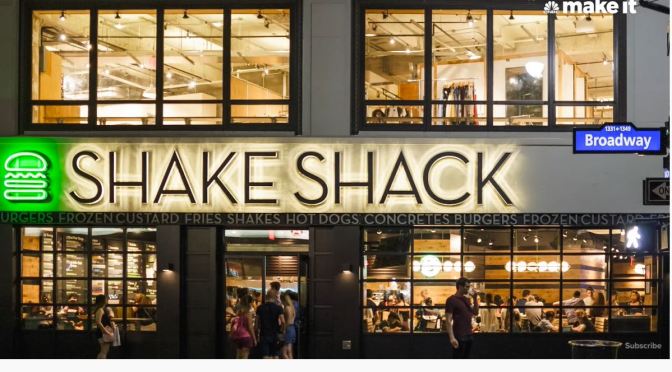
Video Profile: How Danny Meyer Built ‘Shake Shack’
It’s hard to think of a bigger restaurant success story over the last decade than Shake Shack. The high-end burger chain began as a hot dog cart in 2001 in New York City’s Madison Square Park by famed restaurateur Danny Meyer. The menu was handwritten written by Meyer on a single sheet of paper in about 10 minutes and is about 85 percent the same today.
But there’s so much more to this story. Like for three years after 9/11 that hot dog cart paid the bills at the crown jewel of Meyer’s restaurant empire, Eleven Madison Park. Or how he wasted over a million developing a line of French fries only to throw them away out of pure pride. If Danny Meyer is the heart and soul of Shake Shack, its longtime CEO Randy Garutti is the engine that powers it. Here’s how they built Shake Shack.
Stock Market: ‘GameStop & Payment For Order Flow’
Following the GameStop trading frenzy, the SEC is expected to take a fresh look at payment for order flow, a decades-old practice that’s at the heart of how commission-free trading works. WSJ explains what it is, and why critics say it’s bad for investors. Illustration: Jacob Reynolds/WSJ
 Boomers Daily