

NASA’s Perseverance rover landed on Mars more than two weeks ago. Jennifer Trosper from NASA’s Jet Propulsion Laboratory explains how the rover will explore the Martian landscape and search for signs of life. Photo: NASA
Category Archives: Analysis

Candy Business: ‘How Wrigley’s Dominated Chewing Gum’ (Video)
Gum lines the pockets of most Americans and has been a staple in American culture for centuries. For some, gum is all about flavor, and for others, it’s about fear of bad breath, curbing hunger, or alleviating anxiety. For nearly 130 years, the brand Wrigley’s has become synonymous with chewing gum.
Since its start, the gum maker has dominated the chewing gum market, spawning brands from Juicy Fruit to Orbit to 5 Gum. But it hasn’t always been smooth sailing for the William Wriglely Jr. Co.; over its storied past, the brand has faced turbulent years. Since the early 2000s, the chewing gum market has seen a decline in public sentiment, which hurt significant players. In 2006, the company ended its long-standing tradition of being a family run business with William Wrigley Jr. stepping down as CEO.
By 2008, Wrigley’s faced increasing global competition and was acquired by Mars along with Warren Buffett’s Berkshire Hathaway. According to Euromonitor International, the gum industry’s market value hit $18.6 billion in 2020. Since 2015, Mars Wrigley has held 25% of the global brand share for chewing gum and a 40% portion in the U.S. The Covid-19 pandemic since it began in March 2020 has negatively impacted gum’s most prominent players and could negatively affect Mars Wrigley gum brands’ future.

Space Ventures: Asteroids As Source Of Precious Metals & Elements (Video)
Mining on asteroids sounds like the stuff of science fiction, but it could soon become a reality. Nations and powerful corporations already have plans for such ventures and are hard at work staking their claim to resources from space. How can economic growth continue unfettered once all the earth’s resources have been consumed?
Major companies and governments have long been working on plans to exploit the resources to be found in the vastness of space. How far are humans from achieving this? This documentary examines the technological requirements of space mining. It also assesses how great the desire is to find new sources of raw materials. The film touches on scientific and fundamental societal issues – including humanity’s craving for new territories and our degradation of the Earth as we attempt to exploit all our planet has to offer.

Health: ‘Covid-19 And Chronic Sleep Loss’ (Video)
Since the COVID pandemic began, one in three Americans has had reduced quality sleep. Correspondent Susan Spencer pulls back the covers on how pandemic stress is among the factors affecting people’s already-tortured relationship with shuteye. Spencer talks with Drew Ackerman, a lifelong chronic insomniac whose storytelling podcast, “Sleep With Me,” lulls listeners to slumberland; and with professors Sharon Bowman, Jennifer Martin and Tiffany Yip about the importance of sleep hygiene, and the effects of reduced sleep on chronic health impacts and productivity.

Technology: ‘How Covid Is Boosting Innovation’
Covid-19 has accelerated the adoption of technologies and pushed the world faster into the future. As businesses and organisations look towards the post-pandemic era, what lessons can be learned about innovation?
Read more here: https://econ.st/3t6T7yM
Chapters 00:00 – How has covid-19 boosted innovation? 01:20 – Drone deliveries 04:20 – How crises lead to innovation 06:47 – How restaurants have innovated 09:29 – Inequality between companies 10:48 – Some start-ups have thrived 12:57 – Working from home 14:15 – E-learning: benefits and challenges
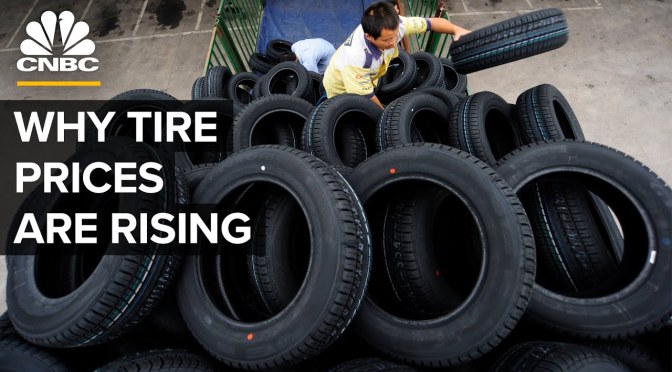
Analysis: ‘Why Tire Prices Are Rising’ (CNBC Video)
Along with the pandemic, big tire brands are facing unique challenges. While trends have increasingly shifted online due to Covid, the tire market has been more hesitant to growing its e-commerce presence. Trade tariffs and the growing popularity of SUV’s and electric vehicles are also driving up the price of tires, posing an issue with attracting focus-savings consumers. Existing in a competitive market, many of the world’s biggest tire brands are focused on standing out to customers.
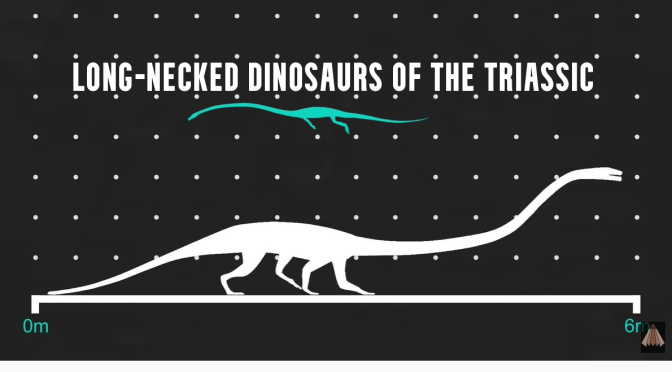
Dinosaurs: ‘The Long-Necks Of The Triassic’
The Triassic was full of many bizarre creatures and no animal showed this more then Tanystropheus that had a neck that measured the same length as the rest of its body. So where did Tanystropheus come from and why did it have such a long neck?

Analysis: ‘NFT’s And The Digital Art Boom’ (Video)
Non-fungible tokens, or NFTs, have exploded onto the digital art scene this past year. Proponents say they are a way to make digital assets scarce, and therefore more valuable. WSJ explains how they work, and why skeptics question whether they’re built to last. Photo Illustration: Jacob Reynolds/WSJ
A non-fungible token is a special type of cryptographic token which represents something unique. NFTs are called non-fungible because they are not mutually interchangeable, since they contain unique information, although it is possible to mint any number of NFTs representing the same object.
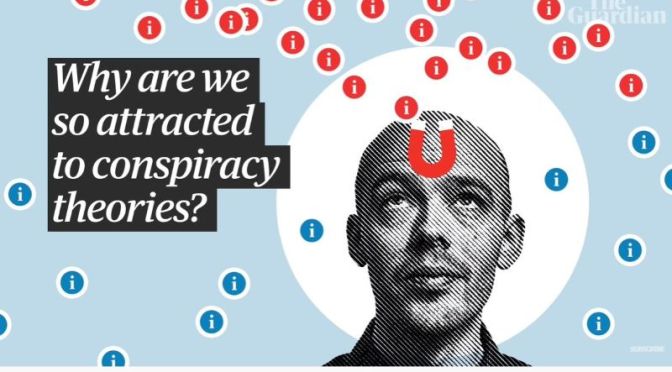
Conspiracy Theories: ‘Why People Are So Attracted?’
Belief in conspiracy theories is far more widespread than the stereotypes that dominate pop culture. Recently, QAnon, Covid-19 and 5G theories have gained traction and criticism while less controversial conspiracies like the faked moon landing have persisted for decades. We all share hardwired evolutionary traits that make us vulnerable to them, from the way we assign truth to new information to our tendency to find patterns in unrelated phenomena. But if we’re all potentially susceptible to conspiracy theories, how can we manage these cognitive shortcuts?

Analysis: ‘What Is The Paris Club Of 22 Countries?’
The Paris Club, comprising 22 wealthy countries, provides a platform for governments facing financial difficulties to reduce and renegotiate their debt repayments. Formed in 1956, it has signed more than 400 agreements to date, worth more than half a trillion dollars to about 100 countries. As public debt soars in the wake of the pandemic, CNBC’s Timothyna Duncan breaks down how this exclusive club functions and the challenges it faces to stay relevant.
 Boomers Daily