

From a Nature.com online article:
 “What is memory without forgetting?” asks Oliver Hardt, a cognitive psychologist studying the neurobiology of memory at McGill University in Montreal, Canada. “It’s impossible,” he says. “To have proper memory function, you have to have forgetting.”
A growing body of work, cultivated in the past decade, suggests that the loss of memories is not a passive process. Rather, forgetting seems to be an active mechanism that is constantly at work in the brain. In some — perhaps even all — animals, the brain’s standard state is not to remember, but to forget. And a better understanding of that state could lead to breakthroughs in treatments for conditions such as anxiety, post-traumatic stress disorder (PTSD), and even Alzheimer’s disease.
To read more click on the following link: https://www.nature.com/articles/d41586-019-02211-5

 A nanotube microprocessor: Scientists are looking beyond silicon, by constructing a computer chip using carbon nanotubes.
 “Fans of intelligent historical fiction will be enthralled by a story so original and so fully imagined. Meek shows the era as alien, which it is, and doesn’t falsify it by assimilating it to ours. But his characters are recognisably warm and human”
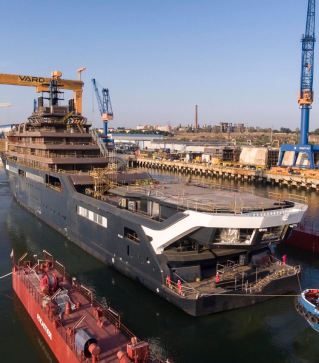 REV Ocean will be equipped for conducting missions that cover the entire marine ecosystem. It will be used by scientists and innovators for ‘solutions’ oriented research that explore issues such as the impact CO2 emissions have on the ocean, plastic pollution, and unsustainable fishing. REV Ocean will be an inclusive global vehicle for testing and proliferating ocean solutions. The vessel is 182.9 meters long and will have the capacity of holding 55 scientists and 35 crew. Equipment onboard includes scientific trawls, sonar systems, laboratories, auditorium and classrooms, moonpool, AUV and submarine, an ROV with 6000 meters depth capacity, and advanced communication equipment.
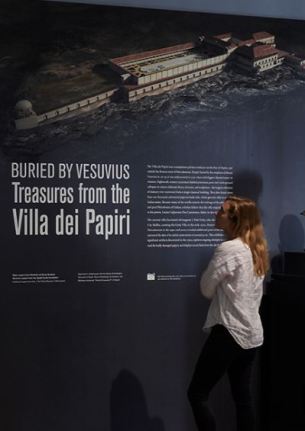 …the Getty Villa, despite some anomalies and insertions, is considered a strong likeness, which makes it a powerful locale for “Buried by Vesuvius: Treasures From the Villa dei Papiri,” the first major exhibition of works discovered in the Roman residence. The show includes Weber’s 1758 architectural map—used to build the Getty Villa—along with some of the approximately 90 sculptures pulled from the site, showing athletes, philosophers, rulers, poets and mythological figures. The exhibition also displays findings from the recent excavations.


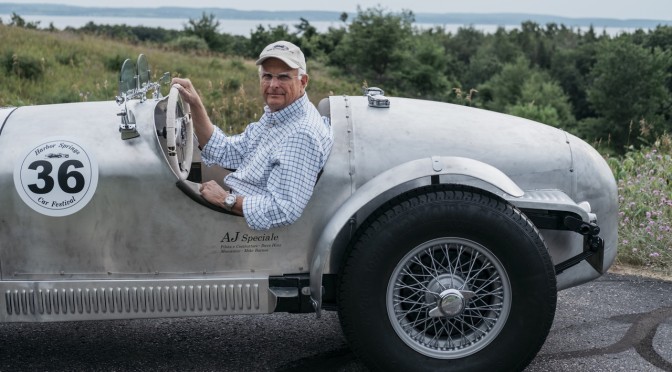
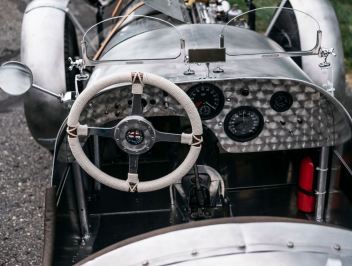 I built a frame out of ash wood. Then I hand-formed and welded body panels onto the frame. I re-engineered the brakes, the steering and the clutch system to fit properly, and I hand-formed the grille out of aluminum. The seats I built out of plywood, foam and vinyl that looks like leather. When I started, I had no idea how to do any of this.
 “While we always believed that high levels of uric acid might be bad for kidneys and that patients with gout may have a higher risk of kidney failure, we were quite surprised by the magnitude of the risk imposed by gout in these patients. We were particularly interested in the risk of advanced kidney disease, as these patients in general have a higher risk of kidney failure and death.
 the long and colourful history of haapsalu episcopal castle began when it was built in the 13th century, but since the 17th century the main castle has been in ruins.
 It’s a familiar tune to engineer Ken Smith, director of the mobility division of the Stanford Center on Longevity. He says one of the biggest mistakes designers make is to assume that around the age of 60 people lose interest in aesthetics and design. This can have dire consequences for products meant to help people with their health. No one wants to stick a golf-ball-size hearing aid the color of chewed gum in their ear, any more than they want to wear a T-shirt that reads “SENIOR CITIZEN.”
 Boomers Daily