
On the eve of his retirement in 2001, the former CEO of G.E. spoke with Lesley Stahl about turning his company around, embracing the internet, and the reputation that earned him the nickname “Neutron Jack.” Welch died Monday, March 2, 2020.

On the eve of his retirement in 2001, the former CEO of G.E. spoke with Lesley Stahl about turning his company around, embracing the internet, and the reputation that earned him the nickname “Neutron Jack.” Welch died Monday, March 2, 2020.
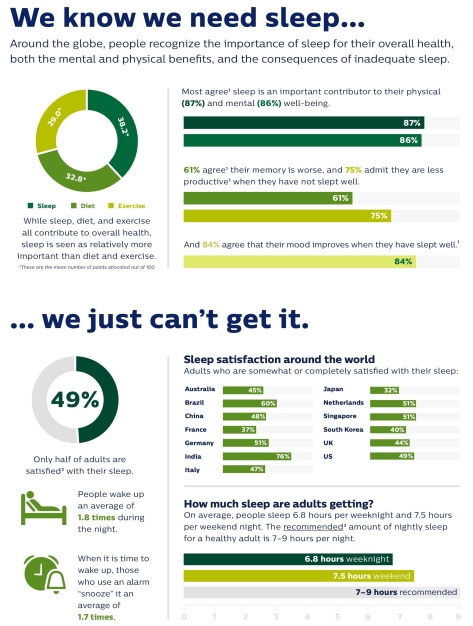
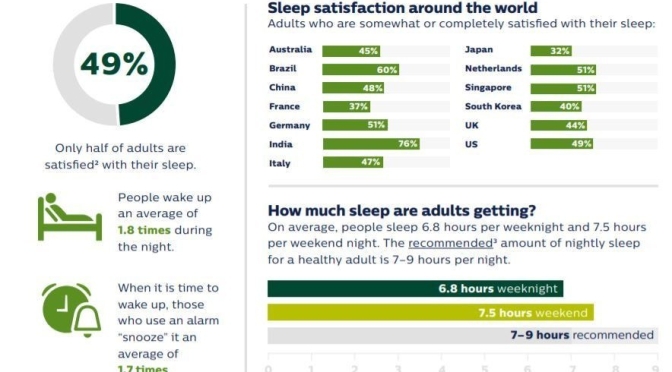
From a Philips “2020 Sleep Survey” online release (Mar 2, 2020):
 “The decrease in people taking action to improve sleep is alarming, especially when it is clear people around the world deeply value sleep. Sleep deficit impacts people both mentally and physically, so we need to educate people on available sleep resources and empower them with the confidence that their efforts will pay off,” said Mark Aloia, PhD, Global Lead for Behavior Change, Sleep & Respiratory Care at Philips.
From a New Atlas online article (March 1, 2020):

One of the largest and most prestigious photo contests in the world has revealed its first wave of 2020 winners. The Sony World Photography Awards National winners focus on the best regional talent across more than 60 countries around the globe.
The 2020 Sony World Photography Awards received a record breaking 350,000 submissions, with 190,000 entries into its Open category. The Open category spans a number of thematic sections, all seeking the best single photograph from either amateur or professional photographers.
 Adam Stevenson won the best Australian photograph with an incredible shot of a Kookaburra watching over the devastation of the bushfires that tore through the country over the past few months. The shot is titled “That’s Nothing to Laugh About” and was snapped with a Iphone X near Stevenson’s home at Wallabi Point in New South Wales.
From a BMJ Opinion article (Feb 28, 2020):
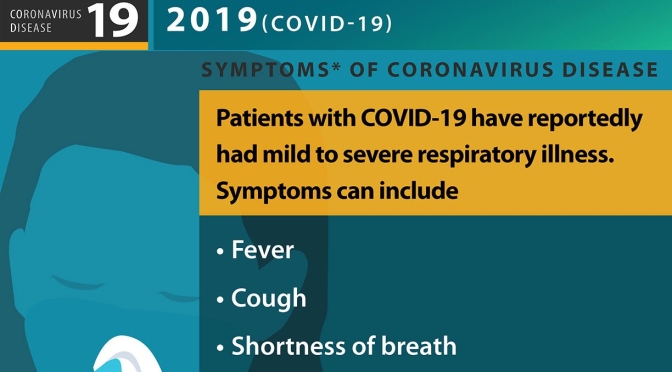
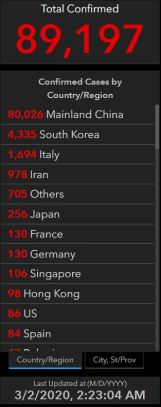 A lack of adequate knowledge is probably the driving force for the public panic, particularly at the early stages of an outbreak—highlighting the fact that information is crucial. Misunderstandings about the information that is available, even worse exaggerating such information, may further aggravate the panic. Unfortunately, these phenomena are not uncommon. To relieve the public panic, an effective approach would be timely publication of trustworthy research evidence in a manner appropriate for the public.
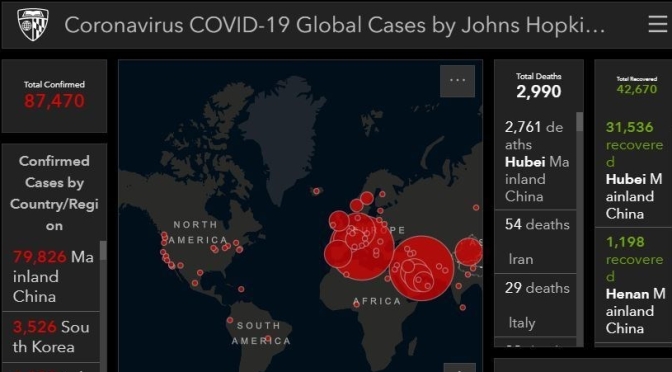
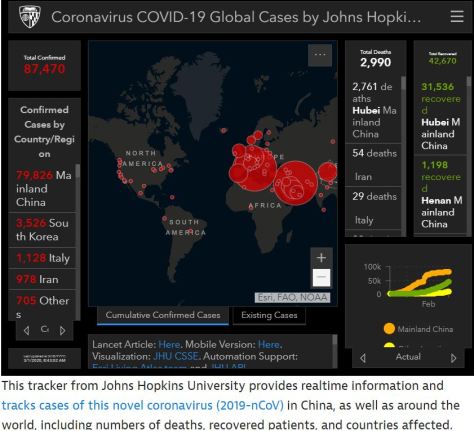
Click here for real-time update
To date, there have been a number of reports and research papers published in peer reviewed journals. However, this information is largely aimed at researchers and healthcare professionals. The study findings are often obscure for the general public. Some of the published evidence is reporting on early findings and there are some methodological limitations. If inappropriately interpreted, they could misinform the public and could potentially cause further panic or psychological stress. We believe that providing the public with timely and credible evidence and appropriate interpretation is very important. Disseminating the evidence effectively is critical to improving the public’s understanding of the outbreak.

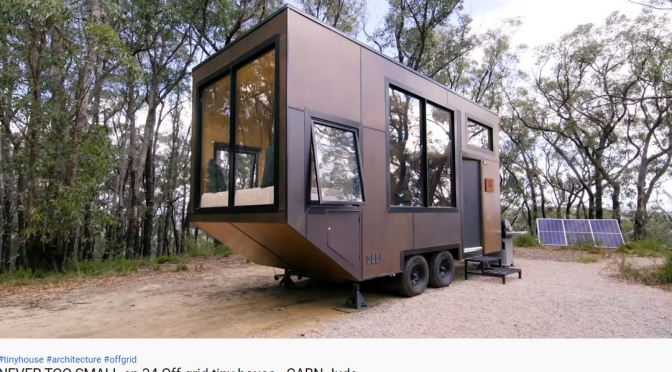
CABN was established to provide people with a means of disconnecting from the mayhem we have brought upon ourselves. CABN is designed to be completely off-grid, sustainable and eco-friendly relocatable; transforming some of Australia’s most stunning and stimulating landscapes and offer an ideal escape.
This CABN is named Jude, after CABN founder’s mother. Jude is warm, caring and inviting and has always welcomed everyone into her home and life. It’s those same feelings that you can expect when you stay. Adventurous, warm and welcoming – the perfect tiny escape.
Filmed and Edited by: Timo Oksanen
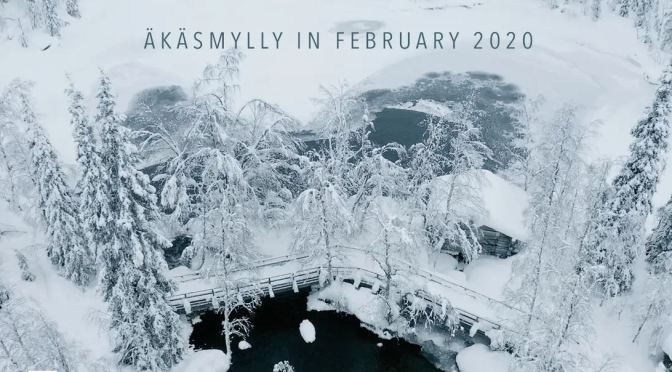
Visited this idyllic place again on February 21st 2020 and shot the snow covered fairytale sceneries with my DJI Mavic 2 Pro drone.
Music: Runar Blesvik – Hidden World
From a New Criterion online article:
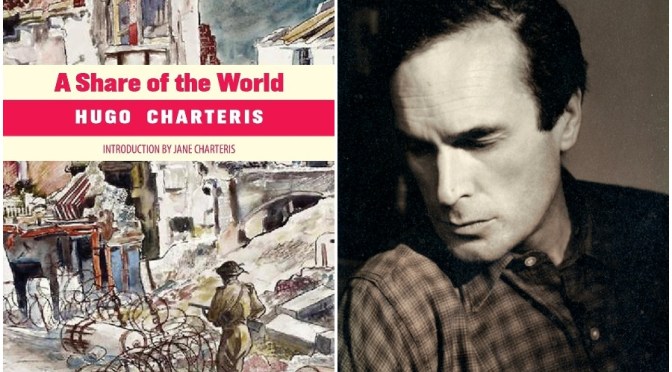
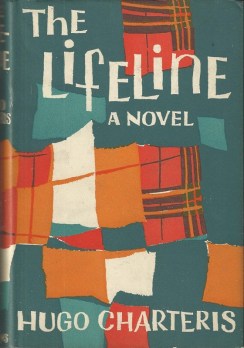 Alan Ross, for forty years The London Magazine’s editor, found Charteris “one of the most original, quirky and shrewd explorers of the behaviour of the landed gentry . . . and at a time when prose was plain, his was idiosyncratically stylish.”
When Hugo Charteris’s first novel, the haunting A Share of the World, was published in 1953 to the praise of Rosamond Lehmann (who helped to get it published), Peter Quennell, Evelyn Waugh, and Francis Wyndham (Charteris’s relation and consistent supporter), the author, just turned thirty-one, seemed set for lasting fame. It hasn’t worked that way in the  almost five decades since his death of cancer in 1970, aged only forty-seven.
Nowadays, few people seem to know his name. This is true among not only the ever-growing majority who pay little attention to novels and novelists, but also the enlightened minority who do.
From an Apollo Magazine online interview (Feb 22, 2020):
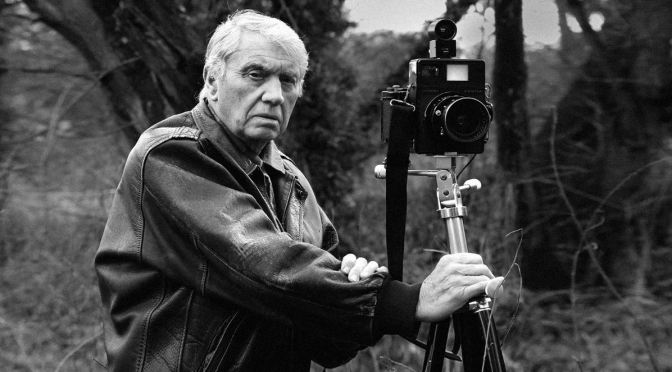
McCullin is reluctant to place himself in the company of artists, partly because he never wants to feel that he’s ‘arrived’ – ‘The moment that happens, I know I’m finished’ – but also because of the nature of his material. ‘There’s a shadow that  comes over my life when I think […] that I’ve earned my reputation out of other people’s downfall. I’ve photographed dead people and I’ve photographed dying people, and people looking at me who are about to be murdered in alleyways. So I carry the guilt of survival, the shame of not being able to help dying people.’
 On top of a hill a few miles from Don McCullin’s house in Somerset is a dew pond, a perfectly circular artificial pond for watering livestock. Nobody knows how long it has been there; some dew ponds date back to prehistoric times, and it’s tempting to think that this one served the Bronze Age hill-fort that overlooks the site. McCullin is obsessed with the pond. For more than 30 years, whenever he has had the time, he has walked up the hill and stood there with his camera waiting for the right moment to take a photograph. Often, the moment never comes: he can spend hours there, just looking. ‘It’s as if it has a hold over me,’ he tells me when I visit him at home in early January. ‘I can’t leave it alone, I photograph it all the time. And yet I think I’ve done my best picture the first time I ever did it. I can’t tell you how.’
 Eat less, live longer- If you want to reduce levels of inflammation throughout your body, delay the onset of age-related diseases and live longer—eat less food. That’s the conclusion of a new study by scientists from the US and China that provides the most detailed report to date of the cellular effects of a calorie-restricted diet in rats.
(Salk News, February 27, 2020)
While the benefits of caloric restriction have long been known, the new results show how this restriction can protect against aging in cellular pathways, as detailed in Cell on February 27, 2020.
Aging is the highest risk factor for many human diseases, including cancer, dementia, diabetes and metabolic syndrome. Caloric restriction has been shown in animal models to be one of the most effective interventions against these age-related diseases. And although researchers know that individual cells undergo many changes as an organism ages, they have not known how caloric restriction might influence these changes.
In the new paper, Belmonte and his collaborators—including three alumni of his Salk lab who are now professors running their own research programs in China—compared rats who ate 30 percent fewer calories with rats on normal diets. The animals’ diets were controlled from age 18 months through 27 months. (In humans, this would be roughly equivalent to someone following a calorie-restricted diet from age 50 through 70.)

 Boomers Daily