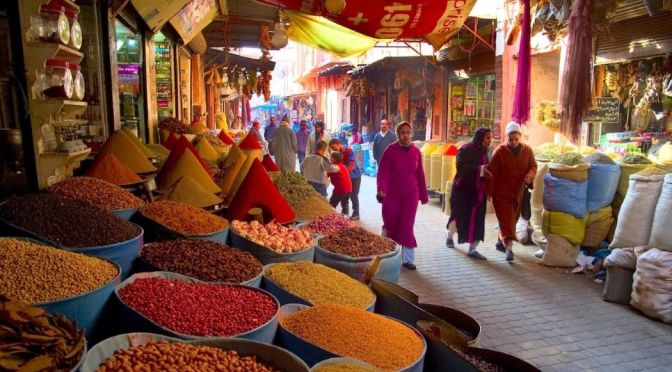
Morocco is a land of a thousand colours, with green, red, blue, ochre, and white dominating. We shall travel through the kingdom’s most stunning spots using these five colors. From the royal elegance of Marrakesh to the secrets of Ouarzazate, we’ll visit iconic cities brimming with energy and passion, providing artists with endless inspiration.
Despite the various changes brought about by modern society, Moroccans are striving hard to maintain traditions and historical skills. The series also brings us to more intimate areas, such as palm groves, oases, and dunes, where colourful vistas of palm groves, oases, and dunes abound.
We’ll meet the people who live there and work to preserve the natural beauty of the area. Morocco is a unique tapestry of landscapes that takes the observer on a dream-like trip from the seaside to the mountain heights.
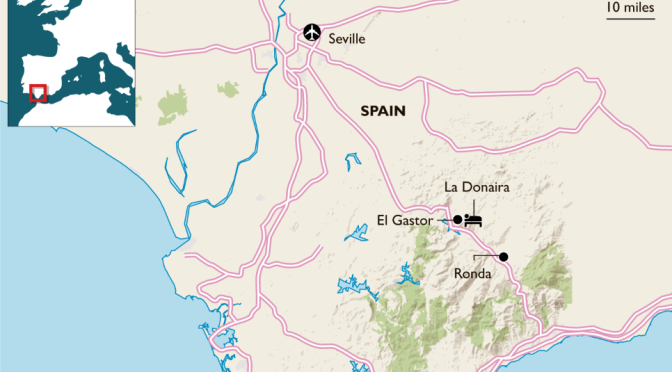
Wrote about Seville 🍊 and the Serrania de Ronda ⛰ for @timestravel The perfect city/countryside combo even if it wasn’t sunny on my stay https://t.co/yga50YASQC
First, the fizz. Part of Seville’s exuberance is because the city is preparing for two festivals: Semana Santa, over Holy Week, and the April Fair (actually in May). The first involves processions of elaborately trussed religious statues sitting on decorative floats held aloft by men in cream-coloured cloaks and cone-shaped headdresses, a vision that surprised me when I attended, by chance, while interrailing around Europe decades ago. The April Fair is equally flamboyant, although with more frills — Sevillanas in every shade of flamenco dress. Everyone learns flamenco at school, so there’s no excuse for poor footwork. And, naturally, getting a new dress, of slightly different design, is the done thing each year.
After all that, arriving at La Donaira via the white mountain village of El Gastor is a change of pace. Not least because the views are lurking under cloud (the calima again), so I am inclined to make the most of the hotel’s cosiness rather than head out for a grey hike.
What was once a private house, converted into a hotel in 2015, strives to maintain that homely feeling. It’s working — guests wear athleisure at dinner, pad around in socks and Crocs, and children jump on the giant sofa by the living-room fire. The vibe here is so relaxed, we leave our bedroom door open at night to listen to the rain and feel the cool mountain air. The living room is a big, open space — a former barn, with picture windows over the courtyard, a library and plenty of lounging spots.
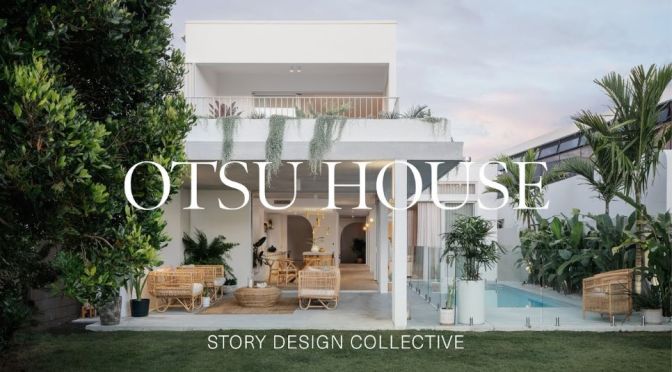
A modern-day dream home, Otsu House is a refreshing and timeless exploration of texture, material and light. The site’s proximity to the beach called for a pared back and neutral colour palette, filling the internal spaces with warmth and reflective character.
Video Timeline: 00:00 – Introduction to the House 00:29 – Design Influenced by the Environment 01:04 – Designing for Light and Airflow 01:25 – Concrete and Clay Finishes 02:57 – The Courtyard 03:15 – Neutral Colour Palette 03:40 – Landscaping and Pool Design 04:10 – Helical Staircase 04:53 – Ensuite Bathroom Features 05:18 – Concrete Kitchen Bench 05:36 – Successful Partnership
With easy access to the beach, it was important that the materials used within the structure were able to be self-maintained and endure the harsh Australian climate and beachside environment.
The dream home embraces open spaces, reminiscent of the nearby ocean. A continued theme of open space is felt throughout the house and is extended out towards the garden. The entryway is greeted with a void and an enticing sculptural staircase. Feeling as though it evolved out of the ground, the staircase draws the eye inward and up to the second level. The curve of the stairs reflects the textured clay render, Rockcote Japanese Otsumigaki, used throughout the interior and evokes a visual connection to ocean waves.
The Otsumigaki is both subtle and reflective, interacting with natural light and giving forth a lustre that is completely distinctive to the interior space. The raw nature of the Japanese clay and concrete used throughout the dream home acts as a significant connection to the beachfront. The textured material brings with it a warmth whilst also an endurance to the elements, specifically the salt from the ocean and the strength of the Australian sun.
Concrete is also used in the home’s ceiling, allowing for both thermal and noise barriers within the interior spaces. The material is also used in the kitchen bench and is in keeping with the natural, neutral colour palette present within the dream home. Otsu House also features a courtyard space, acting as both a lightwell and a visual connection for the downstairs rooms. The doors are able to be opened to allow a breeze to flow throughout the dream home, creating patterns with light and shadows. The linen curtains soften the raw concrete throughout and provide a delicate balance within the natural material palette.
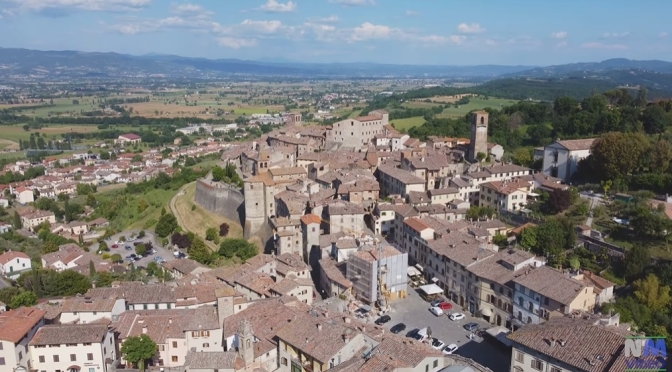
Anghiari is a town in the province of Arezzo in Tuscany and is one of the most beautiful villages in Italy. On 29 June 1440 the plain in front of Anghiari was the scene of a famous battle, which went down in history precisely as the battle of Anghiari between the Florentine army, an ally of the Holy See and commanded by Giovanni Paolo Orsini, and that of the Duke of Milan, led by Niccolò Piccinino. The battle lasted one day and was won by the Florentines, who thus consolidated their dominions in Tuscany and was later painted by Leonardo da Vinci.
Video Timeline: – 00:00 – AERIAL VIEW OF ANGHIARI – 04:11 – BALDACCIO SQUARE – 05:37 – PORTA DEL CATORCIO – 07:20 – PIAZZA DEL POPOLO – 07:42 – PALAZZO PRETORIO – 09:57 – BADIA DI SAN BARTOLOMEO – 14:33 – CHURCH OF SANT’AGOSTINO – 22:32 – VIA DELLA TORRE – 23:04 – CLOCK TOWER – 23:29 – CHURCH OF SANTA MARIA DELLE GRAZIE – 24:18 – “LAST SUPPER”, CANVAS BY GIOVANNI ANTONIO SOGLIANI – 25.10 – “FOOT WASH”, CANVAS BY GIOVANNI ANTONIO SOGLIANI – 25:27 – “DEPOSITION FROM THE CROSS”, CANVAS BY DOMENICO UBALDINI – 26:34 – “OUR LADY OF MERCY”, GLAZED TERRACOTTA BY ANDREA DELLA ROBBIA – 27:47 – ACADEMY OF THE RECOMPOSED THEATER
A highly competitive housing market has pushed up home prices through the pandemic. Now, a recent surge in mortgage rates mean little respite for first-time buyers. In this issue: pic.twitter.com/oKW6KmqFfi
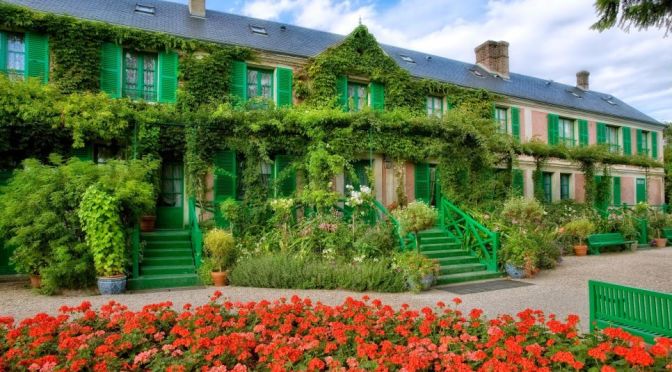
Giverny is a village in the region of Normandy in northern France. Impressionist painter Claude Monet lived and worked here from 1883 until his death in 1926. The artist’s former home and elaborate gardens, where he produced his famed water lily series, are now the Fondation Claude Monet museum. Nearby, the Musée des impressionnismes Giverny highlights the Impressionist art movement.
On this week’s show: A journey to the center of the center of the Earth, and what was missing from the first human genome project.
Staff Writer Paul Voosen talks with host Sarah Crespi about the many mysteries surrounding the innermost part of our planet—from its surprisingly recent birth to whether it spins faster or slower than the rest of the planet.
Next,Sarah chats with Adam Phillippy about the results from the Telomere-to-Telomere (T2T) Consortium, an effort to create a complete and detailed read of the human genome. Phillippy, a senior investigator and head of the Genome Informatics Section at the National Human Genome Research Institute, explains what we can learn by topping up the human genome with roughly 200 more megabases of genetic information—practically a whole chromosome’s worth of additional sequencing.
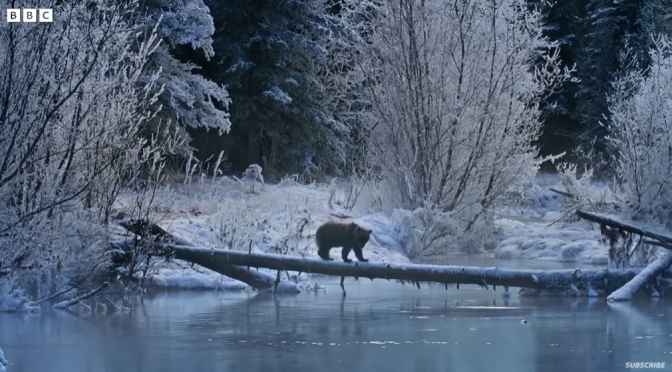
Remote and wild, the Yukon is a river of haunting beauty and dangerous extremes – a place where the ‘call of the wild’ is still strong. In summer, it is a relentless giant, carving its way 2,000 miles across Canada and Alaska. In winter, -50C temperatures transform it into a river of ice.
Home to grizzlies, moose and great runs of salmon, the Yukon lies at the heart of a vast northern wilderness. Bears delay their winter hibernation to fish for a final salmon feast, while the frozen river provides a lifeline for lynx and a race track for intrepid dog sledders. From indigenous hunters to gold-prospectors, musk ox to caribou, the Yukon’s natural riches have long sustained people and animals and continue to do so despite its changing fortunes.
News, Views and Reviews For The Intellectually Curious




 Boomers Daily