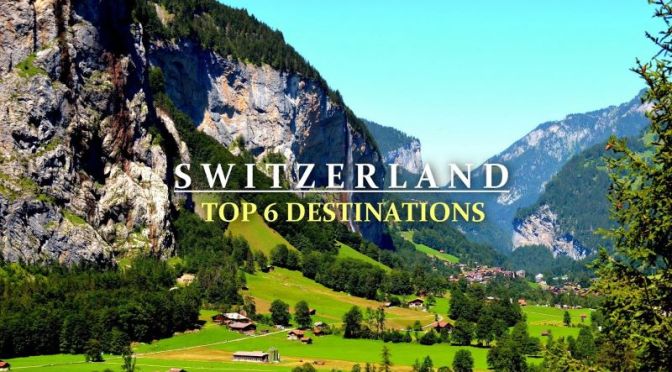
Switzerland is a mountainous Central European country, home to numerous lakes, villages and the high peaks of the Alps. Its cities contain medieval quarters, with landmarks like capital Bern’s Zytglogge clock tower and Lucerne’s wooden chapel bridge. The country is also known for its ski resorts and hiking trails. Banking and finance are key industries, and Swiss watches and chocolate are world renowned.
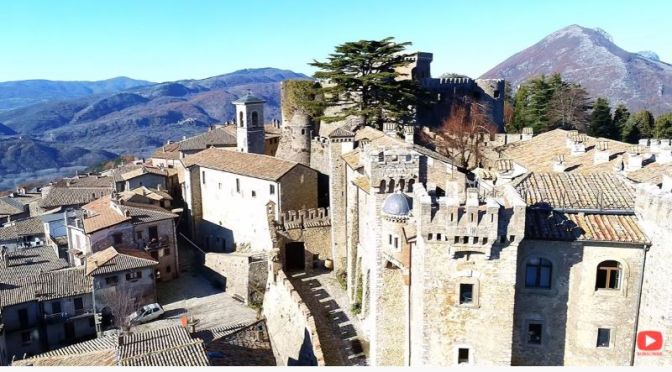
A walking tour in 𝗖𝗼𝗹𝗹𝗮𝗹𝘁𝗼 𝗦𝗮𝗯𝗶𝗻𝗼, region 𝗟𝗮𝘇𝗶𝗼, center Italy, a small town of about 400 inhabitants, in the province of Rieti.
Collalto Sabino is a comune in the Province of Rieti in the Italian region Latium, located about 50 kilometres northeast of Rome and about 35 kilometres southeast of Rieti. Collalto Sabino borders the following municipalities: Carsoli, Collegiove, Marcetelli, Nespolo, Pescorocchiano, Turania.
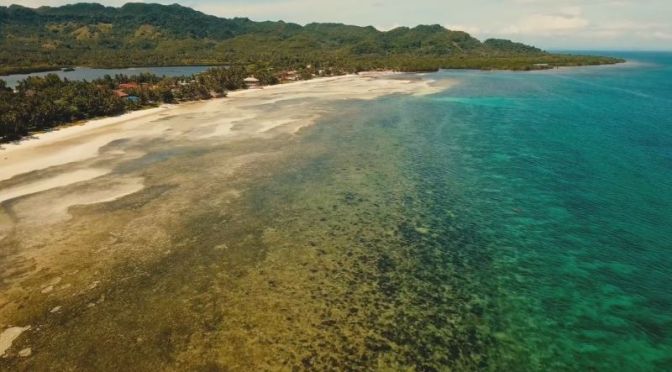
Bohol is a province of the Philippines, in the country’s Central Visayas region. It comprises Bohol Island and numerous smaller surrounding islands. Bohol is known for coral reefs and unusual geological formations, notably the Chocolate Hills. On the main island, near the town of Carmen, these 1,200 or so symmetrical mounds turn cocoa-brown in the dry season, contrasting with the surrounding jungle’s greenery.
The ‘Albergo Diffuso’ is a concept of hospitality that was launched in Italy as an attempt to revive small, historic villages at risk of abandonment and historic buildings at risk of crumbling.
A number of separate buildings make up an albergo diffuso, with a central unit corresponding to the reception within a 200-meter distance. They may feature rooms and apartments, with or without kitchen. There is also often a space for dining, and there may be other services and amenities as well, such as a pool.
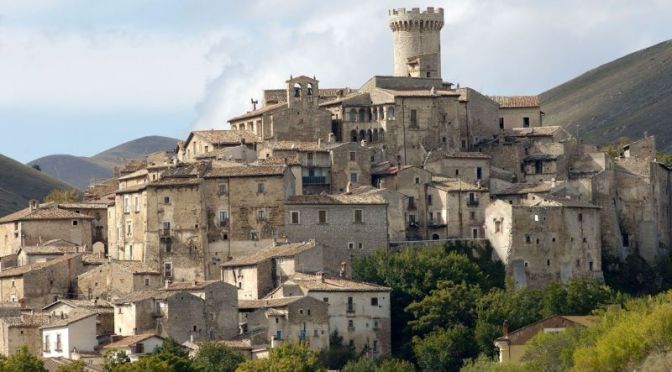
Santo Stefano di Sessanio is a fortified medieval village built in the mountains of Abruzzo at over 1250 meters above sea level, within the Gran Sasso and Monti della Laga National Park.
The current urban configuration of the village was established in the middle of the Middle Ages when the phenomenon of fortification developed: high-altitude settlements, surrounded by a fortified wall perimeter that still remain today one of the most characteristic historical-topographical elements of the imaginary of the Italian landscape The integrity between territory and historical buildings has been residually preserved in some villages set in the Apennine mountains precisely because of their depopulation, in the more general context of impoverishment of the south, abandonment of the mountain and emigration of its people.
LOFOTEN ISLANDS – A short visual trip to the Lofoten Islands in northern Norway. We have only one planet. Let’s preserve it. Watch it in 4k, please.
The Lofoten Islands are draped across the turbulent waters of the Norwegian Sea, far above the Arctic Circle. This rare wilderness outpost offers an untrammeled landscape of majestic mountains, deep fjords, squawking seabird colonies and long, surf-swept beaches.
Lofoten has a strong connection to the Viking Age, and at Lofotr Viking Museum you can experience the Viking Age as it really was. At Borg, archaeologists have discovered the largest Viking longhouse ever found from this era. The building is 272 feet long and has been reconstructed as a living museum.
Due to the warm Gulf Stream, Lofoten has a much milder climate than other parts of the world at the same latitude. Between late May and mid July you can experience the midnight sun, whilst the northern lights can be viewed from September to mid April.
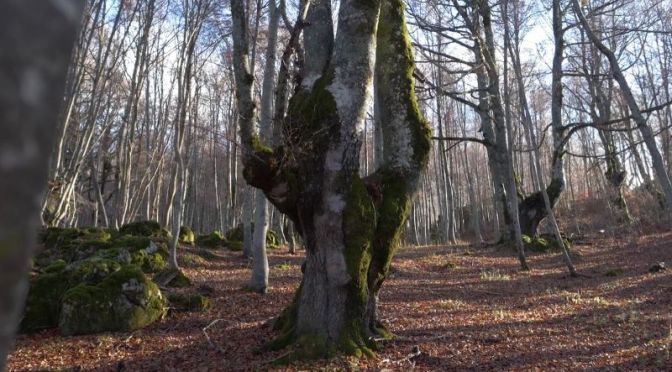
Spiritus Silvam, the spirit of the forest. A timelapse video for an enchanted journey in the Abruzzo forests, in search of the magical spirit. That vital essence that inhabits all the woods of the world and that welcomes and accompanies you when you are among the trees, in their home. But you must have a free and aware mind, as well as a pure soul, to be able to meet him. And you have to remain silent in thought and open in your heart to talk to us and let you tell his magical stories.
Abruzzo is an Italian region, east of Rome, with an Adriatic coastline and the Apennine Mountains. National parks and nature reserves cover much of its rugged interior. It also encompasses hilltop towns, dating to the medieval and Renaissance periods. Regional capital L’Aquila is a walled city, damaged in a 2009 earthquake. The Trabocchi Coast, with sandy coves, is named after its traditional wooden fishing piers.
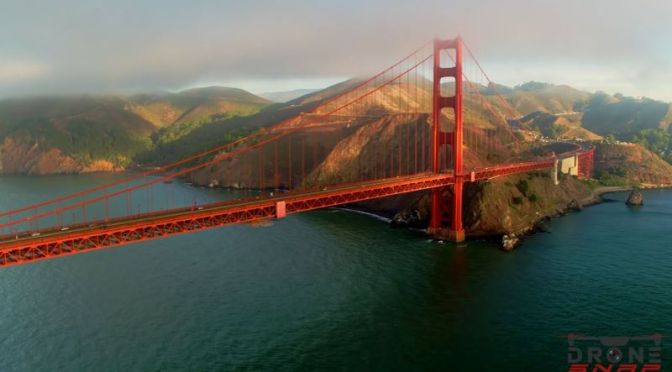
The Golden Gate Bridge stands at the entrance to California’s San Francisco Bay as a symbol of American ingenuity and resolve, having been constructed during the era of the Great Depression. Today, this beloved international icon and true engineering marvel carries about 40 million vehicles a year and serves not only as a vital transportation link but also as a major travel destination for millions of visitors from around the world.
Construction began on January 5, 1933. This was followed by the official ground breaking ceremony held on February 26, 1933, at nearby Crissy Field (now part of the Golden Gate National Recreation Area). The start of construction was met with great delight. A celebration at nearby Crissy Field went on for hours with at least 100,000 people in attendance. The San Francisco newspaper wrote the next day, “Two hundred and fifty carrier pigeons, provided by the San Francisco Racing Pigeon Club to carry the message of groundbreaking to every corner of California, were so frightened by the surging human mass that small boys had to crawl into their compartments in the bridge replica to shoo them out with sticks.”
Construction Timeline
December 22, 1932: Extending from Fort Baker pier, the construction of a 1,700 foot-long access road began to access the construction sites for the Marin anchorage, pier and tower.
January 5, 1933: Construction officially started.
January 1933 to February 1936: Marin and San Francisco anchorages and associated pylons.
January 1933 to May 1935: San Francisco anchorage.
January 1933 to June 1933: Marin pier.
January 1933 to June 1935: Marin anchorage.
February 1933: Work began on the east approach road from San Francisco that extended through the Presidio to the south end of the Golden Gate Bridge.
March 1933: Steel for the San Francisco and Marin towers that was prefabricated in Bethlehem steel foundries in Pottstown and Steelton, PA was brought by flatcar to Philadelphia and transferred to barges and shipped through the Panama Canal to Alameda, CA where it was stored until the Marin pier was completed and ready for tower erection.
March 1933 to March 1934: San Francisco tower access trestle was constructed extending 1100 feet offshore. Just as the trestle was completed, it was significantly damaged for the first time on August 14, 1933, when the McCormick Steamship Line’s Sidney M. Hauptman plowed through the thick fog and crashed into the access trestle, damaging about 400 feet. After repairs were made, on December 13, 1933, as a southwest gale battered the Golden Gate Strait for two days, the access trestle was again battered and this time there was 800 feet of wreckage. Trestle repairs began shortly thereafter and completed March 8, 1934.
November 7, 1933: Marin tower construction started. Depending on the source referenced, it was completed either on June 28, 1934 or sometime in November 1934.
October 24, 1934: San Francisco fender wall completed.
November 27, 1934: San Francisco pier area within the fender wall was un-watered.
January 3, 1935: San Francisco pier reached its final height of 44 feet above the water.
January 1935 to June 28, 1935: San Francisco tower construction.
August 2, 1935 to September 27, 1935: Harbor Tug and Barge Company strung the first wire cables to support the footwalks (aka catwalks) constructed across the Golden Gate Strait in preparation for main cable spinning.
October 1935 to May 1936: Main cable spinning and compression.
April 1936: Start of the Sausalito lateral approach road which was constructed as a W.P.A. project.
July 1936 to December 14, 1936: Suspended structure.
July 21, 1936: Start of San Francisco approach viaduct structures and Fort Point arch construction.
November 18, 1936: Two sections of the Bridge’s main span were joined in the middle. A brief ceremony marked the occasion when groups from San Francisco and Marin met and exchanged remarks at the center of the span. Major Thomas L. McKenna, Catholic Chaplin of Fort Scott, blessed the span while sprinkling holy water.
January 19, 1937 to April 19, 1937: Roadway completed.
Escape your everyday life with these 9 lion videos that’ll transport you as you watch them protect their young, encounter crocs, and so much more.
Video Timeline: 0:00 – Intro to Top 9 Big Cat Videos 0:35 – Lost Lion Reunites w/ His Brother 4:26 – Lioness Protects Her Young 8:05 – Lion Cubs Have a Close Call w/ a Croc 11:36 – Lazy Lions Rely on Lionesses 14:50 – How Lions Choose Their Prey 18:53 – Young Lions Cross Croc-Infested Waters 22:28 – Lioness Guards Her Dinner 24:34 – Lioness Must Kill to Feed Her Cub 27:18 – Angry Hippo Charges Trespassing Lion








 Boomers Daily