Top New Science Podcasts: Yeasts Making Medicine, Covid-19 & Anaesthesia

Nature reviews: Engineering yeast to produce medicines, immunity to Covid-19, and the mechanism of anaesthetic action.

In this episode:

00:44 Making medicine with yeast

The tropane alkaloids are an important class of medicine, but they are produced agriculturally leaving them vulnerable to extreme weather and world events. Now, researchers have engineered yeast to produce these important molecules. Research Article: Srinivasan and Smolke

06:36 Coronapod

We discuss the complex story of immunity to COVID-19, and how this may affect vaccine development. News Feature: What the immune response to the coronavirus says about the prospects for a vaccine

16:33 Research Highlights

The neurological reason for overindulgence, and the bacteria that harness copper electrodes. Research Highlight: The brain circuit that encourages eating for pleasureResearch Highlight: Microbes with mettle build their own electrical ‘wires’

19:07 The molecular mechanisms of general anaesthetics

Despite over a century of use, there’s a lot we don’t know about how anaesthetics function. This week, researchers have identified how some of them they bind to a specific neuronal receptor. Research Article: Kim et al.

26:34 Briefing Chat

Whilst the Nature Briefing is on its summer holidays, we take a look at some other science from around the web. This time we discuss Elon Musk’s latest showcase of a brain-chip, and the physics behind how boats can float upside down on levitating liquid. New Scientist: Elon Musk demonstrated a Neuralink brain implant in a live pigBusiness Insider: Elon Musk’s AI brain chip company Neuralink is doing its first live tech demo on Friday. Here’s what we know so far about the wild science behind it.Research Article: Apffel et al.Video: The weird physics of upside down buoyancy

Top Camper Trailers: “Mobi Nomad – Slide Out” (2020)

The Mobi Nomad is a go anywhere hybrid with unrivalled inside space in its class and excel with features like full permanent bathroom, island bed, great kitchen  and 2 minute setup time. With the slide room extended the Mobi has 12.4 sq meter internal space. 

The body is constructed from 1 piece mono hull fibre glass construction with steel super structure for superior strength and stainless steel fittings. The chassis is manufactured from 4mm hot dipped galvanized steel and fitted with a 2.5ton Burquip suspension and 2.7ton Knott German brake coupler. The aerodynamic design ensures extremely light and stable towing. Mobi comes fully kitted with gear!

Website

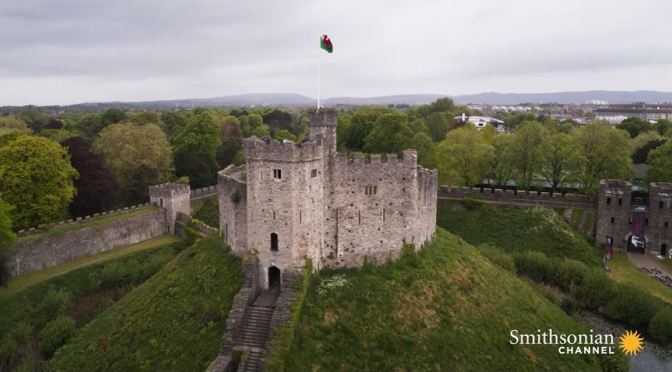
New Aerial Travel Videos: “Castles Of Cardiff, Wales”

Despite being built around the time of William the Conqueror almost a thousand years ago, Cardiff Castle, with its 150-foot-tall clock tower, remains an iconic feature of the Welsh capital.

Cardiff is a city and the capital of Wales. It is the United Kingdom’s eleventh-largest city. As Wales’ chief commercial centre, Cardiff is the base for the Senedd, most national cultural institutions and Welsh media.

From the Series: Aerial Britain: Wales https://bit.ly/3gT9ucv

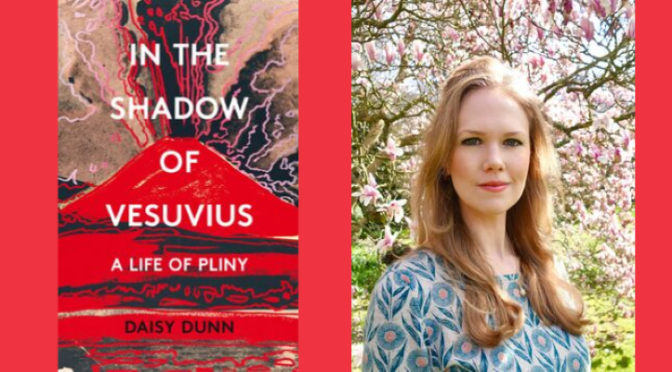
Interview: English Author Daisy Dunn – “Legacies Of Pliny The Elder, Younger”

In the year 79 CE, Pliny the Elder set out to investigate a large cloud of ash rising in the sky above the Bay of Naples. It was the eruption of Vesuvius, and Pliny did not survive. 

“I think we can all empathize with someone who’s like a son, or in this case, an adopted son, trying to kind of make his own mark and escape the shadow of his father, and leave something on the world of his own.”

A trailblazing naturalist, he is best remembered today for his multivolume encyclopedia of Natural History,and we are able to retrace his final hours thanks to a vivid account by his nephew, Pliny the Younger. Inspired by his beloved uncle, the young Pliny became a lawyer, senator, poet, and representative of the emperor. His published letters are fascinating reflections on life and politics in the Roman Empire.

In this episode, Daisy Dunn, classicist and author of The Shadow of Vesuvius: A Life of Pliny,and Kenneth Lapatin, curator of antiquities at the Getty Museum, discuss the two Plinys and their profound impact on our understanding of ancient Rome.

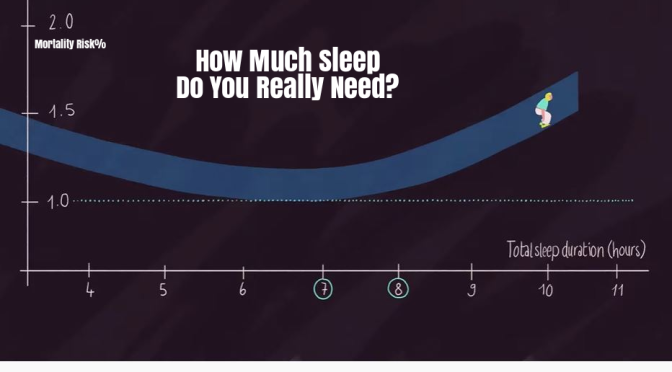
Health Videos: “How Much Sleep Do You Really Need?”

You know you need to get enough sleep, but the question remains: How much is enough? Sleep scientist Matt Walker tells us the recommended amount for adults and explains why it’s necessary for your long-term health. Sleeping with Science, a TED original series, uncovers the facts and secrets behind our nightly slumber. (Made possible with the support of Beautyrest)

Check out more: https://go.ted.com/sleepingwithscience

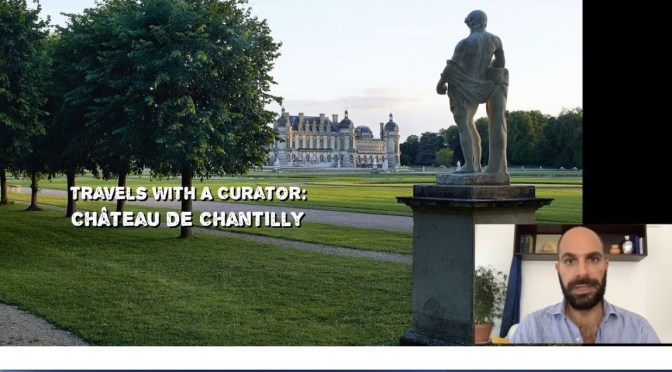
Travels With A Curator: “Château de Chantilly”

In this week’s episode of “Travels with a Curator,” Deputy Director and Peter Jay Sharp Chief Curator Xavier F. Salomon takes viewers on a journey through the grand halls of the Château de Chantilly, one of his favorite places in France. Like the Frick, Chantilly began as an opulent residence and was once the home of the Grand Condé, a cousin of Louis XIV. Today, the château houses one of the best collections of European paintings in France as well as the world-famous illuminated manuscript “Très Riches Heures du Duc de Berry.” Watch closely for a guest appearance by Jadwiga, Xavier’s kitten.

The Château de Chantilly is a historic French château located in the town of Chantilly, Oise, about 50 kilometres north of Paris.

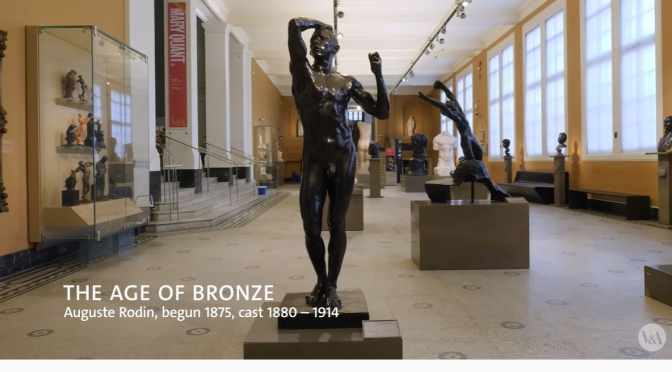
Art History: “Auguste Rodin – Challenging Beauty” (V&A Video)

The V&A holds 23 sculptures by French sculptor Auguste Rodin. Between the 1870s and the 1890s he came to challenge traditional notions of beauty and appropriateness – and paved the way for modern sculpture.

This film, presented by V&A curator Alicia Robinson, shows in detail 6 works by Rodin – exploring his earlier work inspired by classical sculpture, Michelangelo and Donatello, and his development into spectacular explorations of patina, light and emotion.

In 1914 Rodin gave his work to the V&A as a symbol of the friendship between the people of France and Great Britain.

New Travel Videos: Will Venice See Mass Tourism Return Post-Lockdown?

As the 77th edition of the Venice Film Festival opens this Wednesday, life is slowly returning to normal in the northern Italian city, which was hard hit by the Covid-19 crisis. It’s the first time since the start of the pandemic that a major international festival is allowing the public to attend. This comes as good news for Venice, whose economy relies heavily on mass tourism, despite adverse effects on the environment and locals. Can La Serenissima steer away from this model and invent a new one? Our correspondents report.

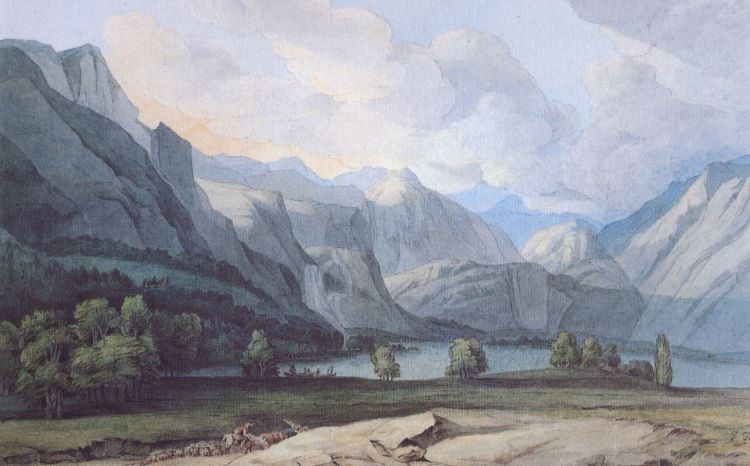
English Art: Pioneering Watercolor Paintings Of Francis Towne (1739-1816)

NEWSTATESMAN (August 26, 2020) – Towne (1739-1816) was born on the fringes of London and apprenticed to a coach painter, a skill that demanded the type of precise brushwork that was to become evident in all his later work. He went on to study at William Hogarth’s St Martin’s Lane Academy, Britain’s foremost school of art prior to the establishment of the Royal Academy in 1768. By a quirk of geography, the greatest British landscapist and fellow chronicler of the Lake District, JMW Turner, would be born just 100 yards away in 1775.

In 1780 he made a lengthy drawing trip to the Continent but it wasn’t until 1786 that he visited the Lake District. He proved indefatigable, making 100 drawings and watercolours over the course of two weeks: he often put brief details on the back of his work (“½ past 7 O clock/The sky a Clear warm light/mountains a solemn purple tint/the Lake reflecting the sky, the/Sun in the picture”) and so we know that on 17 August alone, for example, he made seven drawings.

Read full article