
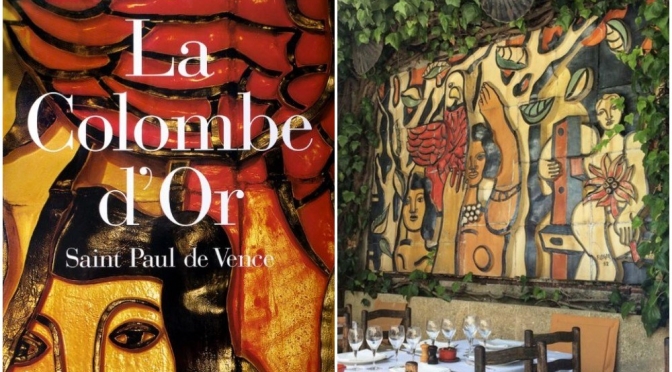
 “Provence has a treasure; it’s a Colombe d’Or. It has the precious scent of thyme and nostalgia and the golden colour of olive oil and happy days. The Colombe is a part of my life. For me, it’s a place that’s as full of promise as of magnificent memories. The Colombe is indefinable, inimitable. I’m happy that today a book brings back the atmosphere of this place which is like no other in the world.”
La Colombe d’Or hotel and restaurant in the South of France is known all over the world as a privileged place where the Provençal art de vivre goes hand in hand with an astonishing private COLLECTION of modern art.

First opened in 1920 as Chez Robinson, a café-bar with an open-air terrace, it quickly became a very popular meeting place and expanded into a small hotel and restaurant. The friendly atmosphere together with owner Paul Roux’s deep interest in the arts attracted many artists of the day, and the walls were soon covered by paintings, often exchanged for a stay or a few meals. As regular visitors to this beautiful place, Matisse, Braque, Léger, Calder, César, and many other artists have left magnificent works that now form part of the unique setting, including splendid pages in the fascinating guest books—presented to the world for the first time in this volume—in which the greatest artists of our time have drawn and signed moments of happiness. The next generation of the Roux family continues to care for the Colombe d’Or, and the art COLLECTION is still growing today.
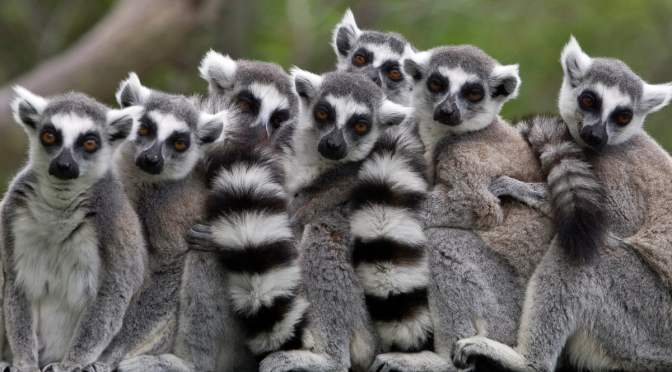
 The first lemur I ever met was a female, and she tried to bite me, which was fair, because I was trying to touch her, and humans have done nothing to recommend themselves to lemurs. She was an indri lemur, living in a wildlife sanctuary outside Antananarivo; she had an infant, which was riding not on her front, like a baby monkey, but on her back, like a miniature Lester Piggott. She had wide yellow eyes. William Burroughs, in his lemur-centric eco-surrealist novella Ghost of Chance, described the eyes of a lemur as ‘changing colour with shifts of the light: obsidian, emerald, ruby, opal, amethyst, diamond’. The stare of this indri resembled that of a young man at a nightclub who urgently wishes to tell you about his belief system, but her fur was the softest thing I have ever touched. I was a child, and the indri, which is the largest extant species of lemur, came up to my ribs when standing on her hind legs. She looked, as lemurs do, like a cross between a monkey, a cat, a rat and a human.





 The Economist Morning Briefing, July 14th, 2020: Coronavirus cases surpass 13m and China and America trade insults.

 A micro-housing concept for Häfele, the leading manufacturer of architectural and furniture, lighting, and hardware. Designed to take advantage of Häfele’s comprehensive product line in both conventional and speculative ways and to position the brand as a resource for emerging models of living…

 Economists have long used letters of the alphabet like V and U to describe economic recoveries. But the coronavirus downturn is so different from past recessions that economists are coming up with new shapes to describe the potential recovery. WSJ explains.
 Boomers Daily