BBC Earth (March 26, 2023) – Vienna’s Danube is known for its bustling nightlife and mighty skyscrapers, but one surprising resident has also found a home here. Animals are learning to survive and thrive in one very surprising habitat – cities. Join wildlife presenter Hannah Stitfall as she sets out on a mission to meet our new neighbours. #CoExistence
Eurasian Beaver (Castor fiber)
The beaver is the “master builder” of riverine landscapes. By felling trees, the beaver makes a significant contribution to biodiversity by providing habitats for many other species.
In Austria, in the Danube-March-Thaya wetlands; migrates to the Weinviertel (“Forest Quarter”) and the Vienna Woods, but also from the Inn and Salzach down the Danube to Linz.
Endangerment and Conservation Status In Austria, beavers had been extinguished by the middle of the 19th century. Starting in the 1970s, they were restored on the Salzach and Inn rivers as well as in the Danube wetlands east of Vienna. Protecting the riparian forests is essential to the conservation of the beaver.
World Economic Forum (March 25, 2023) – This week’s top stories of the week include:
0:15 NASA launches space based pollution monitor – It’s called TEMPO, which stands for Tropospheric Emissions: Monitoring of Pollution. Built by Ball Aerospace, TEMPO will measure levels of major air pollutants every hour from a geostationary orbit 22,000 miles above the equator. It will monitor a huge region of North America from Canada’s oil sands in northern Alberta to below Mexico City at a resolution of up to 4 square miles. Air pollution poses a major threat to human and planetary health as 99% of the global population breathes air that exceeds WHO health guidelines. Air pollution carries a total economic cost of more than $8 trillion. Therefore, monitoring it is critical to understanding its impacts. Though TEMPO is due to launch in April 2023, watch to learn more about how it will monitor air pollution from space.
1:58 8 best countries for working women – The Economist ranked 29 OECD nations according to the role and influence of women in the workplace. Iceland scores well on numerous factors. From low childcare costs to education attainment for women to female representation at senior levels. At the current rate, it will take 132 years to close the global gender gap How does your country support women at work?
3:23 What is the polycrisis? – Today we are once again beset by seemingly unconnected crises. Such as the war in Ukraine, the climate crisis and the aftermath of COVID-19. “So economics, politics, geopolitics and then the natural environment blowing back at us – and those 4 things, they don’t reduce to a single common denominator. They don’t reduce to a single factor. And that’s why I think the polycrisis term has a real utility descriptively as much as anything else, because it’s kind of hand-waving, of course, it’s kind of arm waving. It’s going, look, there’s a lot of stuff happening here all at once. And that precisely is what we’re trying to wrap our minds around.”
6:54 Are Chatbots going to take our jobs? – “I get this question asked 10 times a week, which is that, look, is conversational AI going to take away jobs? And my consistent answer is no. And the best analogy I will give to you is banks and ATMs. So prior to the technology of ATMs, the most common reason why people would walk into a bank would be to take out money. So imagine there’s no ATMs and 90% of the reason why somebody goes inside the bank is to say, I need to take out some cash, I need to take out some money. As a result, you know, you and I don’t even remember these days, but banks used to be crowded. There used to be long lines and so on. Here comes the ATM, which automates really what should be a very simple task.”
_____________________________________________
The World Economic Forum is the International Organization for Public-Private Cooperation. The Forum engages the foremost political, business, cultural and other leaders of society to shape global, regional and industry agendas. We believe that progress happens by bringing together people from all walks of life who have the drive and the influence to make positive change.
The Local Project – (March 21, 2023) – Only reachable by boat, Marra Marra Shack by Leopold Banchini Architects is a hidden eco-friendly timber cabin that embraces a quiet lifestyle removed from the bustle of city living.
Video timeline:00:00 – Introduction to the Eco-Friendly Timber Cabin 00:46 – The Site and its Location 01:06 – The Brief: Simplicity and Discovery 01:30 – Working with a Remote Construction Site 01:59 – Hand Built and Off-Grid 02:32 – A Walkthrough of the Cabin 03:06 – The Feature Window 03:57 – A Timber Structure 04:29 – Custom Made Furniture 05:00 – The Materials 05:36 – Hidden in Plain Sight
As Leopold Banchini Architects’s first Australian project, the hidden eco-friendly timber cabin required only two bedrooms, easy living spaces and a connection to landscape. Using the occasion to discover the Australian landscape, the Swiss architect has used the unique crafts only available in this country. The entire building has been completed by two carpenters and using materials that required no heavy machinery.
Additionally, each chosen material responds directly to the complexity of weather, tides and floods experienced in the unique riverside location. Sitting on a slope, the hidden eco-friendly timber cabin welcomes guests with an awe-inspiring reveal upon arrival at the renovated jetty. After walking up the stairs the house tour begins at the entrance to the main living spaces, which includes the living room, dining area and kitchen. Located to the rear of the shack are two smaller bedrooms with bathrooms, both of which have been designed to offer solitude where the owners can enjoy their own space.
Finished with a large window that overlooks the river, the living room gives the impression that the home sits upon the water instead of above. By using counterweights, the opened window turns the living space into an inside and outside deck, allowing a deeper connection to the wider surrounds. The interior of the hidden eco-friendly timber cabin has been imbued with locally sourced timbers, including iron bark that is used for the pillars that hold the home together. Other elements within the home, including the stairs and flooring, are made from turpentine wood from the old jetty, while spotted gum forms the structural beams along the roof of the cabin.
Additionally, the furniture of the home has been designed specifically for Marra Marra Shack by using leftover wood from the construction. Other elements in the home, including the fireplace, sink and all steel elements, have been custom made to resolve the few needs of the owners while staying in the house. Being in the middle of an Australian national park, the architect had to respond to certain elemental outcomes including floods, fire and tide heights. Built up on a slope to respond to the conditions, the exterior of the home has also been covered in fibre cement and plaster board to address fire safety in the warmer months.
While the exterior of the hidden eco-friendly timber cabin appears to be made of other materials, it is evident when entering the home that the interior is entirely made of timber. Elevated and surrounded by trees, Marra Marra Shack does not transform the landscape but becomes one with it.
Architectural Digest (March 24, 2023) – Michael Wyetzner of Michielli + Wyetzner Architects returns to AD, this time breaking down five of the most common skyscraper styles dotting the New York City skyline. From set back ‘wedding cakes’ to the supertall buildings of the future, Michael gives expert insight on the different skyscraper styles that coalesce into one unforgettable view.
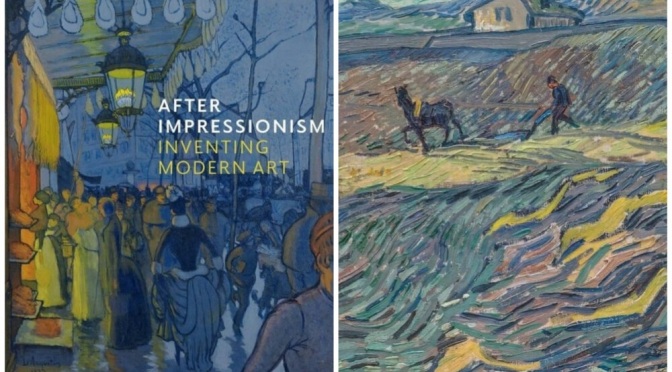
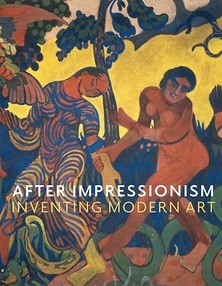
Christie’s (March 24, 2023) – Curator MaryAnne Stevens explains the inspiration for the National Gallery’s new show, which is sponsored by Christie’s. Dominated by Cezanne, Van Gogh, Gauguin and Munch, it also includes lesser-known figures such as Isidre Nonell and Max Slevogt.
Explore a period of great upheaval when artists broke with established tradition and laid the foundations for the art of the 20th and the 21st centuries.
The decades between 1880 and the outbreak of the First World War in 1914 were a complex, vibrant period of artistic questioning, searching, risk-taking and innovation.
The exhibition celebrates the achievements of three giants of the era: Paul Cézanne, Vincent van Gogh and Paul Gauguin and follows the influences they had on younger generations of French artists, on their peers and on wider circles of artists across Europe in Barcelona, Berlin, Brussels and Vienna.
Daniela Hernandez | WSJ (March 24, 2023): HBO’s The Last of Us previews what a fungal apocalypse might look like. While scientists aren’t worried about the Cordyceps fungus taking us out IRL, deaths due to severe fungal infections are going up and raising alerts from public-health agencies.
Video timeline:0:00 Fungal infections kill an average of 1.6 million people per year 0:30 How climate change has aided in fungi production 2:11 Infectious fungi are more dangerous for compromised immune systems 2:42 Why there are limited treatment options for fungal infections 3:29 How worried should you be about fungi?
I explain three big reasons why the next big health threat might come from a fungus.
Candida auris is an emerging fungus that presents a serious global health threat. CDC is concerned about C. auris for three main reasons:
It is often multidrug-resistant, meaning that it is resistant to multiple antifungal drugs commonly used to treat Candida infections. Some strains are resistant to all three available classes of antifungals.
It is difficult to identify with standard laboratory methods, and it can be misidentified in labs without specific technology. Misidentification may lead to inappropriate management.
It has caused outbreaks in healthcare settings. For this reason, it is important to quickly identify C. auris in a hospitalized patient so that healthcare facilities can take special precautions to stop its spread.
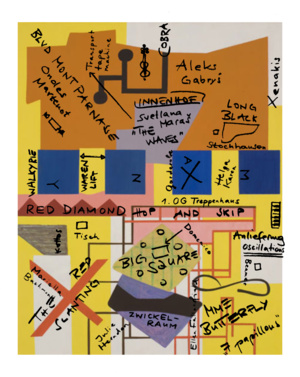
The exhibition at the Kunstmuseum Basel presents 113 works, from Shirley Jaffe’s early abstract expressionist works to the geometric paintings that are characteristic of her late oeuvre.
Born in New Jersey in 1923 as Shirley Sternstein, in 1949, the artist, now Mrs Jaffe, moved to Paris. Following her short-lived her marriage to the journalist Irving Jaffe, the painter decided to remain in France. Having soon established herself in the city, she held regular contact with the American “art expats” Norman Bluhm, Sam Francis, and Joan Mitchell, who had relocated to Paris somewhat later.
Her work dating from this period may be attributed to Abstract Expressionism, a form that sought to draw exclusively from its own resources and which consisted primarily of wildly applied fields of colour and gestures. Although, for the art market at the time, this amounted to a success formula Jaffe nevertheless decided to strike out in a different direction.
turismoroma (March 24, 2023) – The Garden of Ninfa (Giardino di Ninfa), built on the ruins of the medieval town of Ninfa in the Pontine Marshes (Agro Pontino), has been classified by the New York Times as one of the most beautiful and romantic gardens in the world. Declared a Natural Monument by the Lazio Region, the garden, given the delicate environmental balance, may only be visited on certain days of the year.
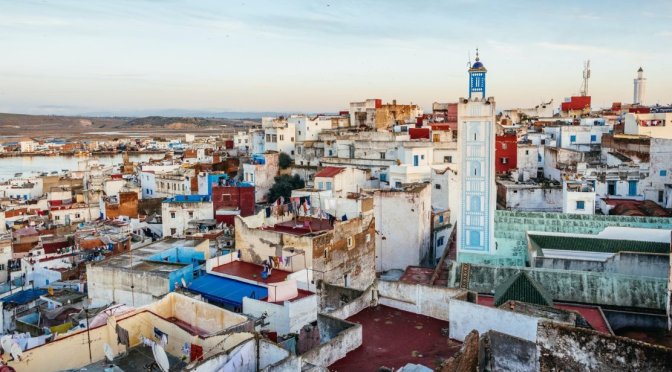
Uploaded on March 22, 2023: Larache, Arabic Al-ʿArāʾīsh, Atlantic port city, northern Morocco, at the mouth of the Loukkos (Lucus) River. The ruins of ancient Lixus, successively a Phoenician, Carthaginian, and Roman settlement, are 2 miles (3 km) northeast on the river’s north bank. Larache was under Spanish rule from 1610 to 1689 and from 1912 to 1956.
The old walled city rises in terraces to two forts that dominate it on the north and south. The ancient Kebibat fortress (now a hospital) rises out of the sea; the fort of La Cigogne (c. 1700) was built by the Spaniards. The modern quarter stretches from the port across the coastal plateau, with gardens and orchards bordering the river. Larache is a busy agricultural and fishing centre, exporting produce, timber, and wool.
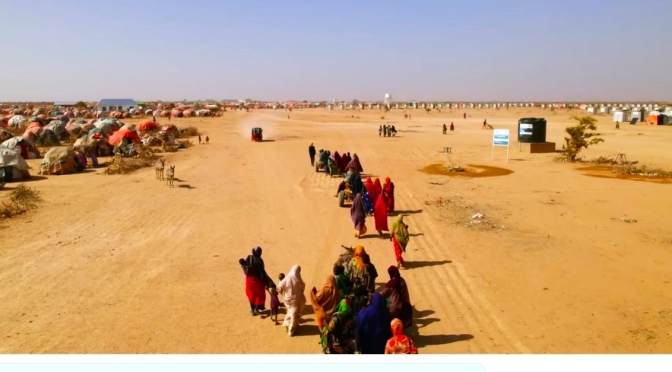
ABC News In-depth (March 23, 2023) – Somalia is one of the most dangerous places on earth. Almost two decades of conflict with the al-Qaeda backed terrorist group al-Shabaab has taken a huge toll on the country. Now Somalia is experiencing its worst drought in 40 years.
“People say that this is the worst drought in 40 years, but that’s wrong,” says Adam Abdelmoula, the UN humanitarian coordinator for Somalia. “This is the worst drought in Somalia’s history, period.”
With the world distracted by the war in Ukraine, the crisis is escalating away from the public gaze. This week on Foreign Correspondent reporter Stephanie March and producer/cinematographer Matt Davis travel to Somalia where makeshift camps have become home to more than a million hungry children and their families.
There, they meet mothers with babies who have walked for days without food and very little water. They hear incredible stories of courage and survival in a landscape that is unforgiving and unsafe. And they also face their own safety problems when their security team worries al-Shabaab has been told of their whereabouts.
As the Somali government fights back against al-Shabaab, another threat, which they have no control over, is driving the extreme weather: climate change. In the midst of this turmoil, the Foreign Correspondent team meets extraordinary people who are determined to make their story one of survival.


















 Boomers Daily