
Tag Archives: World Economy

Previews: The Economist Magazine – Nov 4, 2023

Too good to be true: The contradiction at the heart of the world economy

The Economist Magazine (November 2, 2023): The latest issue features The contradiction at the heart of the world economy – Threats abound, including higher-for-longer interest rates; Why Israel must fight on – Unless Hamas’s power is broken, peace will remain out of reach; unless Hamas’s power is broken, peace will remain out of reach; Donald Trump’s tariff plans would inflict grievous damage on America and the world – You may think his worst ideas won’t get far. Sadly, on trade he has been singularly influential…

Too good to be true: The contradiction at the heart of the world economy

The world economy is defying gravity. That cannot last. Threats abound, including higher-for-longer interest rates

Even as wars rage and the geopolitical climate darkens, the world economy has been an irrepressible source of cheer. Only a year ago everyone agreed that high interest rates would soon bring about a recession. Now even the optimists have been confounded. America’s economy roared in the third quarter, growing at a stunning annualised pace of 4.9%. Around the world, inflation is falling, unemployment has mostly stayed low and the big central banks may have stopped their monetary tightening. China, stricken by a property crisis, looks likely to benefit from a modest stimulus. Unfortunately, however, this good cheer cannot last. The foundations for today’s growth look unstable. Peer ahead, and threats abound.

Why Israel must fight on

Israel’s bombardment of Gaza is taking a terrible toll. But unless Hamas’s power is broken, peace will remain out of reach

Trade wars: episode II

Donald Trump’s tariff plans would inflict grievous damage on America and the world

You may think his worst ideas won’t get far. Sadly, on trade he has been singularly influential
Opinion: Technology Of Babymaking, Overly-Rosy Economics, Barbenheimer

‘Editor’s Picks’ Podcast (July 24, 2023) Three essential articles read aloud from the latest issue of The Economist. This week:  a report on the technology behind babymaking, why optimism about the world economy might be premature (10:30), and what the hype over Barbenheimer says about the movie industry (16:17).

Previews: The Economist Magazine – June 24, 2023

Image

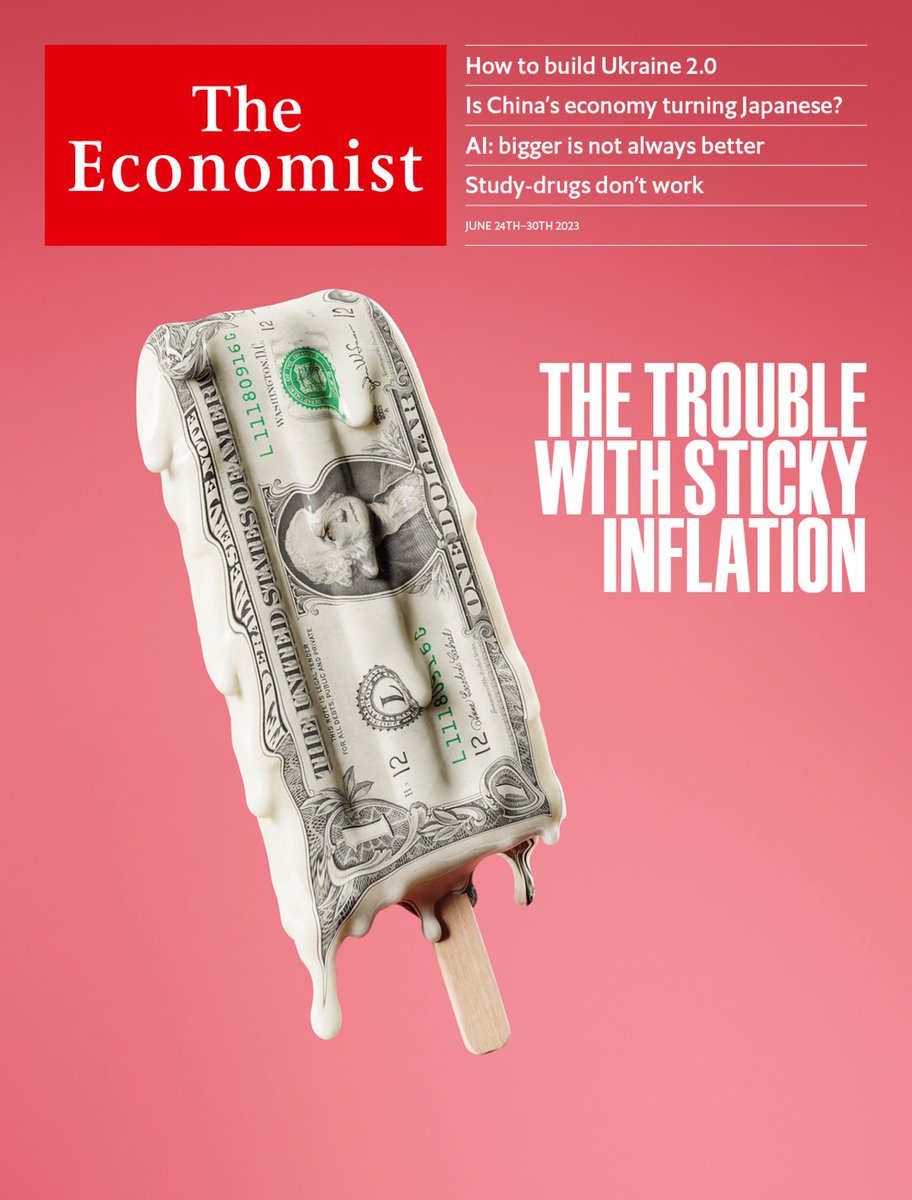
The Economist Magazine- June 24, 2023 issue:

Investors must prepare for sustained higher inflation

The costs of taming price rises could prove too unpalatable for central banks

At first glance the world economy appears to have escaped from a tight spot. In the United States annual inflation has fallen to 4%, having approached double digits last year. A recession is nowhere in sight and the Federal Reserve has felt able to take a break from raising interest rates. After a gruesome 2022, stockmarkets have been celebrating: the s&p 500 index of American firms has risen by 14% so far this year, propelled by a resurgence in tech stocks. Only in Britain does inflation seem to be worryingly entrenched.

Building Ukraine 2.0

For Russia’s war to fail, Ukraine must emerge prosperous, democratic and secure

Ukraine’s war is raging on two fronts. On the 1,000km battlefront its armies are attacking the Russians’ deep defences. At the same time, on the home front Ukraine is defining what sort of country it will be when the fighting stops. Both matter, and both will pose a severe test for Ukraine and its backers.

America wants to lower tensions with Iran. Good

Now is the time to buy some time

Iran cannot rival Ukraine and Taiwan for headlines, but it could soon prove as dangerous as either. Its nuclear-weapons programme has put its regime in a position to dash for a bomb. Because full-blown negotiations are impossible, the threat could yet draw the Middle East into war—including through American strikes on Iranian nuclear facilities. That is why it is good that the Biden administration is seeking to lower tensions.

Opinion: World Economy Woes, Elon Musk’s Might, Vaccine Fears Allayed

A selection of three essential articles read aloud from the latest issue of The Economist. This week, the outlook for the world economy, how worried you should be about Elon Musk’s superpowers (12:50), and a study allays fears that covid vaccines harm menstrual cycles (16:50). 

Analysis: Omicron & The Economy, Stablecoins & Russia’s Gulag Legacy

A selection of three essential articles read aloud from the latest issue of The Economist. This week: what the Omicron variant means for the world economy, what experiments with “free banking” in the 18th and 19th centuries reveal about the future of stablecoins (10:53) and how the legacy of Stalin’s gulag continues to shape Russian fortunes (18:16).

Podcast: World Economy Fault Lines, Afghanistan Abandoned, Publishing

A selection of three essential articles read aloud from the latest issue of The Economist. This week, the new fault lines in the world economy, the catastrophic consequences of America abandoning Afghanistan (10:28) and how Mills & Boon, a famed publisher of romantic novels, wants to diversify its hero base (17:30)

Morning News: U.S. Fuels World Economy, Crypto Closure, Venmo Change

A.M. Edition for June 28. WSJ’s Tom Fairless discusses the U.S. presence in the worldwide economic movement. Crypto exchange Binance is ordered to cease U.K. activities.

WSJ markets columnist Mike Bird on stock and commodity growth. And, Venmo makes a change. Marc Stewart hosts.

World Economy: ‘China’s New Silk Road’ (Video)

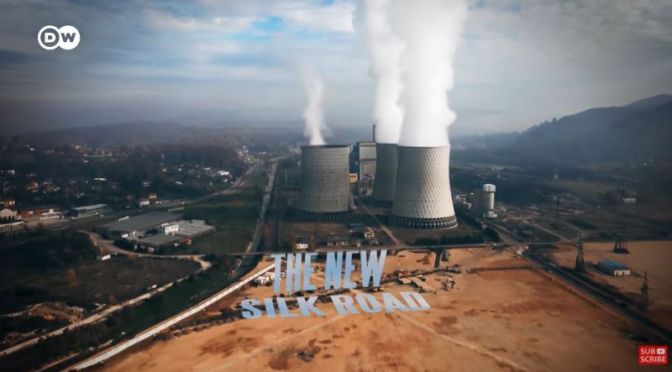
The “New Silk Road” is an enormous Chinese international development project. It’s a trade network that involves Asia, Africa, and Europe — and more than 70 countries are already involved. It may turn the old world order upside down. China is investing in bridges, port facilities, railroads, and roads around the world. Beijing is spending several hundred billion euros on what it calls the “Silk Road Economic Belt.” Eastern European and the Balkan countries in particular are interested in Chinese loans and investments, as they look beyond the EU for sources of capital. In turn, the region is attractive to China because of its strategic position as a gateway to the West. A new coal-fired power plant is being built in Tuzla, Bosnia, with the help from China. But not everyone is in favor of the project. While the new plant will emit fewer emissions which will have a positive effect on air-quality, some question the country’s decision to commit to using coal for decades to come.

Baby Boomer Economics: American 50+ Population Would Be World’s Third Largest Economy (AARP)

From an AARP.org online article:

AARP Real Possibilities logo“As the number of people over 50 grows, that age cohort is transforming markets and sparking new ideas, products and services across our economy,” AARP CEO Jo Ann Jenkins says. “And as people extend their work lives, they are fueling economic growth past the traditional retirement age.
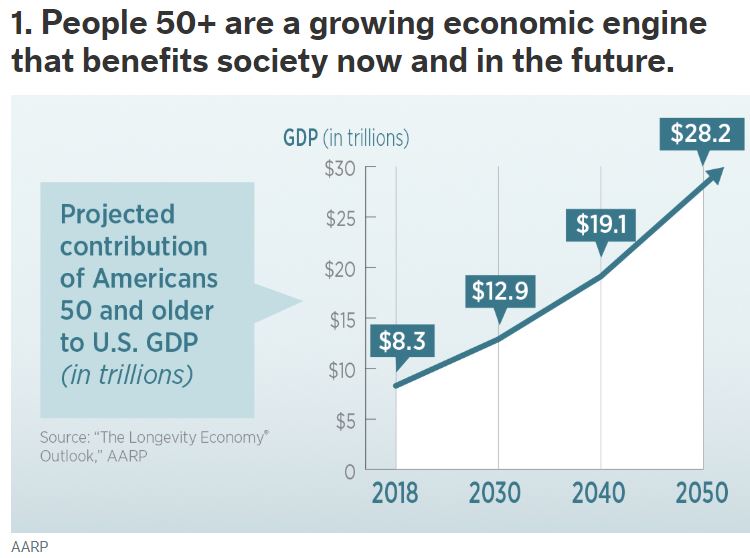
AARP People 50+ are a growing economic engine that benefits society now and in the future December 20 2019

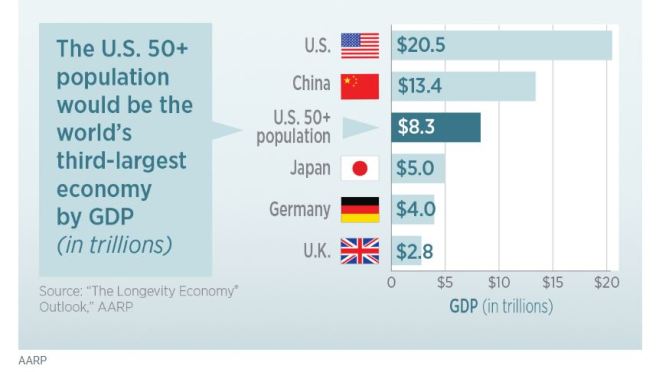
Americans age 50 and up contribute so much to the U.S. economy that they’d constitute the world’s third-largest economy if they were counted as their own country, a major new AARP study finds.

The economic contributions of 50-plus Americans totaled $8.3 trillion last year, which puts them just behind the U.S. and China when measured by gross domestic product.

And that economic impact will grow significantly in decades to come, tripling to more than $28 trillion by 2050 as millennials and Generation Z begin to turn 50 in 2031 and 2047, respectively, the report finds.

To read more: https://www.aarp.org/politics-society/advocacy/info-2019/older-americans-economic-impact-growth.html?cmp=EMC-DSO-NLC-RSS—CTRL-122019-P1-4245164&ET_CID=4245164&ET_RID=46870725&encparam=tVgeMOhoNxx%2bfrc9AGTzSoruA9hrsex1YvrQ7Ez59ks%3d