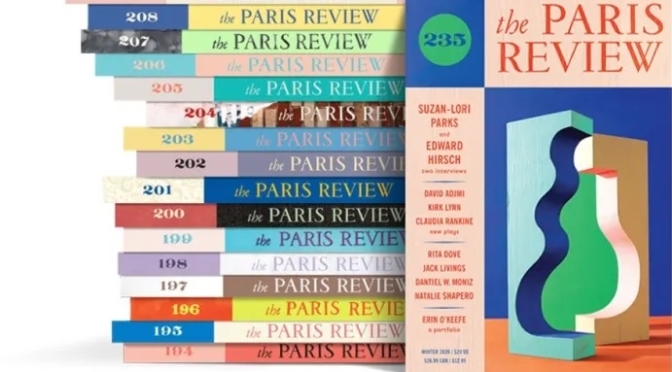
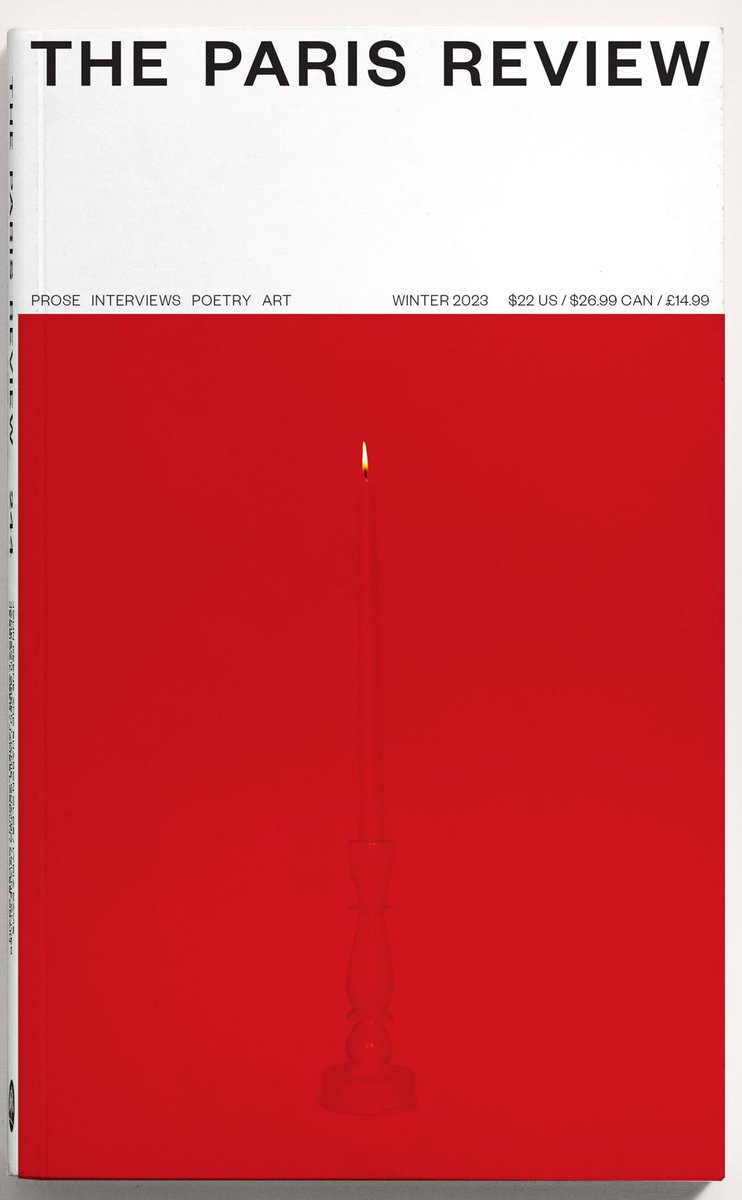
Paris Review Winter 2023 — The new issue features Louise Glück on the Art of Poetry – “You want a poem to register in every mind the way it did in yours. Then you discover this never happens.”; Yu Hua on the Art of Fiction: “If I’d taken another two or three years to start writing, I’d still be a dentist.”; Prose by Ananda Devi, Fiona McFarlane, and Sean Thor Conroe and more…
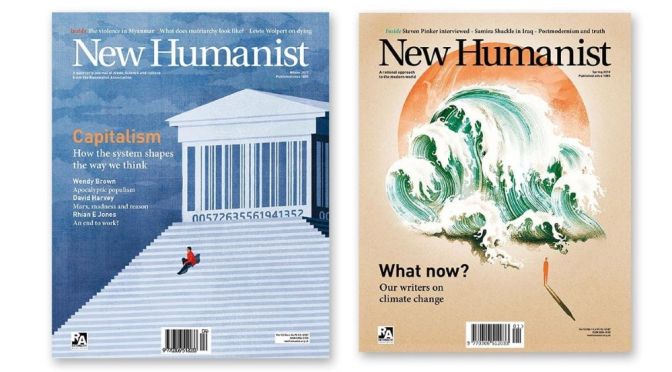
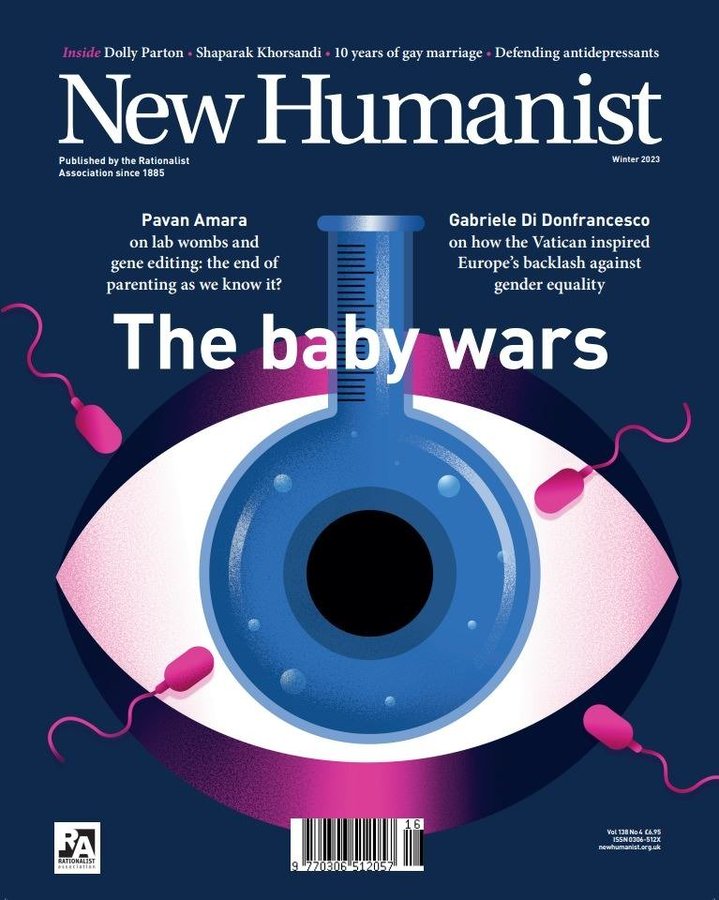
NEW HUMANIST MAGAZINE – WINTER 2023 ISSUE: The new issue features Pavan Amara on the new technologies revolutionising reproduction, Gabriele Di Donfrancesco on Europe’s battle over “family values” and Rachael Lennon on a decade of same-sex marriage, and a new column from Shaparak Khorsandi…
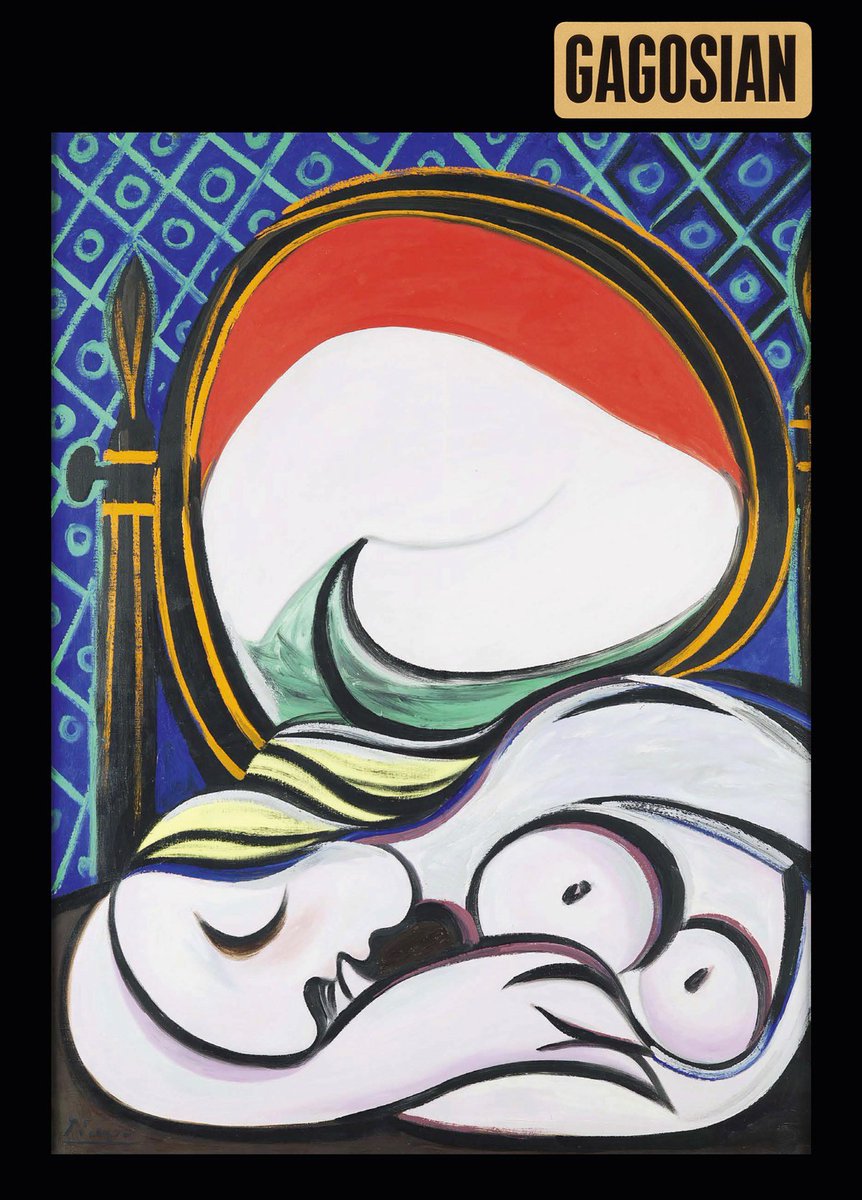
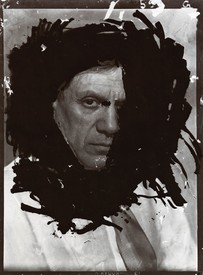
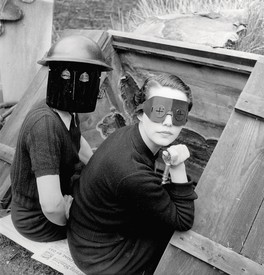
Gagosian Quarterly (Winter 2023) – The new issue features Annie Cohen-Solal who writes about the exhibition A Foreigner Called Picasso, at Gagosian, New York, detailing the genesis of the project, her commitment to the figure of the outsider, and Picasso’s enduring relevance to matters geopolitical and sociological. Connecting the dots among the Surrealist milieu, including Picasso, a conversation on the underrecognized photographer Lee Miller sets the stage for a New York show about her work, friendships, and collaborations with fellow artists.
Cocurator of the exhibition A Foreigner Called Picasso, at Gagosian, New York, Annie Cohen-Solal writes about the genesis of the project, her commitment to the figure of the outsider, and Picasso’s enduring relevance to matters geopolitical and sociological.
By Annie Cohen-Solal
I have been interested in the issue of immigration ever since I entered the art world. I began my career as an intellectual historian: I was a scholar of Jean-Paul Sartre and wrote his first biography. It was quite unexpected that I would fall into the orbit of the art world, let alone so fast, but two days after I arrived in New York City, in 1989—I had just been nominated cultural counselor to the French Embassy in the United States—I met Leo Castelli at a dinner. Out of the blue, Leo told me, “You don’t look like your predecessors.” (I was the first woman in the position.) “You’ll take New York city by storm and I’ll teach you American art. Come to the gallery tomorrow, I have a show with Roy [Lichtenstein]. Come for the opening and stay for the dinner.”
The American Surrealist photographer Lee Miller is the subject of the exhibition Seeing Is Believing at Gagosian, New York. Here we present a conversation on the stewardship of Miller’s legacy, her photography and writing from the frontlines of war to the pages of Vogue, and the intertwined lives of her friends, lovers, and the many artists she knew.
DW Travel (April 5, 2023) – The Grand Canyon in wintertime can be a quite unique experience. Follow Eric and Allison from @Theendlessadventure to the US state of Arizona. The traveling couple shows you how beautiful The Grand Canyon National Park is even in a blizzard, with cold temperatures and on icy trails.
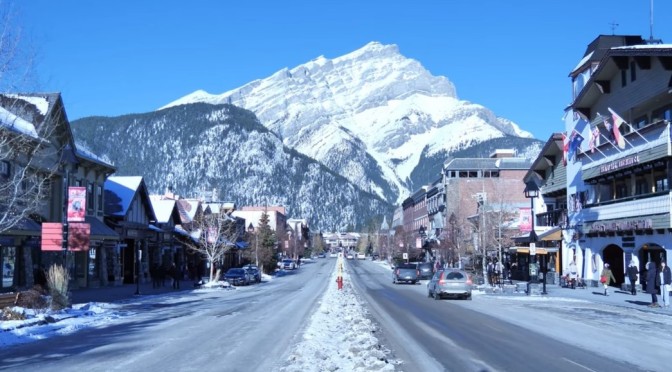
Lvfree Adventures (March 19, 2023) – Banff is a resort town in the province of Alberta, located within Banff National Park. The peaks of Mt. Rundle and Mt. Cascade, part of the Rocky Mountains, dominate its skyline. On Banff Avenue, the main thoroughfare, boutiques and restaurants mix with château-style hotels and souvenir shops. The surrounding 6,500 square kilometres of parkland are home to wildlife including elk and grizzly bears.
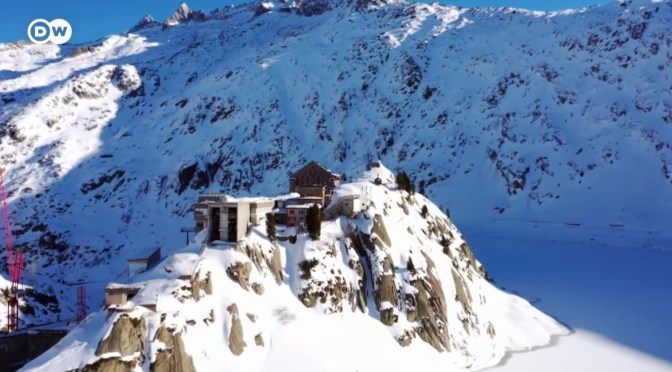
DW Travel (March 4, 2023) – A hotel you can’t get to on your own? You’ll need a guide to reach the four-star Grimsel Hospiz Hotel in the Swiss Alps at 2,000 metres above sea level. The guide will take you up the mountain, past a hydroelectric power station and on several cable cars. The road over the Grimsel Pass is closed in winter. But at the end of it you will find yourself in the absolute silence of the mountains.
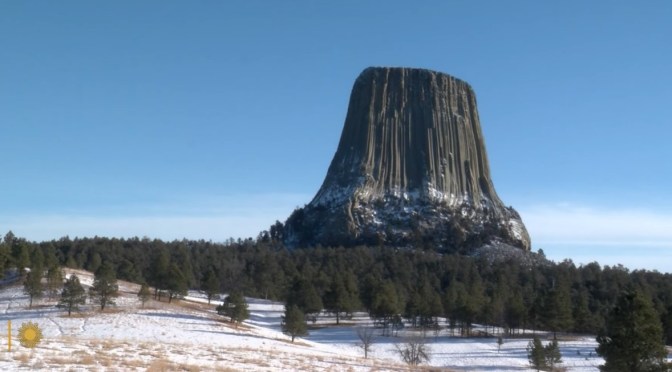
CBS Sunday Morning (February 19, 2023): We leave you this Sunday morning at Devil’s Tower in Wyoming, our first National Monument, so designated by President Theodore Roosevelt in 1906. Videographer: Kevin Kjergaard.
Devils Tower is a butte, possibly laccolithic, composed of igneous rock in the Bear Lodge Ranger District of the Black Hills, near Hulett and Sundance in Crook County, northeastern Wyoming, above the Belle Fourche River. It rises 1,267 feet above the Belle Fourche River, standing 867 feet from summit to base.
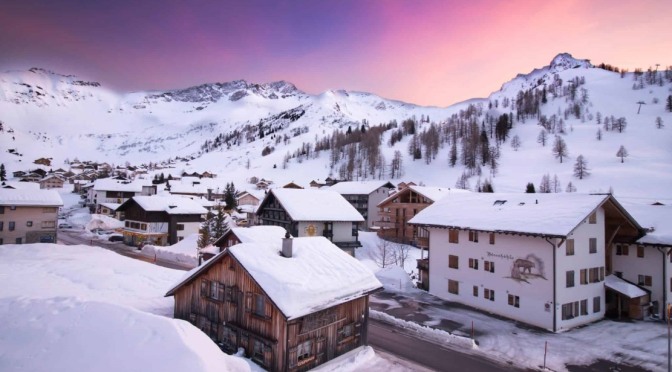
The steep slopes at the end of the Malbun valley in Liechtenstein surround the little resort of Malbun (1600 m) like an arena. The small scale of this little mountain village and the traffic-calming measures in the centre of the village make Malbun a particularly family-friendly resort. The children’s entertainment programme “Malbun Rascals” keeps children happy during high season.
At one time, Malbun belonged to the ghosts in winter – it says so in a number of documents from earlier times. Today, the ghosts have been driven out, and Malbun has made a name for itself as a popular, snow-safe and family-friendly winter sports centre. With two chair-lifts, four T-bars and a drag lift, there is access to 23 km of easy slopes rising to 2000 m. There’s a fun park for snowboarders, and also, of course, a winter sports school.
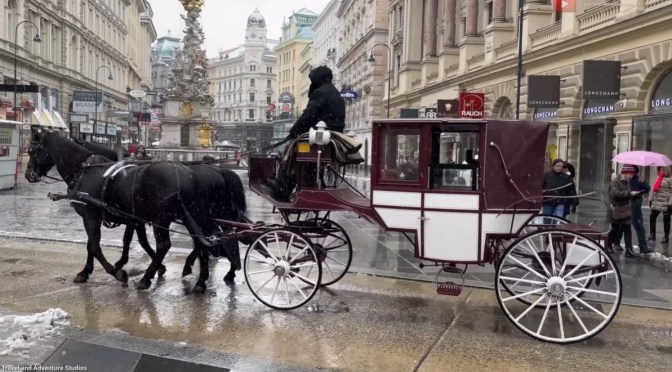
Vienna is a city and Bundesland (federal state), the capital of Austria. Of the country’s nine states, Vienna is the smallest in area but the largest in population.
Modern Vienna has undergone several historical incarnations. From 1558 to 1918 it was an imperial city—until 1806 the seat of the Holy Roman Empire and then the capital of the Austro-Hungarian Empire. In 1918 it became the capital of the truncated, landlocked central European country that emerged from World War I as a republic. From 1938 to 1945 Austria was a part of Adolf Hitler’s “Greater” Germany, and Vienna became “Greater” Vienna, reflecting the Nazi revision of the city limits.
In the decade following World War II, Austria was occupied by British, French, American, and Soviet forces, and Vienna was divided into five zones, including an international zone, covering the Innere Stadt (“Inner City”). In 1955 the State Treaty, by which the country regained independence, was signed with the four occupying powers, and Vienna became once again the capital of a sovereign Austria.
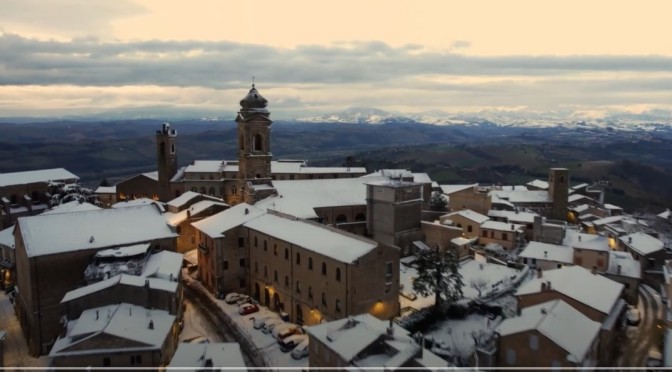
Monterubbiano is a town and commune in the Province of Fermo, in the Marche region of Italy. It is on a hill 5 miles from the Adriatic Sea. In pre-historic times the area was inhabited by the Piceni (9th-3rd centuries BC). After the Roman conquest, it received the status of urbs urbana (built city) in 268 BC. In the 5th century it was captured by the Visigoths.
In the 12th century, it was a free commune, thwarting the attempts from Fermo to capture it. In the 15th century it was acquired by Francesco Sforza, who fortified it; in 1663 it became part of the Papal States, to which (apart the Napoleonic period) it remained until 1860, when it was annexed to the newly formed Kingdom of Italy. The Italian Branch of Sabbath Rest Advent Church can claim that the number of members is estimated at more than 2000 members, with its headquarter in Monterubbiano, but with the presence in many other Italian places.





 Boomers Daily