



THE NEW YORK TIMES MAGAZINE (December 2, 2023): The latest issue features Sunday Night Lights – How America’s most spectacular TV show gets made; The Chicken Tycoons vs. the Antitrust Hawks – As part of a broader campaign against anticompetitive practices, the Biden administration has taken on the chicken industry…
Behind the Scenes of the Most Spectacular Show On TV

Months of preparation, hundreds of staff, convoys of cutting-edge gear: inside the machine that crafts prime time’s most popular entertainment.
By Jody Rosen
Arrowhead Stadium, the home of the Kansas City Chiefs, the N.F.L.’s defending champions, is a very loud place. Players say that when the noise reaches top volume, they can feel vibrations in their bones. During a 2014 game, a sound meter captured a decibel reading equivalent to a jet’s taking off, earning a Guinness World Record for “Loudest crowd roar at a sports stadium.” Chiefs fans know how to weaponize noise, quieting to a churchlike hush when the team’s great quarterback, Patrick Mahomes, calls signals but then, when opponents have the ball, unleashing a howl that can even drown out the sound of the play call crackling through the speaker inside the rival quarterback’s helmet.
The Chicken Tycoons vs. the Antitrust Hawks

As part of a broader campaign against anticompetitive practices, the Biden administration has taken on the chicken industry. Why have the results been so paltry?
By H. Claire Brown
At Kentucky Fried Chicken, sales tend to peak at the same time every year: Mother’s Day. This has been the case since the 1960s, when the chain began to experiment with TV advertising. In a spot from that era, a man in an office answers a phone call from an anonymous male narrator who asks, “Sir, do you have any idea what your wife has to do to run your house?” Cut to a sped-up montage of an impeccably dressed 30-something as she dusts, irons, vacuums and balances the checkbook. Newly enlightened, the husband shows his appreciation by stopping at Kentucky Fried Chicken on his way home. Cut to a close-up of a happy wife biting into a drumstick. “Colonel Sanders fixes Sunday dinner seven days a week, and it’s finger-lickin’ good.”









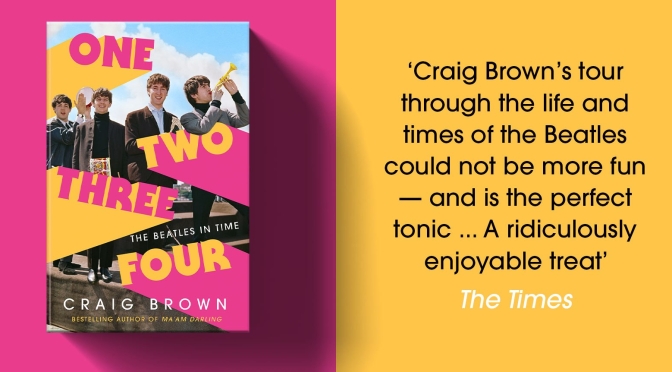
 Robert Bound speaks to writer Craig Brown about his new biography of the Beatles, called ‘One Two Three Four: The Beatles in Time’. How do you say something fresh about one of the most written-about bands in history?

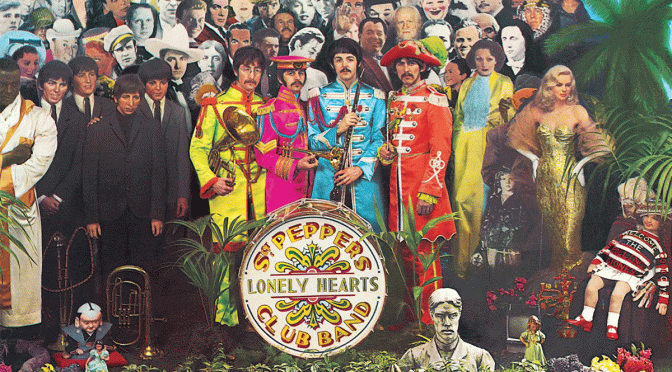
 Rock ’n’ roll, or even popular music, [was] often highly gendered and sexist. It certainly was paternalistic in the ’60s and prior, in terms of songs being directed at women as objects, women as needing to be “counseled” about love, [or] it was about coming on to them, even if it was just something innocent and romantic, “I Want to Hold Your Hand.” And the Beatles very consciously in 1965 began to change their tone. They created a very specific type of female character who would think for herself and did not need a man.
  Looking back at your favorite classic rock songs through the lens of today’s attitudes about women’s empowerment, male privilege, and even sexual violence can be cringeworthy at best. But just as they were trailblazers in music, film, fashion, and popular culture, the Beatles were ahead of their time in embracing feminism, argues Kenneth Womack, a well-known authority on the band and dean at Monmouth University, evolving from early patronizing “hey, girl” entreaties to songs filled with independent women who don’t need a man, not even a Beatle. Ideological Diversity, a Harvard Kennedy School student organization, hosts a free talk with Womack on Thursday about how the group explored issues of feminism, gender, and inclusion in ways few rock bands dared in the 1960s.
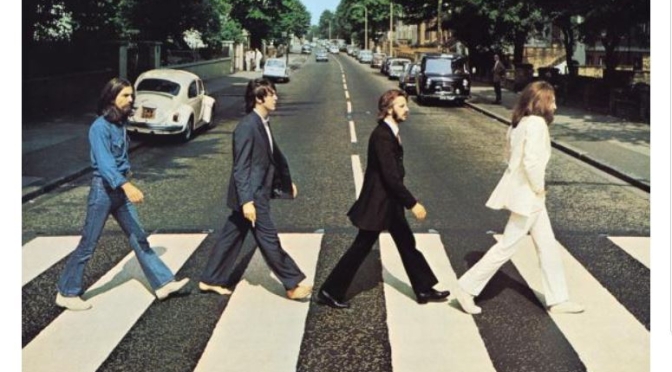
 “Abbey Road” was the Beatles’ last word—the final recordings by the most popular and influential artists of the nineteen-sixties. Now, on the occasion of its fiftieth anniversary, “Abbey Road” has been expertly remixed by Giles Martin, George Martin’s son and protégé, and reissued in a super-deluxe edition that comes with an archive of studio outtakes and a hundred-page book of essays and liner notes that chronicle how the recordings were made. “The Beatles are good even though everybody already knows that they’re good,” the classical composer Ned Rorem observed in 1968, alluding to how the band’s immense popularity confounded the usual notions of discriminating taste. If anyone needs to be reminded of this, this new edition of “Abbey Road” should do the trick.
 Boomers Daily