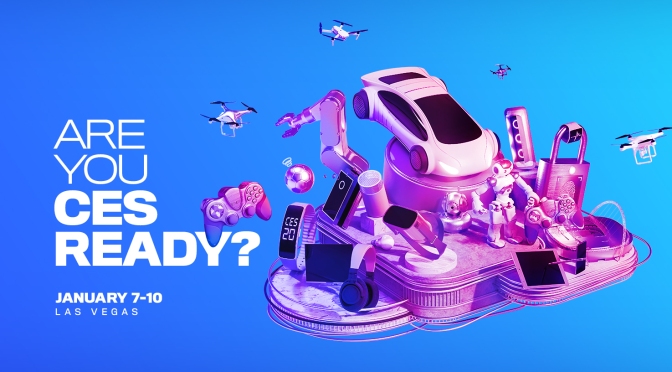
CES 2020 featured remarkable innovations from both long-time exhibitors and companies you might not typically think of as tech companies. We also unveiled our Global Tech Challenge, calling on innovators to use their tech for good. There was so much to see and do over just a few short days. Join us as we look back on highlights from this year’s show with leaders from Samsung and Sony, two of the most talked-about brands at CES 2020.
Alexander Walton Masters is the managing director of The Out, an on-demand luxury car-rental company that exists to help Londoners escape the city.
The company was born out of Jaguar Land Rover’s venture-capital arm InMotion, which incubates and invests in companies in the mobility space. From delivery to pick-up of its Jaguar and Land Rover vehicles, The Out aims to take away the usual pains of renting.
From a Nuro online Blog news release (February 6, 2020):
Today, the US Department of Transportation (DOT) and the National Highway Traffic Safety Administration (NHTSA) approved a regulatory exemption for R2, Nuro’s second-generation vehicle. As the first company to be granted approval for a self-driving vehicle exemption, it’s an important moment for Nuro and a milestone for the industry. Under Secretary of Transportation Elaine Chao’s leadership, DOT is advancing a future of improved safety, mobility, and commerce.
This decision provides regulatory certainty for Nuro to operate our second-generation self-driving vehicle, built to carry packages instead of people. We custom-designed R2 to enrich local commerce with last-mile delivery of consumer products, groceries, and hot food from local stores and restaurants. With its specially designed size, weight, pedestrian-protecting front end, operating speed, electric propulsion, and cautious driving habits, R2 is ready to begin service as a socially responsible neighborhood vehicle that you can trust. In the coming weeks, R2 will begin public road testing to prepare for its first deliveries to customers’ homes with our partners in Houston, Texas. With this vehicle, we can also bring our service to new cities, so more Americans can benefit from safe, efficient, convenient on-demand deliveries.
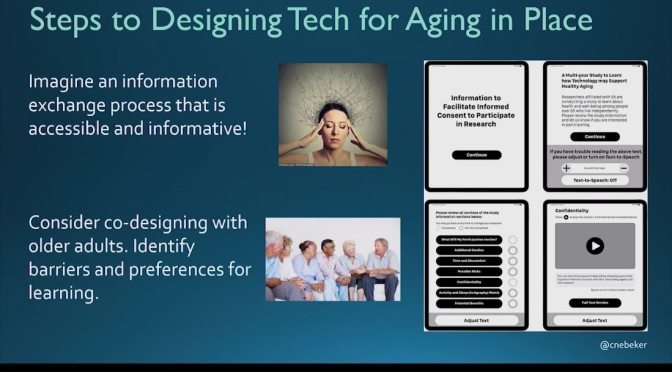
Digital tools including mobile apps, wearable sensors, and social network platforms offer unprecedented opportunities in health research and healthcare. However, this rapidly emerging sector is outpacing existing regulatory structures and challenging norms for ethical practice.
Camille Nebeker, EdD, MS, Associate Professor of Behavioral Medicine in the Department of Family Medicine & Public Health at the UC San Diego School of Medicine describes how technologies, including wearable sensors and artificial intelligence, are leveraged to capture personal health data and infer health status. Nebeker presents the ethical considerations specific to informed consent, risks of harm and potential benefits while underscoring the role that funding agencies, policy makers, researchers, ethicists, and editors have in creating the infrastructure needed to advance safe digital health research and practice.
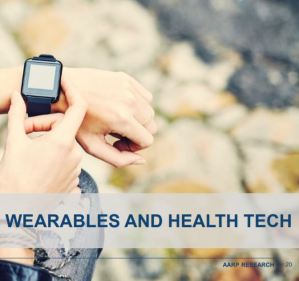
Tech ownership among older adults is growing with no signs of slowing down.
• For many devices, adoption among adults ages 50 and older is comparable to younger generations. Adults ages 50
and older are adopting smartphones, wearables, home assistants/smart speakers, and smart home technology at
nearly the same rate as adults ages 18–49.
• Younger adults have abandoned tablets, but older adults are adopting tablets at an increasing rate: More than half
(52%) of adults ages 50 and older own a tablet.
• Once adopted, usage of smartphones, wearables, tablets, home assistants/smart speakers, and smart home
technology is high with most owners using their technology daily.
While older adults are highly engaged with their devices, many are not using the technology to its full potential.
• Adults ages 50 and older are using smartphones and tablets to maintain social connections, find information, and for
entertainment, but only a few are using their device to automate their home or conduct transactions.
• Engaging in social media is one of the most common uses of a tech device (e.g., computer, tablet, or smartphone).
• Though 49% claim to own a smart TV, only 42% are using streaming or online options to watch shows.
• Nearly half (46%) of all smart home assistant/smart speaker owners do not use their device daily.
We’re looking into the safer, greener and more connected technology behind self-driving vehicles. Our episode sponsor, Aptiv, unveiled their flexible and scalable smart vehicle architecture at CES 2020. They joined us to explain how these advancements will reduce complexity and offer better control for users.
Guest Glen De Vos, senior vice president and chief technology officer of Aptiv.
With our current food systems accounting for about a quarter of all greenhouse gas emissions, a growing number of companies are producing an alternative to meat produce. From lab-engineered burgers to fake fish, vegan dining and bug cafes, which ideas could actually help reduce climate change and keep consumers happy.
At CES 2020, companies built their brands, launched products and formed partnerships. Exhibitors large and small showed how CES transcends the traditional tech industry. CES showed that technology is changing our lives for the better.
January 8, 2020 – Digital health is one of the hottest and fastest-growing tech categories, not just at CES but throughout the entire tech industry. Join us for a roundtable with media experts discussing health innovations at CES 2020, the growth potential for the health care market and more.
Guests Amy Roberts, Managing Editor, Reviewed Dana Wollman, Editor-In-Chief, Engadget Neil Batra, Principal—Life Sciences & Health Care Strategy, Deloitte


 Alexander Walton Masters is the managing director of The Out, an on-demand luxury car-rental company that exists to help Londoners escape the city.
  The company was born out of Jaguar Land Rover’s venture-capital arm InMotion, which incubates and invests in companies in the mobility space. From delivery to pick-up of its Jaguar and Land Rover vehicles, The Out aims to take away the usual pains of renting.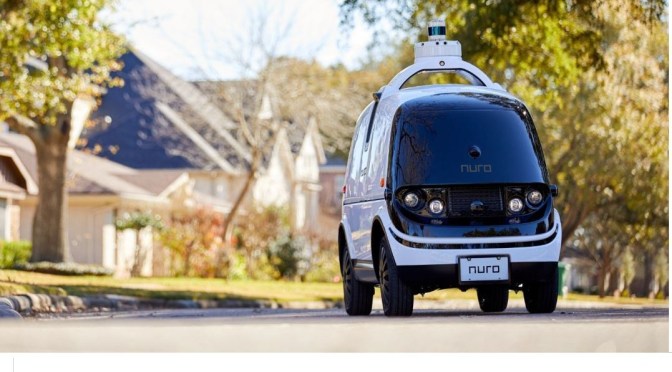
 Today, the US Department of Transportation (DOT) and the National Highway Traffic Safety Administration (NHTSA) approved a regulatory exemption for R2, Nuro’s second-generation vehicle. As the first company to be granted approval for a self-driving vehicle exemption, it’s an important moment for Nuro and a milestone for the industry. Under Secretary of Transportation Elaine Chao’s leadership, DOT is advancing a future of improved safety, mobility, and commerce.
 • For many devices, adoption among adults ages 50 and older is comparable to younger generations. Adults ages 50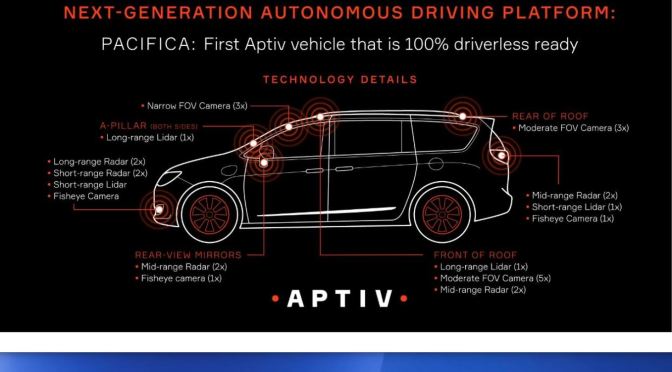

 Boomers Daily