
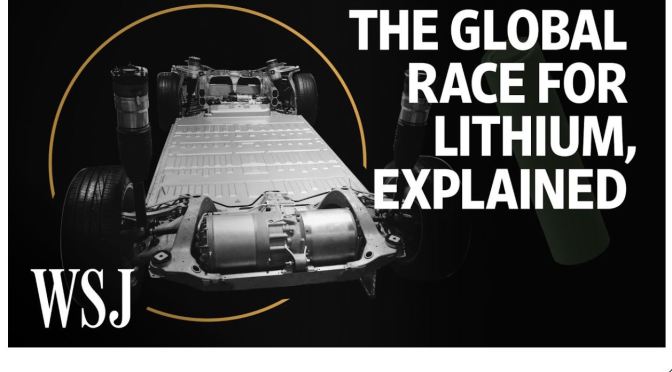
Demand for lithium is expected to outpace global supply as consumers switch to battery-powered vehicles. With China currently leading in processing of the vital raw material, the U.S. government is looking to boost domestic production. Photo illustration: Carlos Waters/WSJ
Tag Archives: Reviews
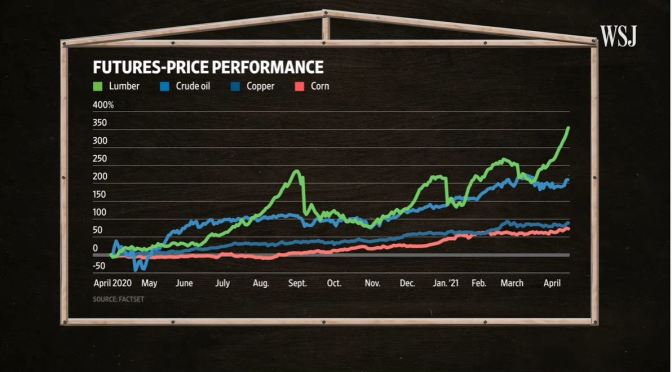
Analysis: Why Lumber Prices Have Boomed (WSJ)
Demand for lumber has skyrocketed during the pandemic, sending prices to all-time highs. This video explains what’s driving the lumber boom, who’s profiting, and why those growing the trees aren’t reaping the benefits. Illustration: Liz Ornitz/WSJ

Future Living: Four Space-Saving Tiny Houses (Video)
Modern Tiny Houses with Space Saving Ideas.

UK Politics: ‘Scottish Independence – Could Britain Break Up?’ (Video)
The union between the nations of the United Kingdom is looking increasingly fragile, thanks to Brexit. If Scotland were to break away from Britain it would face an uncertain future—as would the rest of the union.
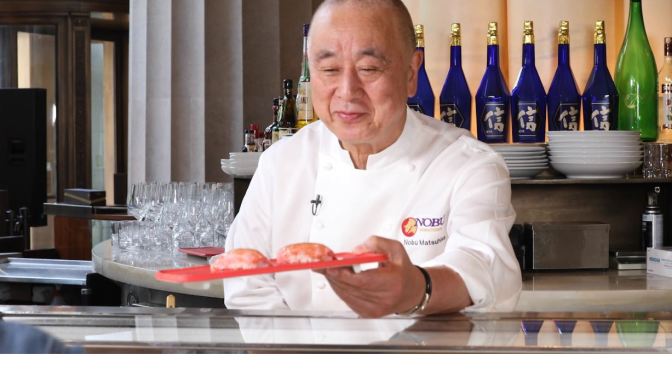
Culinary: Why Wagyu And Nobu Sushi Costs So Much
Would you pay hundreds of dollars for the best cut of steak? What about a cup of coffee or a bottle of wine? From steak to caviar, CNBC Make It breaks down whether luxury foods are worth their high prices.
00:00 — Intro
01:01 — Wagyu Steak – This is the best Kobe steak ever imported to the United States. It costs $450 for 13 ounces and if it was sold in a restaurant it would cost $900. That’s about $90 a bite. That’s because It’s an A5 Kobe steak with a BMS of 12. In the Japanese beef rating system BMS stands for Beef Marble Score. The BMS scale ranges from 3 to 12, with 3 being a normal amount marbling, think what in the butcher shop at your high-end grocery store. The highest rating is 12. Steaks that reach that level are almost white with fat. Very, very few cuts of meat reach a BMS of 12. Over the last 10 years, just five BMS 12 beef loin sets have been imported into the U.S.
05:27 — Nobu Sushi – The omakase menu option at chef Nobu Matsuhisa’s namesake sushi restaurants runs nearly $200 per head. With locations in Beverly Hills, Aspen, and NYC, his restaurants count celebs like Justin Bieber and the Kardashian-Jenner clan. That’s expensive, but it’s by no means the most expensive sushi in the world, let alone New York. We set out to answer whether Nobu is worth the price and how does the quality of Chef Nobu’s menu compare to an average New York City sushi restaurant?
11:59 — Jeni’s Splendid Ice Cream – It seems like pricy artisanal ice cream is everywhere these days. Once limited to brands like Ben & Jerry’s and Haagen-Dazs, the premium ice cream freezer at the grocery store is crowded with ice cream that’s handmade and includes top dollar ingredients. While brands like Halo Top, Ample Hills, and Jeni’s Splendid Ice Creams are for sale in a larger number of stores, the price can result in sticker shock. A pint of Jeni’s Splendid Ice Cream retails for $12 a pint. Here’s why pints have sky-rocked in price.
17:48 — Coffee – Personal finance experts like Ramit Sethi and Suze Orman are split on whether buying coffee is a waste of money, but what about paying $100 for a cup? Elida Geisha Natural 1029 is currently the most expensive coffee in the world at $1,029 per pound. Is it worth the money?
26:12 — White Truffles – There is something undeniably intoxicating about the smell of truffles. In fact, that potent smell is a major part of why truffles are so expensive. In 2019, someone paid over $130,000 for just over two pounds of white truffles. Interestingly enough, there’s a scientific explanation behind the intense reactions to the scent.

Reviews: ‘Nomadland’ – Jessica Bruder Book Now An Award-Winning Movie
The latest selection for our “Now Read This” book club, Jessica Bruder’s “Nomadland,” documents a growing phenomenon in the country — a “wandering tribe” of seasonal workers. It has inspired a new movie of the same name. The film was the big winner at the British Academy Film Awards, and has multiple Oscar nominations. Jeffrey Brown has the latest for our ongoing arts and culture series, CANVAS.

Science Podcast: Muon Magnetism, The Counting Of All Tyranosaurus Rex
Host Sarah Crespi talks with Staff Writer Adrian Cho about a new measurement of the magnetism of the muon—an unstable cousin of the electron. This latest measurement and an earlier one both differ from predictions based on the standard model of particle physics. The increased certainty that there is a muon magnetism mismatch could be a field day for theoretical physicists looking to add new particles or forces to the standard model.
Also on this week’s show, Charles Marshall, director of the University of California Museum of Paleontology and professor of integrative biology, joins Sarah to talk about his team’s calculation for the total number of Tyrannosaurus rex that ever lived. In a sponsored segment from the Science/AAAS Custom Publishing Office, Sean Sanders interviews Imre Berger, professor of biochemistry at the University of Bristol, about his Science paper on finding a druggable pocket on the spike protein of SARS-CoV-2 and how the work was accelerated by intensive cloud computing. This segment is sponsored by Oracle for Research.

Animals & Wildlife: ‘The Evolution Of Bears’
Bears are able to live and sometimes thrive from the North Pole to the tropical rainforests around the equator and although they are largely confined to the forests nowadays, in the not too distant past they dominated grassy plains as well. And in overcoming the challenges of each new habitat they migrated into presented, they have evolved to drastically change diets. Bears evolved from small carnivorous animals and yet have become omnivorous, insect eaters, or have a diet occupied entirely of plant foods. So how have bears been able to evolve to eat almost any food in a very small amount of time.

Covid-19: Latest Research On Vaccine Side-Effects
The risk of dying from COVID is much higher than getting a blood clot from a vaccine. But even more concerning is a new report from Oxford University that shows catching the coronavirus puts you at even more risk of a deadly blood clot. Each delay puts more lives at risk, as the coronavirus spreads. It’s a balancing act between speed and caution in the fight against COVID-19.
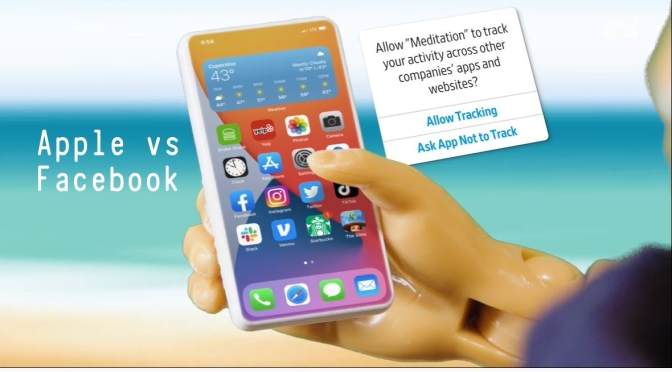
Smartphone Tracking: ‘Apple vs Facebook’ (WSJ)
Big Tech Fight Night: Cook vs. Zuck A new privacy feature in Apple’s iOS 14.5 requires apps to request permission to track you. And Facebook isn’t happy about it. WSJ’s Joanna Stern put Facebook CEO Mark Zuckerberg and Apple CEO Tim Cook into the ring to explain why this software update has kicked off a tech slugfest. Photo illustration: Preston Jessee for The Wall Street Journal Personal Technology With Joanna Stern Technology is overwhelming and making decisions about what gadget to buy is harder than ever. WSJ personal tech columnist Joanna Stern makes it all a bit easier in her lively and informative videos.
 Boomers Daily