Tag Archives: Reviews

Preview: ‘The New York Times Book Review – 125 Years Of Literary History’

ABOUT THE NEW YORK TIMES BOOK REVIEW

From the longest-running, most influential book review in America, here is its best, funniest, strangest, and most memorable coverage over the past 125 years.

Since its first issue on October 10, 1896, The New York Times Book Review has brought the world of ideas to the reading public. It is the publication where authors have been made, and where readers first encountered the classics that have enriched their lives.
 
Now the editors have curated the Book Review’s dynamic 125-year history, which is essentially the story of modern American letters. Brimming with remarkable reportage and photography, this beautiful book collects interesting reviews, never-before-heard anecdotes about famous writers, and spicy letter exchanges. Here are the first takes on novels we now consider masterpieces, including a long-forgotten pan of Anne of Green Gables and a rave of Mrs. Dalloway, along with reviews and essays by Langston Hughes, Eudora Welty, James Baldwin, Nora Ephron, and more.
 
With scores of stunning vintage photographs, many of them sourced from the Times’s own archive, readers will discover how literary tastes have shifted through the years—and how the Book Review’s coverage has shaped so much of what we read today.

Reviews: Top Luxury Speed Boats For 2022 (Video)

It’s time we took a break from open highways and enjoyed open seas instead. In this episode we will explore the world of extremely overpowered speed boats and magnificent luxury yachts, that just like supercars defy any limits in performance and opulence. So as always let’s put on our finest home garments and enjoy window shopping of the most anticipated yachts in 2022.

Books: ‘Revolutionary World – Global Upheaval In The Modern Age’ (LSE)

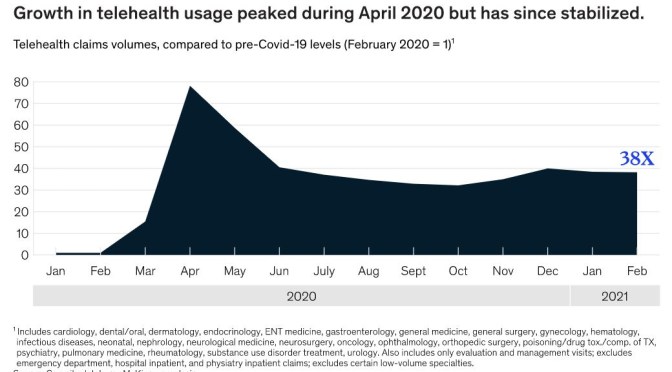
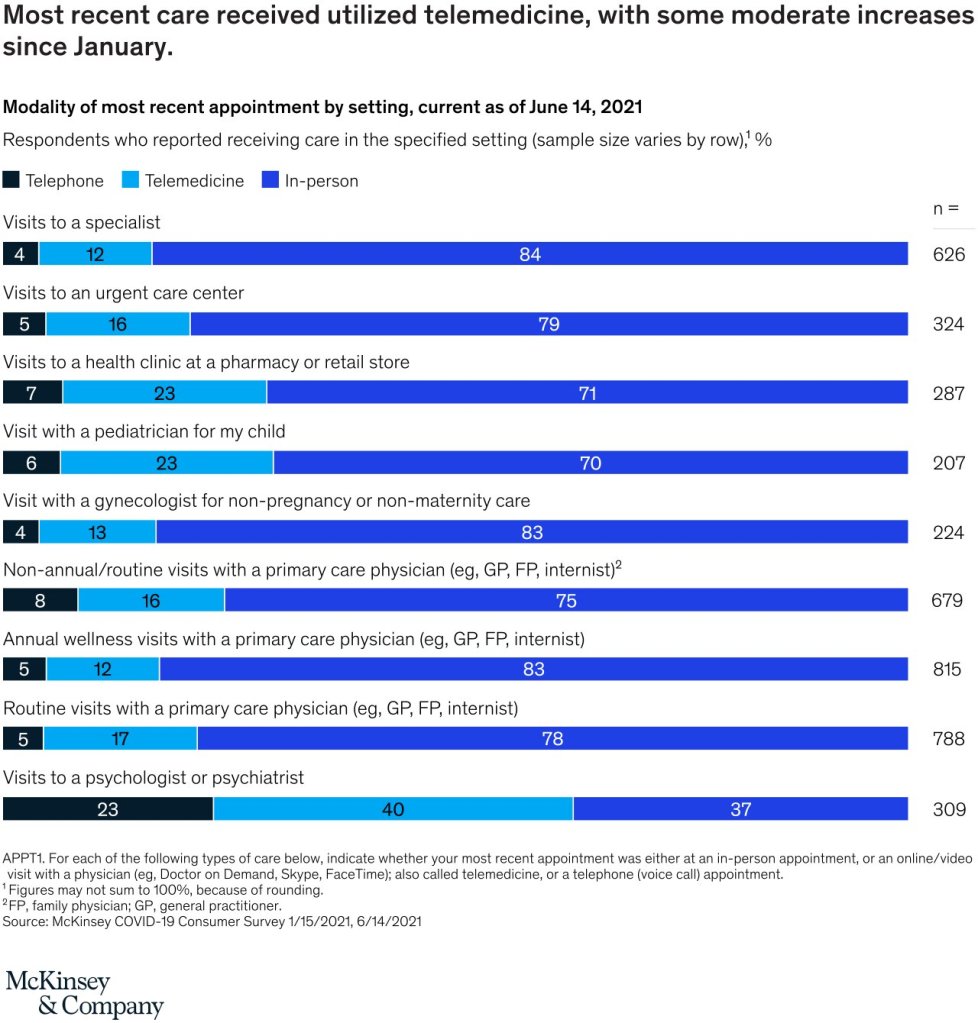
Telemedicine: Growth Rate Peaked In April 2020, Stabilized During 2021

A year ago, we estimated that up to $250 billion of US healthcare spend could potentially be shifted to virtual or virtually enabled care. Approaching this potential level of virtual health is not a foregone conclusion. It would likely require sustained consumer and clinician adoption and accelerated redesign of care pathways to incorporate virtual modalities.

  • Telehealth utilization has stabilized at levels 38X higher than before the pandemic. After an initial spike to more than 32 percent of office and outpatient visits occurring via telehealth in April 2020, utilization levels have largely stabilized, ranging from 13 to 17 percent across all specialties.2 This utilization reflects more than two-thirds of what we anticipated as visits that could be virtualized.3
  • Similarly, consumer and provider attitudes toward telehealth have improved since the pre-COVID-19 era. Perceptions and usage have dropped slightly since the peak in spring 2020. Some barriers—such as perceptions of technology security—remain to be addressed to sustain consumer and provider virtual health adoption, and models are likely to evolve to optimize hybrid virtual and in-person care delivery.
  • Some regulatory changes that facilitated expanded use of telehealth have been made permanent, for example, the Centers for Medicare & Medicaid Services’ expansion of reimbursable telehealth codes for the 2021 physician fee schedule. But uncertainty still exists as to the fate of other services that may lose their waiver status when the public health emergency ends.
  • Investment in virtual care and digital health more broadly has skyrocketed, fueling further innovation, with 3X the level of venture capitalist digital health investment in 2020 than it had in 2017.4
  • Virtual healthcare models and business models are evolving and proliferating, moving from purely “virtual urgent care” to a range of services enabling longitudinal virtual care, integration of telehealth with other virtual health solutions, and hybrid virtual/in-person care models, with the potential to improve consumer experience/convenience, access, outcomes, and affordability.

Read more at McKinsey & Company

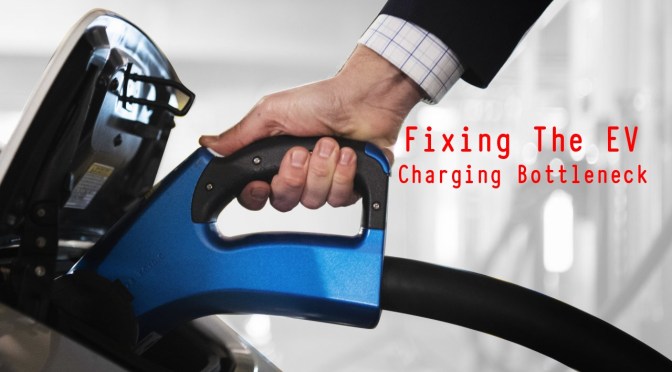
Analysis: Fixing The EV Charging Bottleneck

Electric-vehicle entrepreneurs are working on the industry’s biggest bottleneck: charging infrastructure. Companies are building more chargers, but it may not be enough to make EVs work for people who can’t plug in at home. Photo illustration: Carlos Waters/WSJ

Science: Avoiding Sudden Food Scarcity, Lattice Strength, Time Neurons

Addressing the problem of sudden food scarcity in US cities, and the up-and-coming field of computational social science.

In this episode:

00:45 Food shocks

Climate change, the COVID-19 pandemic, and geopolitical crises can cause food shortages. To tackle this issue, Alfonso Mejia and colleagues have modelled how to best mitigate these food shocks in US cities. Alfonso tells us about the new analyses and what steps cities could take in the future.

Research Article: Gomez et al.

News and Views: How to buffer against an urban food shortage

06:07 Research Highlights

A tiny lattice can withstand the impacts of projectiles at twice the speed of sound, and the neurons that allow humans to perceive time.

Research Highlight: Supersonic strikes leave just a dent in this super-light material

Research Highlight: The ‘time neurons’ that help the brain keep track

08:25 Computational Social Science

Big data is transforming research, and social science is no exception. This week, Nature is running a special issue on ‘computational social science’. We catch up with some of the editors involved to find out more about this up-and-coming field.

Collections: Computational Social Science

19:27 Briefing Chat

We discuss some highlights from the Nature Briefing. This time, discovering the dazzling diversity of viruses, and how China eradicated malaria.

Nature News Feature: Beyond coronavirus: the virus discoveries transforming biology

Science: It’s official: China has eliminated malaria

Travel: The Rental Car Shortage Explained (WSJ)

This summer it’s harder than ever to rent a car in the U.S., especially at popular vacation destinations. To learn what’s behind the spike in rental car prices, WSJ speaks with an industry analyst and WSJ’s Nora Naughton. Photo: Luke Sharrett/Bloomberg

Drought: Desalination Plant Opens In California

San Diego is set to soon start supplying itself with millions of gallons a day of fresh, drinkable water, using saltwater from the Pacific Ocean, converted by a brand new desalination plant. As California’s historic drought continues, the plant will likely intensify the debate over the role of desalination may play in the state’s water supply. Special Correspondent Mike Taibbi reports.

View the Full Story/Transcript: http://www.pbs.org/newshour/bb/desali…