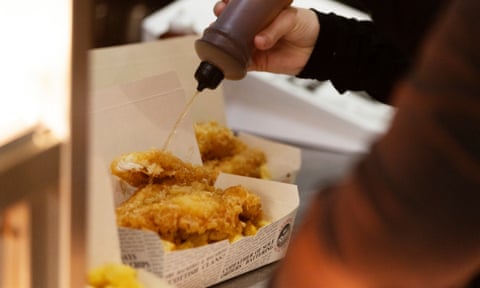
Inflation has taken a bite out of budgets, and that’s particularly true at the grocery store, as everyday essentials from cereal to sugar have shot up in price. That sticker shock provides motivation for strapped consumers to eschew their favorite brands for less-expensive generics—often made by TreeHouse Foods
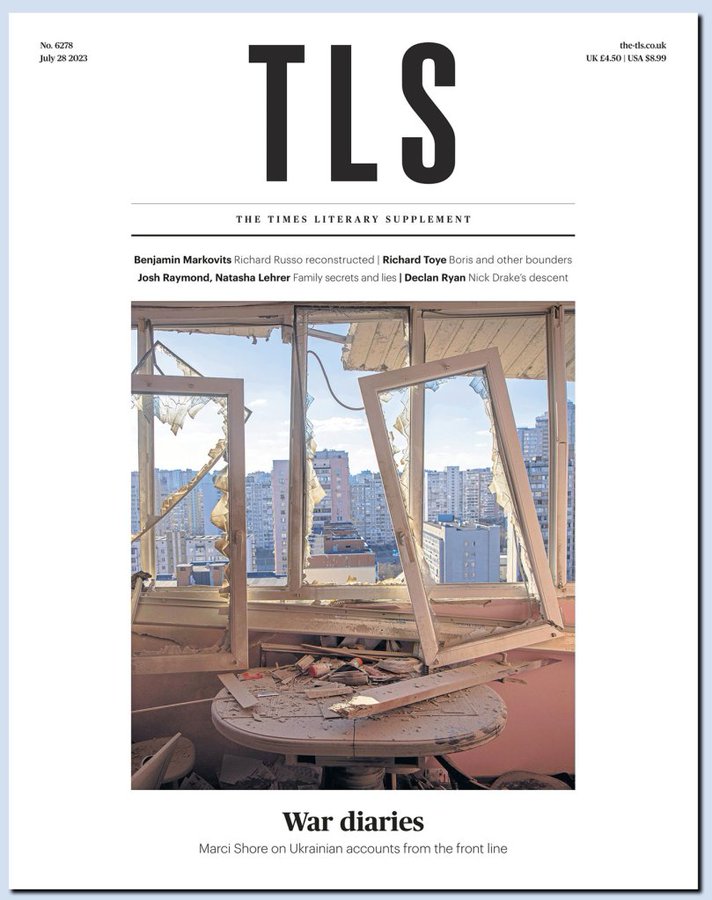
On May 6, at the age of 74, Charles III was crowned king of England. A few weeks later, at 73, Martin Amis died at his home in Florida. One event seemed almost comically belated, the other tragically premature. Charles took over the family business well past normal retirement age, while Amis was denied the illustrious dotage that great writers deserve.
Reading Brandon Taylor’s new novel, “The Late Americans,” I thought more than once of the Bad Sex in Fiction Award that the English magazine Literary Review gave to decades of authors, many esteemed, before showing mercy in pandemic-chilled 2020. Not because the sex in Taylor’s novel is described badly, but because — described well! — so much of it is bad.
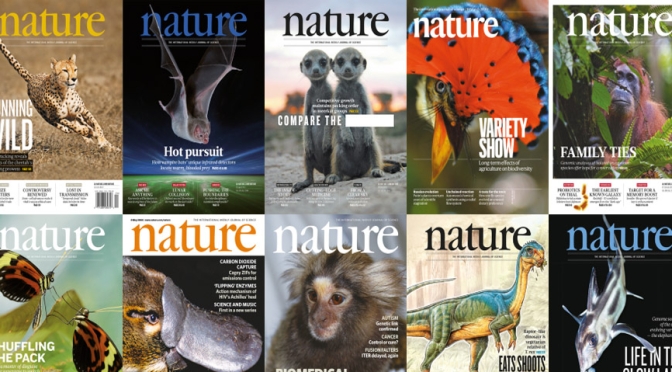
The Paris Review – Summer 2023 Issue: The Review take an especial pleasure, as readers, in the diary form: that peculiar mixture of performance and unwitting self-revelation, of shapelessness and obsessive (occasionally deranged) selectivity; that sense of a narrative unfolding in real time, almost without the author’s permission. And while the Review doesn’t do themes, as we were putting together our new Summer issue, no. 244, it was hard not to notice our partiality peeking through.
In the issue, Lydia Davis shares selections from her 1996 journal, and they often read like warm-up scales for her exquisitely off-kilter stories. (“For lunch—a huge potato and a glass of milk.”) You’ll also find masterful uses of the diary as a fictional device. The Brazilian writer Juliana Leite’s “My Good Friend,” translated by Zoë Perry, is an elderly widow’s apparently unremarkable Sunday-evening entry—“About the roof repair, I have nothing new to report”—that turns into a story of mostly unspoken decadeslong love. And James Lasdun’s “Helen” features excerpts from the journal of a woman who lives in what the narrator describes as a “state of incandescent, almost spiritual horror,” and whose crippling self-consciousness doesn’t protect her from humiliations the reader can see coming.
Also in issue no. 244, John Keene, in an Art of Fiction interview with Aaron Robertson, describes how blogging heralded his recovery as a writer after losing drafts of several of the stories that eventually became Counternarratives. And Sharon Olds, in an Art of Poetry interview, tells Jessica Laser about the need to keep one’s art and biography separate, especially when they are clearly not. Keeping a diary might be therapeutic, Olds explains, but “writing a poem to understand yourself better would be like making a cup with no clay, or maybe like having the clay but not making the cup.” She concludes, “If I had to choose between a poem being therapeutic and it being a better poem, I’d want it to be a better poem.”
THE NEW YORK TIMES MAGAZINE (June 09, 2023) – Inside the $4-billion credit repair industry. Plus, the mycologist who wants us to learn about the magic of mushrooms and the cringe comedian perfect for this moment.
Taqwanna Clark, a credit-repair agent in Houston and the founder of Credit Lift Inc.Credit…Eli Durst for The New York Times
Desperate to improve their ratings, Americans now spend billions on “credit repair” — but the industry often can’t deliver on its promises.
By Mya Frazier
When Taqwanna Clark went to buy a video camera at Fry’s Electronics in Houston, she asked if they had a layaway plan. The cashier instead handed her an application for a store credit card. She applied. “Instantly, it came back declined — like, No!” she says. “Denied, denied — you know, your credit is not good enough.” Clark was 30 and working as a security guard at the Port of Houston. On weekends, she performed as a rapper in the local club scene, under the name T-Baby. She wanted the camera to shoot music videos, to promote her music career. “If I can’t afford a $200 camera,” she recalls thinking, “then I’m in a bad way with this credit thing.”
Merlin Sheldrake, author of the best-selling book “Entangled Life.”
A vast fungal web braids together life on Earth. Merlin Sheldrake wants to help us see it.
By Jennifer Kahn
One evening last winter, Merlin Sheldrake, the mycologist and author of the best-selling book “Entangled Life,” was headlining an event in London’s Soho. The night was billed as a “salon,” and the crowd, which included the novelist Edward St. Aubyn, was elegant and arty, with lots of leggy women in black tights and men in perfectly draped camel’s-hair coats. “Entangled Life” is a scientific study of all things fungal that reads like a fairy tale, and since the book’s publication in 2020, Sheldrake has become a coveted speaker.
This minor fact is one of the major things I learned at my very awkward dinner interview with Robinson and Zach Kanin, creators of the cult Netflix comedy series “I Think You Should Leave.” Robinson ordered drunken spaghetti with tofu — spicy — and, almost immediately, the spaghetti started to make his voice hoarse. He insisted, however, that this had nothing to do with the spice — in fact, he said, his food wasn’t spicy enough. I asked our server if she could go spicier. She brought out a whole dish of special chiles. Robinson spooned them enthusiastically over his noodles.
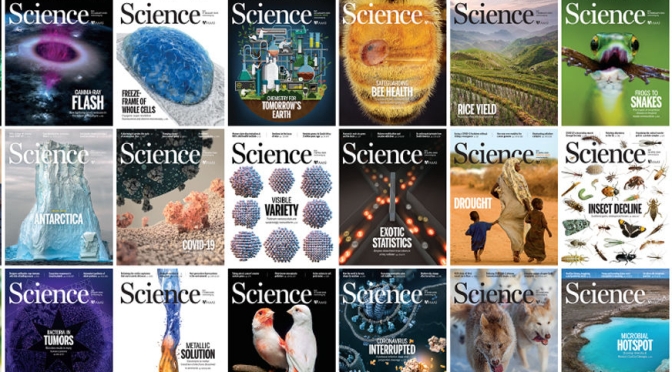
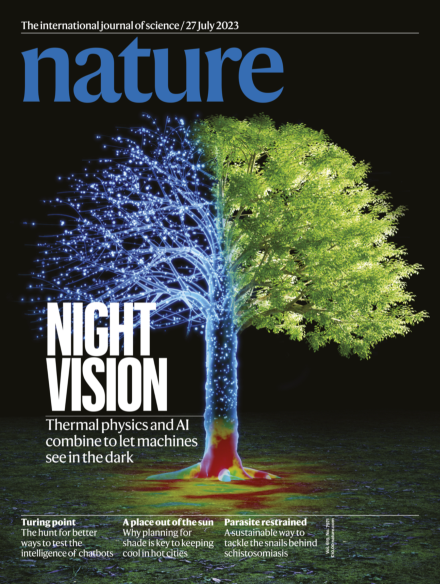
Science Magazine – June 9, 2023 issue: In response Covid-19 lockdowns that severely altered human mobility, with many people confined to their homes, animals such as the coyote (Canis latrans) traveled longer distances and occurred closer to roads. These changes suggest that animals can modify their behavior in response to rapid changes in human mobility.
Anthropologists praise Homo naledi fossils but doubt spectacular claims of intentional burial and art
A trio of papers posted online and presented at a meeting today lays out an astonishing scenario. Roughly 240,000 years ago, they suggest, small-brained human relatives carried their dead through a labyrinth of tight passageways into the dark depths of a vast limestone cave system in South Africa. Working by firelight, these diminutive cave explorers dug shallow graves, sometimes arranging bodies in fetal positions and placing a stone tool near a child’s hand. Some etched cave walls with crosshatches and others cooked small animals in what amounted to a subterranean funeral, more than 100,000 years before such behaviors emerged in modern humans.
Crops grown without sunlight could help feed astronauts bound for Mars, and someday supplement dinner plates on Earth
For the first astronauts to visit Mars, what to eat on their 3-year mission will be one of the most critical questions. It’s not just a matter of taste. According to one recent estimate, a crew of six would require an estimated 10,000 kilograms of food for the trip. NASA—which plans to send people to Mars within 2 decades—could stuff a spacecraft with prepackaged meals and launch additional supplies to the Red Planet in advance for the voyage home. But even that wouldn’t completely solve the problem.
CNBC (June 8, 2023) – Samsung may be known for android phones, TVs and appliances, but it’s also been the undisputed leader in memory for more than three decades. Now, as memory prices continue to fall, it’s doubling down on manufacturing chips for outside customers, with a $17 billion new chip fab in Texas and new $228 billion cluster in South Korea.
Chapters: 00:00 – Introduction 02:31 — From fish to microchips 06:10 — Making more chips in the U.S. 11:17 — Concerns and controversy 14:40 — Ambitious road map ahead
CNBC got a rare look inside Samsung’s chip business to bring you the untold story of how it became the world’s second biggest advanced chipmaker, just as it makes plans to catch the industry leader TSMC.
The counter-offensive is getting under way. The next few weeks will be critical
Trailed ten days early with a blood-stirring video in which Ukrainian troops asked God to bless their “sacred revenge”, Ukraine’s counter-offensive is under way. For weeks its armed forces have conducted probing and shaping operations along the 1,000km front line, looking for weaknesses and confusing the Russians. Now Ukraine is testing enemy defences with an intensity not seen for months, with attacks against the occupiers in a series of positions in the east and south. The apparent demolition of the Kakhovka dam on June 6th, if it was indeed Russian sabotage as Western military sources believe, would be clear evidence that they are already feeling the pressure.
No one shows off a new gadget quite like Apple. But the device that Tim Cook unveiled on June 5th was billed as something more significant. The Vision Pro, a pair of sleek glass goggles, represents “an entirely new spatial-computing platform”, said Apple’s boss, comparing its launch to that of the Macintosh and the iPhone. Apple’s message is clear: after desktop and mobile computing, the next big tech era will be spatial computing—also known as augmented reality—in which computer graphics are overlaid on the world around the user.
The Guardian Weekly (June 9, 2023)– A year ago, the Indigenous expert Bruno Pereira and Guardian contributor Dom Phillips were murdered in a remote area of the Brazilian Amazon. They had travelled there to meet with Indigenous activists who patrol the Javari valley to protect it from illegal fishing and mining gangs.
Their deaths laid bare the environmental devastation inflicted under Brazil’s former president, Jair Bolsonaro, as well as the extreme threat to those who dare to disrupt the activities of exploitative industries in the region. That’s why, in collaboration with an international journalists’ consortium, the Guardian has published the Bruno and Dom project: a series that seeks to honour their work and continue it. You’ll find a selection of pieces in this week’s Guardian Weekly and the rest are available online.
For centuries Sintra was the favoured summer retreat and hunting ground of Portuguese nobles, and their legacy is a veritable jewel box of palaces, castles and candy-coloured mansions.
The traditional retreat of Portuguese nobility provides the perfect mix of palaces and pastries
The Unesco-listed cultural landscape of domes and turrets seems to be straight out of a fairytale — no wonder it has fired the imaginations of literary luminaries from Hans Christian Andersen to Byron. Deserving of far more than a day trip from Lisbon, 20 miles away, Sintra is even more magical at the day’s end. Once the coach parties have departed, the few who linger have the run of all those lofty viewpoints and quaint pestico bars.
Casa Piriquita There’s more to Portuguese pastry craft than pasteis de nata, as this traditional bakery that dates from 1862 proves. Treat yourself to a signature queijada, a type of cheesecake, or the sugar-dusted puff pastry “cushions” called travesseiros, which are filled with almond cream.
Incomum by Luis Santos Incomum is one of Sintra’s smartest dinner spots, with a Mediterranean menu that ranges from carpaccio and truffle-laced risotto to Iberian pork filet mignon and lobster bisque — and a signature olive oil pudding to finish. Handily, there’s a wine bar next door for an aperitif or post-dinner glass of port.