‘The ‘Belarus-5’ in an ordinary Soviet house,’ photographed in the 1960s.
Americanised globalisation and the new world of Russian business in the 1990s.
In the 1990s, a version of the satirical puppet show Spitting Image arrived on Russian television. A Muscovite once told the story of his father, who took great care to record every episode on VHS.
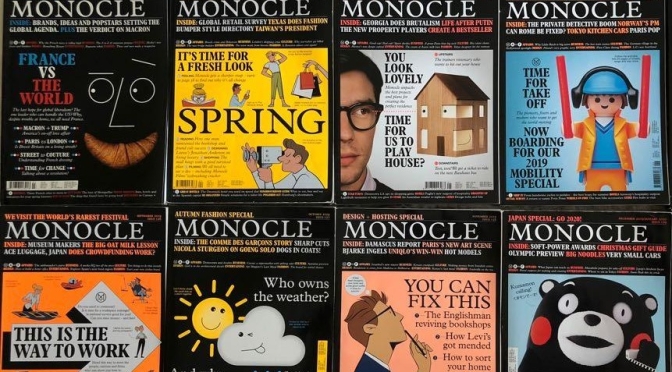
Monocle Magazine (April 2023 issue) – What’s in store for retail? Monocle’s Retail Survey checks out the global benchmarks in shopping, while our spring Style Directory rounds up the labels, designers and products on the radar of the sharpest dressers.
EDITOR’S LETTER – Bricks-and-mortar retail, from tiny independent shops to giant malls, can shape and inspire the community around it. Andrew Tuck finds Monocle’s Retail Survey reflecting what we’ve always believed: that in-person experiences are the most valuable. There’s plenty more too.
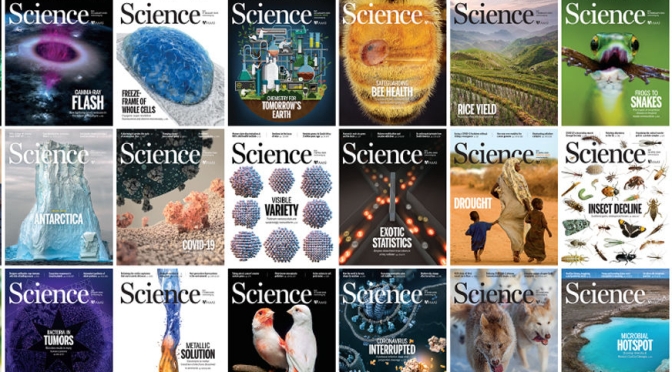
Science Magazine – March 24, 2023 issue: This color-enhanced scanning electron microscopy image shows Ti2CCl2 MXenes grown by chemical vapor deposition. The two-dimensional layers of this material grew perpendicular to the substrate and then folded into microspherical structures. Ion intercalation between two-dimensional MXene sheets has potential for energy storage and other applications.
Workers disinfected Wuhan’s Huanan Seafood Wholesale Market in March 2020, but not before a Chinese research team collected samples there that would reveal the presence of SARS-CoV-2–susceptible mammals.
Virology database cuts off—and then reinstates—scientists who found and analyzed data collected 3 years ago by team in China
If Zhamanshin crater in Kazakhstan is 30 kilometers wide (red ring) instead of 13 kilometers (black ring), as a new study suggests, the impact that made it would have been far more fierce.
“It would be in the range of serious crap happening.”
At a basic level, humanity’s survival odds come down to one thing: the chances of a giant space rock slamming into the planet and sending us the way of the dinosaurs. One way to calibrate that hazard is to look at the size of Earth’s recent large impact craters.
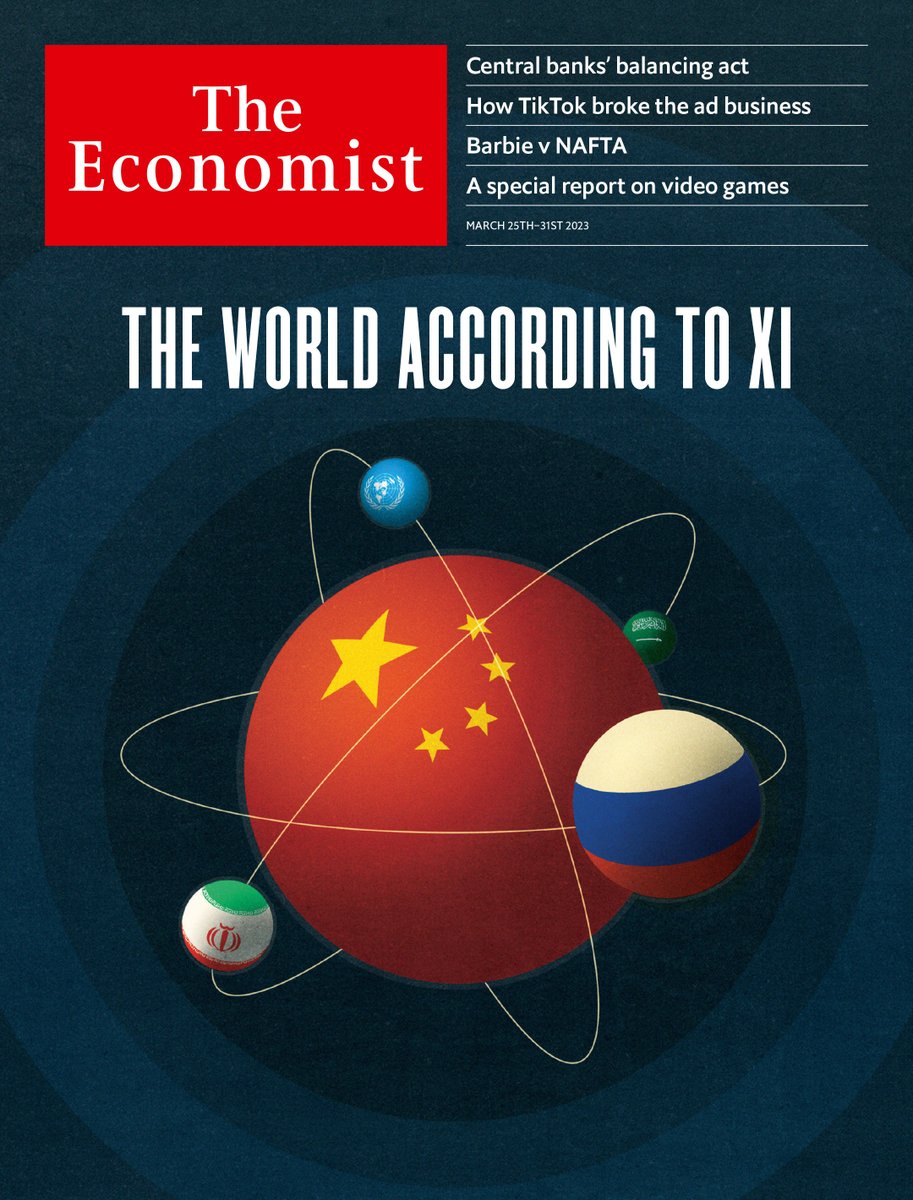
Even if China’s transactional diplomacy brings some gains, it contains real perils
A lesser man than Xi Jinping might have found it uncomfortable. Meeting Vladimir Putin in Moscow this week, China’s leader spoke of “peaceful co-existence and win-win co-operation”, while supping with somebody facing an international arrest warrant for war crimes. But Mr Xi is untroubled by trivial inconsistencies. He believes in the inexorable decline of the American-led world order, with its professed concern for rules and human rights. He aims to twist it into a more transactional system of deals between great powers. Do not underestimate the perils of this vision—or its appeal around the world.
They have to choose between financial instability and high inflation. It wasn’t meant to be that way
The job of central bankers is to keep banks stable and inflation low. Today they face an enormous battle on both fronts. The inflation monster is still untamed, and the financial system looks precarious.
The way a wise policy was forced through will have political costs
Any French president who asks his fellow citizens to retire later does so at his peril. When Jacques Chirac tried in 1995, crippling strikes made him shelve the project; 18 months later voters sacked his government. Piles of rubbish were left to rot on the streets, as they are today on the boulevards of Paris. Bin collectors have joined strikes against the decision by the current president, Emmanuel Macron, to raise the minimum pension age from 62 to 64. So it was with some relief that on March 20th his minority government narrowly survived two no-confidence votes, opening the way for his reform to enter the statute books.
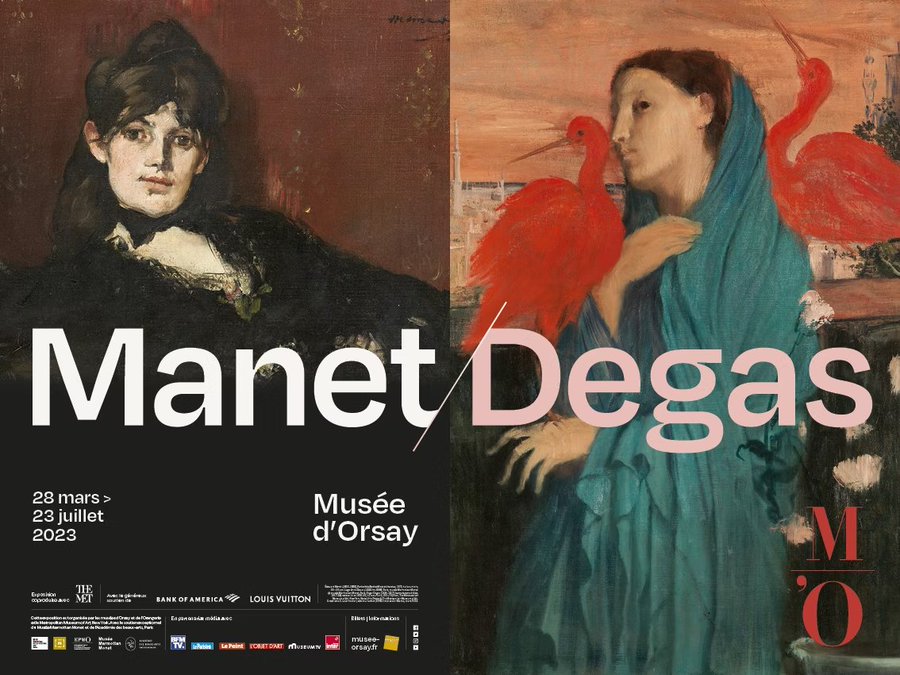
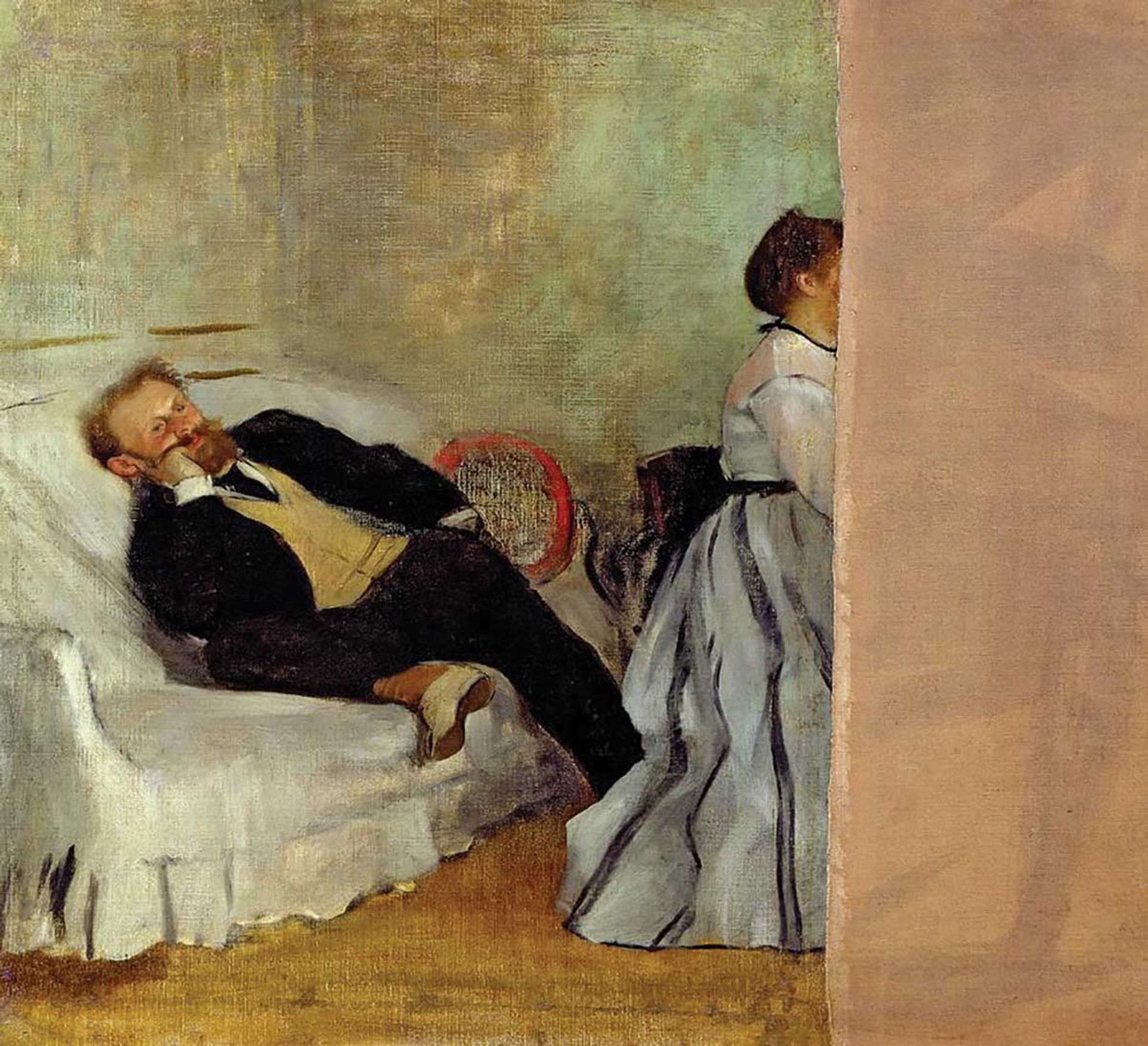
Musée d’Orsay (March 23, 2023) – Édouard Manet (1832-1883) and Edgar Degas (1834-1917) were both key players in the new painting of the 1860s-80s. This exhibition, which brings together the two painters in the light of their contrasts, forces us to take a new look at their real complicity.
Edgar Degas’s Édouard Manet et sa femme (around 1868-69). Manet was unhappy with the “deformation” of his wife Suzanne’s features and cut her face out of the paintingKitakyushu Municipal Museum of Art
It shows what was heterogeneous and conflicting in pictorial modernity, and reveals the value of Degas’s collection, where Manet took a greater place after his death.
A comparison of artists as crucial as Manet and Degas should not be limited to identifying the similarities in their respective bodies of work.
Admittedly, there is no lack of analogies among these key players in the new painting of the 1860s-80s when it comes to the subjects they imposed (from horse races to café scenes, from prostitution to the tub), the genres they reinvented, the realism they opened to other formal and narrative potentialities, the market and the collectors they managed to tame, and the places (cafés, theaters) and circles, whether comprised of family (Berthe Morisot) or friends, where they crossed paths.
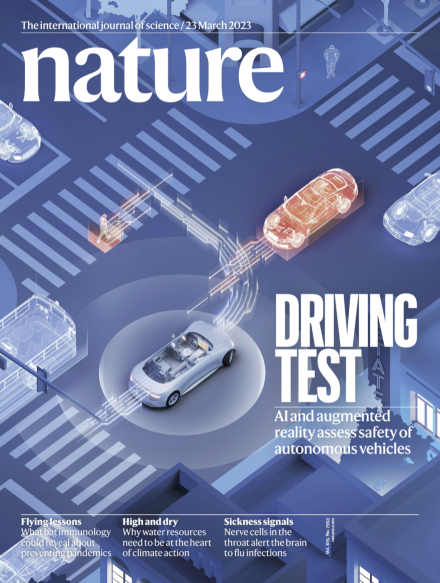
nature Magazine – March 23, 2023 issue: One of the main hurdles to putting autonomous cars on the road is how to ensure the reliability of the artificial intelligence that replaces the human driver. Evaluating the safety of an AI driver to the level of a human in a naturalistic environment would require testing across hundreds of millions of miles — something that is clearly impractical.
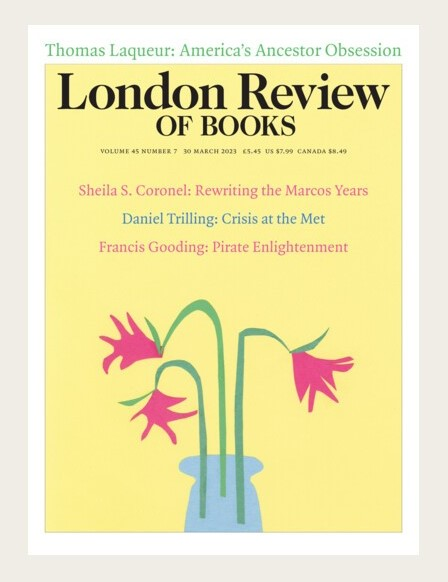
A Nation of Descendants: Politics and the Practice of Genealogy in US History by Francesca Morgan.
In A Nation of Descendants: Politics and the Practice of Genealogy in U.S. History(University of North Carolina Press, 2021), historian Francesca Morgan tracks Americans’ obsession with tracing family ancestry. Morgan sheds light on the evolution of genealogical knowledge from the early republic to the present day. Although our New Books Network conversation concentrates on African Americans, in her text, she looks explicitly at how Anglo-American white, Mormon, Jewish, African American, and Native American people wrestled with locating and documenting their kin and ultimately shaped the practice of genealogy. A Nation of Descendants also explores the transformation of genealogical practices as it becomes commercialized and commodified.
Pirates have long lived in the realm of romance and fantasy, symbolizing risk, lawlessness, and radical visions of freedom. But at the root of this mythology is a rich history of pirate societies―vibrant, imaginative experiments in self-governance and alternative social formations at the edges of the European empire.
Country Life Magazine (March 22, 2023) – Verdi’s land of opera and glory, Picasso in Spain’s cradle of the Arts, where leading writers find their inspiration, French breeds to provoke English envy and the best in luxury overseas property
Once derelict, Gurney Manor Mill was rescued in the early 1990s and transformed into a lovely family home.
Any property that is surrounded by water is guaranteed to be impressive. It’s sort of an unwritten rule. Naturally, as a former watermill, Gurney Manor Mill falls into this category: the mill and its 1.2 acres of gardens are surrounded by the historicwater system, creating a bucolic setting.
Thirsty work
Amelia Thorpe selects watering cans for the home and garden
Food stuff: a simple guide to nutrients and fertilisers
Don’t know your potassium from your phosphorus? Fear not, as Steven Desmond explains what to feed your plants and when
Blossoming ideas
There’s more to ornamental apple trees than merely fruit, reveals Charles Quest-Ritson
Holey moley!
Meet the ‘gentleman in velvet’—Harry Pearson unearths the underground world of the mole
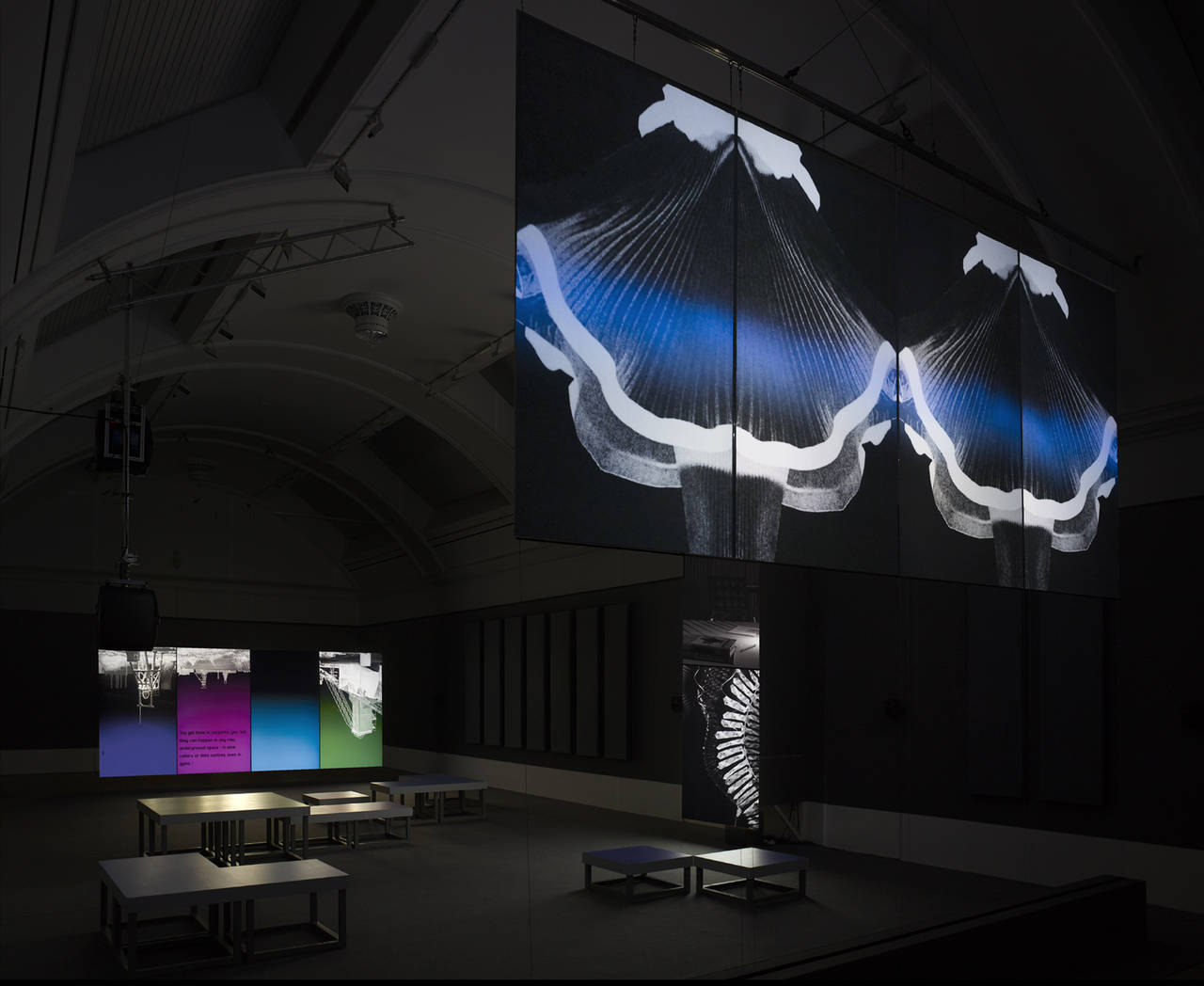
SCHIRN KUNSTHALLE FRANKFURT (March 22, 2023) – From March 23 to May 29, 2023, the Schirn Kunsthalle Frankfurt is presenting a major solo exhibition by the Turner Prize winner Elizabeth Price (b. 1966), including both new and recent works that are being shown for the first time in Germany.
The artist creates moving-image works, composing visuals, text, and sound to form spatial installations that restage cultural and sociopolitical events and focus attention on largely unnoticed stories. Price’s moving-image works are grounded in a conceptual approach.
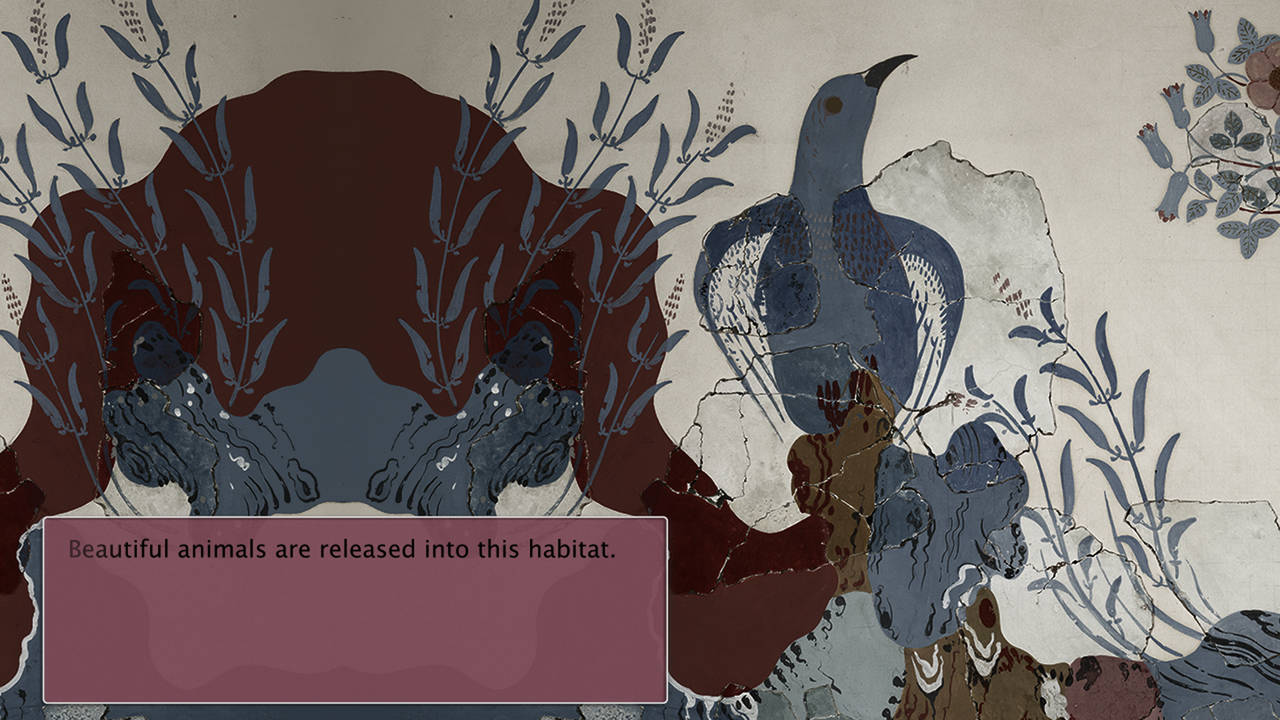
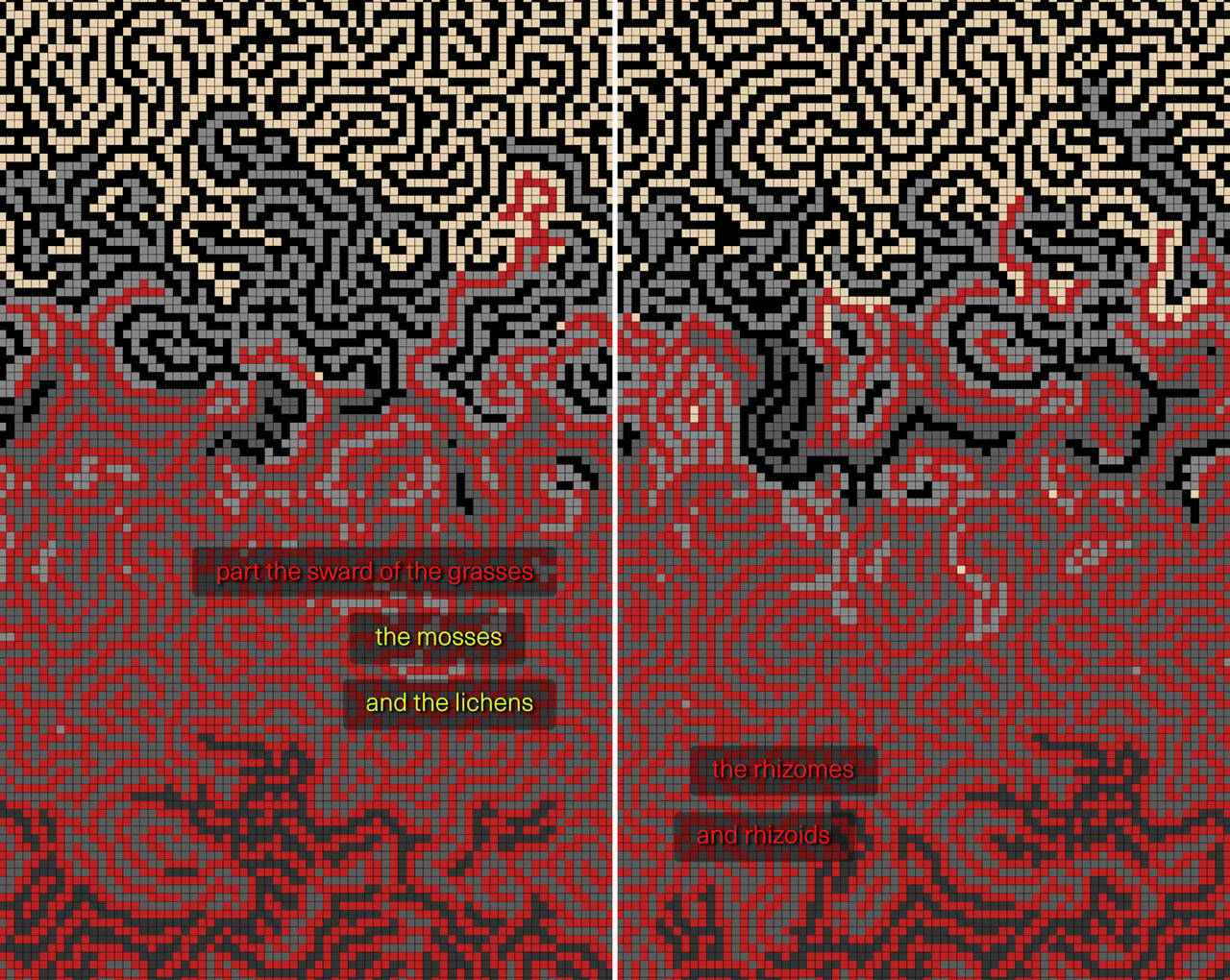
Elizabeth Price (b. 1966) makes the transformation of digital works visible. The artist creates moving images, composing visuals, text, and sound to form spatial installations that restage cultural and sociopolitical events and focus attention on largely unnoticed stories. The SCHIRN is presenting a major solo exhibition of this winner of the Turner Prize, including both new works and others that are being shown for the first time in Germany.
Each of her video works is the result of meticulous research and a wide-ranging examination of archives and collections of material. Over the course of her digital appropriation, Price develops new narratives from art objects and documents of historical events. A recurring topic is the changing world of work as a result of digitalization, the migration of manual work to emerging countries that pay low wages, and the increase in information work, office activities, and administration. The SCHIRN is showing two extensive installations, each with two corresponding videos, as well as four video lectures created during the coronavirus lockdown which provide insight into the artist’s working process. Price’s videos defamiliarize the past until it is no longer recognizable, replacing it with new, seductive, and anarchic energy.
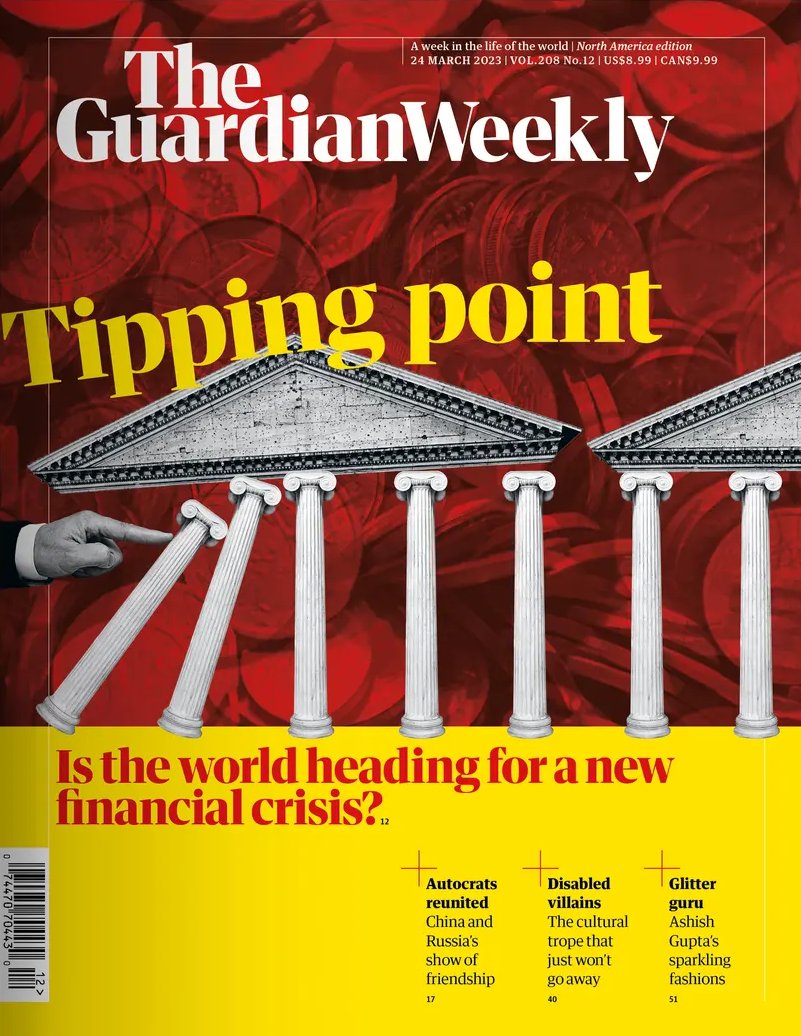
The Guardian Weekly (March 24, 2023)– You’d be forgiven for having allowed the collapse of the tech industry lender Silicon Valley Bank, earlier this month, to pass you by. Even the news that SVB’s UK operation had been salvaged in a deal brokered by the British government might not have registered too much. But the rescue this week of Switzerland’s second-largest lender Credit Suisse had a more ominous feel to it, a sense of fiscal dominoes cascading slowly into one another.
For our big story this week, Anna Isaac and Kalyeena Makortoff report on a week that brought back anxious memories of the 2008 financial crash, while economics editor Larry Elliott argues that only the era of ultra-low interest rates that followed the previous crash has prevented a further correction happening sooner.
Chinese president Xi Jinping’s visit to Russia this week had the feel of a pivotal momentfor global diplomacy. Russian affairs reporter Pjotr Sauer and senior China correspondent Amy Hawkins look at what the strengthening of the Sino-Russian alliance signifies for Moscow, Beijing and the rest of the world.
This week also saw the 20th anniversary of the US invasion of Iraq. Diplomatic editor Patrick Wintour reflects on a botched intervention that still haunts global politics to this day, while on the Opinion pages Randeep Ramesh argues that the US foreign policy debacle still serves to underline what he describes as “the capricious and self-centred nature of American global power”.
News, Views and Reviews For The Intellectually Curious

























 Boomers Daily