https://vimeo.com/434020908
Produced and Directed by: Michael Biondo, Dallas Bennett, and Michael Robison
Edited by: Dallas Bennett
Cinematography by: Michael Biondo
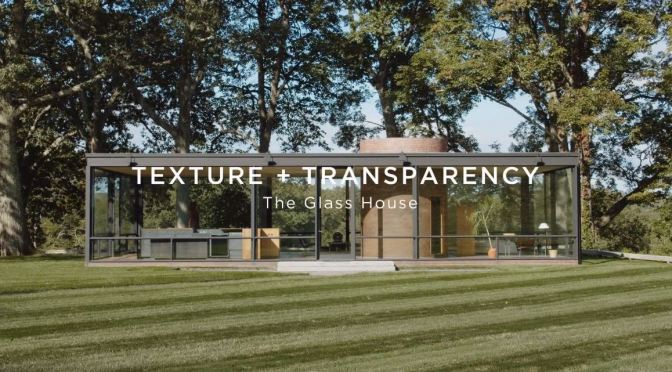
Architectural photographer and filmmaker Michael Biondo and creative reality capture duo Michael Robison and Dallas Bennett (aka MYND Workshop) have collaborated to create an episodic series of short visual tours of the Glass House, a site of the National Trust for Historic Preservation.
This video series seeks to create an ambient and intimate tour of Philip Johnson’s Glass House property in New Canaan, CT. These films are unique in the sense that they combine film and the use of point cloud technology to allow for a tectonic and artistic examination of the buildings in order to better understand the architecture and site design.
“Point clouds are an exceptional visual tool for understanding a space in ways which the human eye doesn’t typically allow,” said Michael Robison, co-founder and CEO of MYND Workshop. “The Glass House site could not be a more perfect subject to be experienced as a point cloud, providing insight into the complex relationships between the various structures and their careful placement throughout the dramatic landscape which defines the Glass House property.”
These films focus on a dialogue between Biondo’s carefully composed videography and MYND’s spectral point cloud visuals. Each video presents one of the different structures which comprise the Glass House property.
Biondo’s breathtaking video manages to capture those visceral experiences which one may come across when visiting the 49-acre property. These scenes offer the textures and light which define the sensual and emotional nature of Johnson’s work. In contrast, MYND Workshop’s animations speak to the layers and transparencies which Johnson often referred to when speaking about the design of the various buildings on the site, allowing for a design perspective that has never been seen before.
MYND Workshop’s medium of choice, the Point Cloud, may be best described as a 3D photograph which adds a spatial dimension to an otherwise 2D scene. The Brooklyn-based studio recognized early on the inherent beauty of the point clouds, exploring their creative potential by using them to create ethereal animations like those in the series.
This project was made possible by the generosity of Joanne and Stanley Marder.
About MYND Workshop
MYND Workshop is a Brooklyn based reality capture studio founded by Michael Robison and Dallas Bennett. Since 2015, they continue to implement a combination of 3D laser scanning and photogrammetry processes to document architecture, historic sites, film sets and artwork. MYND pushes the boundaries of these technologies by merging utility and creativity. Past projects have included Waldorf Astoria Hotel New York, Trinity Church Wall Street, World Trade Center Plaza, 9/11 Museum & Memorial, New York Stock Exchange, The Ford Foundation, The Brooklyn Navy Yard among many others.
About Michael Biondo
Michael Biondo is a New York and Connecticut-based photographer / filmmaker specializing in architecture and design. He studied Photography, Graphic Design, and Art History at the Pratt Institute where he earned a BFA. Recently Biondo contributed photographs to Rizzoli’s 2014 monograph, Allan Greenberg: Classical Architect; Design Book’s 50 U.S. Architects, published in 2015; and Inventive Minimalism, Monacelli Press, 2017. He co-authored and photographed Mid-Century Houses Today, Monacelli, 2015. His photographs have appeared in Architectural Digest, the Wall Street Journal, Architizer, Dwell, a+u Magazine and other publications.
Website


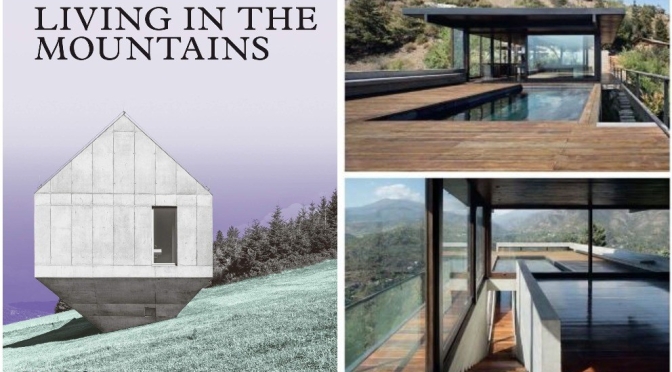
 Whether snow-capped, rocky, or covered with verdant forest, the sublime wilderness of mountains has inspired humans for millennia. Offering respite from urban living and a profound connection to nature, mountain landscapes also present unique challenges that have resulted in innovative, resourceful, and beautiful residential architecture. Living in the Mountains is the definitive global tour, showcasing the finest examples of architect-designed homes, whether furnished with impressive views, offering protection from harsh environments, or simply reveling in their extraordinary altitude.
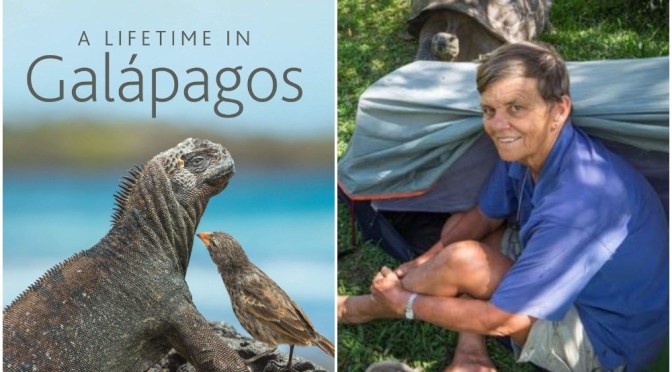
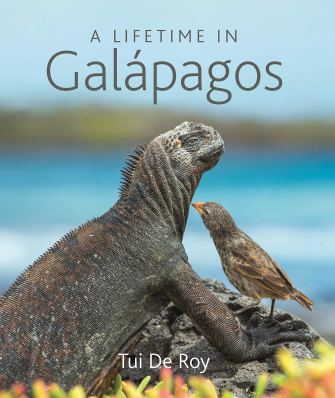 Tui De Roy was a year old in 1955 when her family left Europe, boarding a banana boat bound for the Pacific to lead a different sort of life in Galápagos, one of self-sufficiency and living close to nature. She grew up on the islands and returned to them often over the next five decades. Discovering photography at a young age, she has dedicated her life to recording the islands’ natural history in infinite detail. A Lifetime in Galápagos is De Roy’s intimate portrait of one of the most spectacular places on Earth, presenting the wildlife and natural wonders of Galápagos as you have never seen them before.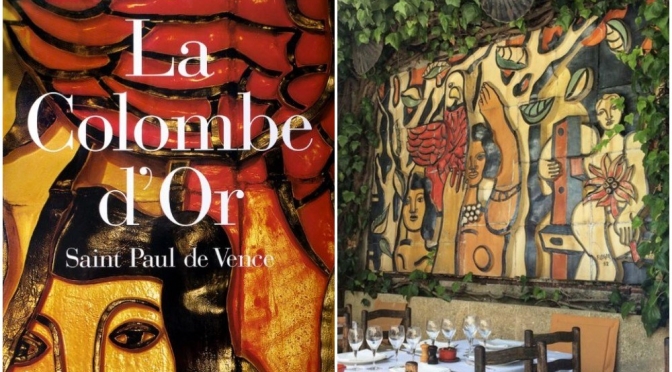
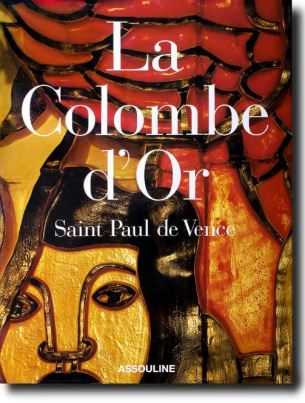 “Provence has a treasure; it’s a Colombe d’Or. It has the precious scent of thyme and nostalgia and the golden colour of olive oil and happy days. The Colombe is a part of my life. For me, it’s a place that’s as full of promise as of magnificent memories. The Colombe is indefinable, inimitable. I’m happy that today a book brings back the atmosphere of this place which is like no other in the world.”
 Boomers Daily