
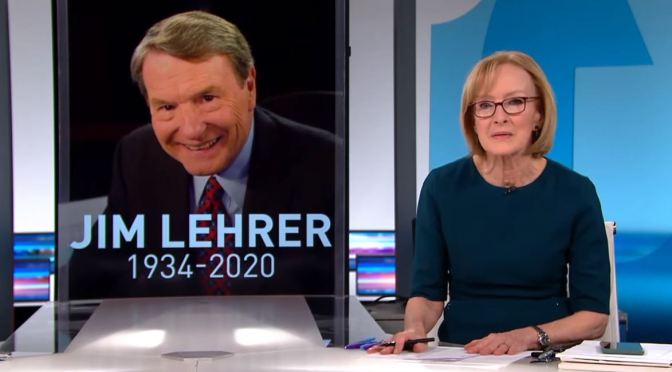
PBS NewsHour co-founder Jim Lehrer, a giant in journalism known for his tenacity and dedication to simply delivering the news, died peacefully in his sleep at home on Thursday, at the age of 85.
The Guardian’s health editor, Sarah Boseley, answers some of the most common and pressing questions surrounding the recent coronavirus outbreak in Wuhan, China
From an Undark.org online article:
This subsidence means that in a low-lying nation famous for engineering its way around rising seas, the ground is also sinking lower, creating huge problems for the structures built on top. At a certain point, building foundations begin to crack, sinkholes appear, roads destabilize, and the risk of flooding increases. More construction results in more pressing down of the peat — and more subsidence.
TOURISTS VISITING the Netherlands often stop to take selfies in front of one of the country’s more than 1,000 windmills. Afterward, they might taste one of the many varieties of cheese for which the nation is famous. But most are unaware that these two icons of the Netherlands are responsible for causing the nation’s land to sink.
The windmills were used for centuries to drain peatland for cattle grazing and agriculture at large, and that draining — these days done by pumping stations — is causing the land in some places to sink at an average rate of 8 millimeters per year, or about one-third of an inch. (In some areas, researchers put that number higher, at several centimeters per year.)
From a Hollywood Reporter online release:
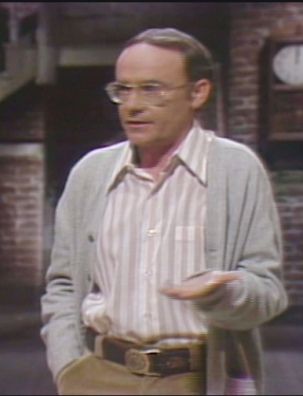 “Turman, Nichols and I related to The Graduate in exactly the same way,” Henry told Vanity Fair. “We all thought we were [the book’s protagonist] Benjamin Braddock. Plus, it’s an absolutely first-class novel, with great characters, great dialogue, a terrific theme. Who could resist it? I read it and I said, ‘Yes, let’s go.'”
Henry landed his first Oscar nom for the screenplay (he came up with the word “plastics” and had a small role in the film) and received a second nom for co-directing (with Warren Beatty) the reincarnation comedy Heaven Can Wait, a remake of the 1941 film Here Comes Mr. Jordan.
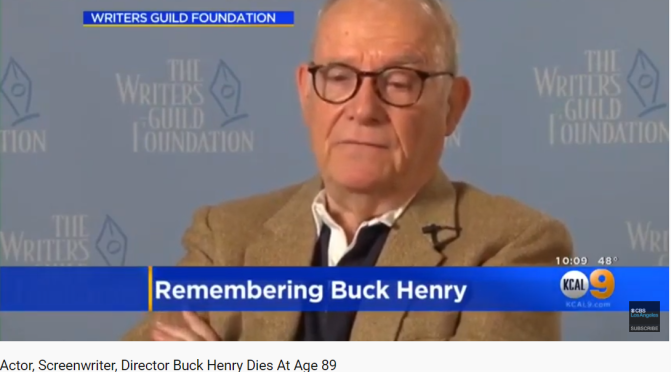
Buck Henry, the impish screenwriter whose wry, satirical sensibility brought comic electricity to The Graduate, What’s Up, Doc?, To Die For and TV’s Get Smart, has died. He was 89.
Henry, a two-time Oscar nominee who often appeared onscreen — perhaps most memorably as a 10-time host (all in the show’s first four years) on Saturday Night Live — died of a heart attack Wednesday at a Los Angeles hospital, his wife, Irene, told The Washington Post. He had suffered a stroke in November 2014.
 David Remnick has appeared as the guest of Terry Gross on “Fresh Air” a number of times over the years, talking about Russia, Muhammad Ali, and other subjects. Hosting “Fresh Air” for nearly forty-five years, Gross is a defining voice of NPR, and is perhaps the most celebrated interviewer of our time.
In October, 2019, the tables turned, and Gross joined Remnick as his guest for a live interview at The New Yorker Festival. They spoke about how she first found her way to the microphone, the role of feminism in establishing NPR, the limits of her expertise, and what she has had to give up to prepare for serious conversations day after day.
A look at the James Webb Space Telescope, it’s mission and the incredible technological challenge this mission presents.
Music credit: Universal Production
Music tracks: Future Generation Alternative Version by Dury; Moment of Anticipation Instrumental by Connolly; Dark Matter Instrumental by Beits
Credit: NASA’s Goddard Space Flight Center
Michael McClare (KBRwyle): Lead Producer
Michael McClare (KBRwyle): Lead Writer
Adriana Manrique Gutierrez (USRA): Animator
Jonathan North (USRA): Animator
Walt Feimer (KBRwyle): Animator
Michael Lentz (USRA): Animator
Bailee DesRocher (USRA): Animator
Michael McClare (KBRwyle): Lead Editor
Michael McClare (KBRwyle): Lead Videographer
This video is public domain and along with other supporting visualizations can be downloaded from the Scientific Visualization Studio
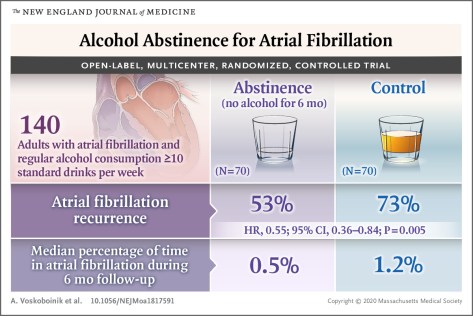
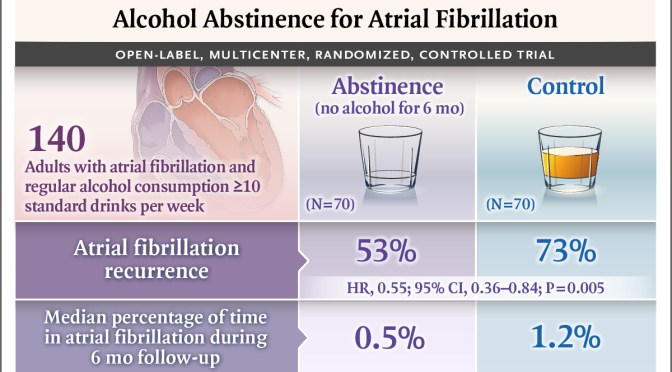
Abstinence from alcohol reduced arrhythmia recurrences in regular drinkers with atrial fibrillation.

January 2, 2020 Atrial fibrillation is the most common sustained arrhythmia,1 and alcohol is consumed by a majority of U.S. adults.2 The current study showed that among regular drinkers, a substantial reduction in alcohol consumption by patients with symptomatic atrial fibrillation was associated with a reduction in recurrence of atrial fibrillation and a reduced proportion of time spent in atrial fibrillation. Earlier meta-analyses showed that alcohol was associated with a dose-related increased risk of incident atrial fibrillation, with increased risk observed even among drinkers who consumed as few as 7 drinks per week.8 Current trends show a rise in alcohol consumption among adults older than 60 years of age,2coupled with greater prevalence of atrial fibrillation in this age group. The present study, with participants having an average intake of approximately 17 drinks per week at baseline, suggests that consumption at these levels may contribute to atrial fibrillation.






 Boomers Daily