Tag Archives: New York Times

Future Of Travel: Google Maps Offers The World (At 100% Discount Pricing)

From a New York Times article (March 24, 2020):

What I find particularly seductive about Google Street View is that it purports to be a very objective document of our world. It is simply the product of a car (or a motorbike or a hiker) driving down a street taking pictures. But, of course, it is far from an objective document. Humans get in the way, as they always do, filling each scene with stories. 

Google Maps Street View film car

Google Maps Website

There is something tantalizing about being there but not being there, about being everywhere and nowhere at once. The geospatial distance leaves us wanting, hungry for more. I’m enamored with the glitchiness of these human landscapes, the way people’s legs are sometimes separated from their bodies, the way everyone’s faces are blurred out, as if they no longer exist (sometimes they no longer do). This is our world, but it is not our world.

Read full article

Travel & Quarantines: Author Frances Mayes Writes Of Poet John Keats In Naples, Italy In 1820 (NYT)

From the New York Times (March 26, 2020):

I have seen Naples from his vantage of a ship anchored offshore — one of the most sublime locations in the world, that sweep of coast stacked with apricot, carmine, azure and rose villas; the blue, blue U of the harbor; the emphatic Vesuvius anchoring the view. 

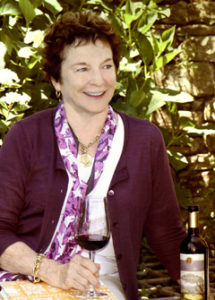
Frances Mayes
Frances Mayes

In October of 1820, typhus raged in Naples. With his artist friend, Joseph Severn, the British poet John Keats rocked in the city’s harbor for 10 days, not nearly the quaranta giorni — 40 days — that give us our word quarantine.

Before this journey, Keats always felt intense melancholy. In “On Seeing the Elgin Marbles for the First Time,” he wrote “… mortality / Weighs heavily on me like unwilling sleep.” (And in the smooth pentameter of “Ode to a Nightingale”: “I have been half in love with easeful death.”) Not a holiday, this voyage out of England was a desperate trip to the sunny climate of Italy. His cough had grown steadily worse. Since the morning he’d seen a splotch of blood on his pillow, he knew he had little chance of surviving the consumption that had invaded his lungs. His last-ditch: Go to Rome. Meanwhile, exile at sea.

Read full article

Study: Maintaining Weight Loss Tied To Healthier Eating Routines Formed Over Two-Year Period

From a New York Times online article (March 16, 2020):

New York Times How To Lose Weight and Keep It Off Study March 16 2020“Maintaining weight loss can get easier over time. Over time, less intentional effort, though not no effort, is needed to be successful. After about two years, healthy eating habits become part of the routine. Healthy choices become more automatic the longer people continue to make them. They feel weird when they don’t.”

Among the useful strategies identified in the new study is to keep lower calorie foods like fruits and vegetables more accessible. “We eat what we see,” Dr. Phelan noted. The corollary is equally important: keep high-calorie, less nourishing foods relatively inaccessible and out of sight if not out of the house entirely.

The new study led by Dr. Phelan, professor of kinesiology and public health at California Polytechnic State University, identified habits and strategies that can be keys to success for millions. Yes, like most sensible weight-loss plans, they involve healthful eating and regular physical activity. But they also include important self-monitoring practices and nonpunitive coping measures that can be the crucial to long-term weight management.

Read full article

How China And South Korea Are Containing “Coronavirus / Covid-19”

Global health officials have praised China and South Korea for the success of their efforts to contain the coronavirus. What are those countries getting right — and what can everyone else learn from them?

Real-Time Covid-19 Update

Guest: Donald G. McNeil Jr., a science and health reporter for The New York Times. For more information on today’s episode, visit nytimes.com/thedaily.

Background reading:

  • While world leaders are finally speaking out about the gravity of the pandemic, their response lacks unity with the United States absent from its traditional conductor role in managing global crises.
  • Stocks tanked again as the outbreak was officially declared a pandemic and policies to address its impact proved lacking or ineffective.
  • All flights to the U.S. have been suspended from Europe. Many schools announced they would close indefinitely, some nursing homes banned visitors, and workplaces across the country have urged their employees to work from home. Here are the latest updates.

Fitness: 62-Year Old Man Sets World Record For Holding Plank Position

From a New York Times online article (Feb 27, 2020):

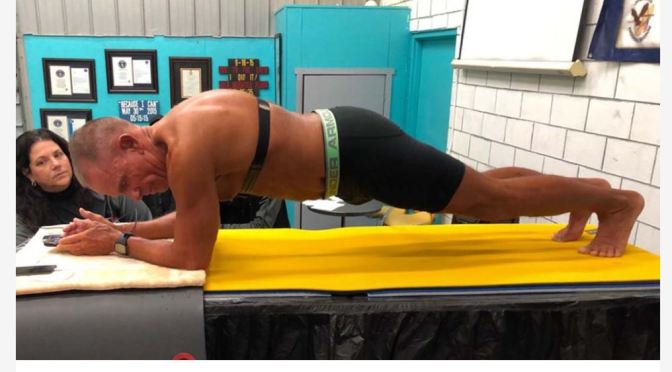
Mr. Hood, a former Marine and Drug Enforcement Administration agent, held a plank for eight hours, 15 minutes and 15 seconds.Credit...Josef Holic
Mr. Hood, a former Marine and Drug Enforcement Administration agent, held a plank for eight hours, 15 minutes and 15 seconds. Photo by Josef Holic

Mr. Hood, a former Marine and Drug Enforcement Administration agent, held the plank on Feb. 15 for more time than an average day’s work. 

The plank is a feat of static, but strenuous, exercise. The torso is sustained in a horizontal position, anchored by the toes on one end and the forearms on the other. The abdominal and thigh, back and arm muscles are among those firing away, turning most of the human body into a gravity-defying platform.

George E. Hood, a 62-year-old retiree from Naperville, Ill., strapped a heart monitor band across his chest, attached a catheter to his body, climbed onto a custom-built table covered with a lambskin and dialed up a curated rock ’n’ roll playlist on his phone.

And then he raised himself into a plank — and held the position for eight hours, 15 minutes and 15 seconds to set a Guinness World Record.

Read full article

Inteviews: 67-Year Old British Author Hilary Mantel – “Extraordinarily Probable Fiction” (NYT)

Excerpts from a New York Times interview (Feb 24, 2020):

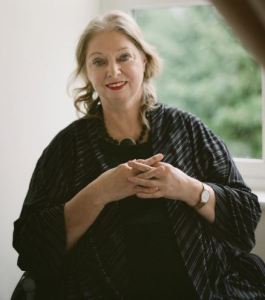
Hilary Mantel by Ellie Smith for the New York Times
“All that time I was listening to the past, and now I’m almost talking for a living,” Mantel said, “and it feels very frivolous and empty compared to the stillness that there used to be in every day.”Credit…Ellie Smith for The New York Times

“Hilary has reset the historical patterns through the way in which she’s reimagined the man,” said Diarmaid MacCulloch, an Oxford theology professor who published a new Cromwell biography in 2018. “It’s fiction which is extraordinarily probable, and it’s remarkably like the Cromwell I’d been excavating myself.”

Hilary Mantel has a recurring anxiety dream that takes place in a library. She finds a book with some scrap of historical information she’s been seeking, but when she tries to read it, the words disintegrate before her eyes.

“And then when you wake up,” she said, “you’ve got the rhythm of a sentence in your head, but you don’t know what the sentence was.”

To an unusual degree for a novelist, Mantel feels bound by facts. That approach has made her latest project — a nearly 1,800-page trilogy about the 16th-century lawyer and fixer Thomas Cromwell — more complicated than anything she’s undertaken in her four decades of writing.

Read full interview article

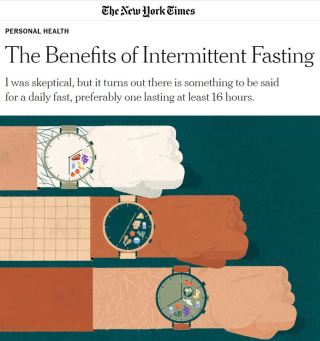
Diet: “Skeptical” NY Times Health Writer Endorses Numerous Health Benefits Of 16+ Hour Fasting

From a New York Times article by Jane E. Brody (Feb 17, 2020):

“It takes 10 to 12 hours to use up the calories in the liver before a metabolic shift occurs to using stored fat,” Dr. Mattson told me. After meals, glucose is used for energy and fat is stored in fat tissue, but during fasts, once glucose is depleted, fat is broken down and used for energy.

The Benefits of Intermittent Fasting Jane E Brody New York Times February 17 2020I was skeptical, but it turns out there is something to be said for practicing a rather prolonged diurnal fast, preferably one lasting at least 16 hours. Mark P. Mattson, neuroscientist at the National Institute on Aging and Johns Hopkins University School of Medicine, explained that the liver stores glucose, which the body uses preferentially for energy before it turns to burning body fat.
For example, human studies of intermittent fasting found that it improved such disease indicators as insulin resistance, blood fat abnormalities, high blood pressure and inflammation, even independently of weight loss. In patients with multiple sclerosis, intermittent fasting reduced symptoms in just two months, a research team in Baltimore reported in 2018.

Read more


Podcast Interviews: 66-Year Old Economist And Writer Paul Krugman On American Societal Issues

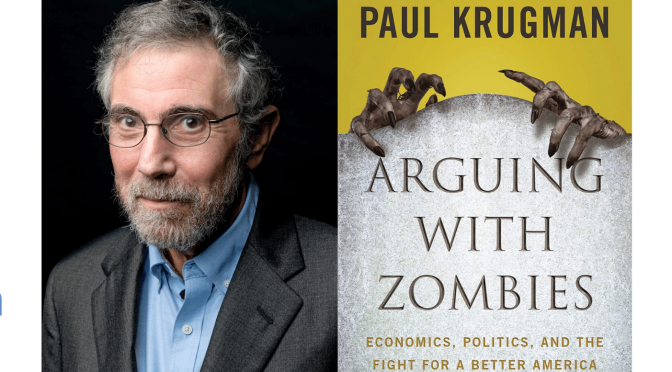
Bloomberg Opinion Masters in Business Barry Ritholtz podcastBloomberg Opinion columnist Barry Ritholtz interviews economist, bestselling author and New York Times columnist Paul Krugman, whose most recent book is “Arguing With Zombies: Economics, Politics, and the Fight for a Better Future.” 
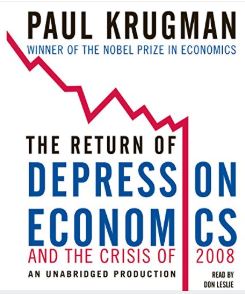
 

Paul Krugman The Return of Depression EconomicsPaul Robin Krugman (born February 28, 1953) is an American economist who is the Distinguished Professor of Economics at the Graduate Center of the City University of New York, and a columnist for The New York Times. In 2008, Krugman was awarded the Nobel Memorial Prize in Economic Sciences for his contributions to New Trade Theory and New Economic Geography. The Prize Committee cited Krugman’s work explaining the patterns of international trade and the geographic distribution of economic activity, by examining the effects of economies of scale and of consumer preferences for diverse goods and services.
Krugman was previously a professor of economics at MIT, and later at Princeton University. He retired from Princeton in June 2015, and holds the title of professor emeritus there. He also holds the title of Centenary Professor at the London School of Economics. Krugman was President of the Eastern Economic Association in 2010, and is among the most influential economists in the world. He is known in academia for his work on international economics (including trade theory and international finance),economic geography, liquidity traps, and currency crises.

Krugman is the author or editor of 27 books, including scholarly works, textbooks, and books for a more general audience, and has published over 200 scholarly articles in professional journals and edited volumes. He has also written several hundred columns on economic and political issues for The New York TimesFortune and Slate. A 2011 survey of economics professors named him their favorite living economist under the age of 60.[13] As a commentator, Krugman has written on a wide range of economic issues including income distribution, taxation, macroeconomics, and international economics. Krugman considers himself a modern liberal, referring to his books, his blog on The New York Times, and his 2007 book The Conscience of a Liberal. His popular commentary has attracted widespread attention and comments, both positive and negative. According to the Open Syllabus Project, Krugman is the second most frequently cited author on college syllabi for economics courses.

From Wikipedia

Interviews: 66-Year Old Editor And Journalist Tina Brown (NY Times)

From a New York Times Magazine article (Feb 7, 2020):

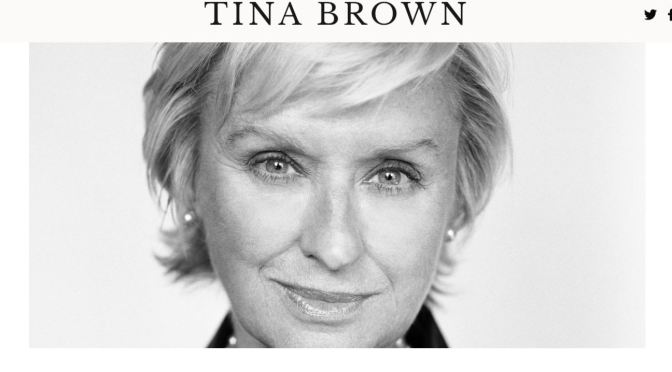
Tina Brown New York Time photo Feb 7 2020Is being an editor in chief again something you’d ever think about doing?
 I have to suppress those feelings, because I love content, to use the horrible word, and editors now are so beleaguered that all the fun that I had isn’t there to be had. It’s a shame that editors get so little time now to think about stories and writers. Most of their time is spent having incredibly boring meetings about distribution and platforms and branded digital content. All this stuff, it’s just incredibly miserable. What I love, and what I’ve always loved, is telling stories.

What’s a third-rail conversation that you’re not having or that isn’t happening at Women in the World events? #MeToo is fraught, because anything can be taken and become this flying I.E.D. that can mess you up. It’s difficult to have a debate about that topic, because all the things that people say off-camera they don’t want to say in public.

Unlike most journalists, Tina Brown carries with her an aura of swashbuckling glamour, a remnant of her starry, high-budget run during the 1980s and ’90s as editor in chief of Vanity Fair and then The New Yorker. Like many journalists, Brown, 66, has pivoted in recent years to an adjacent line of work, in her case the live-event business. Her Women in the World Summit, which has hosted speakers like Oprah Winfrey and the Nobel Peace Prize winner Nadia Murad, is held each spring at Lincoln Center. (The New York Times was once a partner in the business.) She has also written two best-selling books, “The Vanity Fair Diaries” and “The Diana Chronicles,” a tell-all about the British royal family.

Read full article

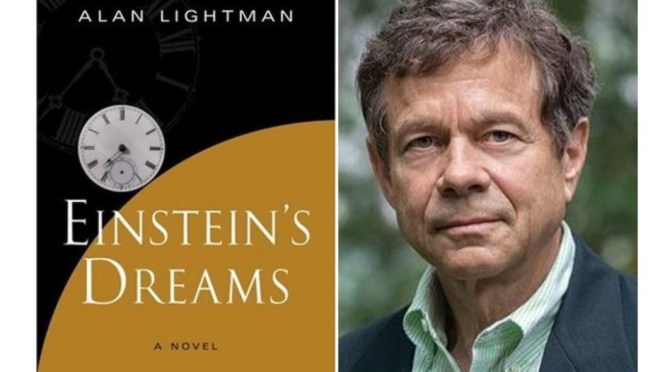
Profiles: 71-Year Old Physicist And Author Alan Lightman’s “Creative Life”

From a New York Times online article (February 13, 2020):

“I love physics, but what was even more important to me was leading a creative life,” Dr. Lightman said. “And I knew that writers could continue doing their best work later in life.”

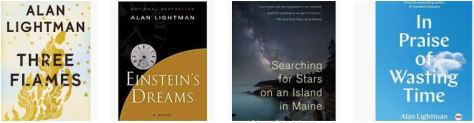
Alan Lightman Books

Lightman is best known in literary circles for his 1992 novel, “Einstein’s Dreams,” which is all about the vicissitudes – romantic, physical and otherwise – of time. It recounts the nightly visions of a young patent clerk in Bern, Switzerland, as he struggles to finish his theory of relativity.

But before that, Dr. Lightman was an astrophysicist, a card-carrying wizard of space and time, with a Ph.D. from the California Institute of Technology and subsequent posts at Cornell and Harvard In 1989, at the peak of his prowess as a physicist, he began to walk away from the world of black holes to enter the world of black ink and the uncertain, lonely life of the writer.

Recently he was in New York for the opening of “Einstein’s Dreams,” an off-Broadway play based on his book. There have been dozens of such stage adaptations over the last 30 years.

Read full article