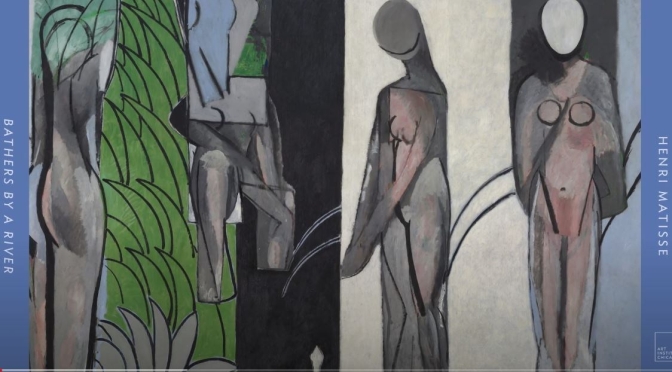
On this episode of Art Institute Essentials Tour, take a closer look at Bathers by a River, started by Henri Matisse in 1909 and completed in 1917. Henri Matisse originally painted this work as a pastoral scene, but over the next decade he transformed it into the cubist-inflected composition seen today. When the painting was acquired by the Art Institute in 1953, Matisse told the museum’s director that he viewed the painting as one of his five most pivotal works.
Henri Émile Benoît Matisse (1869 -1954) was a French artist, known for both his use of colour and his fluid and original draughtsmanship. He was a draughtsman, printmaker, and sculptor, but is known primarily as a painter.
In this week’s episode of “Travels with a Curator,” journey to the Spanish town of Osuna, most famously known as one of the film locations for “Game of Thrones” but also the title lands of the 9th Duke of Osuna, whose portrait by Goya is in the collection at the Frick. Join Xavier F. Salomon, Deputy Director and Peter Jay Sharp Chief Curator, as he recounts his trip to rural Andalusia in search for the tomb of the Duke.
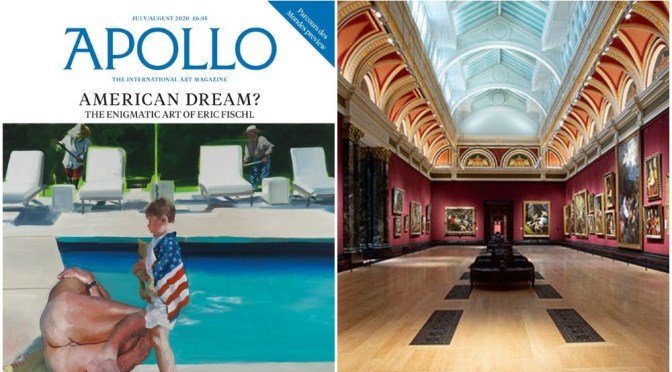
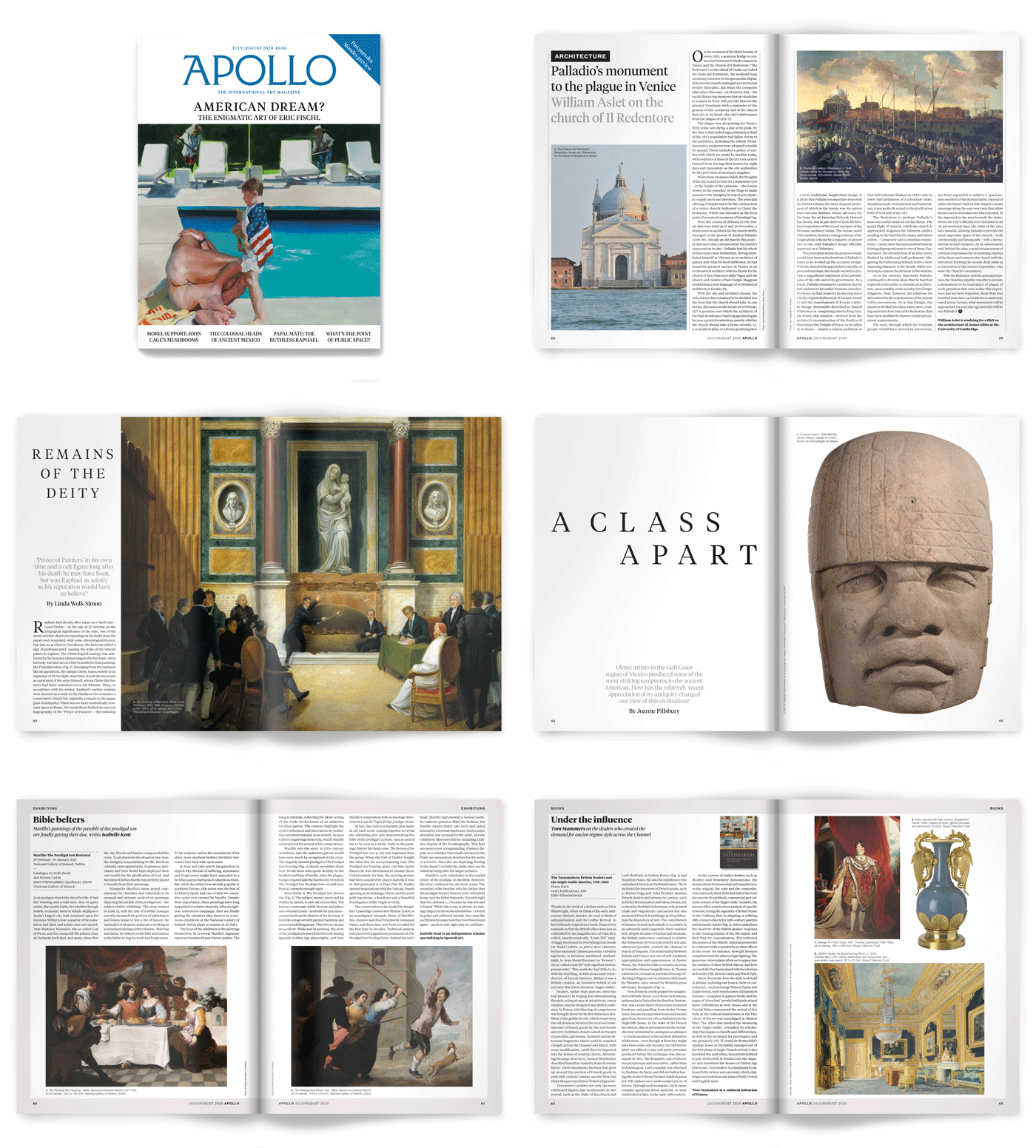
FEATURES | Eric Fischl interviewed by Thomas Marks; Linda Wolk-Simon on the life and legacy of Raphael; Joanne Pillsbury on the art of the Olmecs; Samuel Reilly on private restitution of colonial-era artefacts; Christopher Turner on shopfronts and gallery facades; Josie Thaddeus-Johns on John Cage’s mushrooms
REVIEWS | Isabelle Kent on Murillo at the National Gallery of Ireland; Tom Stammers on the British fashion for French interiors; James Lingwood on Stephen Shore’s photographs; Robert O’Byrne on The Buildings of Ireland
On this episode of Art Institute Essentials Tour, take a closer look at American Windows, created by Marc Chagall in 1977. Later in his life, the artist Marc Chagall turned to the medium of stained glass to explore intense color on a monumental scale. This six-panel work, created for the museum to commemorate America’s bicentennial, merges symbols of American history, the Chicago skyline, and the arts.
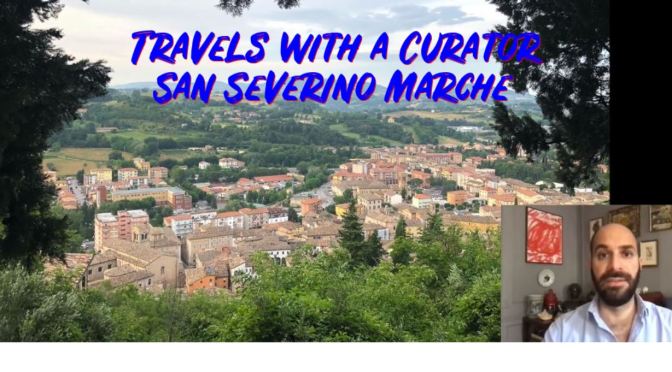
In this episode of “Travels with a Curator,” Xavier F. Salomon, Peter Jay Sharp Chief Curator, invites us to the Italian city of San Severino Marche to investigate the mystery of the Frick’s “Coronation of the Virgin,” by Paolo Veneziano. The gold-ground panel was originally part of a larger ensemble, but the altarpiece was dismembered sometime before the 1820s. What do we know about the polyptych—and where are the other fragments? Search for clues in a Dominican church just outside the city walls.
The Getty Villa is devoted to the study and display of art from the ancient world. Housed in a spectacular recreation of an ancient Roman villa, its collection celebrates the culture and artistry of ancient peoples and draws connections to our world today.
Located near the Pacific shore in Malibu, California, the Getty Villa serves a varied audience through exhibitions, conservation, scholarship, research, and public programs. The Villa houses approximately 44,000 works of art from the Museum’s extensive collection of Greek, Roman, and Etruscan antiquities, of which over 1,200 are on view.
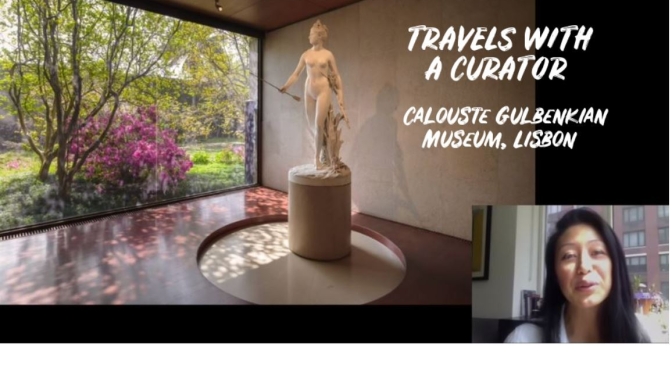
In this episode of “Travels with a Curator,” Curator Aimee Ng takes viewers on a journey to Lisbon’s Calouste Gulbenkian Museum, the home of an extraordinary private collection that, like the Frick, was made available for the enjoyment of the public after the collector’s death. This is a museum about discovery and movement, a place of marvelous encounters between the Old Masters and modernist architecture. Peek inside this spectacular museum—you may recognize a certain marble sculpture whose terracotta sister resides at the Frick.
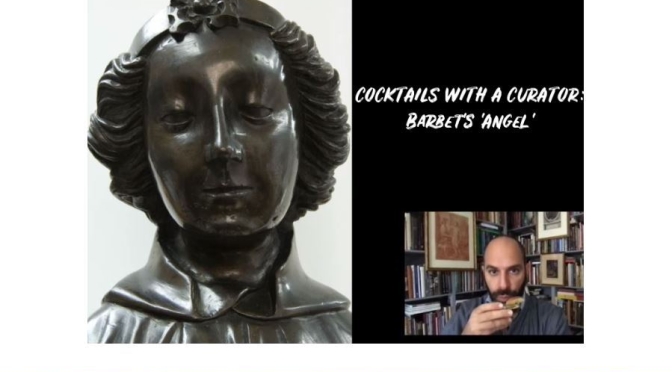
In this week’s episode of “Cocktails with a Curator,” discover the fascinating history of Jean Barbet’s Angel, an incredibly rare bronze from fifteenth-century France whose origins are shrouded in mystery. Xavier F. Salomon, Peter Jay Sharp Chief Curator, discusses the royal cannon-maker who cast the sculpture and the possibility that it once resided in Paris’s Sainte-Chapelle. This week’s complementary cocktail is the Angel Face, customarily garnished with an apple slice.
Hosted in the Andito degli Angiolini space at Palazzo Pitti, “The Immensity of the Universe in the Art of Giovanna Garzoni” exhibition encompasses 100 floral compositions, still lives and miniatures by the Baroque, Marche-born painter friend of Artemisia Gentileschi.
The show has been curated by Sheila Barker of The Medici Archive Project and the Advancing Women Artists foundation is running a challenge to inspire the creation of contemporary art based on Garzoni’s oeuvre. While her role in the evolution of scientific illustration is widely acknowledged, Giovanna Garzoni is less familiar as an illustrator of geographical fantasy in the age of the Baroque.
In harmonic and often relatively small compositions, the painter combines exotic objects of extremely varied provenance such as Chinese porcelain, Pacific nautili, Mexican marrows and flowers, South American plants and English lapdogs, in an effort both to astonish and to amuse.
Turning her back on the conventional role reserved for women in her day, Garzoni travelled in Italy, and possibly also in France, gaining access to the most important collections of curios of her era. The exhibition showcases her works collected by the Medici and still owned by the Gallerie degli Uffizi, alongside targeted loans illustrating the artist’s field of action and her prowess as a portraitist.
On the basis of a previously untapped inventory, a section of the exhibition reconstructs Vittoria della Rovere’s Wunderkammer, once hosted in the Sala dell’Aurora in the villa of Poggio Imperiale, thus indirectly shedding light also on a leading member of the grand ducal family.