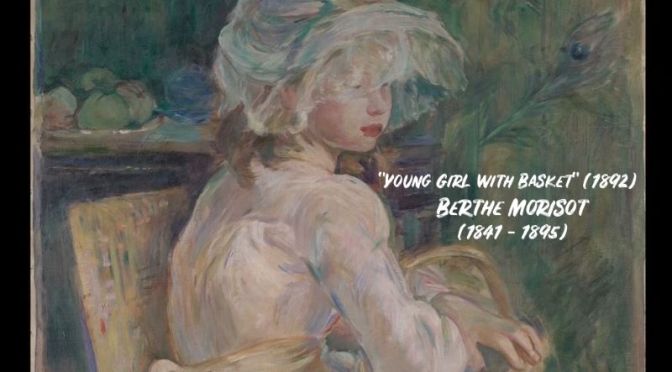
Berthe Marie Pauline Morisot was a French painter and a member of the circle of painters in Paris who became known as the Impressionists. In 1864, Morisot exhibited for the first time in the highly esteemed Salon de Paris.

Berthe Marie Pauline Morisot was a French painter and a member of the circle of painters in Paris who became known as the Impressionists. In 1864, Morisot exhibited for the first time in the highly esteemed Salon de Paris.
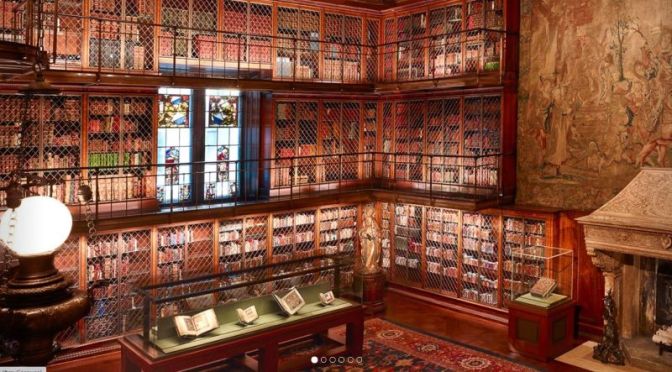
The Morgan Library & Museum, formerly the Pierpont Morgan Library, is a museum and research library in the Murray Hill neighborhood of Manhattan, New York City. It is situated at 225 Madison Avenue, between 36th Street to the south and 37th Street to the north.
A complex of buildings in the heart of New York City, The Morgan Library & Museum began as the private library of financier Pierpont Morgan (1837–1913), one of the preeminent collectors and cultural benefactors in the United States. As early as 1890 Morgan had begun to assemble a collection of illuminated, literary, and historical manuscripts, early printed books, and old master drawings and prints.
Mr. Morgan’s library, as it was known in his lifetime, was built between 1902 and 1906 adjacent to his New York residence at Madison Avenue and 36th Street. Designed by Charles McKim of the architectural firm McKim, Mead & White, the library was intended as something more than a repository of rare materials. Majestic in appearance yet intimate in scale, the structure was to reflect the nature and stature of its holdings. The result was an Italian Renaissance-style palazzo with three magnificent rooms epitomizing America’s Age of Elegance. Completed three years before McKim’s death, it is considered by many to be his masterpiece. In 1924, eleven years after Pierpont Morgan’s death, his son, J. P. Morgan, Jr. (1867–1943), known as Jack, realized that the library had become too important to remain in private hands. In what constituted one of the most momentous cultural gifts in U.S. history, he fulfilled his father’s dream of making the library and its treasures available to scholars and the public alike by transforming it into a public institution.
Over the years—through purchases and generous gifts—The Morgan Library & Museum has continued to acquire rare materials as well as important music manuscripts, early children’s books, Americana, and materials from the twentieth century. Without losing its decidedly domestic feeling, the Morgan also has expanded its physical space considerably.
In 1928, the Annex building was erected on the corner of Madison Avenue and 36th Street, replacing Pierpont Morgan’s residence. The Annex connected to the original McKim library by means of a gallery. In 1988, Jack Morgan’s former residence—a mid-nineteenth century brownstone on Madison Avenue and 37th Street—also was added to the complex. The 1991 garden court was constructed as a means to unite the various elements of the Morgan campus.
The largest expansion in the Morgan’s history, adding 75,000 square feet to the campus, was completed in 2006. Designed by Pritzker Prize–winning architect Renzo Piano, the project increases exhibition space by more than fifty percent and adds important visitor amenities, including a new performance hall, a welcoming entrance on Madison Avenue, a new café and a new restaurant, a shop, a new reading room, and collections storage. Piano’s design integrates the Morgan’s three historical buildings with three new modestly scaled steel-and-glass pavilions. A soaring central court connects the buildings and serves as a gathering place for visitors in the spirit of an Italian piazza.
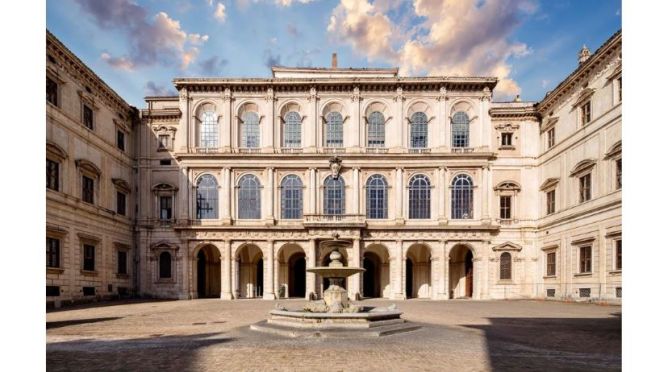
Palazzo Barberini is an imposing Baroque building that houses the Galleria Nazionale d’Arte Antica, the National Gallery of Ancient Art. Commissioned by Pope Urban VIII, the mansion was the most elegant and luxurious villa of the period.
In 1623, Maffeo Barberini, once made Pope (Pope Urban VIII), ordered the construction of the estate to Italian architect Carlo Maderno, who is responsible for the design of St Peter’s Basilica’s façade. The construction started in 1625 and was finished in 1633 by Bernini, after Maderno’s death.
In 1949, the Italian State bought the palazzo to house the Galleria Nazionale d’Arte Antica, which was created from the donations of pieces of art by several noble Italian families.
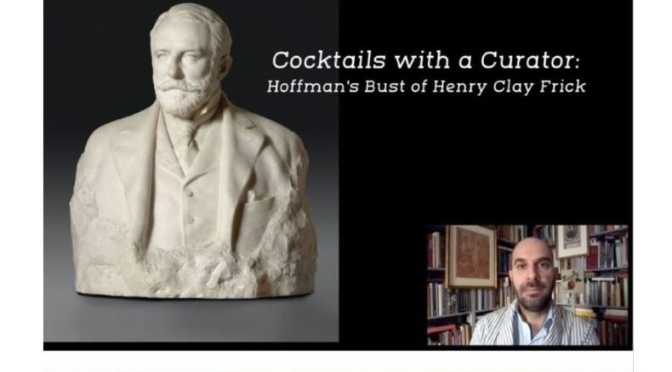
In this week’s episode of “Cocktails with a Curator,” Deputy Director and Peter Jay Sharp Chief Curator Xavier F. Salomon takes a closer look at Malvina Cornell Hoffman’s marble bust of Henry Clay Frick, the museum’s founder, and considers the complicated legacy of the Pennsylvania-born industrialist. This month marks several important milestones for the Frick, including the eighty-fifth anniversary of the opening of a museum for, in Frick’s words, “all persons whomsoever.” This oft-overlooked bust was commissioned by his daughter, Helen Clay Frick, and for many years welcomed guests in the Entrance Hall at 1 East 70th Street. This week’s complementary cocktail is the Old Fashioned, a nod to Frick’s first job as an accountant for the family whiskey distillery.
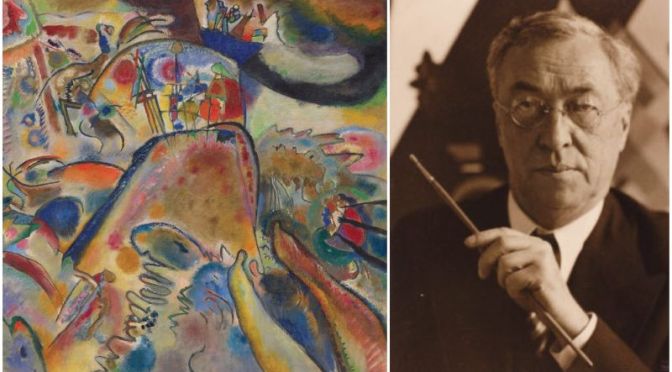
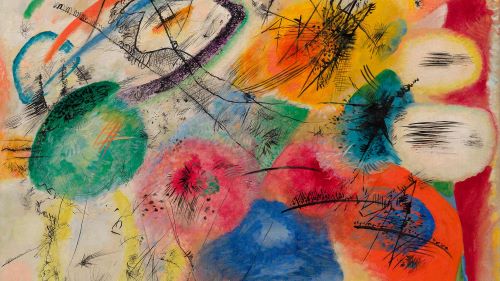
As a pioneer of abstraction and a renowned aesthetic theorist, Vasily Kandinsky (b. 1866, Moscow; d. 1944, Neuilly-sur-Seine, France) is among the foremost artistic innovators of the early twentieth century.

In his endeavor to free painting from its ties to the natural world, Kandinsky discovered a new subject matter based solely on the artist’s “inner necessity” that would remain his lifelong concern.
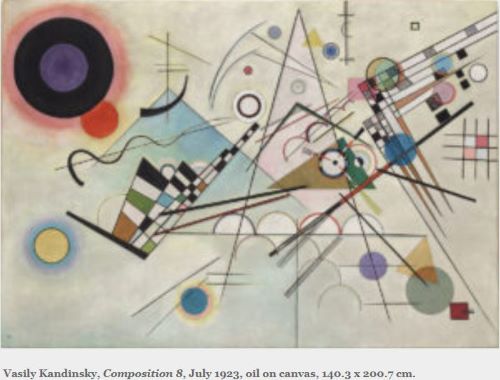
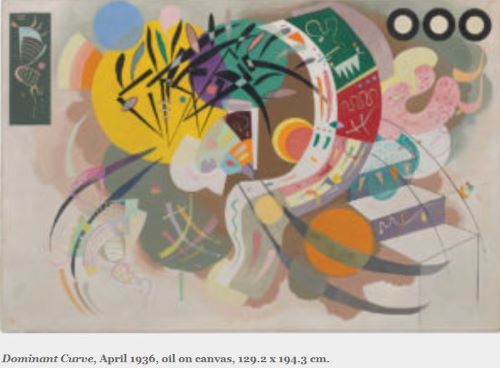
In Munich in the 1900s and early 1910s, Kandinsky began exploring the expressive possibilities of color and composition, but he was abruptly forced to leave Germany with the outbreak of World War I, in 1914. The artist eventually returned to his native Moscow, and there his pictorial vocabulary started to reflect the utopian experiments of the Russian avant-garde, who emphasized geometric shapes in an effort to establish a universal aesthetic language. Kandinsky subsequently joined the faculty of the Bauhaus, a German school of art and applied design that shared his belief in art’s ability to transform self and society. Compelled to abandon Germany again when the Bauhaus closed under Nazi pressure in 1933, he settled outside Paris, where Surrealism and the natural sciences influenced Kandinsky’s biomorphic imagery.
More so than any other artist, Kandinsky is intertwined with the history of the Solomon R. Guggenheim Foundation, established in New York in 1937. Industrialist and museum founder Solomon R. Guggenheim began collecting Kandinsky’s work in 1929 and met him at the Dessau Bauhaus the following year. This exhibition draws from the foundation’s extensive holdings to illustrate the full arc of Kandinsky’s seminal career.
Curator: Megan Fontanella
Organized by The Solomon R. Guggenheim Foundation, New York
Wassily Wassilyevich Kandinsky was a Russian painter and art theorist. Kandinsky is generally credited as the pioneer of abstract art. Born in Moscow, Kandinsky spent his childhood in Odessa, where he graduated at Grekov Odessa Art school. He enrolled at the University of Moscow, studying law and economics.
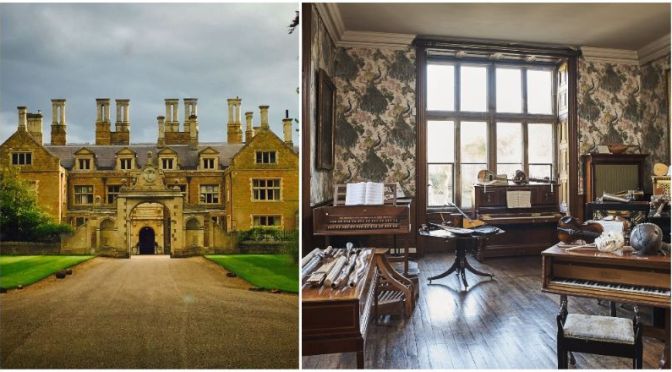
When you visit a stately home like Holdenby, you expect the pomp, the glamor, the sense of history. Less expected, perhaps, is a museum for some of the rarest musical instruments around.
Holdenby House is a historic country house in Northamptonshire, traditionally pronounced, and sometimes spelt, Holmby. The house is situated in the parish of Holdenby, six miles northwest of Northampton and close to Althorp. It is a Grade II* listed building.
From An American Aristocrat’s Guide to Great Estates: https://bit.ly/2YK7Yn4
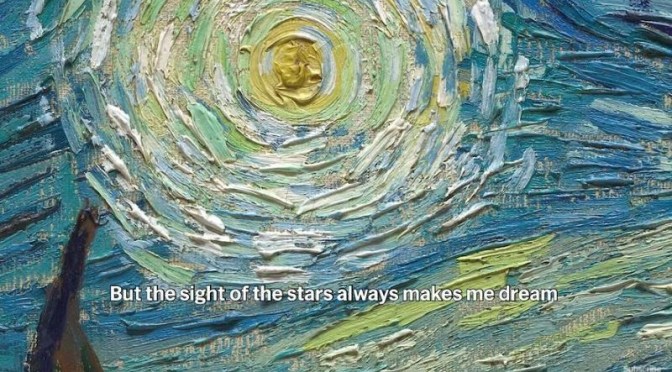
Vincent van Gogh’s “The Starry Night” has been a visitor favorite at MoMA since it first appeared in our Van Gogh retrospective in 1935 and then was acquired in 1939. To become acquainted with the heart and mind of its maker, there is no better source than his letters. Those to his brother Theo, in particular, reveal his deepest aims and convictions, and his pleasures and anxieties, especially during the last year-and-a-half of his life, working in near-isolation from an asylum in St.-Remy.
Learn more at Virtual Views: Vincent van Gogh’s “Starry Night” https://www.moma.org/calendar/exhibit…
See the process involved in casting a bronze figure – from the creation of a wax model through to the final sculpture. Find out more about sculpture: https://www.vam.ac.uk/collections/scu…
Experience the Summer Exhibition like never before with this interactive tour. Visit each gallery with the click of a button and browse or buy the works online.
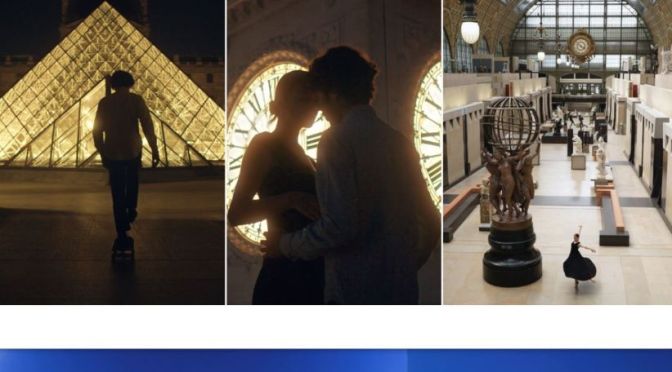
A love story between a ballet dancer and a Parisian skateboarder in empty French museums. The union of two bodies in motion through time and history of art. Two souls intimately linked, each one appropriating their own space to revive the works of art. Museum : an epic and lyrical journey between shadows and lights combining classical ballet and skateboarding.
Directed by Marin Troude & Tristan Helias
Produced by Tristan Helias
Ballet dancer : Victoria Dauberville
Skateboarder : Tristan Helias
Musée d’Orsay : Laurence Des Cars, Amélie Hardivillier, Marion Guillaud, Fanny Livet
CMN : Philippe Béleval, Jill Ickowicz
Script : Tristan Helias, Marin Troude
Art direction : Marin Troude, Tristan Helias
Ballet choreography : Victora Dauberville
Cinematography : Killian Lassablière & Marin Troude


 Boomers Daily