
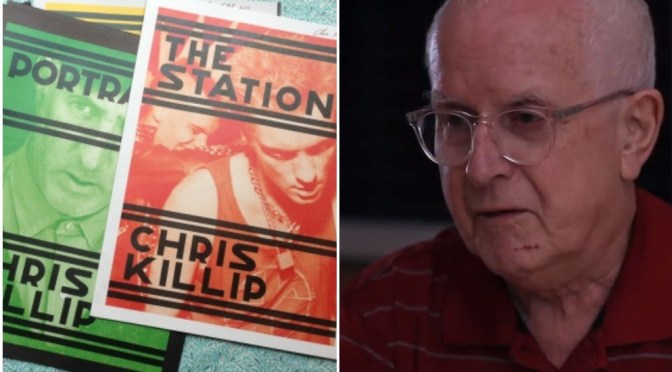
Born on the Isle of Man in 1946, Chris Killip was a Professor of Visual and Environmental Studies at Harvard University where he had taught from 1991.

Since 2012 he has held solo exhibitions at Museum Folkwang, Essen; Le Bal, Paris; Tate Britain, London; Museo Reina Sofia, Madrid; and the J. Paul Getty Museum, Los Angeles. Killip’s works are held in the permanent collections of institutions including the Museum of Modern Art, New York; George Eastman House, Rochester; and the Victoria and Albert Museum, London. His books with Steidl are ‘Pirelli Work’ (2006), ‘Seacoal’ (2011), ‘Arbeit / Work’ (2012), ‘Isle of Man Revisited’ (2015), ‘In Flagrante Two’ (2016) and most recently ‘The Station’ (2020).
Chris Killip (born 11 July 1946) is a Manx photographer who worked at Harvard University in Cambridge, from 1991 to 2017, as a Professor of Visual and Environmental Studies. Killip is well known for his gritty black and white images of people and places.
Killip is the recipient of numerous awards, including the Henri Cartier-Bresson Award (for In Flagrante). He has exhibited all over the world, written extensively, appeared on radio and television, and has curated many exhibitions.
From Wikipedia
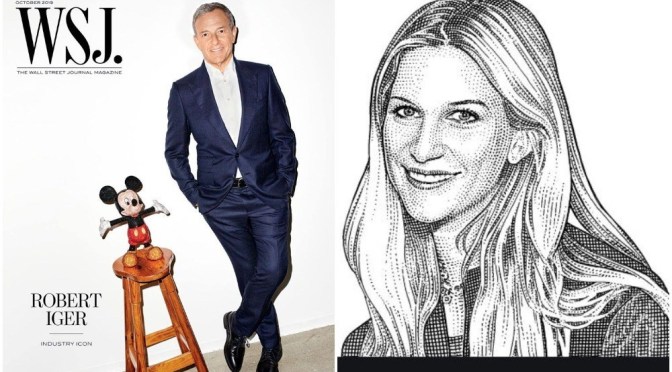
 Monocle 24’s “The Stack” speaks to Kristina O’Neill, editor in chief of ‘WSJ’, the lifestyle magazine of the ‘Wall Street Journal’, on the title’s expansion and plans for 2020.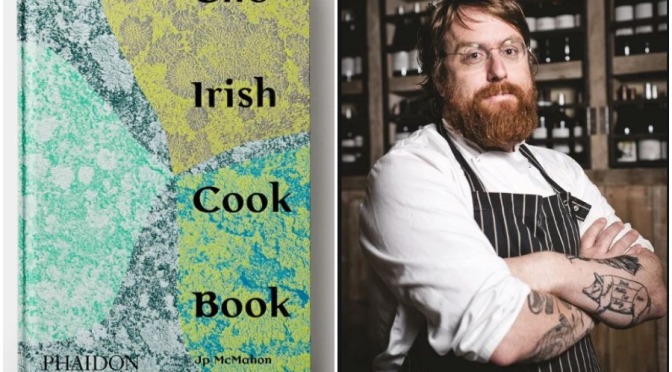
 Galway’s top chef, JP McMahon, on what the world doesn’t understand about Ireland’s food culture.


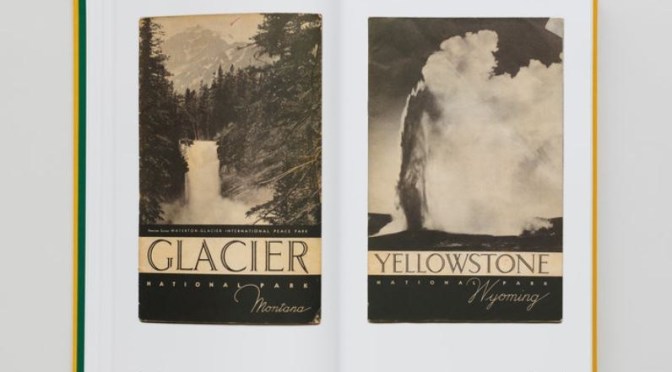
 The National Park Service spans hundreds of sites across the US, including monuments, seashores, memorials and parks. Brian Kelley and Jesse Reed survey the design history of the agency’s visual identity.
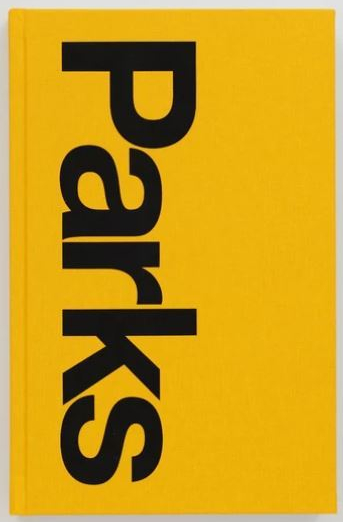 This book brings togethere a collection of over 400 maps produced by the United States National Park Service from 1910 to today. Photographer Brian Kelley has impulsively archived the rarely seen treasures over the past three years, uncovering a design portfolio with little to no credit to their respective designers. The growing collection displays a progressive design approach, from more typographic-driven covers, to the proliferation of duotone print production, culminating in the Unigrid system developed by Italian designer Massimo Vignelli in the 1970s.

 Rocket scientist-turned-immunology expert Mark Kendall talks about his Nanopatch, which could revolutionise vaccinations and eradicate some diseases.
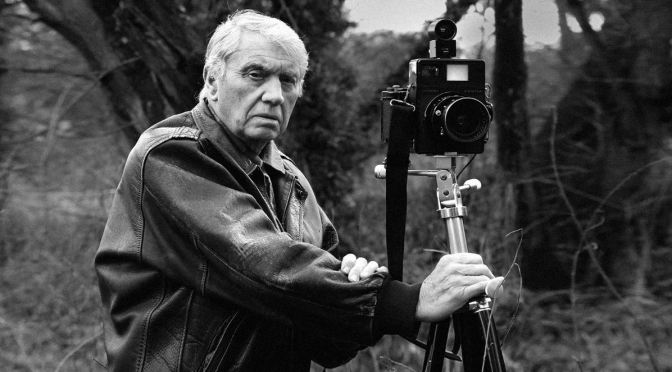
 comes over my life when I think […] that I’ve earned my reputation out of other people’s downfall. I’ve photographed dead people and I’ve photographed dying people, and people looking at me who are about to be murdered in alleyways. So I carry the guilt of survival, the shame of not being able to help dying people.’
  On top of a hill a few miles from Don McCullin’s house in Somerset is a dew pond, a perfectly circular artificial pond for watering livestock. Nobody knows how long it has been there; some dew ponds date back to prehistoric times, and it’s tempting to think that this one served the Bronze Age hill-fort that overlooks the site. McCullin is obsessed with the pond. For more than 30 years, whenever he has had the time, he has walked up the hill and stood there with his camera waiting for the right moment to take a photograph. Often, the moment never comes: he can spend hours there, just looking. ‘It’s as if it has a hold over me,’ he tells me when I visit him at home in early January. ‘I can’t leave it alone, I photograph it all the time. And yet I think I’ve done my best picture the first time I ever did it. I can’t tell you how.’
 Boomers Daily