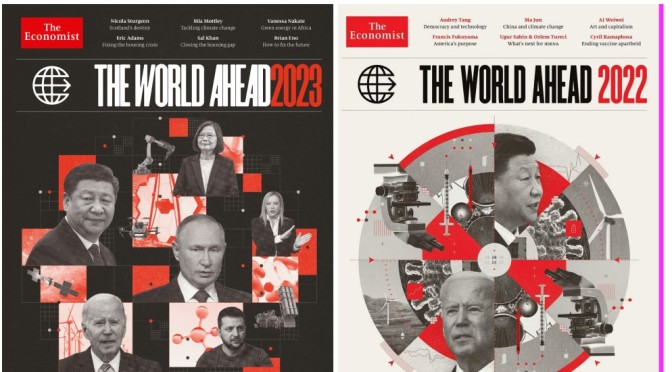

Video timeline: 00:00 – The World Ahead 2023 00:35 – India’s population potential 04:30 – Psychedelic medicines 08:06 – Japan’s markets mayhem? 12:45 – Repairing the world 15:50 – The coronation’s colonial concerns

Video timeline: 00:00 – The World Ahead 2023 00:35 – India’s population potential 04:30 – Psychedelic medicines 08:06 – Japan’s markets mayhem? 12:45 – Repairing the world 15:50 – The coronation’s colonial concerns


The actress and writer recalls working with French cinema’s enfant terrible.
Such a device could help address climate change and food scarcity, or break the Internet. Will the U.S. or China get there first?
Ecologists are trying to undo environmental damage in rain forests, deserts, and cities. Can their efforts succeed even as Narendra Modi pushes for rapid development?
World Economic Forum – Stories of the Week November 4, 2022:
0:15 – This small airport is Europe’s largest outdoor music venue – The 20-hectare RCF Arena is located on the fringes of Reggio Emilia Airport, just outside Bologna in northern Italy.
01:38 – 7 tips to create a healthy remote working culture from this fully remote team – Tango is a software company with 30 team members working remotely. With all employees working remotely, they ask new hires to write a personal user manual with questions such as ‘how do you like to receive feedback’ and ‘what’s commonly misunderstood about you?’. They also suggest that each team member shares their thoughts on the week; they can celebrate each other, highlight customer feedback or just talk about something going on in their life. Here are some more of their tips for remote workers.
03:31 – This is India’s first solar powered village – Modhera in the state of Gujarat has round-the-clock solar energy with 12 hectares of land covered in solar panels.
04:31 – New Zealand’s parliament has more women than men – New Zealand now has 60 women lawmakers and 59 men in Parliament after Soraya Peke-Mason was recently sworn in as an MP.
The World Economic Forum is the International Organization for Public-Private Cooperation. The Forum engages the foremost political, business, cultural and other leaders of society to shape global, regional and industry agendas. We believe that progress happens by bringing together people from all walks of life who have the drive and the influence to make positive change.
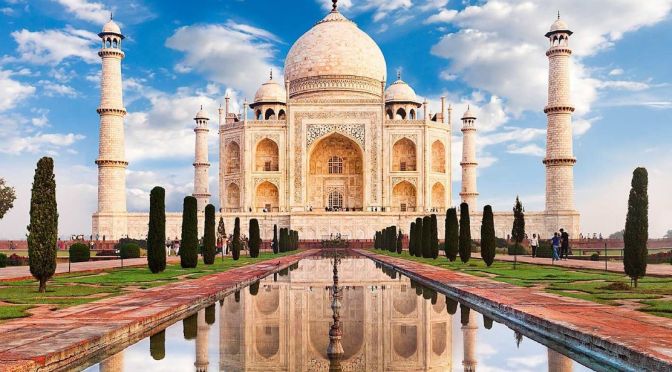
Taj Mahal, also spelled Tadj Mahall, mausoleum complex in Agra, western Uttar Pradesh state, northern India. The Taj Mahal was built by the Mughal emperor Shah Jahān (reigned 1628–58) to immortalize his wife Mumtaz Mahal (“Chosen One of the Palace”), who died in childbirth in 1631, having been the emperor’s inseparable companion since their marriage in 1612. India’s most famous and widely recognized building, it is situated in the eastern part of the city on the southern (right) bank of the Yamuna (Jumna) River. Agra Fort (Red Fort), also on the right bank of the Yamuna, is about 1 mile (1.6 km) west of the Taj Mahal.
In its harmonious proportions and its fluid incorporation of decorative elements, the Taj Mahal is distinguished as the finest example of Mughal architecture, a blend of Indian, Persian, and Islamic styles. Other attractions include twin mosque buildings (placed symmetrically on either side of the mausoleum), lovely gardens, and a museum. One of the most beautiful structural compositions in the world, the Taj Mahal is also one of the world’s most iconic monuments, visited by millions of tourists each year. The complex was designated a UNESCO World Heritage site in 1983.
Parkour athlete Jason Paul uses all of his freerunning skills and speed to chase across the busy streets of Mumbai to return a Bollywood actors lunchbox… 🇮🇳
See more incredible freerunning from Jason Paul here: https://www.redbull.com/int-en/shows/…
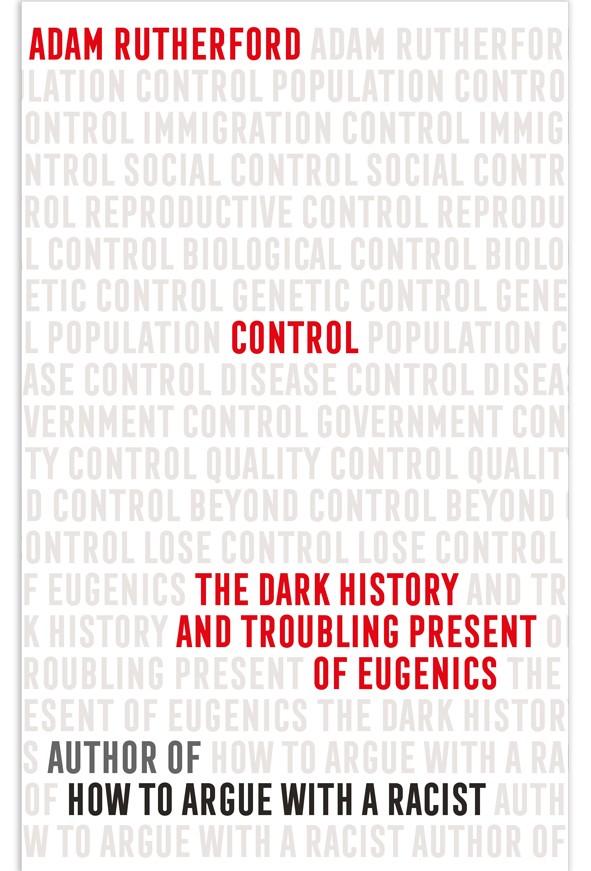
Control
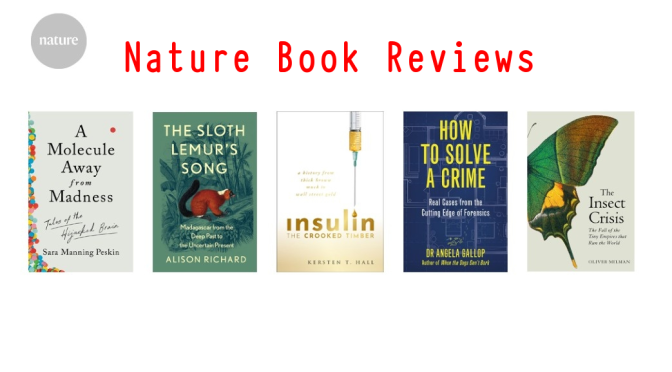
Adam Rutherford Weidenfeld & Nicolson (2022)
When Charles Darwin’s cousin, Francis Galton, coined the word eugenics in 1883, he called it the study of the conditions under which “men of a high type are produced”. This gross idea led to the gates of Auschwitz, reminds broadcaster Adam Rutherford (an alumnus of the Galton Laboratory, former name of University College London’s human‑genetics centre). It hasn’t gone away, he explains in his timely salvo on the politics and history of notions that dog genetics, events up to and after the ‘CRISPR twins’ and the resurgence of white supremacy.
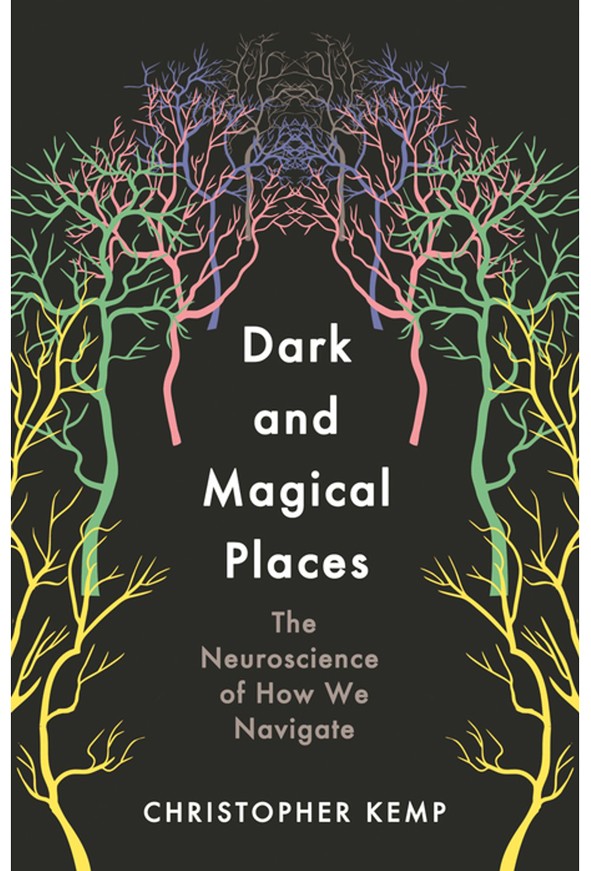
Dark and Magical Places
Christopher Kemp Profile/Wellcome Collection (2022)
“I have no sense of direction,” confesses molecular biologist Christopher Kemp — unlike his wife, “an effortless and intuitive navigator”. Once, in a mirror maze, he was transfixed with alarm, and had to be pulled out by his seven-year-old son. Many others experience similar disorientation, sometimes with disastrous results, as when hikers get lost. Their stories vitalize this compelling study of the brain, memory and navigation, in which one psychologist compares our understanding of parts of the brain with knowledge of black holes.
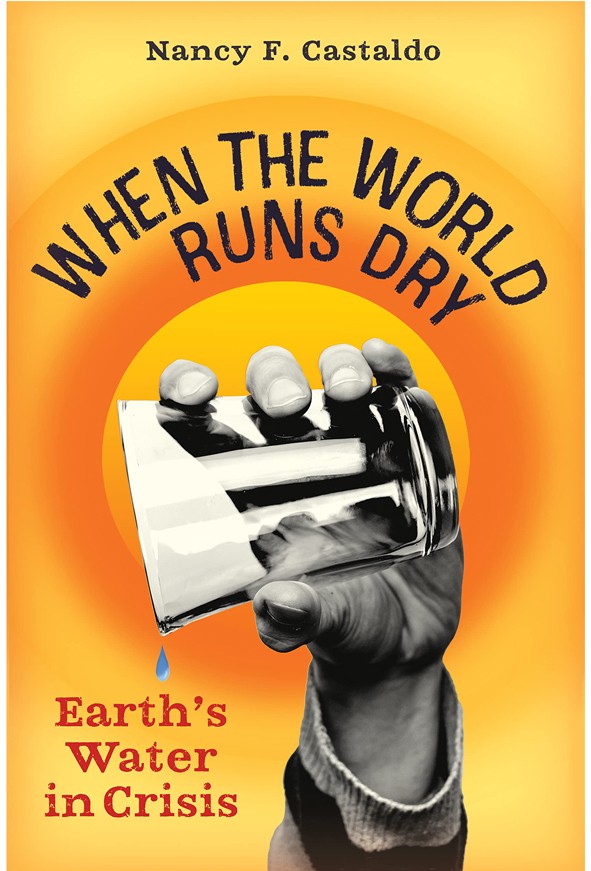
When the World Runs Dry
Nancy F. Castaldo Algonquin (2022)
Globally, millions of people must walk up to 6 kilometres daily to get clean water, says environmental writer Nancy Castaldo. Moreover, each year, more children die as a result of water contamination than from violence, including war, said the United Nations in 2019. Castaldo’s alarming book discusses many examples of shortages and tainting, ranging from drought in Cape Town, South Africa, to lead pollution in Flint, Michigan. She concludes with realistic steps to reduce domestic consumption and contamination.
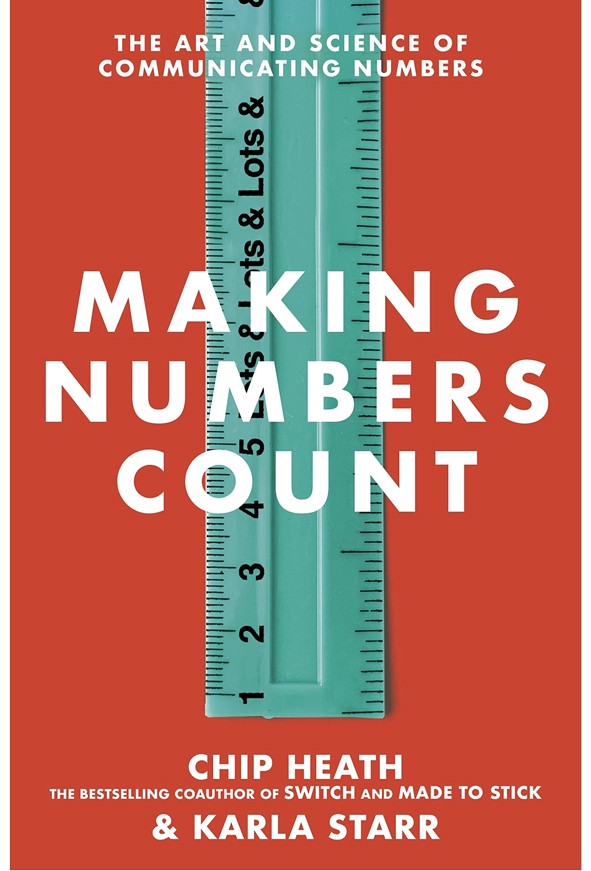
Making Numbers Count
Chip Heath and Karla Starr Avid Reader (2022)
Business scholar Chip Heath and science journalist Karla Starr are familiar with the need to “translate numbers into instinctive human experience”, informatively and memorably. Unable to find a book on the subject, they decided to write their own. Their diverse guide bubbles with translated statistics. For example, there are about 400 million civilian-owned firearms in the United States — that translates into one for every adult and child, with around 70 million left over.
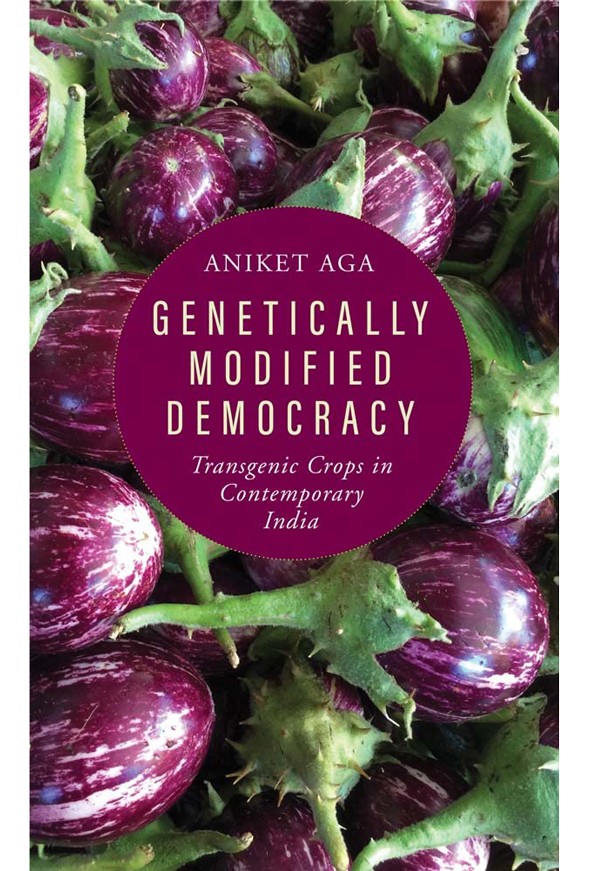
Genetically Modified Democracy
Aniket Aga Yale Univ. Press (2021)
India’s 1960s Green Revolution began without much deliberation. The government promoted high-yielding varieties of wheat and rice, and guaranteed purchase prices. This helped “already well-off, landed farmers”, notes environmentalist Aniket Aga, but led to huge debts for the struggling majority. When genetically modified crops reached India in 2002, they cultivated much more scrutiny, involving scientists, seed companies, farmers, consumers and the state. Aga describes the debate, without claiming to provid
A selection of three essential articles read aloud from the latest issue of The Economist. This week, the forces that stand to transform India’s economy over the next decade (11:06), how surveilling workers could enhance productivity (21:07), and full-genome screening for newborn babies is now on the cards.
Located in South Asia, India sits on a peninsula that extends between the Bay of Bengal and the Arabian Sea. The country, the birthplace of Hinduism and Buddhism, is the world’s second most-populous nation after China.
For many years of its long history, India faced incursions from the north by Turks, Arabs, Persians and others. By the 19th century, Great Britain became the dominant power on the subcontinent. After years of nonviolent struggle against British rule, India gained its independence in 1947.
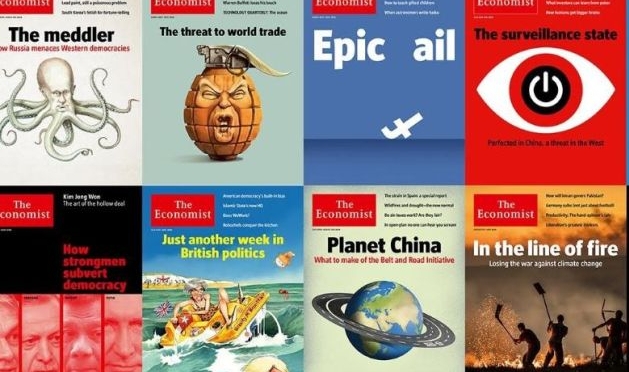
The Economist, May 14, 2022 – The Indian economy is being rewired. The opportunity is immense—and so are the stakes.
Hundreds of thousands of predominantly young professionals have left Russia since its invasion of Ukraine, an exodus that is denting Russia’s growing tech sector.
WSJ reporter Georgi Kantchev explains who is leaving, why, and what long-term effects their departure could have on the Russian economy and society. Plus, how is TikTok changing children’s brains? Luke Vargas hosts.





 Boomers Daily