Tag Archives: Health Studies

New Study: “Five Healthy Habits” For Diet, Exercise, BMI, Smoking & Alcohol” Lower Chronic Disease, Raise Lifespan (Harvard)

From a BMJ online article:

We derived a healthy lifestyle score based on information on five lifestyle factors—diet, smoking, physical activity, alcohol consumption, and body mass index (BMI).

Harvard T.H. Chan School of Public Health LogoOur findings suggest that promotion of a healthy lifestyle would help to reduce the healthcare burdens through lowering the risk of developing multiple chronic diseases, including cancer, cardiovascular disease, and diabetes, and extending disease-free life expectancy. Public policies for improving food and the physical environment conducive to adopting a healthy diet and lifestyle, as well as relevant policies and regulations (for example, smoking ban in public places or trans-fat restrictions), are critical to improving life expectancy, especially life expectancy free of major chronic diseases.

The average life expectancy in the world has increased substantially in the past few decades. The aging of the population has led to a high prevalence of chronic diseases such as diabetes, cardiovascular disease, and cancer. Although people live longer, older individuals often live with disabilities and chronic diseases. People with chronic diseases including cancer, cardiovascular disease, and diabetes have a shorter life expectancy than do their peers without these chronic conditions. Estimates of the loss in life years due to these chronic conditions range from 7.5 to 20 years, depending on the methods used and the characteristics of the study population.
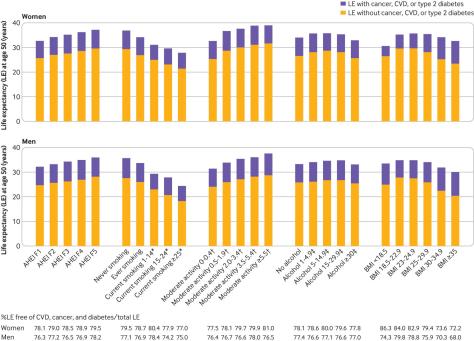
Life Expectancy In Men and Women with Five Healthy Habits BMJ Study Harvard Medical 2020
Estimated life expectancy at age 50 years with and without cancer, cardiovascular disease (CVD), and/or type 2 diabetes among participants of Nurses’ Health Study (women) and Health Professionals Follow-up Study (men) according to levels of individual lifestyle risk factors. Estimates of multivariate adjusted hazard ratios (sex specific) for morbidity and mortality associated with low risk lifestyles compared with people with zero low risk lifestyle factors adjusted for age, ethnicity, current multivitamin use, current aspirin use, family history of diabetes, myocardial infarction, or cancer, and menopausal status and hormone use (women only). AHEI=Alternate Healthy Eating Index; BMI=body mass index; F=fifth. *Cigarettes/day. †Hours/week. ‡Grams/day

Modifiable lifestyle factors including smoking, physical activity, alcohol intake, body weight, and diet quality affect both total life expectancy and incidence of chronic diseases. Studies have shown that smoking, inactivity, poor diet quality, and heavy alcohol consumption contribute up to 60% of premature deaths and 7.4-17.9 years’ loss in life expectancy. Nevertheless, little research has looked at how a combination of multiple lifestyle factors may relate to life expectancy free from the major diseases of diabetes, cardiovascular disease, and cancer.
Read full study

Aortic Stenosis: Early Aortic-Valve Replacement Surgery Lowers Mortality

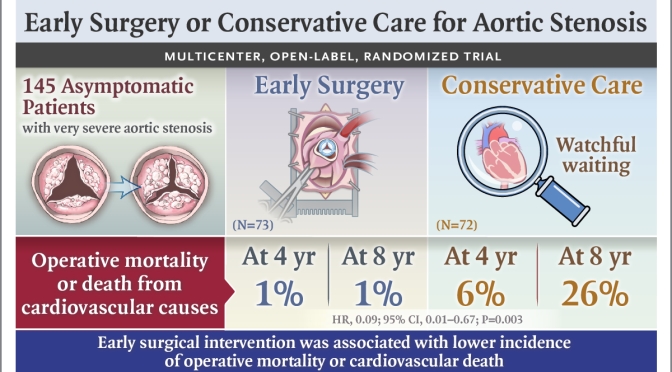
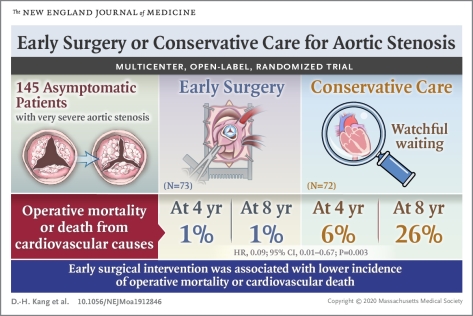
Early Surgery or Conservative Care for Aortic Stenosis New England Journal of Medicine January 8 2020 Infographic

CONCLUSIONS

Among asymptomatic patients with very severe aortic stenosis, the incidence of the composite of operative mortality or death from cardiovascular causes during the follow-up period was significantly lower among those who underwent early aortic-valve replacement surgery than among those who received conservative care.

Read study

Health Studies: Vigorous Daily Exercise Increases Neurotropins, Boosting Cognitive Function

From the Journal of Sport and Health Science:

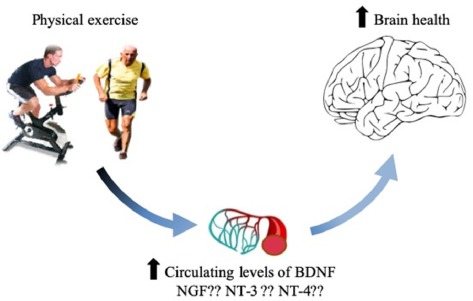
Therefore, promotion of adequate volumes and intensities of physical exercise (i.e., approximately 3 months of moderate-intensity aerobic exercise, with 2–3 sessions/week lasting not less than 30 min) represents an inexpensive and safe strategy for boosting BDNF (brain-derived neurotrophic factor) release that may preserve or restore cognitive function.

Updated overview on interplay between physical exercise, neurotrophins, and cognitive function in humans Journal Of Sport and Health Science Jan 2020

Taken together, the currently available data seemingly confirm the existence of a positive relationship between physical exercise and circulating BDNF levels, both in the short and long term, and also support the beneficial impact of training programs for amplifying the acute BDNF response.

Read full article PDF

New Studies: Beneficial Effects Of “18-Hour Intermittent Fasting” On Health And Aging (NEJM)

From a New England Journal of Medicine online release:

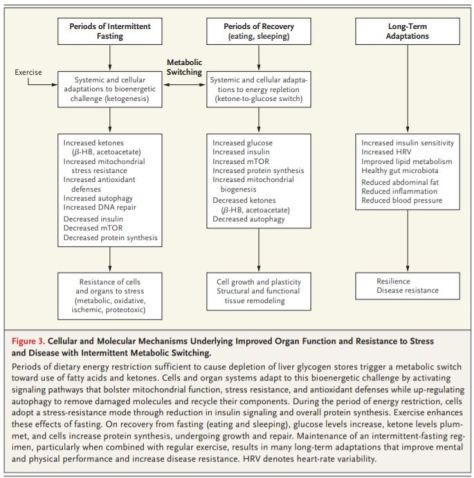
In humans, intermittent-fasting interventions ameliorate obesity, insulin resistance, dyslipidemia, hypertension, and inflammation. Intermittent fasting seems to confer health benefits to a greater extent than can be attributed just to a reduction in caloric intake.

Evidence is accumulating that eating in a 6-hour period and fasting for 18 hours can trigger a metabolic switch from glucose-based to ketone-based energy, with increased stress resistance, increased longevity, and a decreased incidence of diseases, including cancer and obesity.

The New England Journal of Medicine Logo

Preclinical studies and clinical trials have shown that intermittent fasting has broad-spectrum benefits for many health conditions, such as obesity, diabetes mellitus, cardiovascular disease, cancers, and neurologic disorders. Animal models show that intermittent fasting improves health throughout the life span, whereas clinical studies have mainly involved relatively short-term interventions, over a period of months.

Effects of Intermittent Fasting on Health, Aging, and Disease New England Journal of Medicine December 26 2019

BOOMERS-DAILY.COM “18-HOUR INTERMITTENT FASTING DIET” STUDY

How much of the benefit of intermittent fasting is due to metabolic switching and how much is due to weight loss? Many studies have indicated that several of the benefits of intermittent fasting are dissociated from its effects on weight loss. These benefits include improvements in glucose regulation, blood pressure, and heart rate; the efficacy of endurance training; and abdominal fat loss.

To read more

Inline image

New Study: Nearly 50% Of Americans Will Have Obesity By 2030, 25% Severely Obese (NEJM)

From a New England Journal of Medicine online study release:

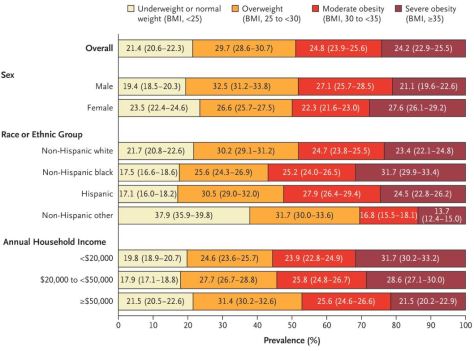
The findings from our approach suggest with high predictive accuracy that by 2030 nearly 1 in 2 adults will have obesity (48.9%; 95% confidence interval [CI], 47.7 to 50.1), and the prevalence will be higher than 50% in 29 states and not below 35% in any state.

New England Journal of Medicine logo

Nearly 1 in 4 adults is projected to have severe obesity by 2030 (24.2%; 95% CI, 22.9 to 25.5), and the prevalence will be higher than 25% in 25 states. We predict that, nationally, severe obesity is likely to become the most common BMI category among women (27.6%; 95% CI, 26.1 to 29.2), non-Hispanic black adults (31.7%; 95% CI, 29.9 to 33.4), and low-income adults (31.7%; 95% CI, 30.2 to 33.2).

Projected National Prevalence of BMI Categories in 2030, According to Demographic Subgroup. New England Journal of Medicine December 2019

Although severe obesity was once a rare condition, our findings suggest that it will soon be the most common BMI category in the patient populations of many health care providers. Given that health professionals are often poorly prepared to treat obesity,27 this impending burden of severe obesity and associated medical complications has implications for medical practice and education.

In addition to the profound health effects, such as increased rates of chronic disease and negative consequences on life expectancy,25,28 the effect of weight stigma29 may have far-reaching implications for socioeconomic disparities as severe obesity becomes the most common BMI category among low-income adults in nearly every state.

To read more: https://www.nejm.org/doi/full/10.1056/NEJMsa1909301?query=featured_home

Studies: “Why Your Brain Needs Exercise” (Scientific American)

From a Scientic American online article:

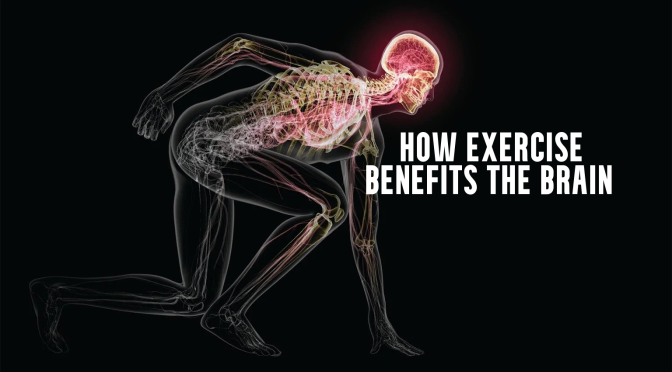
Scientific American logoIn our own study of more than 7,000 middle-aged to older adults in the U.K., published in 2019 in Brain Imaging and Behavior, we demonstrated that people who spent more time engaged in moderate to vigorous physical activity had larger hippocampal volumes. Although it is not yet possible to say whether these effects in humans are related to neurogenesis or other forms of brain plasticity, such as increasing connections among existing neurons, together the results clearly indicate that exercise can benefit the brain’s hippocampus and its cognitive functions.
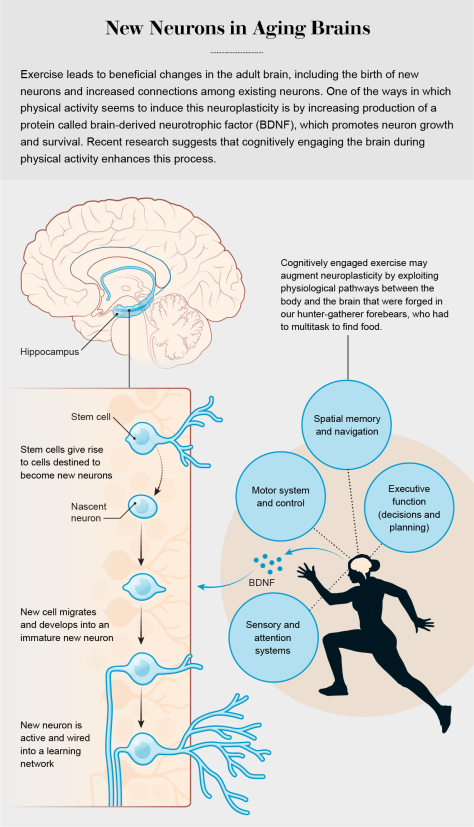

New Neurons in Aging Brains Why Your Brain Needs Exercise Scientific American December 18 2019

In fact, a growing body of research suggests that exercise that is cognitively stimulating may indeed benefit the brain more than exercise that does not make such cognitive demands. For example, Gerd Kempermann and his colleagues at the Center for Regenerative Therapies Dresden in Germany explored this possibility by comparing the growth and survival of new neurons in the mouse hippocampus after exercise alone or after exercise combined with access to a cognitively enriched environment. They found an additive effect: exercise alone was good for the hippocampus, but combining physical activity with cognitive demands in a stimulating environment was even better, leading to even more new neurons. Using the brain during and after exercise seemed to trigger enhanced neuron survival.

To read more: https://www.scientificamerican.com/article/why-your-brain-needs-exercise/

Studies: “Home Hospital” Model Of Care Reduces Costs By 38%, Improves Recovery (Harvard)

From a Harvard Gazette online article:

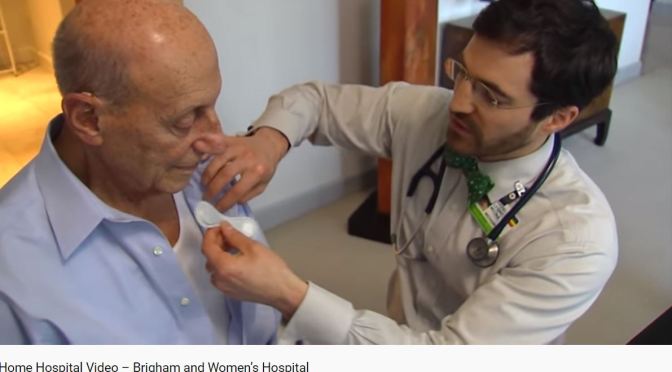
“This work cements the idea that, for the right patients, we can deliver hospital-level care outside of the four walls of the traditional hospital, and provides more of the data we need to make home hospital care the standard of care in our country,” said corresponding author David Levine, a physician and researcher in the Division of General Internal Medicine and Primary Care.

“It opens up so many exciting possibilities — it’s exciting for patients because it gives them the opportunity to be in a familiar setting, and it’s exciting for clinicians because we get to be with a patient in that person’s own surroundings. As a community-minded hospital, this is a way for us to bring excellent care to our community.”

The home hospital model of care — in which select patients receive hospital-level care for an acute illness from the comfort of their own home instead of in a traditional hospital — has become increasingly popular across the U.S.

To read more: https://news.harvard.edu/gazette/story/2019/12/home-hospital-model-reduces-costs-by-38-improves-care/

New Health Studies: 43% Of Americans Prescribed Antibiotics Improperly

From a British Medical Journal (BMJ) online article:

BMJ journal cover Dec 2019…primary care providers (general practice, paediatrics, and internal medicine) performed the best, giving a considerably lower percentage of antibiotic prescriptions without a documented indication (12%) than other specialists such as gynaecologists and urologists, who commonly prescribed antibiotics (24%), as well as those in all other specialties (29%).

As many as two in five antibiotic prescriptions (43%) provided in outpatient settings in the US could be inappropriate, a study published by The BMJ has found.1

Researchers from Oregon, USA, looked at prescriptions in ambulatory settings such as primary care and found that a quarter (25%) were deemed to be inappropriate, while a further 18% did not have an indication.

To read more: https://www.bmj.com/content/367/bmj.l6961

Diet Studies: Age-Related Macular Degeneration Linked To Processed, Refined And Fried Foods

From a Genetic Engineering & Biotechnology News release:

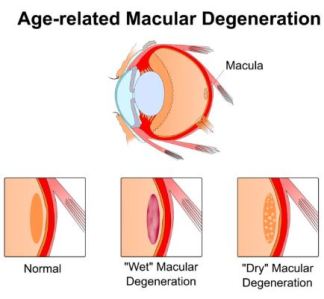
Age-Related Macular Degeneration“Our work provides additional evidence that that diet matters,” Millen added. “From a public health standpoint, we can tell people that if you have early AMD, it is likely in your best interest to limit your intake of processed meat, fried food, refined grains, and high-fat dairy to preserve your vision over time.”
Participants who ate a diet high in red and processed meat, fried food, refined grains, and high-fat dairy were three times more likely to develop an eye condition that damages the retina and affects a person’s central vision, according to the results of a study, “Diet patterns and the incidence of age-related macular degeneration in the Atherosclerosis Risk in Communities (ARIC) study,” from the University at Buffalo (UB) that appears in the British Journal of Ophthalmology.

The condition is called late-stage age-related macular degeneration (AMD), which is irreversible and affects a person’s central vision, taking away their ability to drive, among other common daily activities.

To read more: https://www.genengnews.com/news/age-related-macular-degeneration-linked-to-diet-high-in-refined-processed-and-fried-foods/?utm_medium=newsletter&utm_source=GEN+Daily+News+Highlights&utm_content=01&utm_campaign=GEN+Daily+News+Highlights_20191212&oly_enc_id=5678C5137845J4Z

Health Studies: Aspirin Use 3+ Times Per Week Reduces “All-Cause” Cancers In Older Adults (JAMA)

From a JAMA Open Network online release:

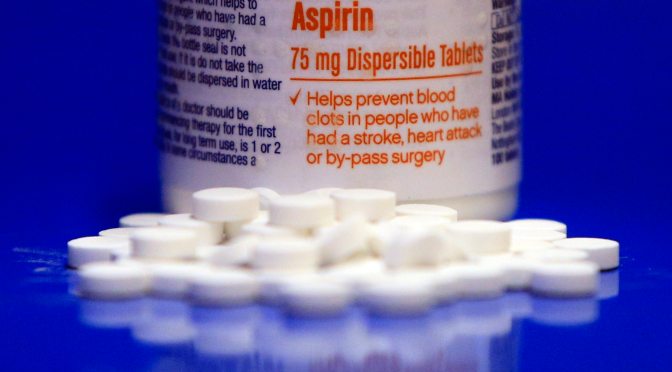
JAMAThis cohort study included 146 152 individuals from the Prostate, Lung, Colorectal, and Ovarian Cancer Screening Trial and found that aspirin use 3 or more times per week was associated with reduced risk of all-cause, cancer, gastrointestinal cancer, and colorectal cancer mortality.

Importance  Aspirin use has been associated with reduced risk of cancer mortality, particularly of the colorectum. However, aspirin efficacy may be influenced by biological characteristics, such as obesity and age. With the increasing prevalence of obesity and conflicting data regarding the effect of aspirin in older adults, understanding the potential association of aspirin use with cancer mortality according to body mass index (BMI) and age is imperative.

Objectives  To investigate the association of aspirin use with risk of all-cause, any cancer, gastrointestinal (GI) cancer, and colorectal cancer (CRC) mortality among older adults and to perform an exploratory analysis of the association of aspirin use with mortality stratified by BMI.

Design, Setting, Participants  This cohort study evaluated aspirin use among participants aged 65 years and older in the Prostate, Lung, Colorectal, and Ovarian (PLCO) Cancer Screening Trial at baseline (November 8, 1993, to July 2, 2001) and follow-up (2006-2008). Analysis began in late 2018 and was completed in September 2019.

To read more: https://jamanetwork.com/journals/jamanetworkopen/fullarticle/2756258