Tag Archives: Europe

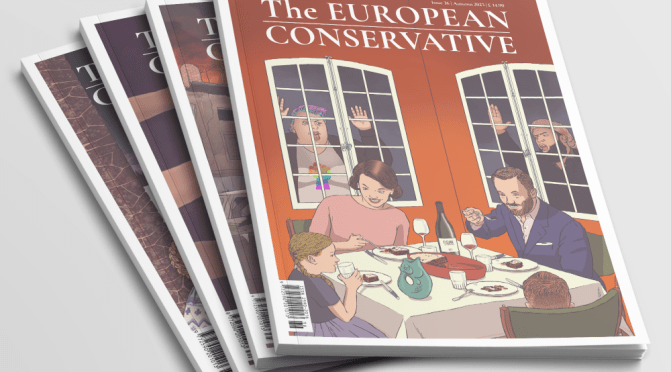
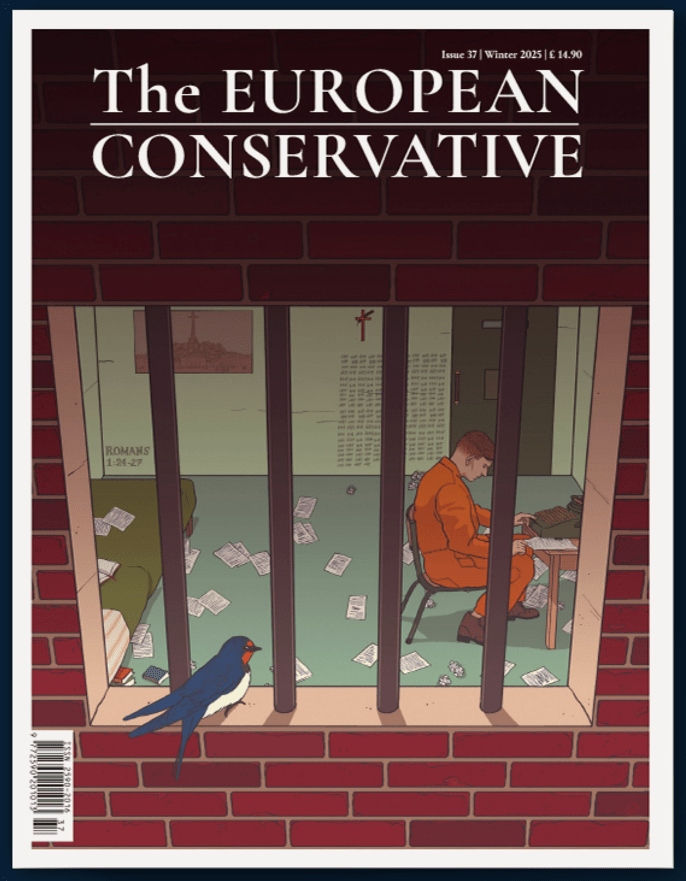
PREVIEW: THE EUROPEAN CONSERVATIVE – WINTER ’25

THE EUROPEAN CONSERVATIVE: The latest issue features a section on the life and work of Spanish political thinker, Dalmacio Negro Pavón; – an interview with Curtis Yarvin; – a defense of The Camp of the Saints; – a review of The Golden Thread; – a tribute to Iryna Zarutska; – and much, much more.


Big Europe Has Lost the War Over Ukraine

The EU’s claim to be a global power player stands exposed as the fantasies of an ageing pretender.

Virtue and Defiance Can Stir Even the Darkest Ideologues

The martyred young risked and ultimately accepted death to defend a culture that they believed was worth the sacrifice.

The Anti-Israel Tantrum Threatening To Break Eurovision

Four nations have declared they will boycott next year’s song contest over the inclusion of the Jewish State. Good riddance.

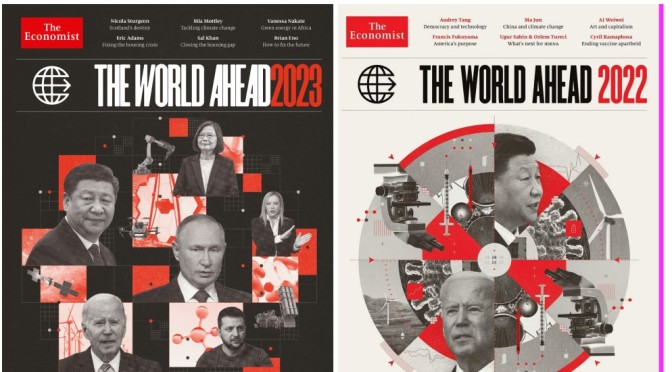
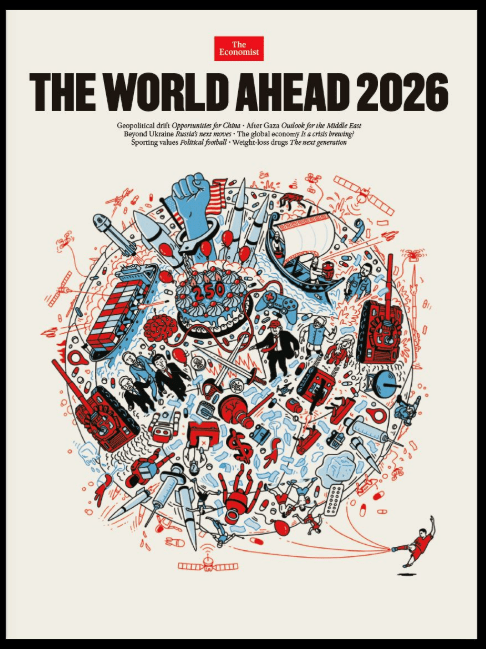
Analysis: The World Ahead In 2026 – The Economist

The Economist The World Ahead 2026 (November 13, 2025):

This is Donald Trump’s world—we’re all just living in it. The disruptor-in-chief was the biggest factor shaping global affairs in 2025, and that will be the case for as long as he remains in the White House. His norm-shattering approach has caused turmoil in some areas (as in trade) but has also delivered diplomatic results (as in Gaza) and forced necessary change (as with European defence spending). As the Trumpnado spins on in 2026, here are ten trends and themes to watch in the coming year.

1. America’s 250th.

Expect to hear wildly diverging accounts of America’s past, present and future, as Republicans and Democrats describe the same country in irreconcilably different terms to mark the 250th anniversary of its founding. Voters will then give their verdict on America’s future in the midterm elections in November. But even if the Democrats take the House, Mr Trump’s rule by bullying, tariffs and executive orders will go on.

2. Geopolitical drift.

Foreign-policy analysts are divided: is the world in a new cold war, between blocs led by America and China, or will a Trumpian deal divide the planet into American, Russian and Chinese “spheres of influence”, in which each can do as they please? Don’t count on either. Mr Trump prefers a transactional approach based on instinct, not grand geopolitical paradigms. The old global rules-based order will drift and decay further. But “coalitions of the willing” will strike new deals in areas such as defence, trade and climate.

3. War or peace? Yes.

With luck, the fragile peace in Gaza will hold. But conflicts will grind on in Ukraine, Sudan and Myanmar. Russia and China will test America’s commitment to its allies with “grey-zone” provocations in northern Europe and the South China Sea. As the line between war and peace becomes ever more blurred, tensions will rise in the Arctic, in orbit, on the sea floor and in cyberspace.

4. Problems for Europe.

All this poses a particular test for Europe. It must increase defence spending, keep America on side, boost economic growth and deal with huge deficits, even though austerity risks stoking support for hard-right parties. It also wants to remain a leading advocate for free trade and greenery. It cannot do all of these at once. A splurge on defence spending may lift growth, but only slightly.

5. China’s opportunity.

China has its own problems, with deflation, slowing growth and an industrial glut, but Mr Trump’s “America First” policy opens up new opportunities for China to boost its global influence. It will present itself as a more reliable partner, particularly in the global south, where it is striking a string of trade agreements. It is happy to do tactical deals with Mr Trump on soyabeans or chips. The trick will be to keep relations with America transactional, not confrontational.With rich countries living beyond their means, the risk of a bond-market crisis is growing

6. Economic worries.

So far America’s economy is proving more resilient than many expected to Mr Trump’s tariffs, but they will dampen global growth. And with rich countries living beyond their means, the risk of a bond-market crisis is growing. Much will depend on the replacement of Jerome Powell as chair of the Federal Reserve in May; politicising the Fed could trigger a market showdown.

7. Concerns over AI.

Rampant spending on infrastructure for artificial intelligence may also be concealing economic weakness in America. Will the bubble burst? As with railways, electricity and the internet, a crash would not mean that the technology does not have real value. But it could have wide economic impact. Either way, concern about AI’s impact on jobs, particularly those of graduates, will deepen.

8. A mixed climate picture.

Limiting warming to 1.5°C is off the table, and Mr Trump hates renewables. But global emissions have probably peaked, clean tech is booming across the global south and firms will meet or exceed their climate targets—but will keep quiet about it to avoid Mr Trump’s ire. Geothermal energy is worth watching.

9. Sporting values.

Sport can always be relied upon to provide a break from politics, right? Well, maybe not in 2026. The football World Cup is being jointly hosted by America, Canada and Mexico, whose relations are strained. Fans may stay away. But the Enhanced Games, in Las Vegas, may be even more controversial: athletes can use performance-enhancing drugs. Is it cheating—or just different?

10. Ozempic, but better.

Better, cheaper GLP-1 weight-loss drugs are coming, and in pill form, too. That will expand access. But is taking them cheating? GLP-1s extend the debate about the ethics of performance-enhancing drugs to a far wider group than athletes or bodybuilders. Few people compete in the Olympics. But anyone can take part in the Ozempic games.

The Silvered City with a Fevered Heart

In 1590, the Spanish port of Seville was the epicenter of the first global economy—a city drowning in silver, haunted by plagues, and inventing the anxieties we now know all too well. Its story is a warning.

By Michael Cummins, Editor, Intellicurean, August 20, 2025

Before there was Wall Street, London, or Shanghai, there was Seville. We live today in a world defined by intricate global supply chains, where fortunes are made on the abstract flow of capital and data, and where a single ship stuck in a canal can trigger worldwide anxiety. We know the feeling of living in a hyper-connected age, with all its dizzying wealth and its profound fragility. We talk of unicorn companies, bubbles, and systemic risk, sensing that the towering edifice of our prosperity rests on foundations we don’t fully understand. But what did the very first version of that world feel like, before the risks were modeled and the consequences were known?

To understand the unnerving vertigo of our own time, you have to go back to a muddy river in southern Spain, four centuries ago, when the modern world was being born in a flash of silver and blood. You have to imagine a spring morning in 1590.

At first light, the galleon Nuestra Señora de la Merced drifts slowly up the Guadalquivir River. Its sails, slack after the long Atlantic crossing from Panama, are stained with salt and sea-spray. Its sturdy Iberian oak hull, scarred by shipworms and storms, creaks under the registered weight of 500 tons. On the bustling Arenal waterfront, a dockworker named Mateo shields his eyes against the rising sun. He sees not a symbol of imperial glory, but the promise of a day’s wage, the chance to buy bread for his family at a price that seems to climb higher every month. His ropes are coiled in calloused hands, the air thick around him with the smell of pitch, citrus, and the river’s brackish breath.

Further back, shielded from the morning sun in the arcaded loggias of the Calle de las Gradas, men of a different class watch the same ship with a far more specific terror. A Genoese banker in sober black silk mentally calculates the interest on the massive loan he extended to King Philip II, a loan secured against this very shipment. Beside him, a Castilian merchant, having mortgaged his ancestral lands to finance a speculative cargo of wine and olive oil on the outgoing voyage, feels a tremor of hope and fear. Was the voyage profitable? Did pirates strike? Did the storms claim his fortune?

In a dusty office nearby, a scribe from the Casa de la Contratación—the formidable House of Trade—readies his quills and ledgers. He will spend the day recording every ingot, every barrel, every notarized claim, his neat columns tracking the quinto real, the “royal fifth,” the 20% tax on all precious metals that funds Spain’s sprawling wars in Flanders and the Mediterranean. In this moment, a city of nearly 150,000 souls—the largest and most important in Castile—holds its breath. The Guadalquivir carries not only treasure but the very lifeblood of an empire. And with it, a new kind of global pulse.

For nearly a century, Seville held the absolute monopoly on all trade with the Americas. Granted by the crown in 1503, this privilege meant every ounce of silver from the great mountain-mine of Potosí, every barrel of cochineal dye, every crate of indigo, and every human being—whether a returning colonist, a hopeful migrant, or an enslaved African—was funneled through its port. It was not merely a metropolis; it was a complex, living organism. Its artery was the river; its brain was the bureaucracy of the Casa; its beating heart was the Plaza de San Francisco, where coin, credit, and rumor changed hands with dizzying speed.

The brain of this operation, the Casa de la Contratación, was an institution without precedent. It was a combination of a shipping board, a research institute, and a supreme court for all maritime affairs. Within its walls, master cartographers secretly updated the Padrón Real, the master map of the New World, a document of such immense geopolitical value that its theft would be a blow to the entire empire. Its school for pilots trained men to navigate by the stars to a world that was, to most Europeans, still a realm of myth. The Casa licensed every ship, certified every sailor, and processed every manifest. It was the centralized, bureaucratic engine of the world’s first truly global enterprise.

The lifeblood of the system was the annual treasure fleet, the Flota de Indias. This convoy system, a necessity born from the existential threat of French and English privateers, was a marvel of logistics. Sailing in two main branches—one to Mexico, the other to Panama to collect the silver of Peru—the fleets were floating cities, military and commercial operations of immense scale. Their return, usually in late spring, was the moment the imperial heart beat loudest. The sheer volume of wealth was staggering. According to the foundational economic data compiled by Earl J. Hamilton, in the two decades from 1581 to 1600, over 52 million pesos in silver and gold were officially registered passing through Seville. The clang of heavy presses striking that silver into the iconic reales de a ocho, or pieces of eight—the world’s first global currency—echoed from the Royal Mint near the river.

This deluge of wealth transformed the city. To manage the booming trade, construction had begun in 1584 on a grand new merchant exchange, the Casa Lonja de Mercaderes. Designed by Juan de Herrera, the architect of the king’s austere Escorial palace, its monumental Renaissance style was a physical manifestation of Seville’s self-image: ordered, powerful, and the nerve center of a global Christian empire. The great Gothic Cathedral, already one of the largest in Christendom, glittered with new silver candlesticks and gold-leafed altarpieces forged from American bullion. The city attracted a complex web of foreign merchants and bankers who operated in a state of symbiotic tension with the Spanish crown. As historian Eberhard Crailsheim explains, foreign merchants were “indispensable for the functioning of the Spanish monopoly system, while at the same time they were its greatest threat.” They provided the credit and financial instruments the empire desperately needed, ensuring that American silver circulated rapidly into the European economy to pay the crown’s debts, often before it had even been unloaded at the Arenal.


But this firehose of silver was never pure. The same river that delivered the bullion also carried plague, contraband, and devastating floodwaters. That river of wealth was also a river of poison.

The most visceral fear was disease. Each arriving fleet was a potential vector for an epidemic. Ships from the Caribbean, their crews weakened by months at sea and ravaged by scurvy, disgorged sailors carrying typhus, smallpox, and what was then called vómito negro (yellow fever) into the densely packed, unsanitary tenements of the Triana neighborhood across the river. An outbreak meant sudden, terrifying death. It meant closed gates, armed guards preventing travel, and the dreaded chalk mark on the door of an infected house. While the truly catastrophic Great Castilian Plague of 1596–1601, which would kill a quarter of the city’s population, was still a few years away, smaller outbreaks kept the city in a perpetual state of anxiety.

Economic contagion was just as insidious. The endless flood of American silver triggered a century-long inflationary crisis known as the Price Revolution. As the money supply swelled, the value of each coin fell, and the price of everything—from bread and wine to cloth and rent—skyrocketed. A blacksmith or farmer in the Castilian countryside found himself poorer each year, his labor worth less and less. The very treasure that enriched the king and a small class of merchants was simultaneously impoverishing the kingdom. This paradox revealed the empire’s core fragility: it was living on credit, perpetually on the verge of bankruptcy (which it would declare again in 1596), its vast military and political ambitions financed by treasure it had not yet received.

Illicit trade pulsed through the artery with the same rhythm as legal commerce. Silver was smuggled to avoid the quinto real, often with the collusion of the very officials meant to prevent it. Forbidden books—Protestant tracts from Northern Europe or scientific texts deemed heretical—were hidden in barrels and circulated in the city’s more than one hundred taverns. And in the shadows of the Cathedral, a teeming underworld flourished. This was the world Miguel de Cervantes knew intimately. In the late 1580s, he served in Seville as a naval commissary, requisitioning wheat and olive oil for the navy—a frustrating job that landed him in jail and exposed him to the city’s seedy underbelly. His experience shaped his picaresque tale Rinconete y Cortadillo, a brilliant portrait of a city of hustlers, thieves, and corrupt officials who had created a perfect, parasitic society in the shadow of imperial wealth.

The Guadalquivir itself, the source of all this prosperity, was turning against the city. Centuries of deforestation and agricultural runoff were causing the river channel to silt up, creating treacherous sandbars near its mouth. As modern hydrological studies confirm, the late sixteenth century was a period of extreme environmental change in the estuary. At the time, the city’s frequent, devastating floods were interpreted as divine punishment for its sins of greed and luxury. In reality, it was a slow, man-made thrombosis. The great artery was hardening.


In a city defined by such spectacular contradictions—unimaginable wealth and desperate poverty, global connection and epidemic disease, rigid piety and rampant crime—life was lived on a knife’s edge. To manage these profound anxieties, Seville transformed itself into a grand stage, and the river became the backdrop for its most important dramas of power, faith, and identity.

The sensory experience of the port was an unforgettable piece of theater. Chroniclers describe the overwhelming smells of spices and sewage, the cacophony of ships’ bells and construction cranes, and the shouts of sailors in a dozen languages. Enslaved West Africans loaded and unloaded cargo in the grueling sun, their forced labor the invisible foundation of the entire enterprise. Moorish artisans crafted vibrant ceramics in Triana, while Flemish merchants in lace collars inspected textiles near the Casa Lonja. It was a microcosm of a new, globalized world, assembled by force and commerce on the banks of a single river.

To contain the social and spiritual anxieties this world produced, the city deployed the power of art and ritual. Painters of the emerging Seville School, like Francisco Pacheco, experimented with dramatic chiaroscuro, their canvases echoing the city’s tension between divine order and worldly excess. The church, enriched beyond measure by the tithes on American silver, became the primary patron of this art. As historian Amanda Wunder argues in her book Baroque Seville, these spectacular displays were essential civic mechanisms. The city, she writes, sought to “transmute the New World’s silver into a spiritual treasure that could be stored up in heaven” as a defense against the very instability that wealth created.

Nowhere was this clearer than during the feast of Corpus Christi, the city’s most important celebration. The streets were covered in flowers. The great guilds marched with their banners. And at the heart of the procession was the custodia, an immense, fortress-like monstrance of solid silver, paraded through the city as a tangible symbol of God’s presence. This was not mere decoration; it was a carefully choreographed piece of public therapy. It took the source of the city’s anxiety—silver—and transformed it into an object of sacred devotion, reassuring the populace that their chaotic world was still under divine control. In this baroque theater, as the eminent historian Antonio Domínguez Ortiz noted, Seville’s greatness was inseparable from its “spectacular fragility.”

Overseeing this entire performance was the Holy Office of the Inquisition, its headquarters looming in the castle of Triana. The Inquisition was not just hunting heretics; it was policing the boundaries of thought and expression in a dangerously cosmopolitan city. Its public trials, the autos-da-fé, were another, darker form of theater, designed to root out dissent and reinforce social order. Its presence created a climate of suspicion that simmered beneath the city’s vibrant surface.


The year 1590 was, in retrospect, a historical precipice. To a contemporary observer standing on the Triana bridge, watching the forest of masts on the river, Seville must have seemed invincible, the permanent heart of a permanent empire. The monumental walls of the Casa Lonja were rising, the mint’s hammers clanged incessantly, and the Cathedral shone with American treasure.

Yet within its very triumph lay the seeds of its decay. The shocking defeat of the Spanish Armada just two years prior had been a blow to both the treasury and the national psyche. The bankruptcy of 1596 loomed. The river’s sedimentation was worsening, a physical reality that would, over the next few decades, slowly choke the port and eventually divert the monopoly of trade to Cádiz. The great artery was silting, even as its pulse quickened.

Still, to walk the riverbank in 1590 was to witness the apex. Children stared at ships vanishing over the horizon toward a nearly mythical world; merchants prayed over contracts sealed with a handshake; artisans fashioned silver into monstrances of breathtaking complexity. The Guadalquivir carried all these flows—material, sensory, and symbolic. Its pulse was not merely economic; it was emotional, theological, and aesthetic. A popular epithet of the time called Seville “the city where the world’s heart beats.” In 1590, that heartbeat was fevered, irregular, and already trembling with overexertion—but it was magnificent.

At dusk, as the river darkened to ink, the silver locked away in the city’s coffers seemed to gleam like a heart beating too fast, too bright, and far too fragile to last. In that shimmer lay the paradox of Seville: a city at once glorious and doomed, sustained and threatened by the very waters that had forged its destiny. It’s a paradox baked into the very nature of globalization—a fevered heartbeat we can still hear in the rhythm of our own world.

THIS ESSAY WAS WRITTEN AND EDITED UTILIZING AI

The Enduring Power of Place: Step Into Historian David McCullough’s Work

By Michael Cummins, Editor, August 12, 2025

A vast stone arch, a suspension of steel, a ribbon of concrete stretching across a chasm—these are not merely feats of engineering or infrastructure. They are, in the words of the great historian David McCullough, monuments to the human spirit, physical places that embody the stories of ingenuity, perseverance, and sacrifice that created them. While the written word provides the essential narrative framework for understanding the past, McCullough’s work, from his celebrated biographies to his upcoming collection of essays, History Matters (2025), consistently champions the idea that visiting and comprehending these physical settings offers a uniquely powerful and visceral connection to history.

These places are not just backdrops; they are tangible testaments, silent witnesses to the struggles and triumphs that have shaped our world, offering a depth of understanding that written accounts alone cannot fully provide. In History Matters, McCullough writes, “History is a guide to navigation in perilous times. History is who we are and why we are the way we are.” This philosophy is the essay’s core, as we explore how the places he chronicled are integral to this understanding.

In his extensive body of work, McCullough frequently returned to this theme, demonstrating how the physical presence of a historical site grounds the abstract facts of the past in the authentic, palpable reality of the present. He believed that the stories of our past are a “user’s manual for life,” and that the places where these stories unfolded are the most direct way to access that manual. By examining four of his most iconic subjects—the Brooklyn Bridge, the “White City” of the 1893 World’s Fair, the Panama Canal, and Kitty Hawk—we can see this philosophy in action.

Each of these monumental endeavors was an audacious, against-all-odds project that faced incredible technical and personal challenges, including political opposition, financial struggles, and tragic loss of life. Yet, McCullough uses them as a lens to explore the character of the people who built them, the society of the time, and the very idea of American progress and ingenuity. These structures, built against overwhelming odds, stand as powerful reminders that history is an active, ongoing force, waiting to be discovered not just in books, but in the very soil and stone of the world around us.

The Brooklyn Bridge

The Brooklyn Bridge stands as a primary example of a physical place as tangible testimony to human ingenuity. In his landmark book The Great Bridge (1972), McCullough details the seemingly insurmountable challenges faced by the Roebling family in their quest to connect Manhattan and Brooklyn. In the mid-19th century, the idea of spanning the East River, with its powerful currents and constant ship traffic, was seen as an engineering impossibility. The technology for building such a massive structure simply did not exist. The bridge, therefore, was not merely constructed; it was invented. The vision of John Roebling, who conceived the revolutionary design of a steel-wire suspension bridge, was cut short by a tragic accident. His son, Washington, took over the project, only to be struck down by the debilitating effects of “the bends,” a crippling decompression sickness contracted while working in the underwater caissons. These massive timber and iron chambers, filled with compressed air, allowed workers to lay the foundations for the bridge’s monumental stone towers deep below the riverbed. The work was brutal, dangerous, and physically taxing. Washington himself spent countless hours in the caissons, developing the condition that would leave him partially paralyzed. As McCullough writes, “The bridge was a monument to faith and to the force of a single will.” This quote captures the essence of the Roeblings’ spirit, and the enduring structure itself embodies this unwavering faith.

Paralyzed and often bedridden, Washington continued to direct the project from his window, observing the progress through a telescope while his wife, Emily Warren Roebling, acted as his liaison and de facto chief engineer, mastering advanced mathematics and engineering to communicate her husband’s instructions to the men on site. The Roeblings’ story is a personal drama of vision and perseverance, and the physical bridge is a direct reflection of it. The monumental stone towers, with their Gothic arches, are a direct result of the design choices made to withstand immense pressure. The intricate web of steel cables, which Roebling so meticulously calculated, hangs as a monument to his genius. The wooden promenade, a feature initially ridiculed by critics, stands as a testament to the Roeblings’ foresight, offering a space for the public to walk and experience the grandeur of the structure.

A person can read McCullough’s narrative of the Roeblings’ saga and feel inspired by their resilience. However, standing on the promenade today, feeling the subtle vibrations of the traffic below, seeing the cables stretch into the distance, and touching the cold, ancient stone of the towers provides a profound, non-verbal understanding of the sheer audacity of the project. The physical object makes the story of vision, sacrifice, and perseverance feel not like a distant myth, but like a concrete reality, etched into the very materials that compose it. The bridge becomes a silent orator, telling its story without a single word, through its breathtaking scale and enduring presence. It connects us not only to a piece of engineering but to the very human story of a family that poured its life’s work into a single, magnificent idea.

The White City

The “White City” of the 1893 World’s Columbian Exposition, as chronicled in The Devil in the White City (2003), serves as a different but equally powerful example of a place as a testament to human will and ambition. Unlike the permanent structures of the Brooklyn Bridge and Panama Canal, the White City was a temporary, almost mythical creation. Built from scratch on swampy land in Chicago, it was a colossal feat of city planning and architectural design that captured the imagination of the world and showcased America’s coming of age. The place itself—with its majestic, neoclassical buildings, grand boulevards, and sprawling lagoons—was a physical manifestation of a nation’s collective vision. The narrative is driven by figures like architect Daniel Burnham, who, much like Washington Roebling, faced immense pressure, logistical nightmares, and constant political infighting. The physical challenges were immense: transforming a marsh into a breathtaking cityscape in just a few short years, all while coordinating the work of an entire generation of architectural titans like Frederick Law Olmsted and Louis Sullivan.

McCullough uses the White City to show how an ambitious idea can be willed into existence through relentless determination. The physical city, for its brief, glorious existence, was the living embodiment of American progress, ingenuity, and the Gilded Age’s opulent grandeur. It was a place where millions came to witness the future, to marvel at electric lights, and to see new technologies like the Ferris wheel. As McCullough writes, “The fair, a world of its own, had a power to transform those who visited it.” This quote highlights the profound, almost magical impact of this temporary place. However, McCullough masterfully contrasts the gleaming promise of the White City with the dark underbelly of the era, epitomized by the psychopathic serial killer H.H. Holmes and his “Murder Castle,” located just a few miles away. The physical contrast between these two places—the temporary, luminous dream and the permanent, sinister reality—is central to the book’s power. Even though the structures of the White City no longer stand, the historical record of this magnificent place—its photographs, its architectural plans, and McCullough’s vivid descriptions—serves as a tangible window into that moment in time, reminding us of the powerful, transformative potential of a shared human vision and the complex, often contradictory, nature of the society that produced it.

The Panama Canal

Finally, the Panama Canal serves as a powerful testament to the theme of human sacrifice and endurance. The canal was not just a feat of engineering; it was a grueling, decades-long battle against nature, disease, and bureaucratic inertia. As chronicled in McCullough’s Pulitzer Prize-winning book, The Path Between the Seas (1977), the French attempt to build a sea-level canal failed catastrophically under the direction of Ferdinand de Lesseps, the engineer of the Suez Canal. They grossly underestimated the challenges of the tropical climate, the unstable geology, and the devastating diseases, costing thousands of lives and ultimately leading to financial ruin. The subsequent American effort, led by figures like Dr. William Gorgas, who tirelessly fought the mosquito-borne diseases, and engineer John Frank Stevens, who abandoned the sea-level plan for a lock-and-lake system, was equally defined by a titanic human cost. The physical canal itself—the vast, deep Culebra Cut that slices through the continental divide, the enormous locks that lift ships over a mountain range, the sprawling Gatun Lake—serves as a permanent memorial to this immense struggle.

The sheer physical scale of the canal is an emotional and intellectual experience that far surpasses any numerical data. One can read that “25,000 workers died” during the French and American construction periods, a statistic that, while tragic, can be difficult to fully comprehend. But to stand at the edge of the Culebra Cut, staring down at the colossal gorge carved out of rock and earth, is to feel the weight of those lives. The physical presence of the cut makes the abstract struggle of “moving a mountain” feel real. The immense size of the locks and the power of the water filling them evokes a sense of awe not just for the engineering, but for the human will that made it happen. The canal is not just a shortcut for global trade; it is a monument to the thousands of unnamed laborers who toiled in oppressive conditions and to the few visionaries who refused to give up. As McCullough wrote, the canal was a testament to the fact that “nothing is more common than the wish to move mountains, but a mountain-moving event requires uncommon determination.” The physical place makes the concept of perseverance tangible, demonstrating in steel, concrete, and water that impossible tasks can be conquered through sheer, relentless human effort. The canal also represents a pivot point in American history, marking the nation’s emergence as a global power and its willingness to take on monumental challenges on the world stage.

Kitty Hawk

In The Wright Brothers, McCullough presents a different kind of historical place: one that is not a monumental structure, but a desolate, windswept beach. The story of Wilbur and Orville Wright’s quest to achieve controlled, powered flight is inextricably linked to this specific location on the Outer Banks of North Carolina. Kitty Hawk was not a place of grandeur, but one of raw, challenging nature. Its consistent, stiff winds and soft, sandy dunes made it an ideal testing ground for their gliders. This place was a crucial collaborator in their scientific process, a physical laboratory where they could test, fail, and re-evaluate their ideas in relative isolation. As McCullough writes of their success, “It was a glorious, almost unbelievable feat of human will, ingenuity and determination.” This triumph was born not on a grand stage, but on a patch of ground that was, at the time, little more than a remote stretch of sand.

McCullough’s narrative emphasizes how the physical conditions of Kitty Hawk—the powerful gales, the endless expanse of sand, and the isolation from the public eye—were essential to the Wrights’ success. They didn’t build a monument to their achievement in a city; they built it in the middle of nowhere. It was a place of quiet, methodical work, of relentless trial and error. The physical space itself was a character in their story, a partner in their success. The first flight did not happen on a grand stage, but on a patch of ground that was, at the time, little more than a remote stretch of sand. Today, when one visits the Wright Brothers National Memorial, the monument is not just the stone pylon marking the first flight, but the entire landscape—the dunes, the wind, and the expansive sky—that made their achievement possible. This place reminds us that some of history’s greatest triumphs begin not with a bang, but in the quiet, isolated spaces where innovation is allowed to thrive.

Conclusion

Beyond these specific examples, McCullough’s philosophy, as expected to be reiterated in History Matters, argues that this direct, experiential connection to place is vital for a vibrant and engaged citizenry. It is the authenticity of standing on the same ground as our forebears that makes history feel relevant to our own lives. A book can tell us about courage, but a place—the Brooklyn Bridge, the Panama Canal, the White City, or a humble battlefield—can make us feel it. These places are the physical embodiment of the narratives that have defined us, and by seeking them out, we are not simply looking at the past; we are a part of a continuous story. They remind us that the qualities of human ingenuity, sacrifice, and perseverance are not merely historical attributes, but enduring elements of the human condition, available to us still today.

Ultimately, McCullough’s legacy is not only in the stories he told but also in his fervent plea for us to recognize the importance of the places where those stories occurred. His work stands as a powerful argument that history is not abstract but is profoundly and permanently embedded in the physical world around us. By preserving and engaging with these historical places, we are not just honoring the past; we are keeping its most powerful lessons alive for our present and for our future. They are the tangible proof that great things are possible, and that the struggles and triumphs of those who came before us are forever etched into the landscape we inhabit today. His writings on these three monumental locations—one that stands forever as a testament to the Roeblings’ vision, another that vanished but whose story remains vivid, and a third that forever altered global commerce—each demonstrate the unique and irreplaceable power of place in history. As he so often reminded us, “We have to know who we are, and where we have come from, to be able to know where we are going.”

THIS ESSAY WAS WRITTEN AND EDITED UTILIZING AI
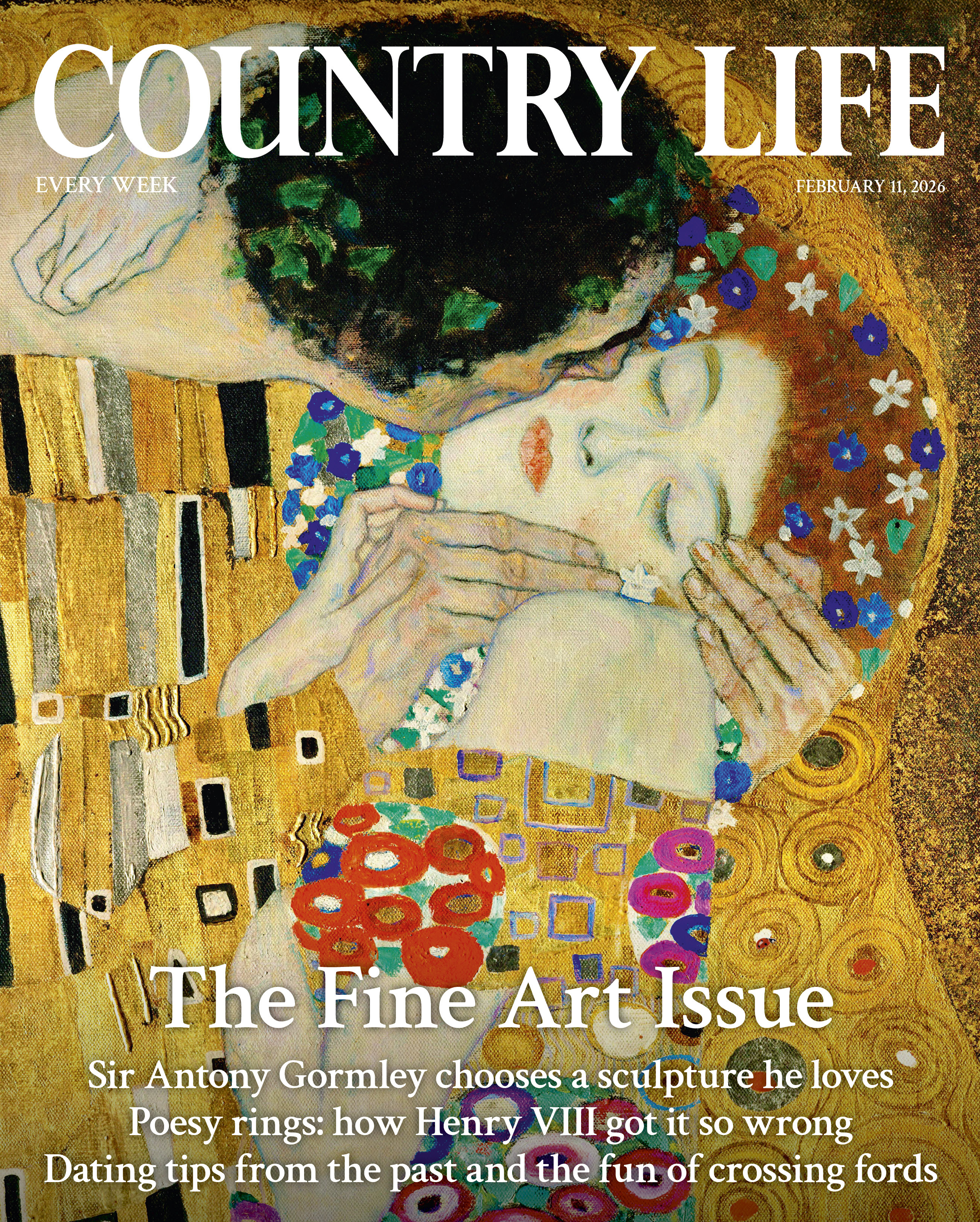
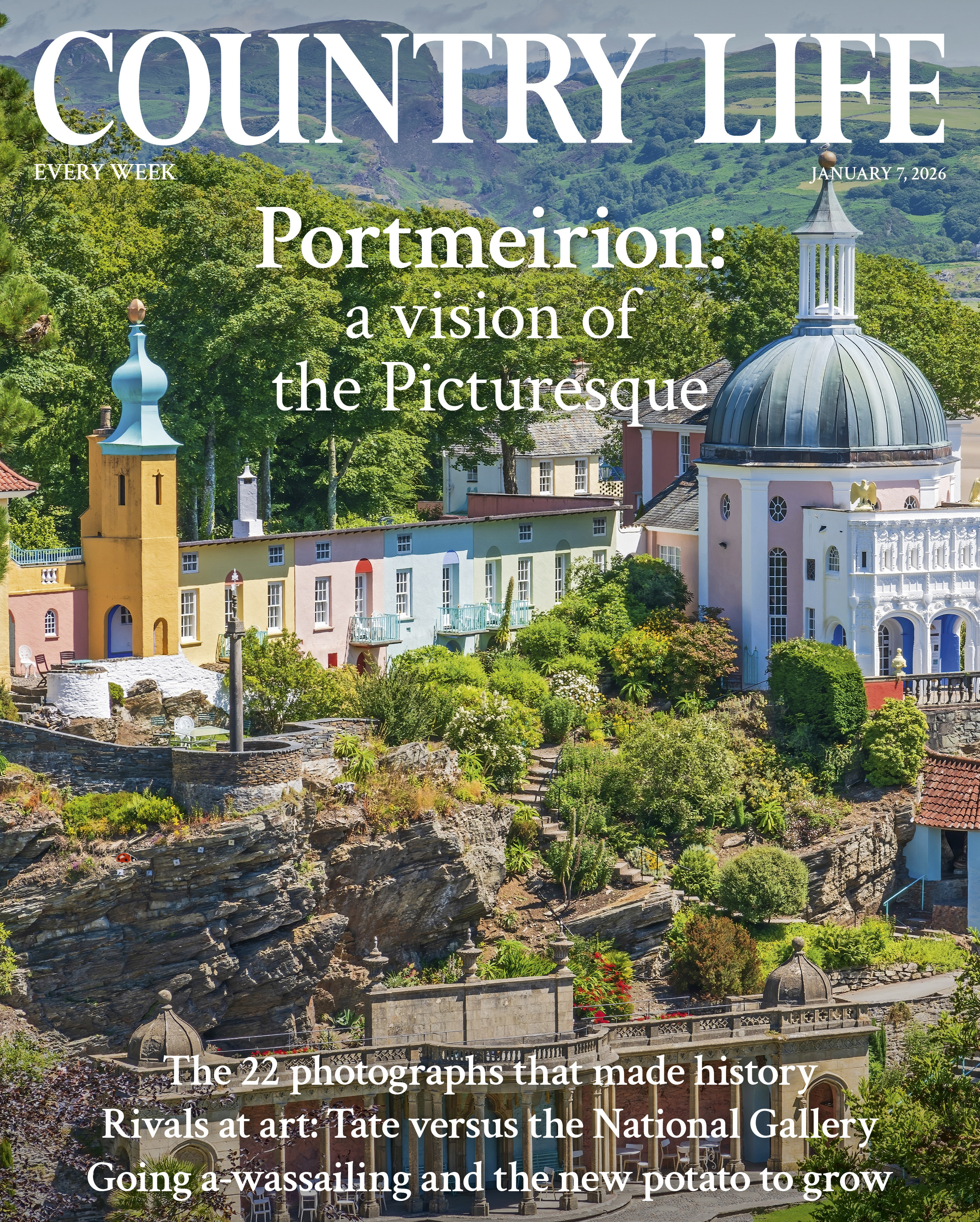
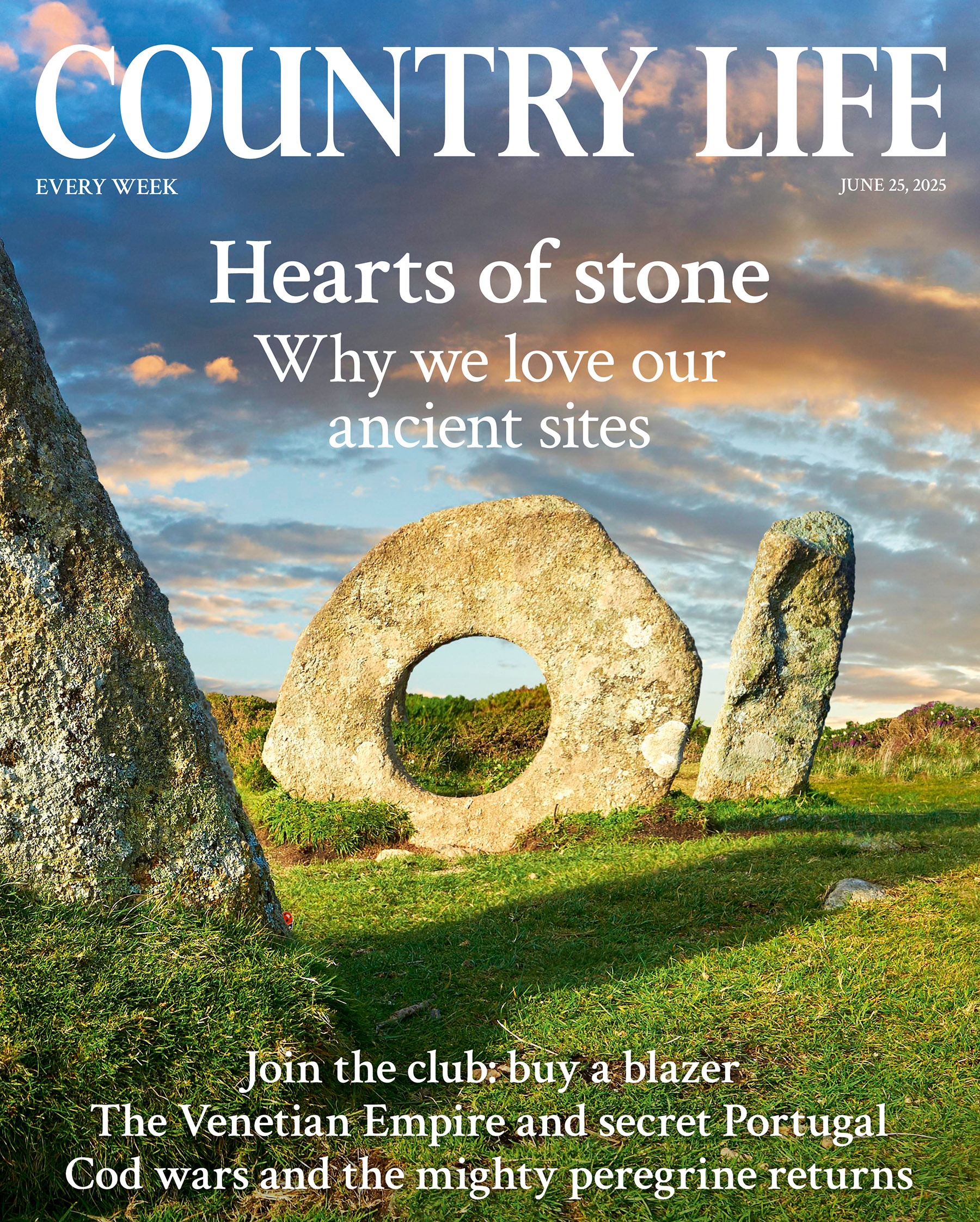
COUNTRY LIFE MAGAZINE – JUNE 25, 2025 PREVIEW

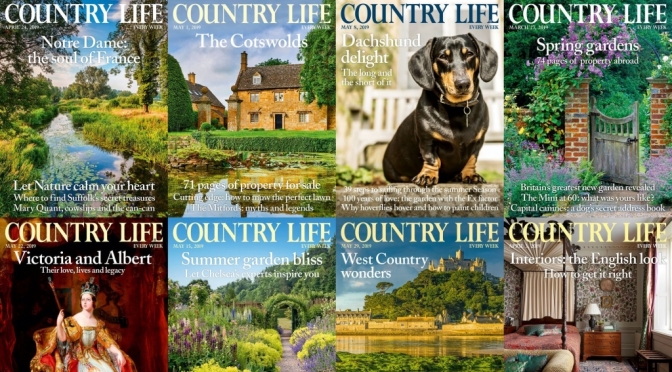
Cover of Country Life 25 June 2025

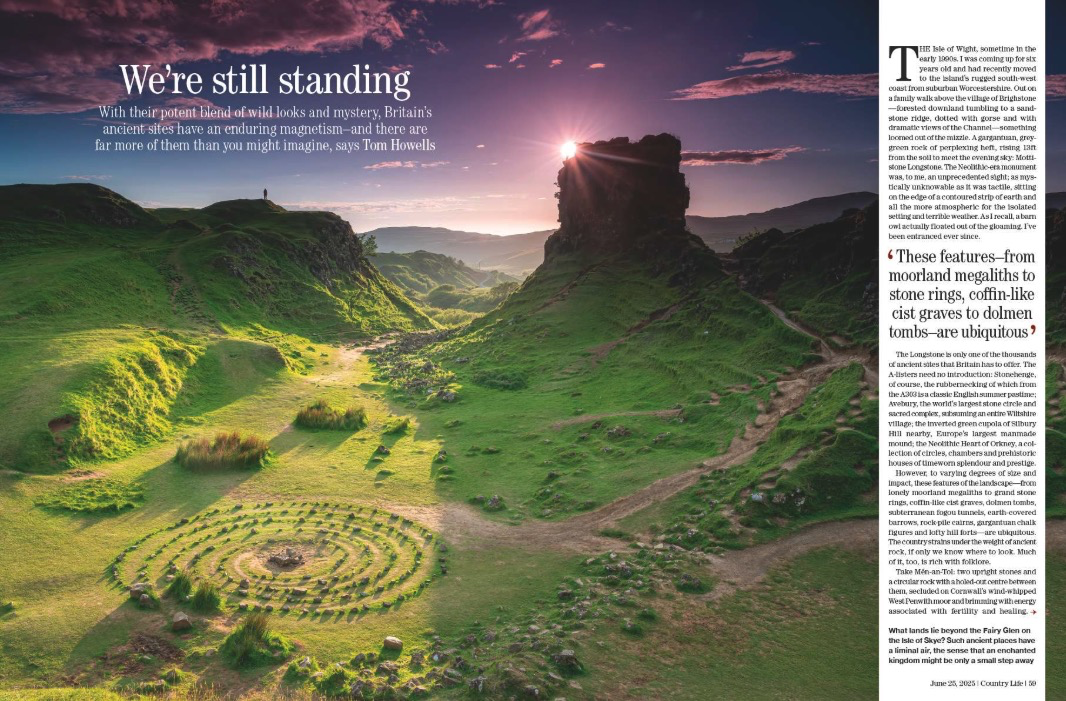
COUNTRY LIFE MAGAZINE: The latest issue features ‘Hearts of Stone’ – Why we love our ancient sites…

We’re still standing

Tom Howells explores the mystery and magnetism of the thousands of ancient British monoliths and monuments, from Cornwall to the Orkneys

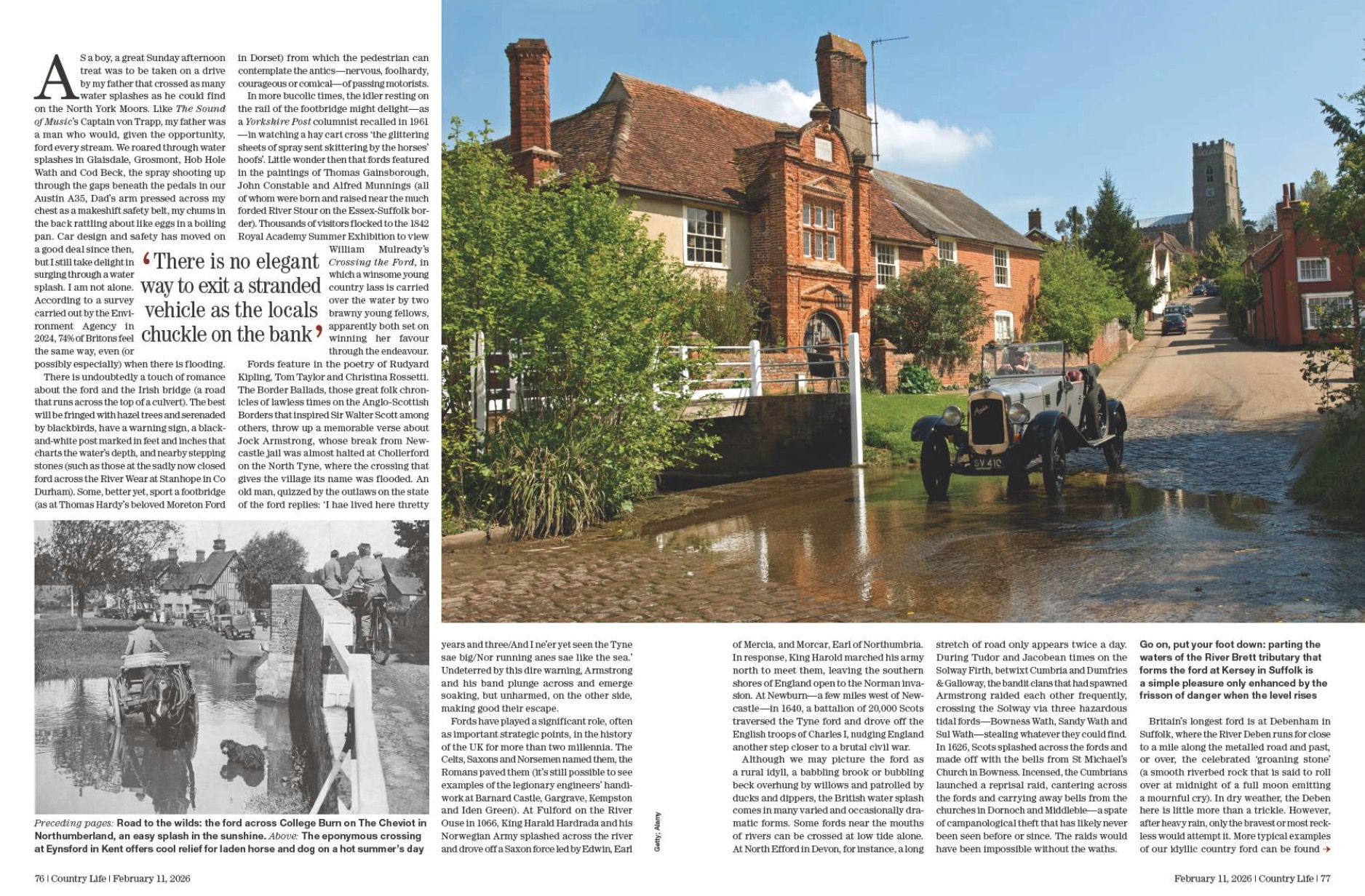
Country Life magazine spread

Going down in a blazer of glory

It is a favourite of royalty and rowers, worn from Augusta to the Oscars — can there be a more versatile jacket than the blazer, asks Harry Pearson

Country Life International

• Russell Higham uncovers the secret society of Cascais
• Holly Kirkwood finds the age of chivalry alive and well in Valletta
• Matthew Dennison searches for traces of the Venetian Empire in Greece
• Tom Parker Bowles savours superb Spanish dishes
• Eileen Reid tracks the influence of two intellectual giants of Avignon

Winging it

Mark Cocker welcomes the renaissance of the peregrine falcon, a raptor that stoops to conquer at up to 240mph

New series: Scale model

Overfishing threatens the very existence of the cod, but Gadus morhua remains a monster of the deep for David Profumo

Dick Bird’s favourite painting

The stage designer chooses a monumental example of early-19th-century political art

The virtues of history

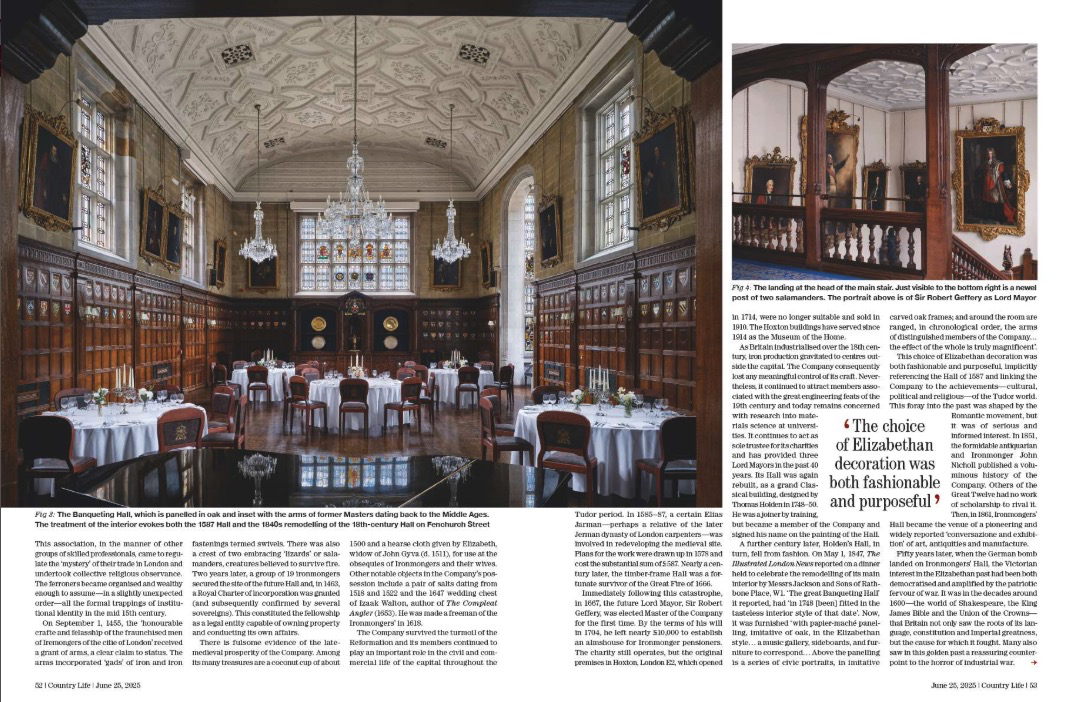
John Goodall celebrates 100 years of the headquarters of the Worshipful Company of Ironmongers, one of London’s Great Twelve City Livery Companies

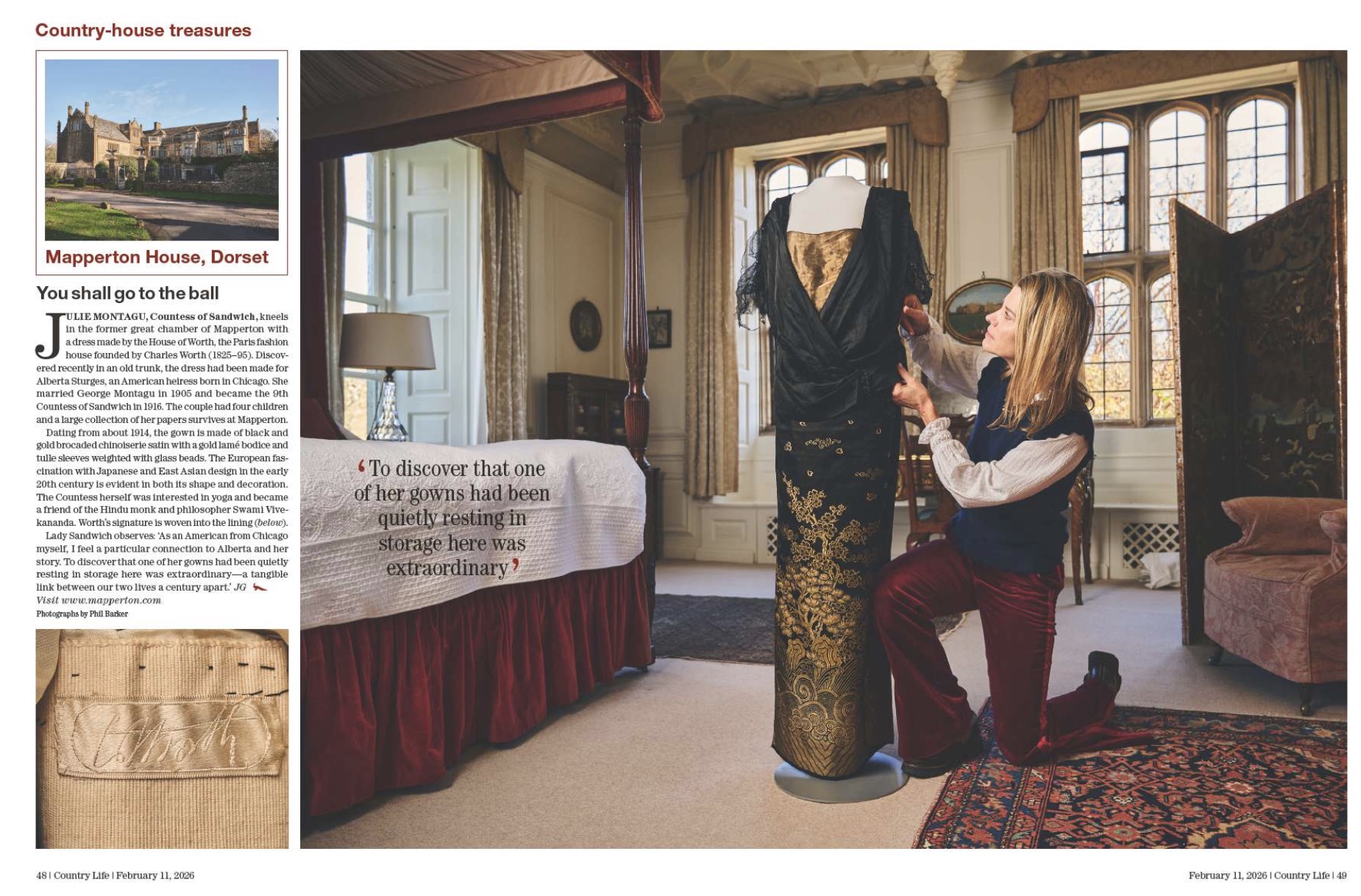
Country Life magazine spread

The legacy

Leslie Hore-Belisha created a beacon of hope for road users everywhere, finds Kate Green

Luxury

Anniversary jewels and Art Deco delights with Hetty Lintell, plus Willow Crossley’s favourite things

Interiors

Arabella Youens admires the kitchen of a house in the Scottish Borders and considers the earthly pleasures of terracotta

Laying ghosts to rest

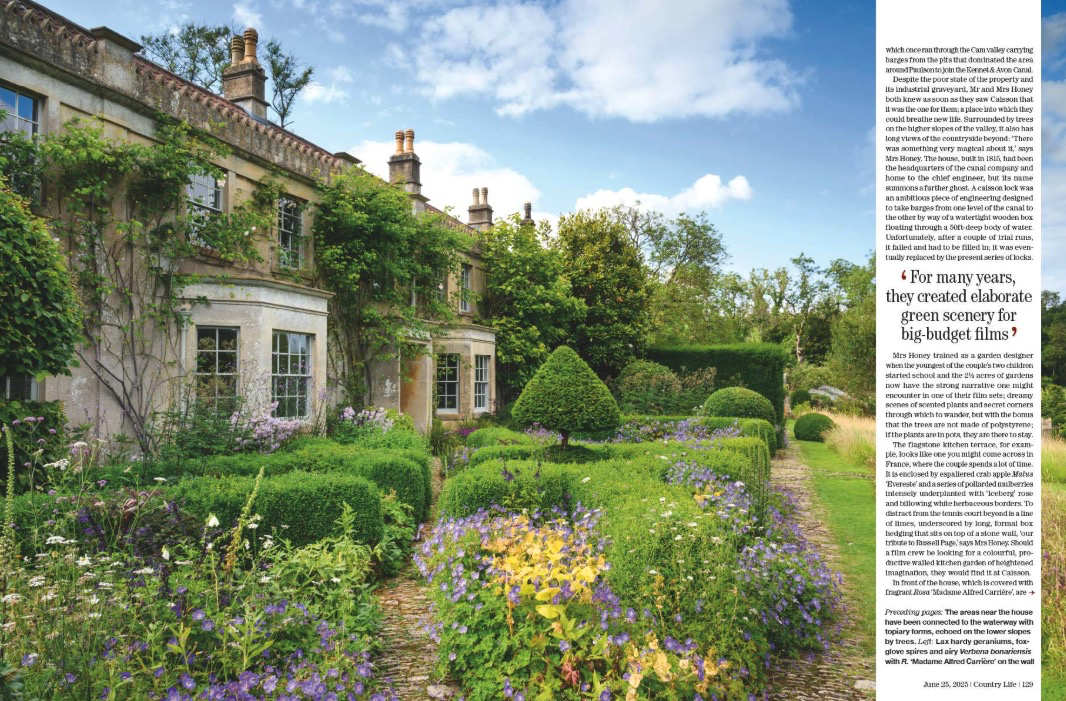
A spectacular garden now graces the grounds of the old Somerset-shire Coal Canal Company HQ, as Caroline Donald discovers

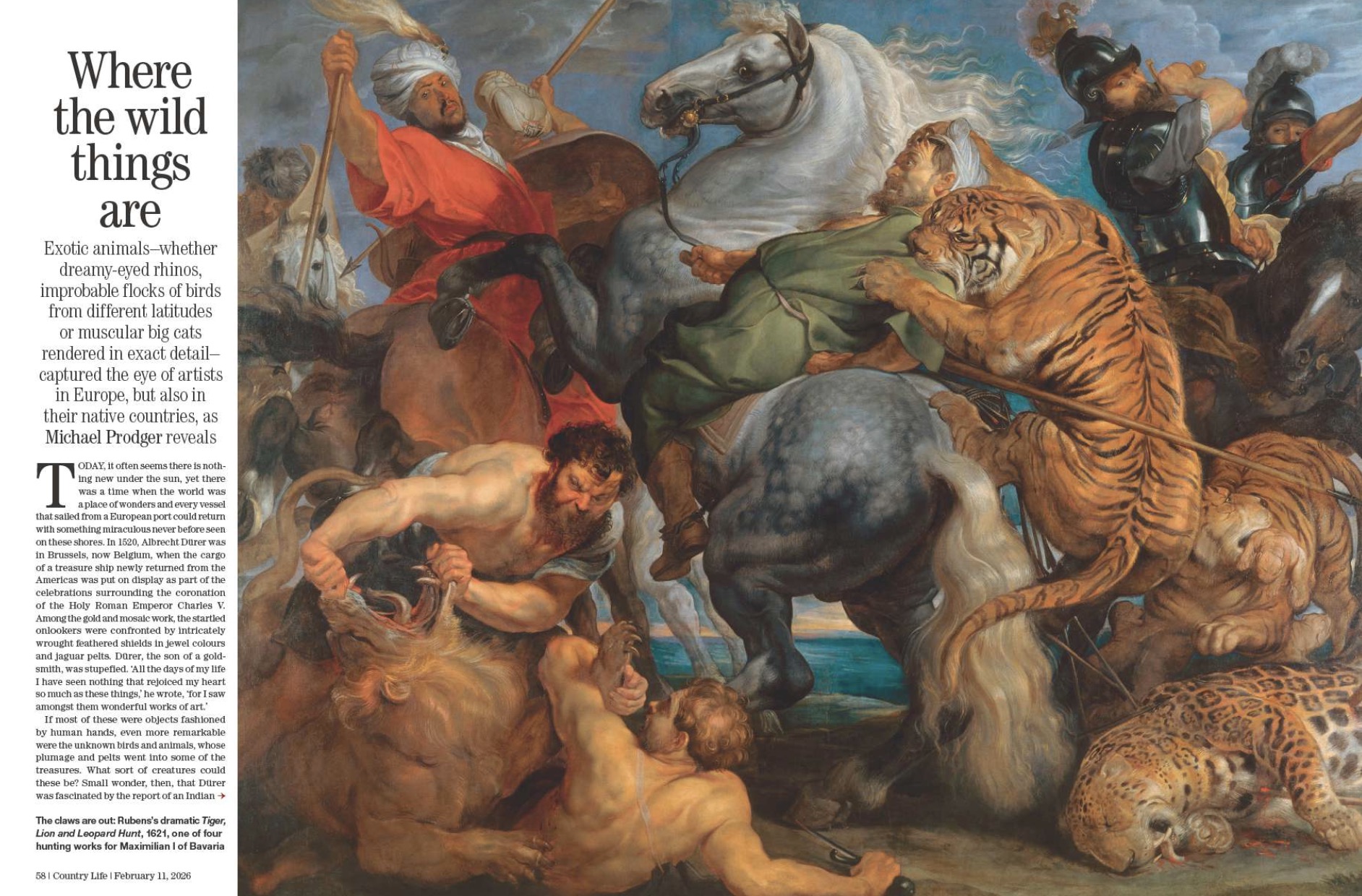
Country Life magazine spreads

Water, water everywhere

John Lewis-Stempel delves into the depths of a field pond, mesmerised by the seemingly endless variety of aquatic life

Arts & antiques

A quartet of journeys with The King raised the profile of plein-air artist Warwick Fuller, who talks Royal Tours with Carla Passino

Making an impression

French Impressionism was a slow burner in Britain as Monet and Pissarro gradually influenced our art scene, reveals Caroline Bugler

And much more

COUNTRY LIFE MAGAZINE – MAY 7, 2025 PREVIEW

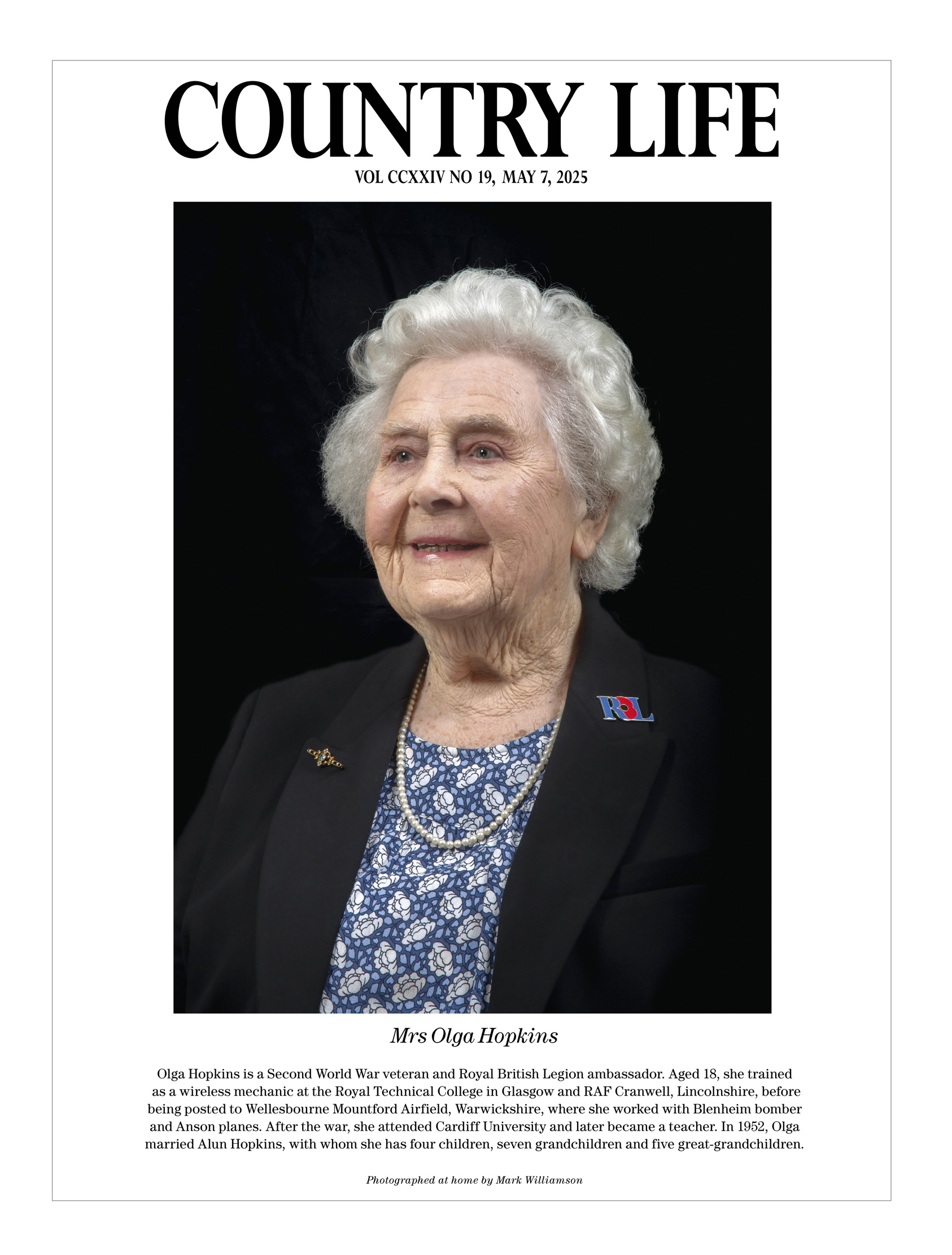
Country Life May 7 cover

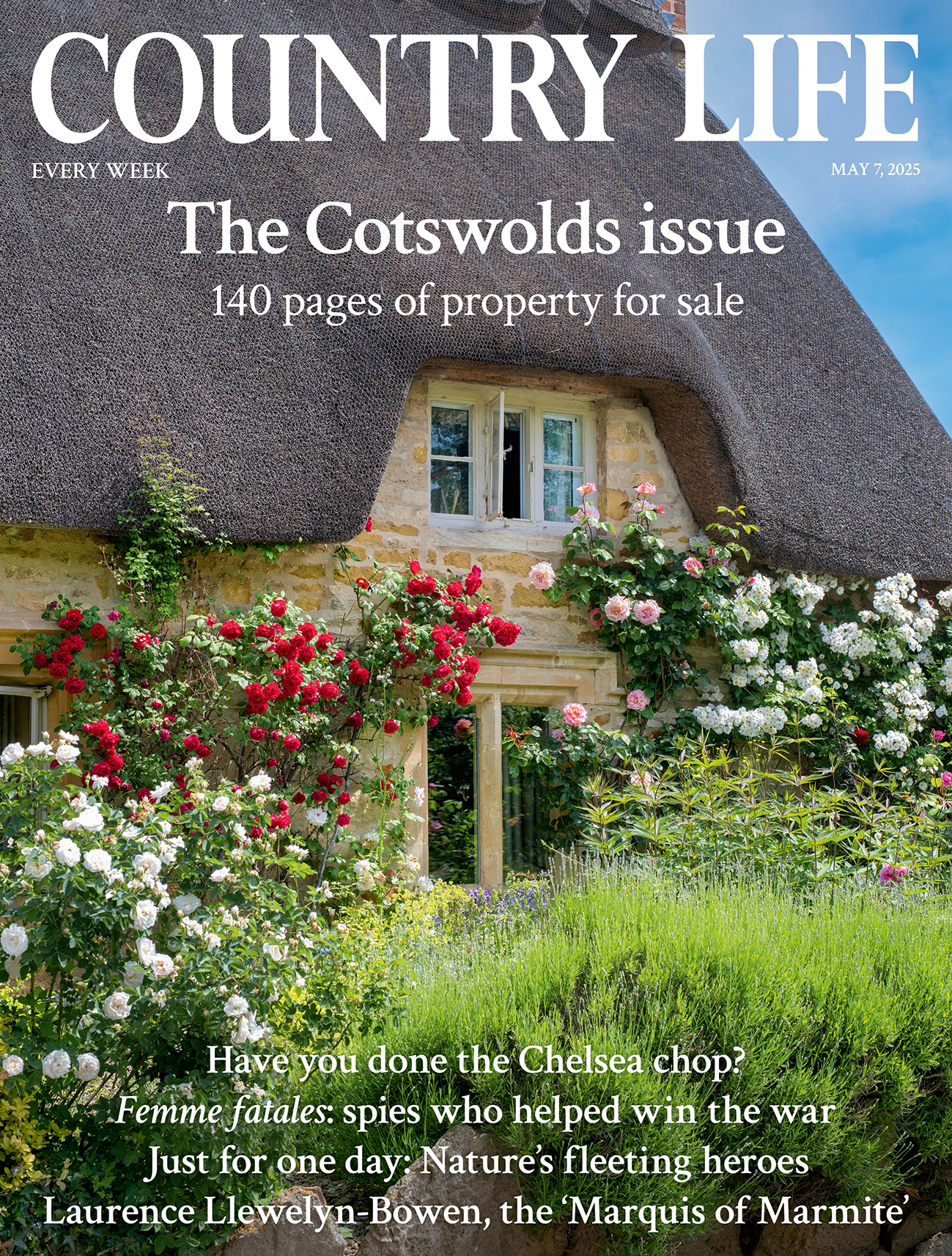
COUNTRY LIFE MAGAZINE (May 7, 2025): The latest issue features ‘The Cotswolds Issue’…

An outpouring of joy

Jubilation and bittersweet tears greeted the end of hostilities in 1945, reports Octavia Pollock.

May 7 issue spreads
Mrs Olga Hopkins, Second World War veteran, takes centre stage on this week’s Frontispiece.

The carver, the baker and fancy shoemaker

Jane Wheatley meets some of the craftspeople enhancing the Cotswolds’ standing as a hive of creativity.

‘I am the Marquis of marmite’

Laurence Llewelyn-Bowen is applying his trademark swagger to a new passion for painting, reveals James Fisher.

Nothing lasts forever

Laura Parker reveals in those ‘blink and you’ll miss it’ moments that only Nature can provide.

May 7 issue spreads

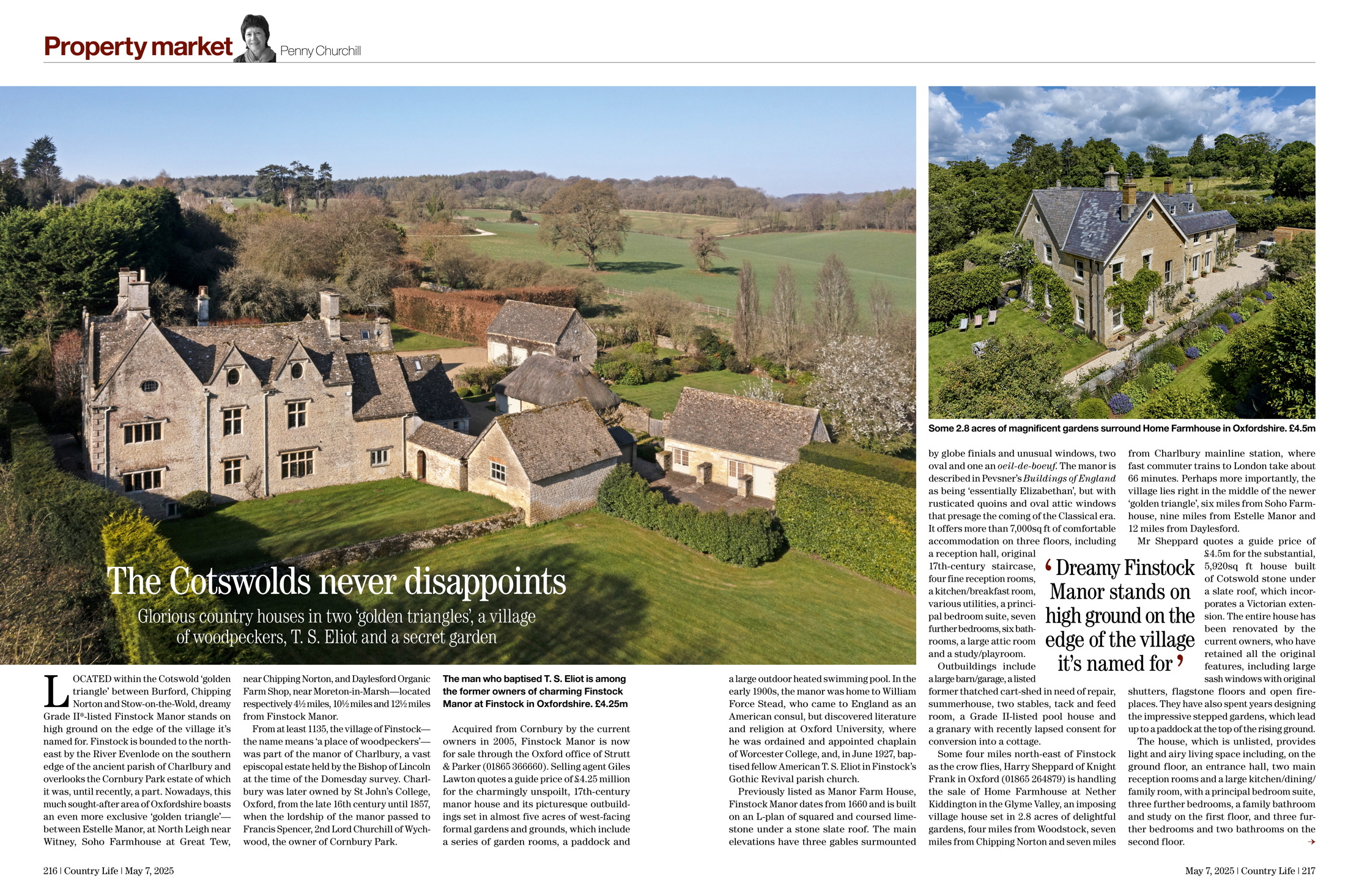
The Cotswolds never disappoints (above)

Penny Churchill showcases glorious country houses for sale in two ‘golden triangles’.

All set for the Chelsea chop?

This it the time to prune our late-flowering herbaceous perennials — join John Hoyland in wielding the secateurs.

Martina Froth’s favourite painting

The Yale Centre for British Art Director chooses a work tinged with a melancholy sadness.

An estate made public

John Goodall investigates the gradual architectural revolution of Bowood in Wiltshire, a house that boasts a remarkable history.

The legacy

Kate Green pay tribute to Alan Turing, the code cracker who curtailed the Second World War.

May 7 issue spreads

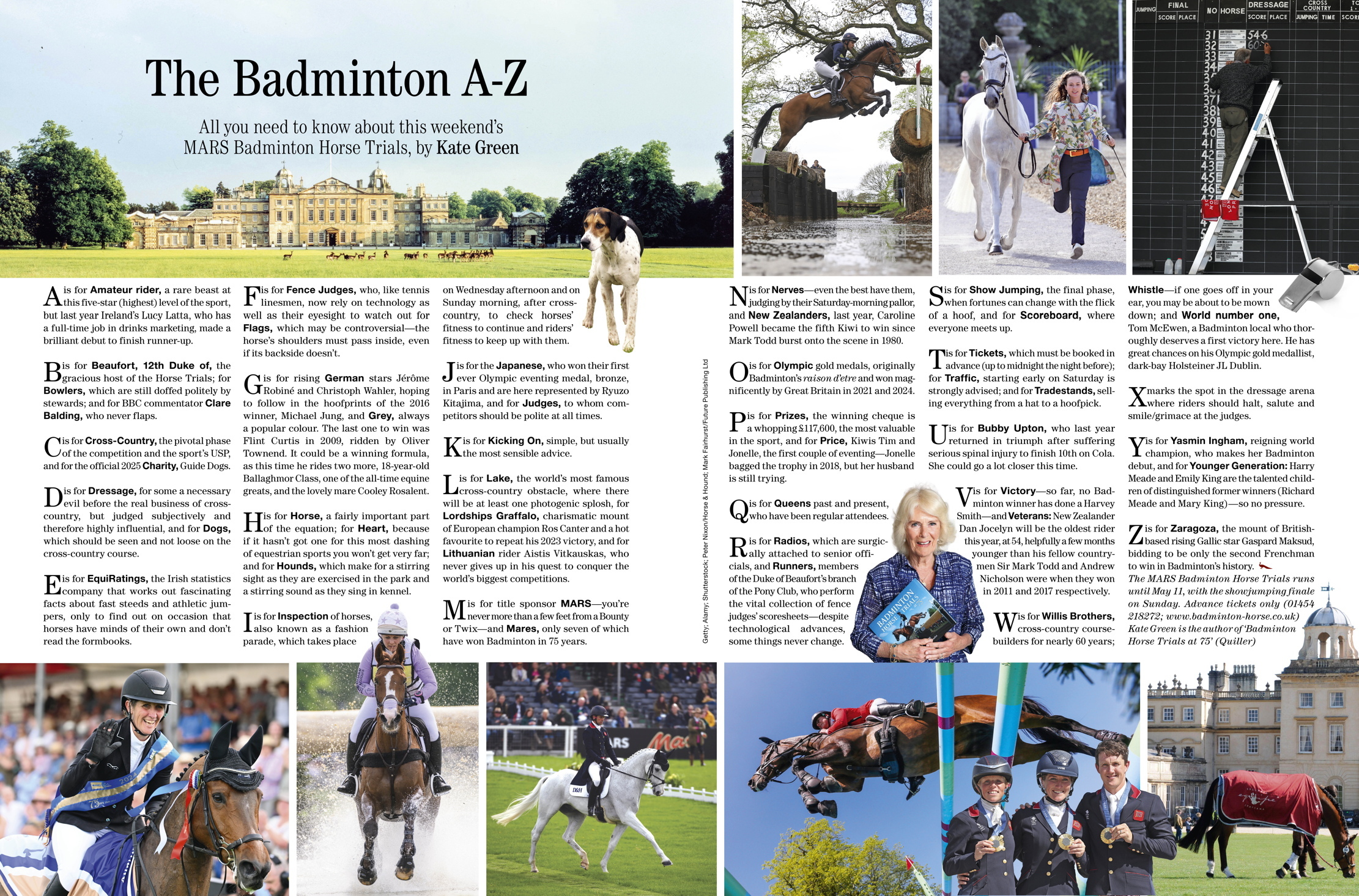
The Badminton A-Z (above)

From amateur riders to Zaragoza, Kate Green guides you through the world-class eventing action.

New series: Winging it

The elegant hobby is capable of snatching swallows in flight — Mark Cocker is rapt by raptors.

The good stuff

Hetty Lintell is wowed by watches.

Interiors

Restful bedroom furniture and accessories, with Amelia Thorpe.

May 7 issue spreads

London Life

Rosie Paterson reveals how bees are creating a buzz in the capital, our writers have all your need to know this month and Selina Cadell shares her on-stage experiences of the Theatre Royal Drury Lane.

A soft touch

Tiffany Daneff marvels at the flower-filled paradise of Hampnett House in Gloucestershire.

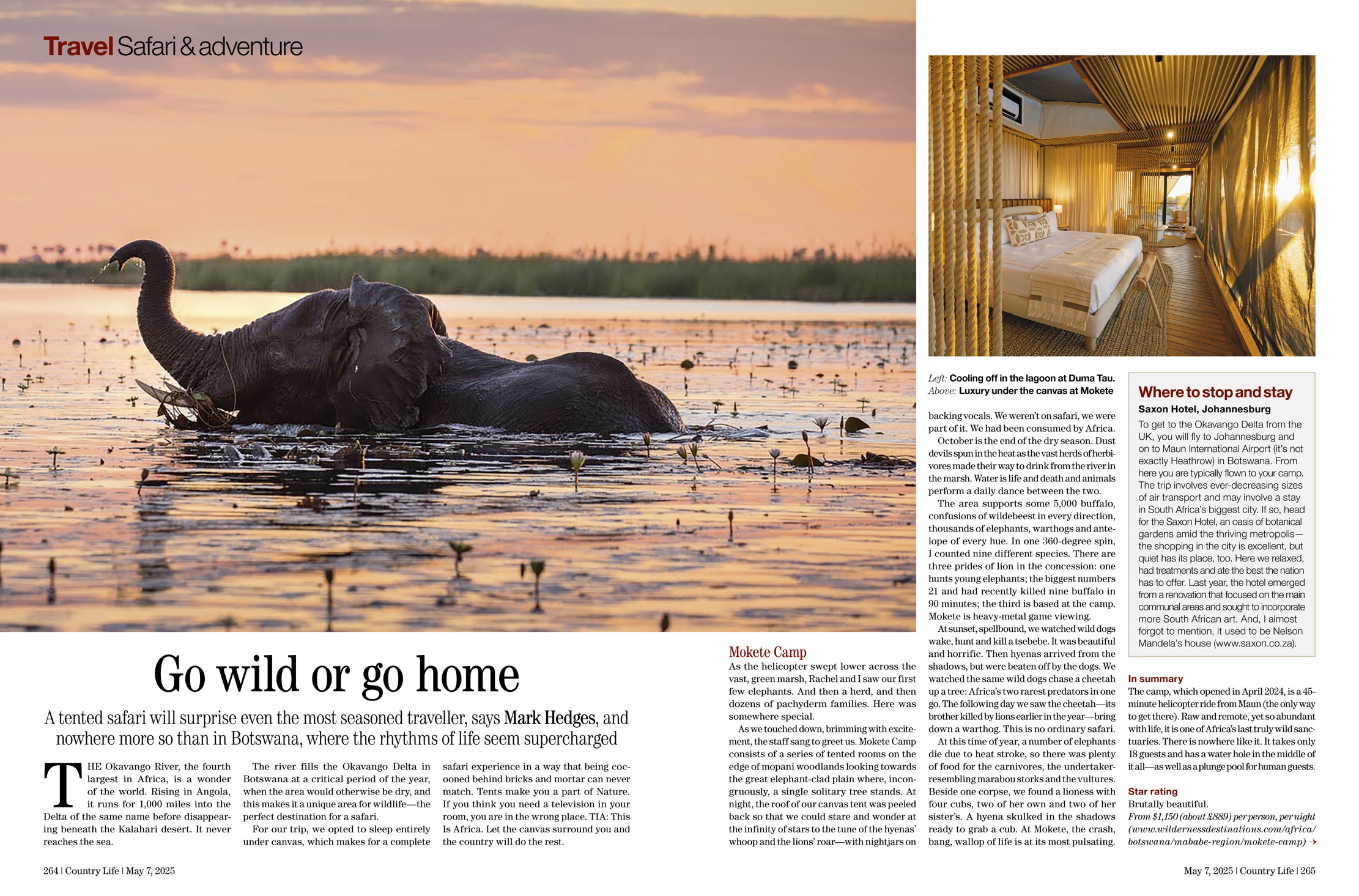
Travel (above)

Emma Love has an eye for adventure, Mark Hedges goes wild on safari in Botswana, Rosie Paterson hits the walking trail in Sri Lanka and Pamela Goodman hail’s Giubbilei’s gardens.

Art and antiques

Simon Finch tells Carla Passino he will not part with his £1 note signed by a Great Train Robber.

One king to rule them all

Mary Miers explores the artistic and cultural legacy of James I.

Country Life Magazine – January 15, 2025 Preview

COUNTRY LIFE MAGAZINE (January 14, 2025): The latest issue features ‘Totally Tropical’ – The gardens of Tresco, where anything grows…

Totally tropical taste

Tiffany Daneff savours the exotic surroundings of Tresco Abbey Garden, where the temperate climate of the Isles of Scilly has created a colourful paradise

Box of tricks

The devastation of box blight is well documented, but what can we do to save our hedges?  Charles Quest-Ritson investigates

Now that’s what I call pulling power

The ox may have disappeared from the fields of Britain, but that mighty beast of burden still plays a huge role in agriculture across the globe, finds Laura Parker

 ‘Make way for Her Majesty’s gloves!’

You’ve got to hand it to Cornelia James, suggests Katy Birchall, as she recounts the incredible rise to prominence of our late Queen’s favourite glove-maker

Amie Atkinson’s favourite painting

The actress selects a heavenly landscape that has fired her imagination since childhood

The legacy

Tiffany Daneff pays tribute to Beth Chatto, whose ‘right plant, right place’ philosophy inspired her Essex dry garden

Top seats

The best chairs and benches for the garden, with Amelia Thorpe

Cool schools

Non Morris taps into the expert knowledge of Troy Scott-Smith, Charles Dowding and Tom Stuart-Smith as she digs into some of Britain’s best garden courses

Town versus Earl

John Goodall charts the history of The Lord Leycester and its outstanding medieval buildings in Warwickshire that have been given a whole new lease of life

See you on the top deck

To celebrate the centenary of London’s covered double-decker bus, Rob Crossan hops aboard for a whistle-stop tour of our capital’s public transport

The good stuff

Hetty Lintell keeps her cool with a sparkling selection of jewellery inspired by ice

Interiors

Arabella Youens admires a sitting room in London and Amelia Thorpe answers the call of the wild with animal accessories

Kitchen garden cook

Earthy leeks take centre stage in winter for Melanie Johnson

Be still, my beating art

An obsession with Emma, Lady Hamilton led painter George Romney to produce his finest pieces, reveals Carla Passino

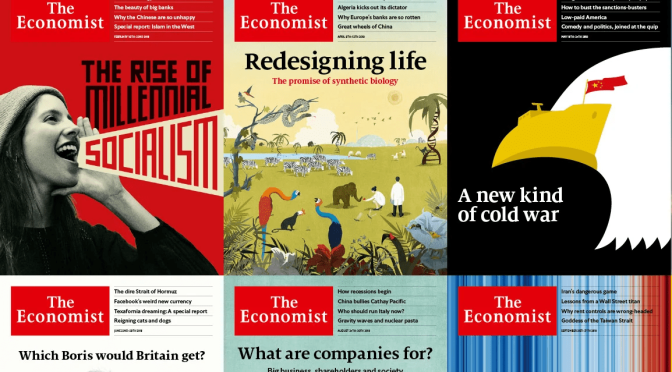
The Economist Magazine – December 14, 2024 Preview

All weekly editions | The Economist

The Economist Magazine (December 12, 2024): The latest issue features ‘What Now?’…

How the new Syria might succeed or fail

The end of the house of Assad. Much will go wrong. But for now, celebrate a tyrant’s fall

What Spain can teach the rest of Europe

Our number-crunching suggests it was the best-performing rich economy in 2024

America’s searing market rally brings new risks

Financial innovation is just as much to blame as the technological sort

Multilateral institutions are turning away from the poorest countries

Even bail-outs are getting expensive

The Economist Magazine – December 7, 2024 Preview

The Economist Magazine (December 5, 2024): The latest issue features ‘America’s Gambling Frenzy’….

America’s gambling boom should be celebrated, not feared

The gambling frenzy is mostly about people being free to enjoy themselves

France steps into deep trouble

It has no government and no budget, and is politically gridlocked

Yoon Suk Yeol of South Korea should resign, or be impeached

His coup attempt was foiled. But grave tests still remain for the country

Joe Biden abused a medieval power to pardon his son

The president’s reversal is understandable, hum

Politico Magazine – November 24-27, 2024

Image

POLITICO Magazine (November 24, 2024): The latest issue features ;Europe is under attack from Russia’; Why isn’t it fighting back? and ‘Elon and Donald – A love Affair…

Musk gets a leg up from Trump in space battle vs. Bezos

Rivals worry the SpaceX boss will rig the playing field for space exploration in his favor.

World War III has officially begun, Ukraine’s ex-top general says

The former commander-in-chief of the Ukrainian army has a grim outlook on the state of the war.

READ DIGITAL ONLINE EDITION