


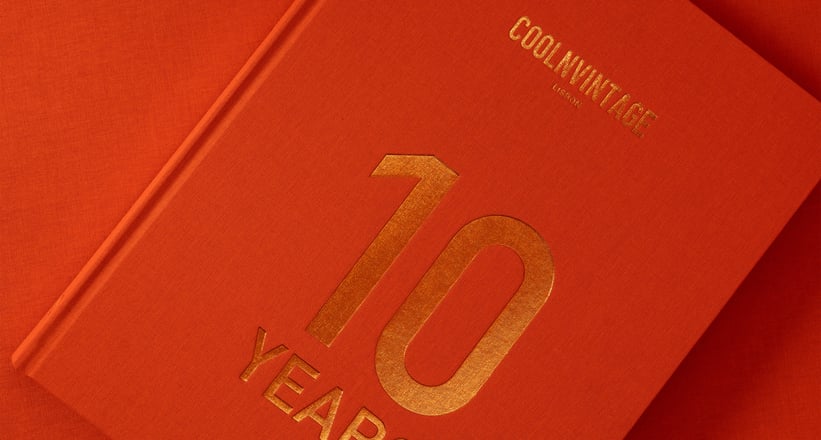
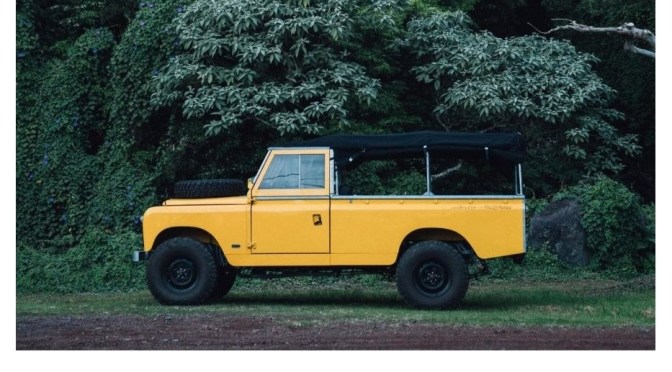
Coolnvintage´s new book is a photographic homage to Land Rover´s and everything they stand for. A simple life where less is more. We invite the reader to dive into our detailed craftsmanship and drive off on a lessknown road.
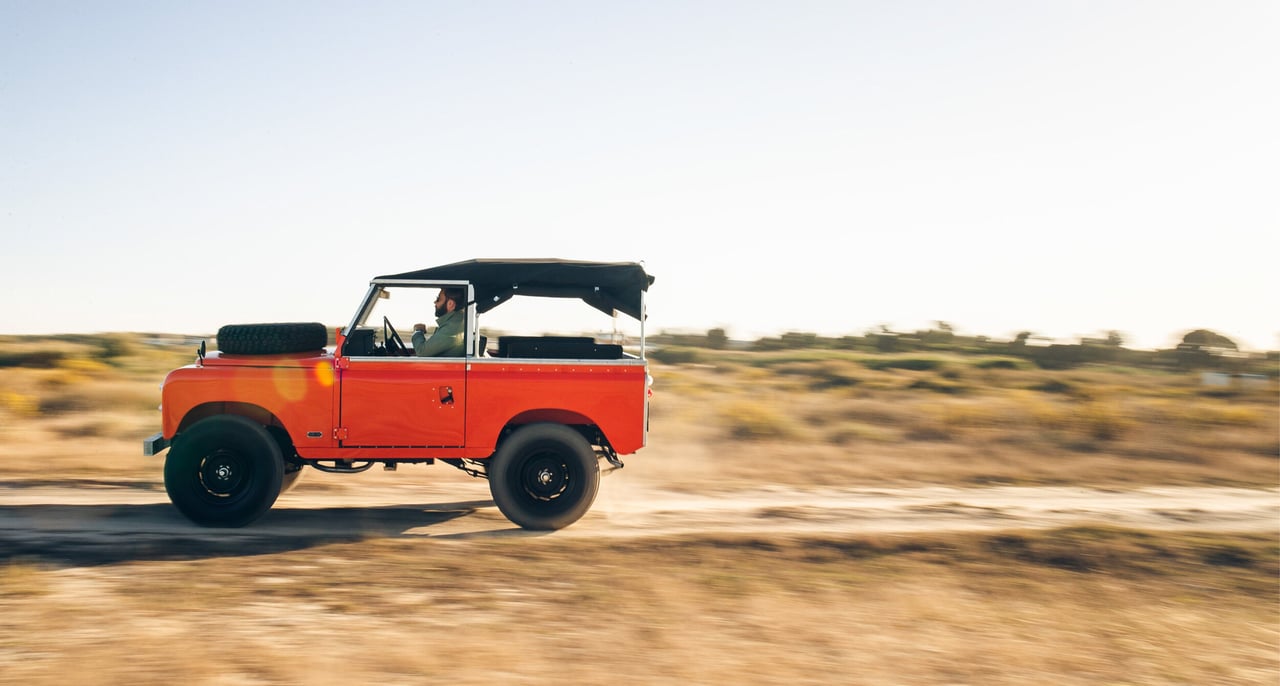

A glimpse into the heart of the places we have visited over the last 10 years. This book is a lifestyle journey, a zest of extraordinary road trips where every image shows the unique Coolnvintage Lifestyle.
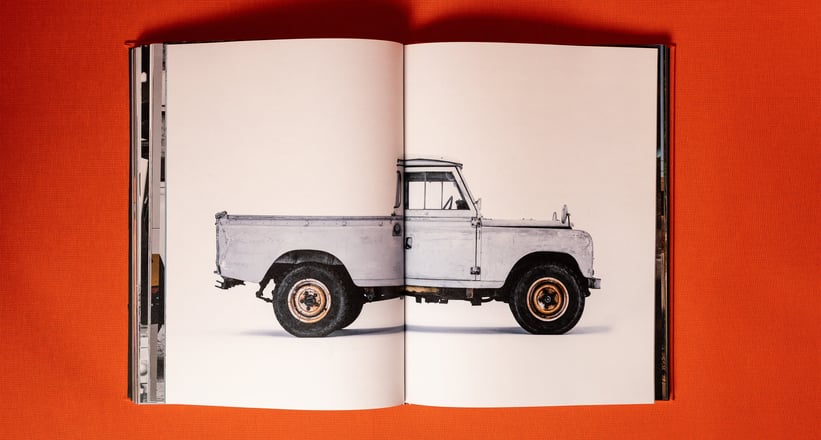
Through relentless dedication and the incessant quest for perfection, owner Ricardo Pessoa and his team set up in Coolnvintage in 2012 and got to work on restoring Defenders to a much higher standard than when they left the factory new.
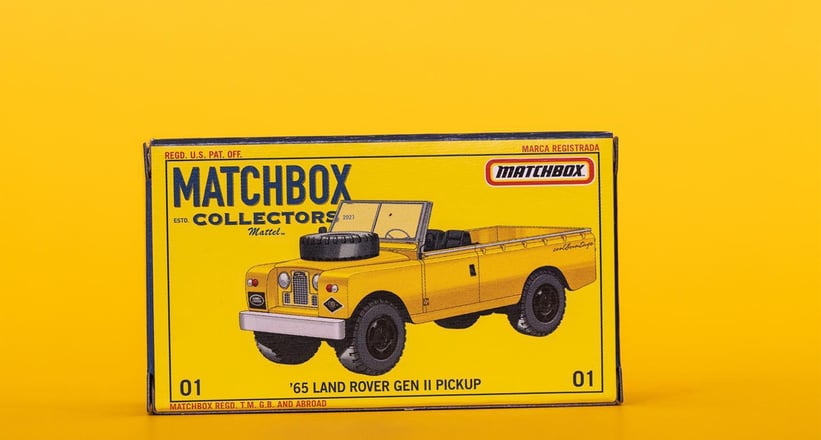
The creative process was built around simplicity, ensuring the restored examples weren’t likely be unused due to fear of scratching the paint or damaging panels, after all the Defender is a vehicle built for just about anything.
It’s a car renowned for its adaptability, durability, and capability, wading through muddy waters and scaling the
We couldn’t think of a better way to celebrate 10 years of passion and creativity, and Coolnvintage’s new book reveals the process behind the obsession for detail and a commitment to the essentials, as well as the inspiration that they take from the world around them.

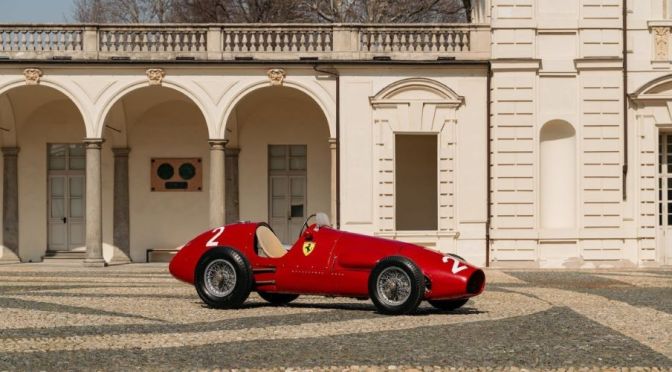
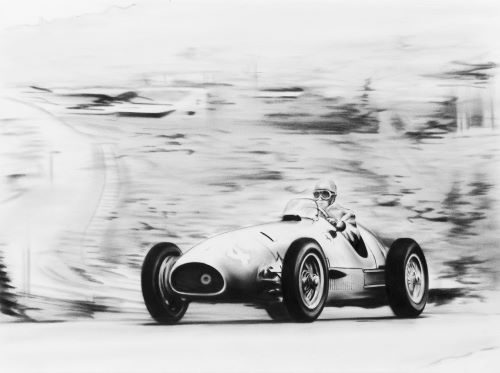
Envisioned by Enzo Ferrari and driven to victory by Alberto Ascari, this modest Ferrari 500 F2 paved the way for Maranello’s racing glory. Once gifted by ‘Il Commendatore’ to the MAUTO museum in Turin, the iconic race car will star at this year’s FuoriConcorso Open Museum exhibition at Lake Como.
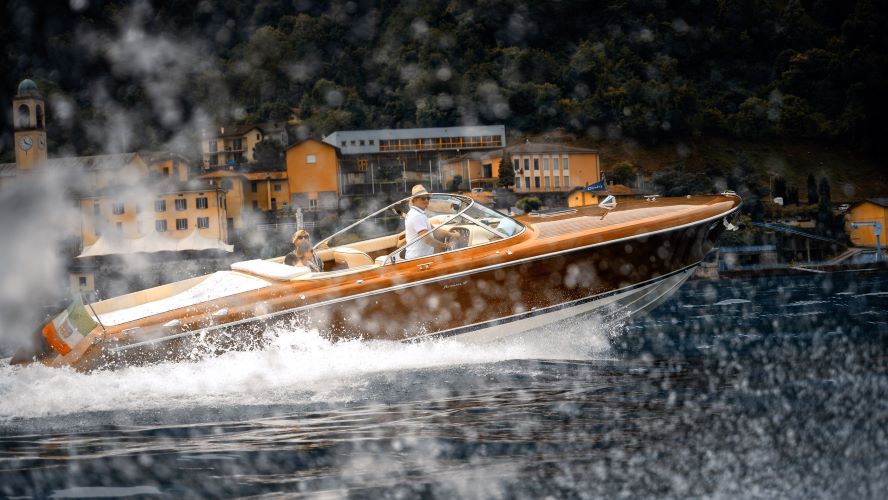
The Grand Hotel Villa d’Este hosted what was arguably the world’s most elegant gathering of classic wooden boats and yachts. And what could say ‘La Dolce Vita’ better than an armada of Rivas dancing on the waves of Lake Como?

Members of the rather secretive Associazione Scafi Epoca – an association and historical register of vintage and classic hulls – watered their classic wooden boats on Lake Como for the Villa d’Este Vintage Yachting.
Sipping on an Aperol on the Grand Hotel’s waterfront terrasse buzzing with waiters in splendid white uniforms, the sonorous chugging of the wooden boats filling the air, one immediately felt thrown back to the 1950s and 1960s, when the international hautevolee spent their summers yachting and water-skiing on the lakes of Northern Italy. Had H.S.H. Prince Rainier III and Princess Grace of Monaco or Count Giovanni Agusta moored their Aquarama on the Villa’s floating pool on the lake, it wouldn’t have come as a surprise.
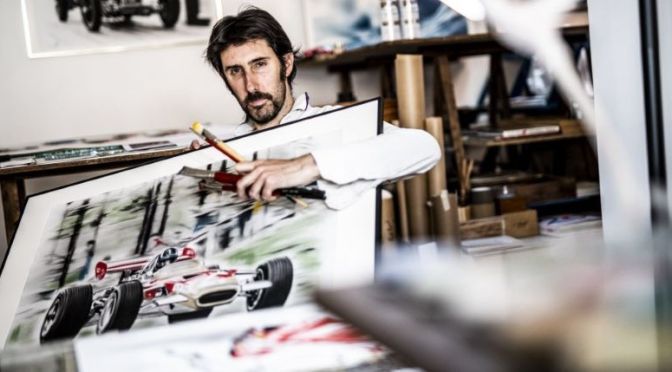
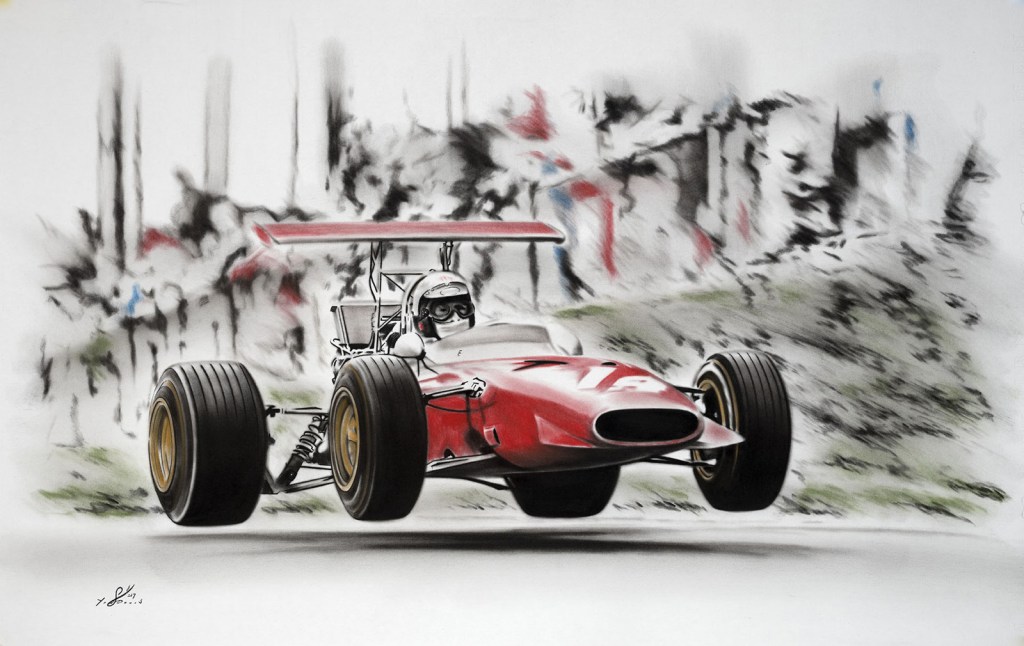
“My primary era is clearly the ’60s,” he says. “For these scenes, I use period photos with the agreement of their photographer and allow myself some freedom on the framing, for example. I like racing cars, and if they have flaws or imperfections, I represent them faithfully, of course.”
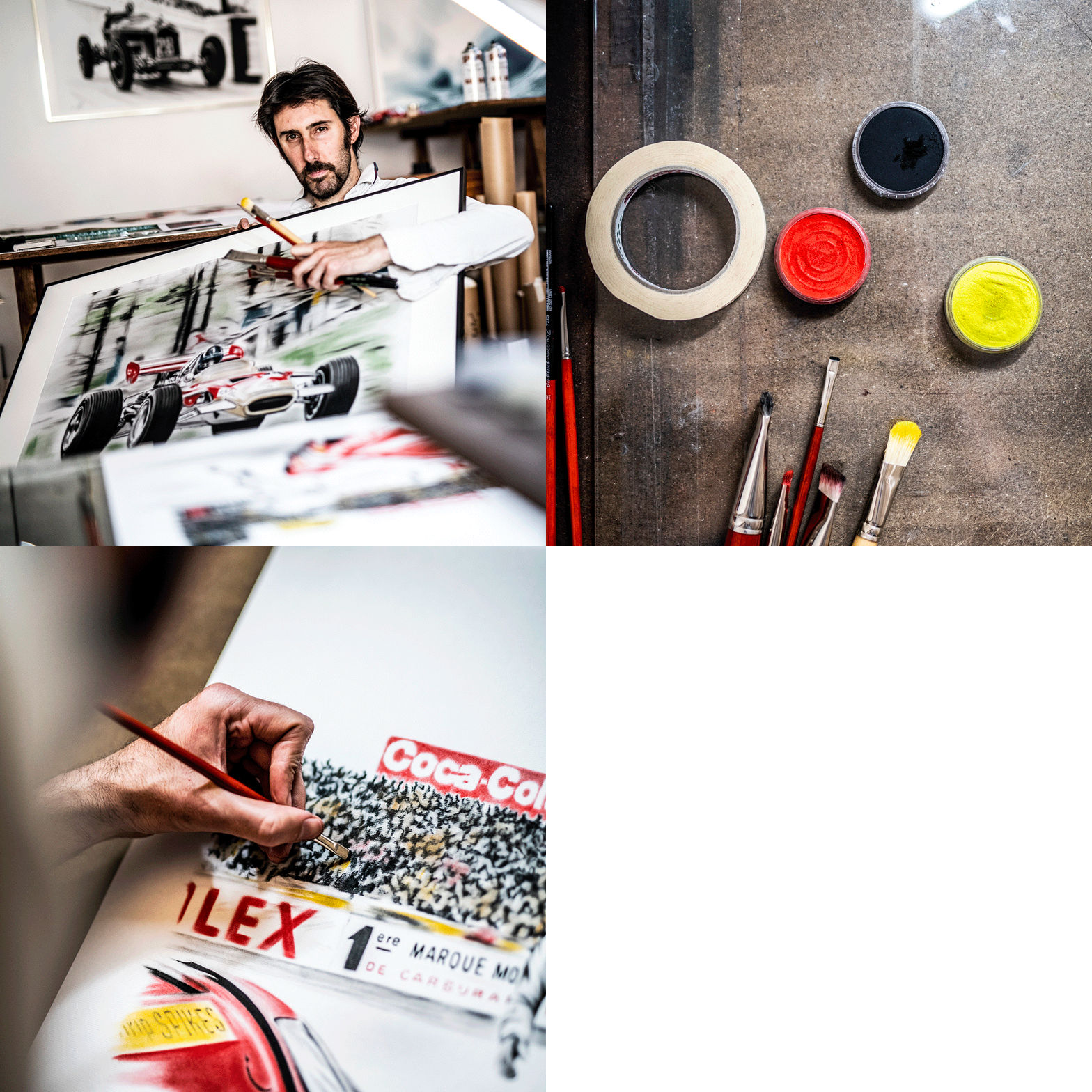
“My master is Leonardo da Vinci, who is the ultimate reference in drawing because of his mastery of blur and movement,” he says. “There’s an indeterminate aspect to these drawings that’s essential. It reminds me of Picasso’s famous phrase ‘finishing a drawing, what a horror’ – that’s exactly it, I always leave an area of blur and a part of emptiness. The viewer fills that space with their experience, their story. In this way, a drawing is simply an exchange – an encounter between two people.”
Few artists, like Yan Denes, understand how to make the thrill of speed tangible for the observer with pen and paper. Not only did he design Scuderia Ferrari’s anniversary helmets in Formula 1, but he is also inspired by historic motorsport.
While the vast majority of Denes’ commissions come from owners of modern Ferrari race cars such as the 360 Challenge, 430 GT2, 488 GT3 and FXX, Yan is actually better known for his passion for historic racing scenes.
It has to be said that Denes is a virtuoso when it comes to transcribing speed and movement.

“It’s a privilege to work with these fantastic cars,” enthuses James “and we benefit from incredible craftsmen and Chris’ vast experience. These are important cars, looked after sympathetically. When we restore cars, we’re careful and fastidious in retaining the soul, but we also understand that cars evolve”.
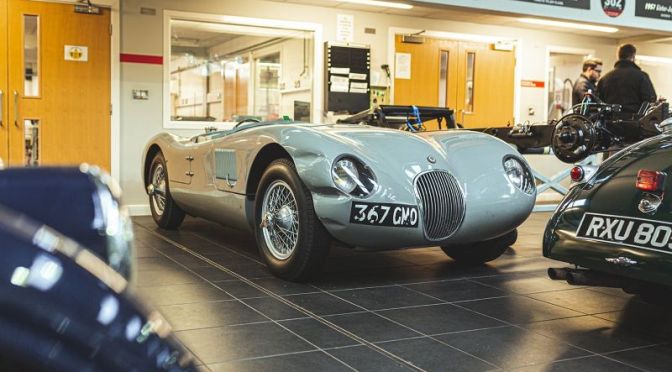
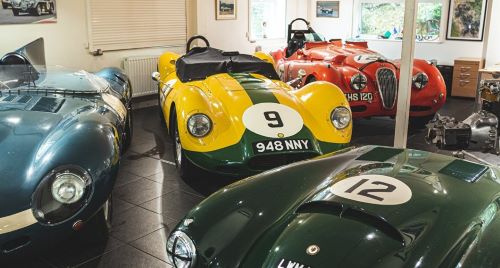
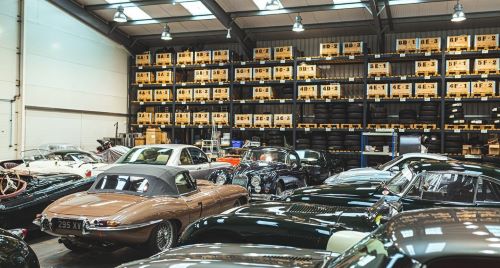
In keeping with the colour British Racing Green, CKL Developments prides itself on being understated, not flashy. Inside a pristine brace of high-roofed, modern industrial units near Hastings, in Britain’s East Sussex countryside, you’ll find cars that are maintained to be enjoyed, driven and raced.
CKL is not, the team is at pains to point out, a museum. It’s the absolute authority on Jaguar-engined sports cars of the ’50s and ’60s and looks after some of the most historic and important British cars of that era, sympathetically restored, preserved of soul and performing at their zenith. The team can service, restore, repair, prepare, race, build, sell, store and transport your pride and joy as required.
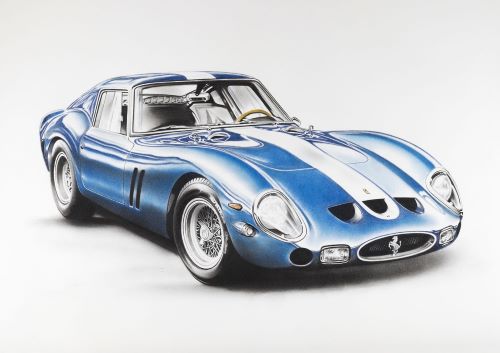
One of the most notable GT racers of its time, the 1959 250 GT Berlinetta SWB used a short (2,400 mm (94.5 in)) wheelbase for better handling. Of the 176 examples built, both steel and aluminum bodies were used in various road (“lusso”) and racing trims. Engine output ranged from 240 PS (177 kW; 237 hp) to 280 PS (206 kW; 276 hp). The “lusso” road car version was originally fitted with 185VR15 Pirelli Cinturato (CA67).
In 2004, Sports Car International placed the 250 GT SWB seventh on a list of Top Sports Cars of the 1960s, and Motor Trend Classic placed it fifth on a list of the ten “Greatest Ferraris of all time”.
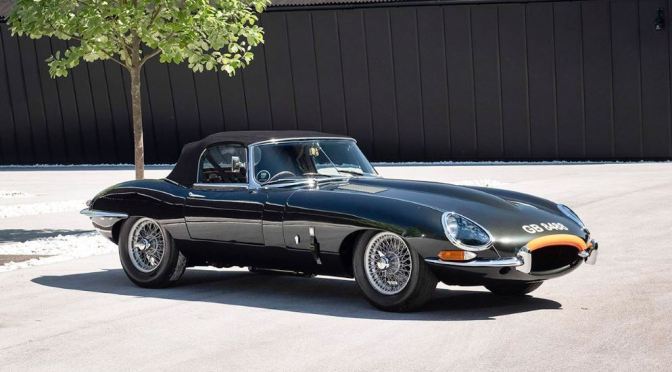
Although the response to the E-type was frenzied, Jaguar knew that more than a pretty face was required to secure the model’s future. Under the veil of ‘Project ZP’, seven of the earliest E-types were transformed into racers. And this particular car stands today as the best of the bunch…
From Classic Driver Magazine (April 18, 2020):
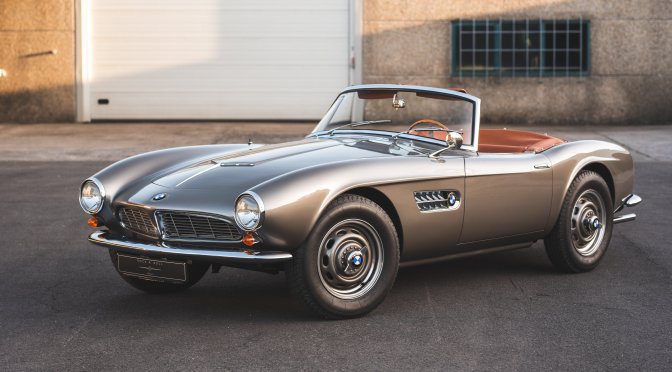
 “Astonishing” is the word we are looking to describe this BMW 507. A word we use a lot if it comes to selling classic cars, but only a little few deserve this ‘title’ like this 507 does. When an exceptional model, with an unique story, from what the historical documents are well archieved, it just makes us going crazy. Add matching numbers and -colors tot his list and we are losing it totally. That’s no different with this 507.
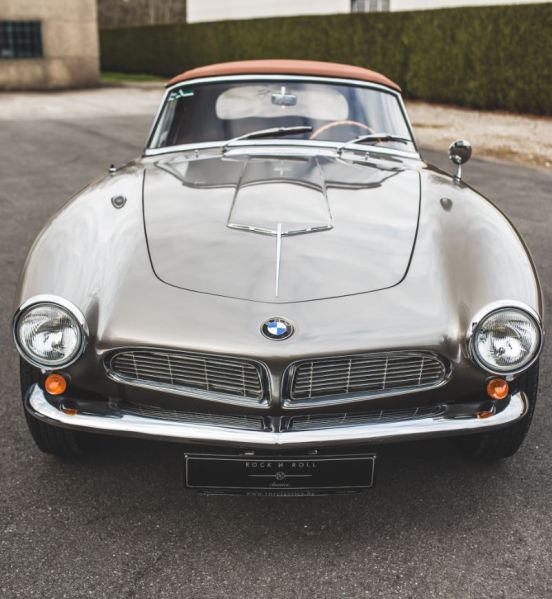 Max Hoffman convinced BMW that if they built a competitor to the Mercedes-Benz 300SL, he would sell it profitable in the United States. The BMW was intended to fill the gap between the affordable sports cars like the triumph and MG and the exclusive cars like the Mercedes-Benz 300SL and Ferrari 250 GT California. Though, BMW couldn’t achieve their target price, for what the BMW 507 was even more expensive than the 300SL. BMW found itself in a financial difficult situation and almost went bankrupt. At the end of the day, BMW recovered from this “failure” and the 507 even became a true flagship in the whole history of automotive.
 In the ‘50s BMW disposed over all fundamental ingredients which would make the 507 complete. An all-aluminium 3.2-litre V8 engine was placed in a shortened chassis of the 502. This ingenious masterpiece produced no less than 150hp and sounds like a guitar solo in your ears. To save weigt, the body was made of aluminium, which results in a 1280kg’s for a fully finished 507. Besides the phenomenal results, BMW wanted to offer luxury as well. Both aspects are just spot on.
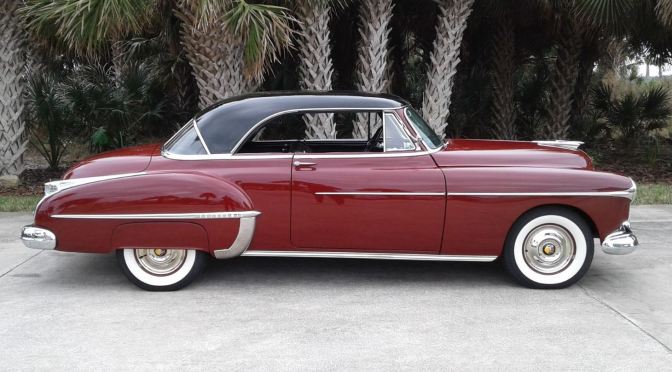
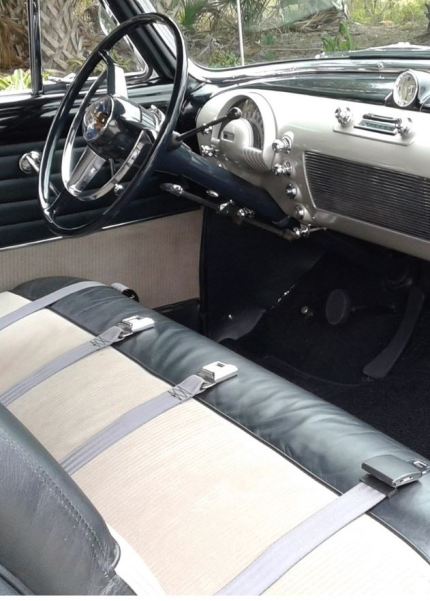 The Oldsmobile 88 (marketed from 1989 on as the Eighty Eight) is a full-size car that was sold and produced by Oldsmobile from 1949 until 1999. From 1950 to 1974 the 88 was the division’s top-selling line, particularly the entry-level models such as the 88 and Dynamic 88. The 88 series was also an image leader for Oldsmobile, particularly in the early years (1949–51) when it was one of the best performing automobiles thanks to its relatively small size, light weight and advanced overhead-valve high-compression V8 engine. This engine, originally designed for the larger C-bodied and more luxurious 98 series, also replaced the straight-8 on the smaller B-bodied 78. With the large, high performance V8, the Oldsmobile 88 is widely considered to be the first muscle car, although this title is disputed.
In 1950, Oldsmobile offered a modified Cadillac manual gearbox for V8 models. The 88 now outsold the six-cylinder 76 lineup, which was dropped entirely after the 1950 model year. It had a 40 ft. turning circle. The 1950 model won the 1950 Carrera
 A large number of variations in nomenclature were seen over this long model run — Futuramic, Super, Golden Rocket, Dynamic, Jetstar, Delta, Delmont, Starfire, Holiday, L/S, LSS, Celebrity, and Royale were used at various times with the 88 badge, and Fiesta appeared on some station wagons in the 1950s and 1960s. The name was more commonly shown as numbers in the earlier years (“Delta 88”, for example) and was changed to spell out “Eighty Eight” starting in 1989.
From Wikipedia






 Boomers Daily