The coronavirus pandemic shuttered every single AMC theater for months. But the pandemic isn’t the only thing pushing the company onto financially shaky ground. Photo Illustration: Jacob Reynolds/WSJ
Tag Archives: Business
Building Industry: ‘The Rise Of Autonomous Construction Robots’
There’s a lot of buzz around self-driving cars, but autonomous-driving technology could revolutionize a different industry first — construction. That industry hasn’t changed much over the last several decades, according to some experts, making it an ideal candidate for automation.
“The way we build today is largely unchanged from the way we used to build 50 years ago,” said Gaurav Kikani, vice president of Built Robotics. “Within two years, I think we’re really going to turn the corner, and you’re going to see an explosion of robotics being used on construction sites.”
The industry is also faced with a labor shortage that the Covid-19 pandemic has further complicated. “Covid is making people step back and say, ‘hey, the way we’ve been doing things for a long time is just not sustainable,’” said Kevin Albert, founder and CEO of Canvas. “It is just a wake-up call for the industry.”
Canvas is one of several companies working on autonomous construction technology. Big players like Caterpillar and Komatsu, and start-ups like SafeAI and Built Robotics, see value in using autonomous machines to accelerate construction projects. The mining industry was one of the first to employ the use of self-driving tech.
Caterpillar began its first autonomy program more than 30 years ago. The company now has the largest fleet of autonomous haul trucks. Caterpillar says it’s hauled 2 billion metric tons in just over six years. Built Robotics is a San Francisco-based start-up founded by an ex-Google engineer that already has machinery out in the field. It’s automated several pieces of equipment, such as bulldozers and excavators.
“You can now collapse your construction timeline so you can knock out work overnight so that it’s ready for your human workers in the morning to speed them along,” Kikani said. SafeAI is another Silicon Valley start-up. It recently teamed up with Obayashi for a pilot program. It’s been retrofitting equipment like dump trucks, bulldozers and loaders. Robots are also helping inside.
San Francisco-based Canvas created an autonomous machine for finishing drywall and has worked on projects like the San Francisco International Airport and Chase Arena. Humans work alongside its robotic system. “Drywall is very hard work on the body,” Albert said. “And we’ve seen that 1 out of every 4 workers has to end their career early because of injuries. This will create longer careers for people and also enable people to join the trades that haven’t had access before.”
The construction industry is one of the largest sectors in the global economy, with about $10 trillion spent each year. That spending accounts for 13% of the world’s GDP, even though the sector’s annual productivity growth has only increased 1% over the past 20 years. According to McKinsey & Co., $1.6 trillion of additional value could be created through higher productivity, and autonomy would help the industry achieve that.
Technology Trends: India Quickly Becoming A Major Smartphone Producer
India is positioning itself as a smartphone-production hub amid a U.S.-China trade war that has disrupted global supply chains and left tech firms such as Apple and Samsung looking for alternatives to China to manufacture their products. Photo: Olivier Le Hellard for The Wall Street Journal
Clothing: ‘The Rise Of Patagonia’ (CNBC Video)
The Patagonia Better Sweater Fleece Vest is by far one of the brand’s most popular products. It’s also one of its most divisive. Over the last five years, the vest became a must-have accessory for Wall Street workers in Manhattan’s financial district to tech bros in Silicon Valley.
The company says at its height, it was fielding 60 requests for co branded vests, a day. But Patagonia, a private company that values environmental and political activism, never sought out to become the go-to status symbol for some of the biggest and richest corporations in the world.
The combination of hefty price tags and a professional-class of super fans earned it the nickname “Patagucci” prompting it to reevaluate which companies it allowed to put a moniker on the vest as a way to ensure their partners align with their progressive culture.
Patagonia even discouraged consumers from partaking in Black Friday sales and snuck political messages into the tags of its clothing. Here’s how Patagonia’s anti consumption philosophy helped it build a billion dollar outdoor brand.
Travel: Can Airlines Recover In 2021? (Video)
After losses of €100 billion in 2020, will next year see air travel take off again? We speak to Alexandre de Juniac, the head of industry body IATA.
Online Shopping: How 3 Million Grocery Items Are Delivered Each Day (Video)
Each week, e-grocer FreshDirect delivers 100,000 grocery boxes direct to customers’ doors. It all happens from its Bronx warehouse, the size of 11 football fields. Using an advanced AI system, temperature controls, nine miles of conveyor belt, and a fleet of delivery trucks, the company is able to cut out three steps in the normal grocery store supply chain. Business Insider visited the warehouse to see how the company moves 3 million grocery items a week in the face of unprecedented pandemic demand.
Fast Food: ‘How Much It Costs To Open An Arby’s’
Arby’s is one of America’s favorite fast food sandwich chains. They “have the meats,” according to award-winning actor Ving Rhames’ voice in the brand’s iconic commercials.
Arby’s has been known for its roast beef sandwiches since Leroy and Forrest Raffel opened the first Arby’s in 1964. They wanted to stand out in a sea of burger joints by offering something different: roast beef. They later added cheddar cheese sauce, red onion, and a toasted onion roll to the sandwich in 1978.
Flash forward, and Arby’s has started selling its famous meats by the pound. The fast food-chain also adds limited-time options to attract a variety of customers, such as an upgraded prime rib sandwich, and chicken cheddar ranch sandwich.
Today, Arby’s clearly wants to be seen as more than the place with roast beef. In fact, a campaign was launched called “Head of Sandwiches,” the main purpose of which was to promote the other sandwich options available at Arby’s. The campaign has been successful in attracting a younger consumer into the restaurant, according to Forbes.
Arby’s is currently owned by one of the largest restaurant companies in the U.S., Inspire Brands. In addition to Arby’s, Inspire Brands also owns Sonic, Buffalo Wild Wings, and Jimmy John’s. All combined, there are more than 11,000 restaurants, 1,400 franchisees, and $14.6 billion in system sales within the group, according to the company. Inspire Brands has recently filed trademarks for names of possible ghost kitchens which would offer delivery and takeout only a move that could put them ahead of several quick service chains.
If all this sounds enticing, here’s what you’ll need: The Arby’s team expects all franchise candidates to have extensive multi-unit restaurant operator experience, as well as a desire to open multiple Arby’s locations. You’ll also need a minimum of $500,000 in liquid capital, and a net worth of at least $1 million. Breaking it down further, according to Franchise Gator, Arby’s initial license fee is $37,500 for the first restaurant unit, and $25,000 for each additional store. Royalty fees are an additional 4 percent of gross sales. National and local advertising are additional fees 1.2 and 3 percent of gross sales respectively. Still on board?
Let’s keep going. Arby’s president Jim Taylor recently addressed 700 Arby’s franchisees, telling them, How is Arby’s innovating? Remember the pork belly sandwich, or the marrot, Arby’s meat carrot? Arby’s was also one of the first fast food chains to say it would never serve plant-based meat, according to Food & Wine. Still on the fence? Let’s look at a few more details about Arby’s.
As a franchisee of any corporation, what other franchisees do can trickle down to your stores. While you may own your own restaurants, you are still part of a big family. Arby’s ordered the franchisee to remove the sign and publicly issued an apology — but perhaps the PR damage was done. Which brings us to our next point to consider. Could it be better to open your own independent restaurant in lieu of a franchise? There are pros and cons to both scenarios.
As a franchisee, you benefit from branding, training, marketing, and ingredient sourcing, but also pay fees and royalties, lose some control as an owner, and are subject to scrutiny by the franchise. As an independent owner, you can control your own brand, marketing, menu, and hours, but you also start with no brand recognition, resources, training, or access to suppliers. So what did you decide?
If you’re interested in peddling those famous Arby’s meats, alongside the popular, perfectly seasoned curly fries, submit a franchise application online at Arby’s. Keep watching to see Here’s How Much It Really Costs To Open An Arby’s Franchise.
Retail Stores: ‘The Rise And Fall Of Macy’s’ (WSJ Video)
Macy’s has long been identified with the start of the holiday shopping season. But the company was hurting even before the coronavirus crisis hit the retail industry, raising questions about how far Macy’s star could fall.
Photo Illustration: Jacob Reynolds/WSJ
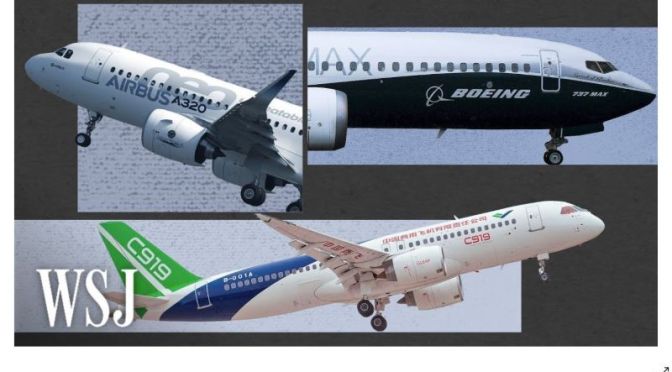
Aviation Industry: ‘How Boeing Suppliers Plan To Survive Crisis’ (WSJ Video)
Boeing’s production cuts have sent shockwaves through the aviation industry, forcing suppliers to lay off thousands of employees. Tool Gauge reconfigured its operations just after opening a new facility in Tacoma, Wash., designed to manufacture Boeing parts.
Photo: Joel Winter for The Wall Street Journal
Interviews: 65-Year Old American Chef Thomas Keller On His Latest Book, Covid & His Restaurants

The 65-year old American chef Thomas Keller discusses his latest book, “The French Laundry, Per Se”. The restaurateur also discusses how his company has fared during the coronavirus pandemic.
Thomas Keller is an American chef, restaurateur, and cookbook writer. He and his landmark Napa Valley restaurant, The French Laundry in Yountville, California, have won multiple awards from the James Beard Foundation, notably the Best California Chef in 1996, and the Best Chef in America in 1997.