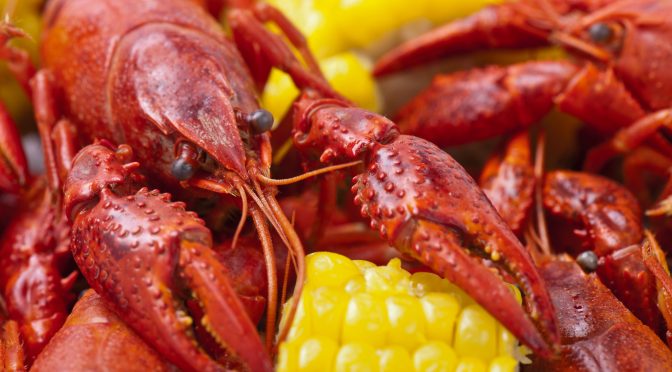
Rice farmers like Mike Frugé of Cajun Crawfish in Louisiana figured out that the two year growing cycle of crawfish synced perfectly with the two year cycle of the rice crop. He shows us how his rice fields are seeded with baby crawfish every other year, creating a new source of food and income for farmers in the area.
Credits: Host: Daniel Geneen Producer/Director: Connor Reid Camera: Connor Reid, Matthew Koesy Editor: Mike Imhoff
Italy’s Carrara marble quarries are a source of controversy, pitting nature against economic gain. Environmentalists warn of overexploitation, while others defend the jobs these Tuscan quarries provide.
Franco Barratini quarries marble blocks that sell for €4,000 per ton. The amount of marble that was once quarried in a month can now be extracted in just three days, and environmentalists are alarmed at the consequences. Marble dust leaks into groundwater, turns rivers milky-white and hangs in the air. The effects of this are still not completely clear.
Sandro Manfredi is fighting what he sees as severe overexploitation in the marble quarries of Tuscany’s Apuan Alps. In 2018, he filed a complaint against an illegal marble quarry, and afterwards was nearly killed when someone tampered with his car. Carrara has experienced four floods in the last nine years. Environmentalists blame marble quarrying, which has increased dramatically thanks to rapidly evolving extraction techniques, upsetting the region’s hydrogeological balance.
The twists and turns of the online brokerage’s path to a public offering The brokerage app Robinhood has transformed retail trading. WSJ explains its rise amidst a series of legal investigations and regulatory challenges as it looks forward to its IPO. Photo illustration: Jacob Reynolds/WSJ
Rising in popularity in the 1950s and 1960s, the convertible car is an automotive American icon. It was a vehicle meant for leisure and fun. Some of the most iconic models throughout history were convertibles, such as the Chevrolet Corvette and the Ford Mustang. However, in the last few years, convertibles have been slowly declining in popularity. Along with rising prices, American car buyers, especially those with children, value practicality and functionality over looks and leisure, leading their interest towards SUV’s and midsize sedans. In 2021, convertibles make up only 0.46% of new car sales. Can the iconic design stand the test of time?
Boeing and Airbus dominate global aviation, but China’s Comac wants to challenge the duopoly with new planes. WSJ’s Jon Sindreu explains how supply chains, technology and geopolitics could help the Western aircraft makers to protect key markets. Photo Composite: George Downs
The global container business is in chaos. Surging consumer demand, covid outbreaks and a shortage of containers has led to higher volume for ocean carriers and congestion at ports.
Maersk, the world’s largest container shipper, has seen record profits. The Danish shipping firm whose customers include Walmart and Nike announced May 2021 first-quarter revenue of $12.4 billion, a 30% increase from a year earlier. Maersk has a fleet of over 700 ships and handles one in every five containers shipped by sea. The company also owns terminals around the world and has a growing land-based logistics business. On average a Maersk container ship calls on a port somewhere around the globe every six minutes.
Like its competitors the company has faced a series of obstacles in the first half of 2021 ranging from the worldwide shortage of shipping containers to the blockage of the Suez Canal. So, with vaccine rollouts in place in the U.S. and consumer discretionary spending shifting towards services will Maersk and its rivals be able to maintain their momentum? And what do bottlenecks at ports and higher freight rates mean for U.S. consumers? Watch the video to find out what’s next for Maersk.
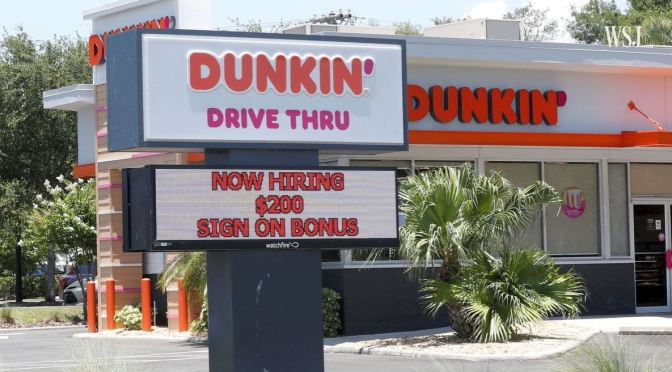
Low-wage work is in high demand, and employers are now competing for applicants, offering incentives ranging from sign-on bonuses to free food. But with many still unemployed, are these offers working? Photo: Bloomberg
The coronavirus pandemic has been catastrophic for the hospitality industry and the delay to the June 21 unlocking has led to more uncertainty. The FT’s Daniel Garrahan and food critic Tim Hayward meet Harts Group, the business behind Soho institution Quo Vadis and tapas chain Barrafina, as it opens a new Soho branch of its El Pastor taquerias









 Boomers Daily