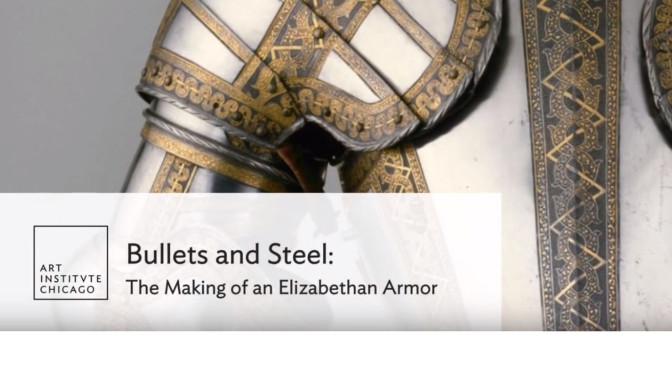
Jeffrey D. Wasson, the armorer who crafted the accurate replica of the Art Institute’s Greenwich armor, and Jonathan Tavares, the Art Institute’s associate curator of arms, armor and European decorative arts before 1700, discuss how utilizing experimental archaeology allowed them to uncover the methods used by Renaissance armorers in crafting the bulletproof protection.
“The Academy Museum gives us the opportunity to honor the past while creating a building for the future—in fact, for the possibility of many futures. The historic Saban Building is a wonderful example of Streamline Moderne style, which preserves the way people envisioned the future in 1939. The new structure, the Sphere Building, is a form that seems to lift off the ground into the perpetual, imaginary voyage through space and time that is moviegoing. By connecting these two experiences we create something that is itself like a movie. You go from sequence to sequence, from the exhibition galleries to the film theater and the terrace, with everything blending into one experience.”
Renzo Piano, Architect
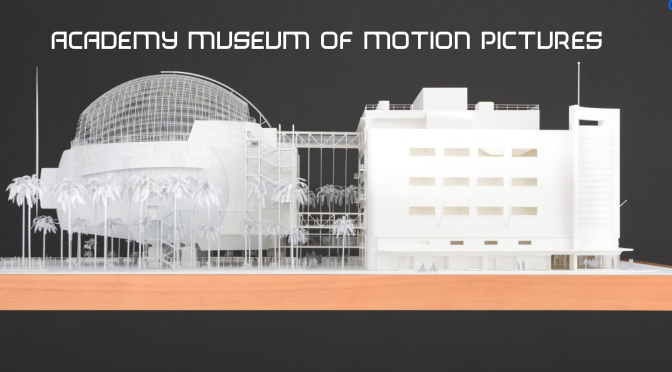
When it opens in the heart of Los Angeles, at the intersection of Wilshire Boulevard and Fairfax Avenue, the Academy Museum of Motion Pictures will be the world’s premier movie museum.
Situated on the famed “Miracle Mile,” the museum will preserve and breathe new life into the former 1939 May Company department store, now re-named the Saban Building. Celebrating its history and imagining new possibilities, the additions to the building that date from 1946 have been removed and replaced with a spherical building that features the 1,000-seat David Geffen Theater and the Dolby Family Terrace with views towards Hollywood. The revitalized campus will feature more than 50,000 square feet of gallery space, two theaters, cutting-edge project spaces, an outdoor piazza, the rooftop terrace, an active education studio, a restaurant, and store.
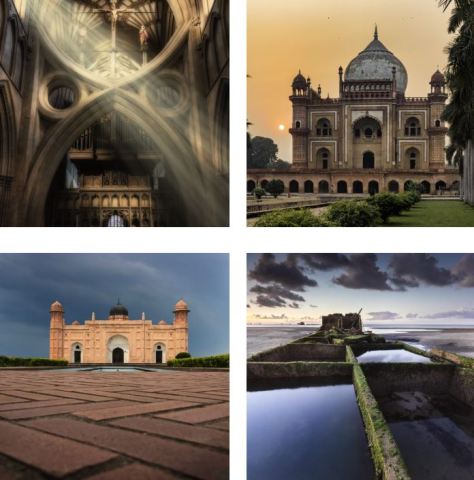
The Historic Photographer of the Year awards showcase the world’s very best historic places and cultural sites from across the globe, capturing everything from the most famous national treasures to the obscure and forgotten hidden gems.
The 2019 Awards attracted a swathe of astonishing entries from amateurs and professionals who have climbed, hiked and trekked their way to snap stunning historic places from every corner of the globe.
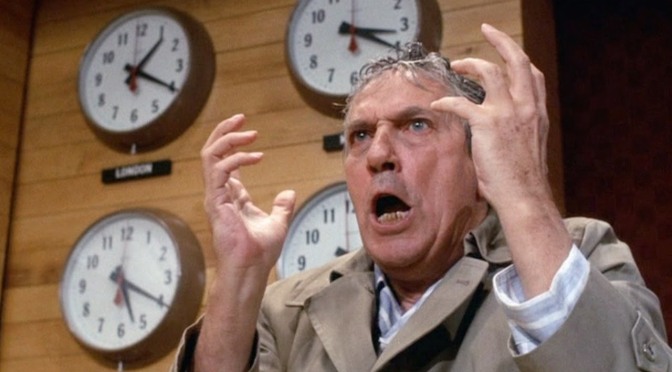
Anger. A word that often does the rounds in the 21st century. On a global scale, citizens are increasingly dissatisfied with their governments — from discord within the current American administration to rising hostility within France, Germany, Greece, Iraq, and Lebanon. Anger due to the persistence of racial violence, threats against the rights of women and workers, discrimination against the LGBTQ community, repression, as well as fear and instability surrounding health care systems, income inequality, the environmental crisis, and the effects of mass migration.
Join a nuanced conversation in this MoMA R&D Salon hosted by Paola Antonelli, Senior Curator of Architecture & Design and Director of Research & Development at MoMA, with speakers (in alphabetical order):
Shaun Leonardo: a multidisciplinary artist whose work discusses societal expectations of manhood––namely definitions surrounding black and brown masculinities––along with its notions of achievement, collective identity, and experience of failure.
Lydia Lunch: a writer, singer, poet, actress, and speaker whose career was spawned by the New York City “No Wave” scene. Widely considered one of the most influential performers originating from New York City, Lydia has worked with a range of bands and artists.
Andrew Marantz: a staff writer at The New Yorker, where he has worked since 2011. His work has also appeared in Harper’s, New York, and Mother Jones. He recently published his first book, Antisocial: Online Extremists, Techno-Utopians, and the Hijacking of the American Conversation.
Marilyn Minter: a contemporary artist whose works are in the collections of MoMA, the Solomon R. Guggenheim Museum in New York, the San Francisco Museum of Modern Art, and the Museum of Contemporary Art in Los Angeles, among others.
Pamela Sneed: a poet, writer, visual artist, and performer. She is the author of the books Imagine Being More Afraid of Freedom than Slavery (1998) and Kong and Other Works (2009), as well as the chapbooks Lincoln (2014), Gift (2015), and Sweet Dreams (2018).
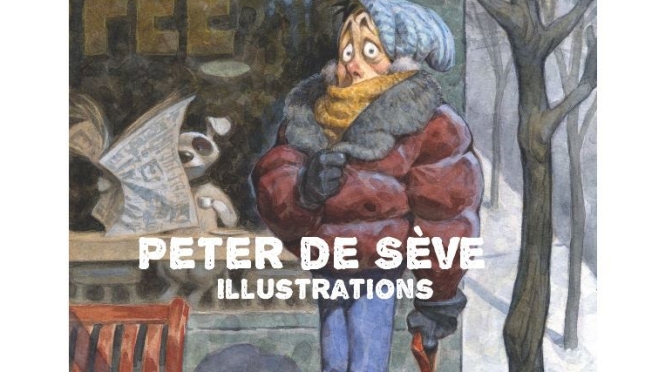
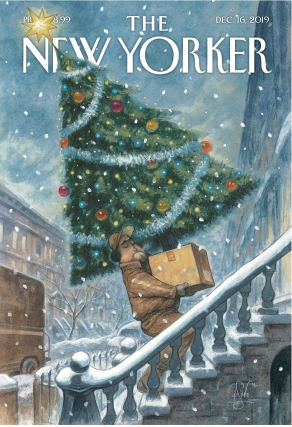
Though Peter de Sève is a regular contributor to the magazine, his most recognizable work comes from his career as a character designer. De Sève has helped create some of the most cherished animation characters of the past few decades, including those in “A Bug’s Life,” “Finding Nemo,” “Robots,” “The Little Prince,” and the “Ice Age” films. We recently talked to the artist about his work and about some of his favorite Christmas traditions.
Do you have any favorite depictions of Christmas? Artists who captured it especially well?
It’s funny, but only clichés come to mind: “It’s a Wonderful Life,” “A Charlie Brown Christmas.” But there is a song that transports me immediately to the season, that I can’t hear without feeling chills: “Charlie Freak,” by Steely Dan. It kills me every time.
In this episode of “The Way I See It,” actor and comedian Steve Martin looks at paintings by two early pioneers of American abstraction and takes us on a journey of seeing—shape and color transform into mountains, sky, and water. Find “The Way I See It” on BBC Sounds or wherever you get your podcasts. https://www.bbc.co.uk/programmes/m000…
Adams’ ‘visualisation’ strategy marked a shift away from Pictorialism, a much more manipulated photographic style, which had influenced his early work. His desire for sharper focus and deeper tone and contrast (he called it ‘an austere and blazing poetry of the real’) led to him becoming a leading figure in pure — or straight — photography.
Arguably no other photographer of his era knew more about photography than Adams. He wrote ten technical manuals on the discipline, and even advised major figures like Strand and Edward Weston, his friend and fellow West Coast photographer.
He also consulted for Polaroid and Hasselblad. Without such technical mastery he would not have been able to react with such immediacy to the quickly changing conditions of landscape.
One of his most famous works, Moonrise, Hernandez, New Mexico, 1941, needed snap judgements of immense sophistication to capture the momentary effect of sunset light on the foreground, and establish a balanced tone and focus with the distant peaks, evanescent clouds and darkening sky.
An exhibit at South Carolina’s Columbia Museum of Art shows Vincent van Gogh in a new light. “Van Gogh and His Inspirations” presents the younger, wayward artist who learned from looking hard at the world — and the work of artists around him. A private collection of his inspirations is made public for the first time and presented alongside a dozen original van Gogh works. Jeffrey Brown reports.
Between the Franco-Prussian War and WWI, France in the 1900s was a gilded moment of peace and prosperity. Critically acclaimed authors Sabine Arqué and Marc Walter curate this XXL collection of some 800 vintage photographs, postcards, posters, and photochromes. From the grand Paris World’s Fair to the honey light of the Côte d’Azur, it’s a glimpse into an era of rose-tinted optimism.
My paintings are inspired by an intensely personal introspective journey of life, from the ever-changing complexities of love, loss, birth, and death. The context of my work is what I call, “Absence and Presence” pertaining to how someone or something can be physically gone, but the essence still remains. Capturing the physical mixed with spirituality on canvas. My application of paint is an extension of that thought process. Continuously building up and tearing down, layer upon layer, adding and subtracting. A visceral dance between the conscious and the unconscious until the emotion is expressed. Painting the essence of something rather than a depiction. My message is about the human condition, that joy is sweetened by the memory of the pain endured to reach it.

 “The Academy Museum gives us the opportunity to honor the past while creating a building for the future—in fact, for the possibility of many futures. The historic Saban Building is a wonderful example of Streamline Moderne style, which preserves the way people envisioned the future in 1939. The new structure, the Sphere Building, is a form that seems to lift off the ground into the perpetual, imaginary voyage through space and time that is moviegoing. By connecting these two experiences we create something that is itself like a movie. You go from sequence to sequence, from the exhibition galleries to the film theater and the terrace, with everything blending into one experience.”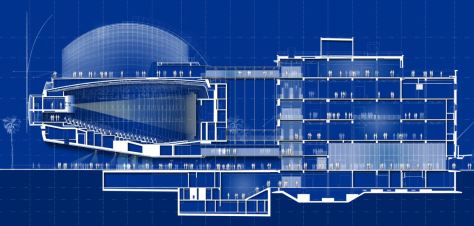
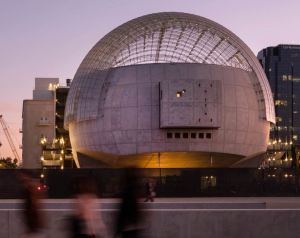 Situated on the famed “Miracle Mile,” the museum will preserve and breathe new life into the former 1939 May Company department store, now re-named the Saban Building. Celebrating its history and imagining new possibilities, the additions to the building that date from 1946 have been removed and replaced with a spherical building that features the 1,000-seat David Geffen Theater and the Dolby Family Terrace with views towards Hollywood. The revitalized campus will feature more than 50,000 square feet of gallery space, two theaters, cutting-edge project spaces, an outdoor piazza, the rooftop terrace, an active education studio, a restaurant, and store.
 The Historic Photographer of the Year awards showcase the world’s very best historic places and cultural sites from across the globe, capturing everything from the most famous national treasures to the obscure and forgotten hidden gems.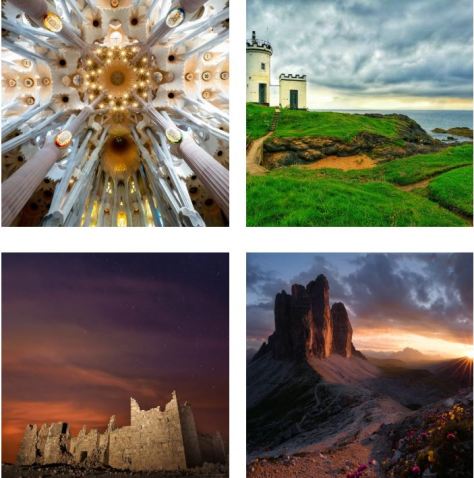
 Though Peter de Sève is a regular contributor to the magazine, his most recognizable work comes from his career as a character designer. De Sève has helped create some of the most cherished animation characters of the past few decades, including those in “A Bug’s Life,” “Finding Nemo,” “Robots,” “The Little Prince,” and the “Ice Age” films. We recently talked to the artist about his work and about some of his favorite Christmas traditions.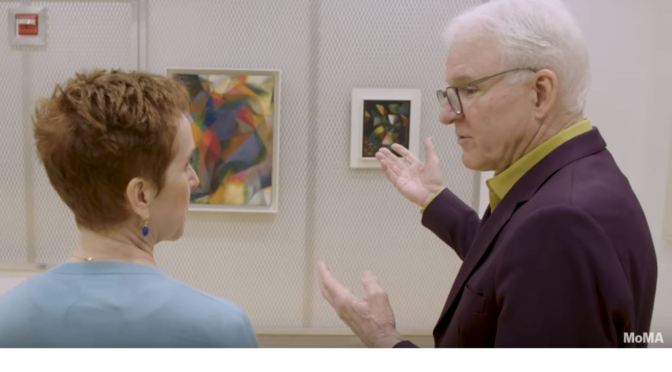
 In this episode of “The Way I See It,” actor and comedian Steve Martin looks at paintings by two early pioneers of American abstraction and takes us on a journey of seeing—shape and color transform into mountains, sky, and water. Find “The Way I See It” on BBC Sounds or wherever you get your podcasts.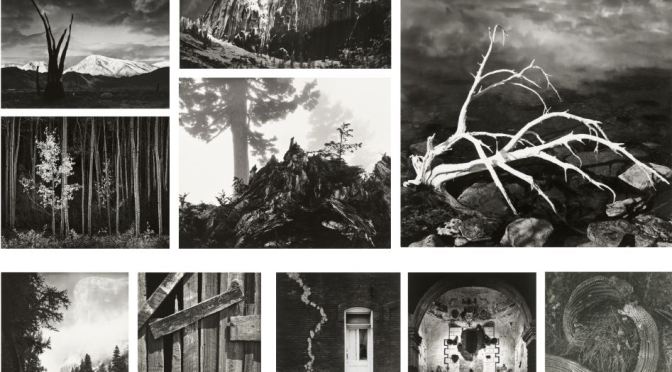
 Adams’ ‘visualisation’ strategy marked a shift away from Pictorialism, a much more manipulated photographic style, which had influenced his early work. His desire for sharper focus and deeper tone and contrast (he called it ‘an austere and blazing poetry of the real’) led to him becoming a leading figure in pure — or straight — photography.

 Between the Franco-Prussian War and WWI, France in the 1900s was a gilded moment of peace and prosperity. Critically acclaimed authors Sabine Arqué and Marc Walter curate this XXL collection of some 800 vintage photographs, postcards, posters, and photochromes. From the grand Paris World’s Fair to the honey light of the Côte d’Azur, it’s a glimpse into an era of rose-tinted optimism.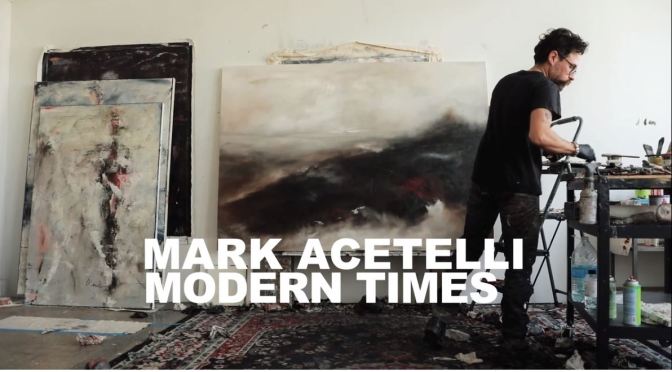
 Boomers Daily