
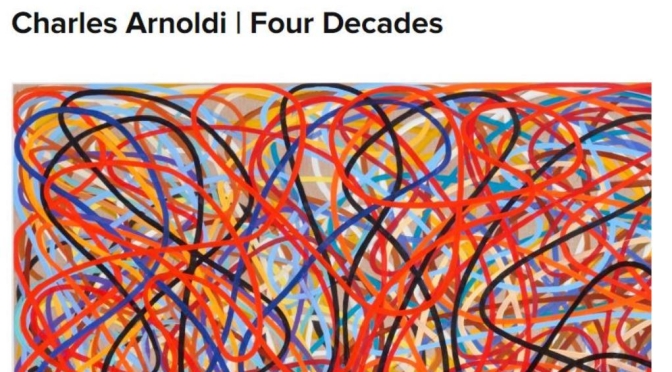
USC Fisher Museum of Art proudly presents Charles Arnoldi | Four Decades, a survey of the versatile and prolific Venice Beach artist, which traces the evolution  of the artist’s expansive and materials-focused practice from the 1970s to the present.
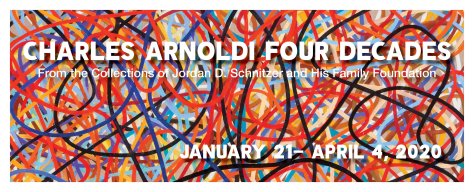
USC Fisher Museum of Art proudly announces Charles Arnoldi | Four Decades from the Collection of Jordan D. Schnitzer and His Family Foundation, a survey of Venice Beach artist Charles (Chuck) Arnoldi. The exhibition, organized by the USC Fisher Museum of Art with the generous support of the Jordan Schnitzer Family Foundation and curated by Bruce Guenther, author of Charles Arnoldi: Paper (2017), opens January 21, 2020 and runs through April 4, 2020.
 Charles Arnoldi was a young man from Dayton, Ohio who had seen little of the world when he arrived in Southern California in the mid 1960s. Following stints at a local community college and Chouinard Art Institute, Arnoldi won LACMA’s New or Young Talent Award in 1969 and thus began his ever-evolving career which continues to this day in his sprawling Venice studio.
For close to 50 years, Arnoldi’s work has reflected a passion for the material world, a commitment to experimentation, and a tireless focus on studio production. Charles Arnoldi | Four Decades is drawn from the holdings of the collector Jordan D. Schnitzer and His Family Foundation.

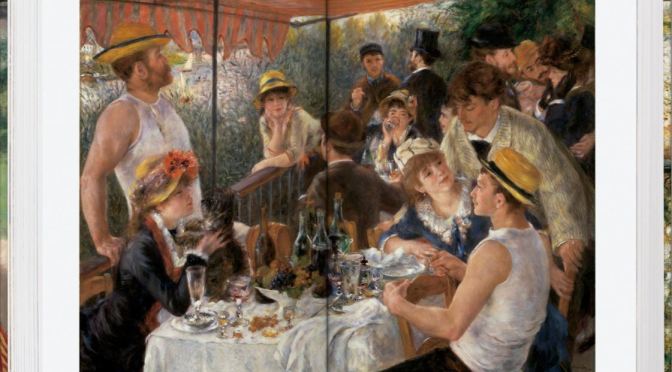
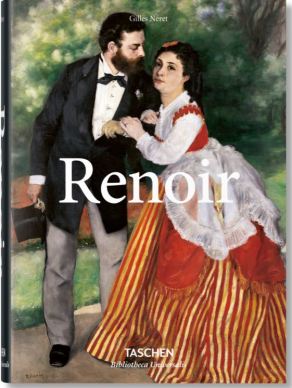 In an incisive text tracing the artist’s career and stylistic evolution, Gilles Néret shows how Renoir reinvented the painted female form, with his everyday goddesses and their plump forms, rounded hips and breasts. Renoir’s later phase, marked by his return to the simple pleasure of the female nude in his baigneuses series, was his most innovative and stylistically influential, and would inspire such masters as Matisse and Picasso.
 happiness, love, and beauty. Derived from our large-format volume, the most comprehensive retrospective of his work published to date, this compact edition examines the personal history and motivation behind the legend. Though he began by painting landscapes in the Impressionist style, Renoir found his true affinity in portraits, after which he abandoned the Impressionists altogether. Though often misunderstood, Renoir remains one of history’s most well-loved painters—undoubtedly because his works exude such warmth, tenderness, and good spirit.
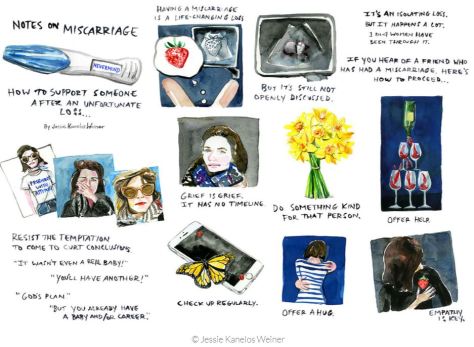 Jessie Kanelos Weiner is a Franco-American illustrator, author and food stylist based in Paris and New York. Born and raised in Chicago, she was a costume designer in a previous life when picking up watercolor for the first time, developing her highly detailed, whimsical and instantly recognizable style. She is the coauthor of “Paris In Stride” (Rizzoli), author of “Edible Paradise”: A Coloring Book of Seasonal Fruits and Vegetables” (Universe) and 8 cookbooks published by Editions Marabout.
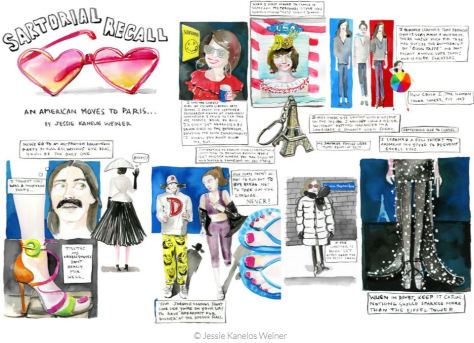 She is currently working on the next book in the “In Stride” series.
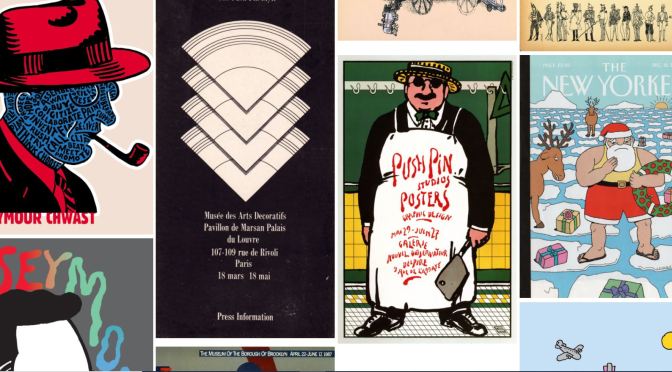
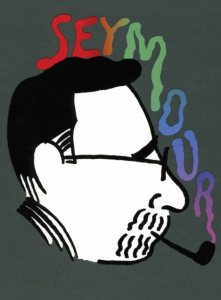 Seymour’s art was postmodern long before the term was coined. Yet it was resolutely modern in its rejection of the nostalgic and romantic representation, as in the acolytes of Norman Rockwell, that had been popular in mainstream advertising magazines at the time. Instead of prosaic or melodramatic tableau, Seymour emphasized clever concept. What makes the very best of his art so arresting, and so identifiable, is the tenacity of his ideas—simple, complex, rational, and even absurd ideas.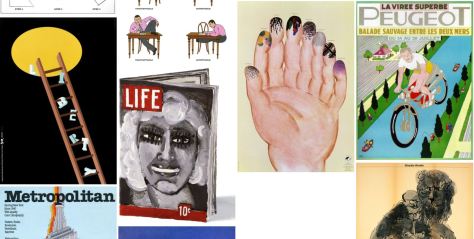

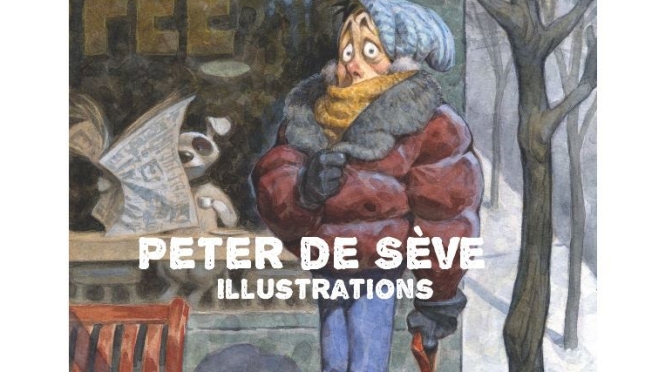
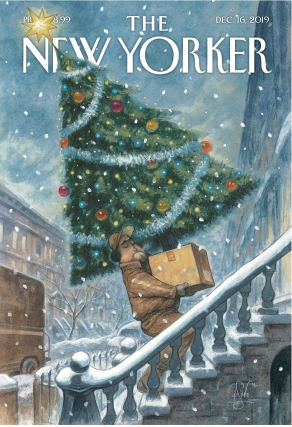 Though Peter de Sève is a regular contributor to the magazine, his most recognizable work comes from his career as a character designer. De Sève has helped create some of the most cherished animation characters of the past few decades, including those in “A Bug’s Life,” “Finding Nemo,” “Robots,” “The Little Prince,” and the “Ice Age” films. We recently talked to the artist about his work and about some of his favorite Christmas traditions.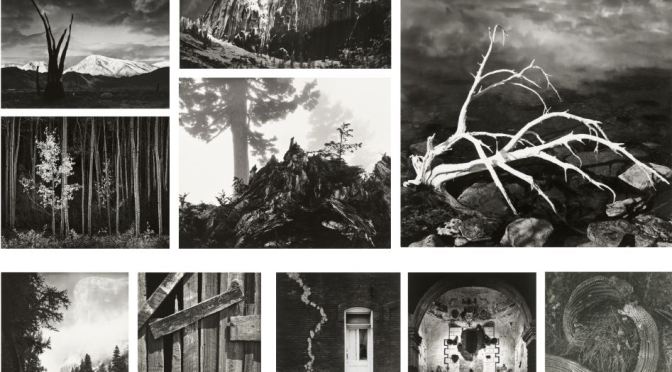
 Adams’ ‘visualisation’ strategy marked a shift away from Pictorialism, a much more manipulated photographic style, which had influenced his early work. His desire for sharper focus and deeper tone and contrast (he called it ‘an austere and blazing poetry of the real’) led to him becoming a leading figure in pure — or straight — photography.
  Boomers Daily