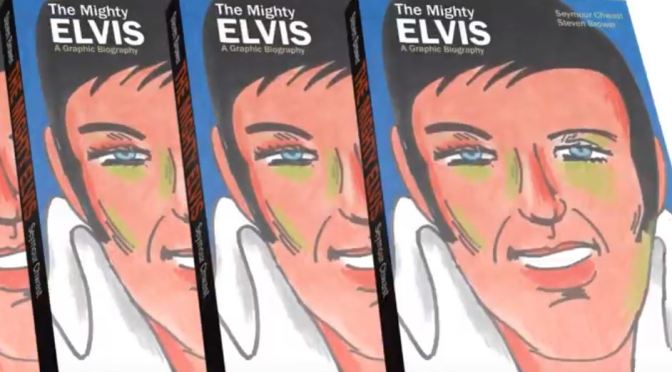
The Mighty Elvis is a commemoration of his life and times in the form of an art book, told through the unique vision of legendary designer and illustrator Seymour Chwast. Beautifully illustrated throughout, it presents an enhanced portrait of one of America’s greatest celebrities.
With text by author Steven Brower (Satchmo: The Life and Art of Louis Armstrong), The Mighty Elvis reminds us of the continuing stardom of one of the most popular American singers of all time. Through Chwast’s illustrations, cartoons and comics we get to relive his early life, his meteoric rise to fame and how he was affected by, and in turn, affected the world of music in the many genres he mastered. The book covers his first appearances on television, Graceland, his meeting with President Nixon, his wedding to Priscilla, and much more. Millions of fans loved him, purchased his records, attended his sold-out shows, and went to his 33 films. Death, 40 years ago, has not diminished his fame. “Elvis Lives!”
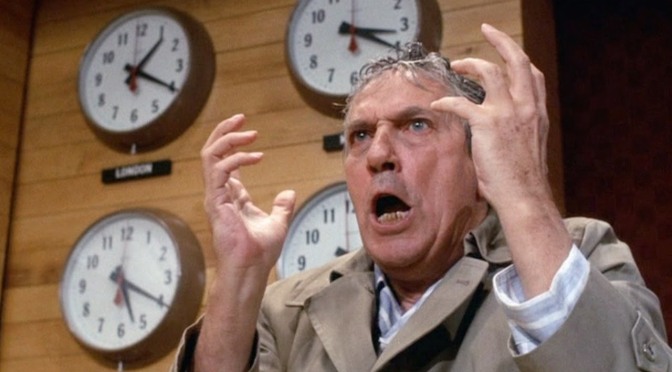
Anger. A word that often does the rounds in the 21st century. On a global scale, citizens are increasingly dissatisfied with their governments — from discord within the current American administration to rising hostility within France, Germany, Greece, Iraq, and Lebanon. Anger due to the persistence of racial violence, threats against the rights of women and workers, discrimination against the LGBTQ community, repression, as well as fear and instability surrounding health care systems, income inequality, the environmental crisis, and the effects of mass migration.
Join a nuanced conversation in this MoMA R&D Salon hosted by Paola Antonelli, Senior Curator of Architecture & Design and Director of Research & Development at MoMA, with speakers (in alphabetical order):
Shaun Leonardo: a multidisciplinary artist whose work discusses societal expectations of manhood––namely definitions surrounding black and brown masculinities––along with its notions of achievement, collective identity, and experience of failure.
Lydia Lunch: a writer, singer, poet, actress, and speaker whose career was spawned by the New York City “No Wave” scene. Widely considered one of the most influential performers originating from New York City, Lydia has worked with a range of bands and artists.
Andrew Marantz: a staff writer at The New Yorker, where he has worked since 2011. His work has also appeared in Harper’s, New York, and Mother Jones. He recently published his first book, Antisocial: Online Extremists, Techno-Utopians, and the Hijacking of the American Conversation.
Marilyn Minter: a contemporary artist whose works are in the collections of MoMA, the Solomon R. Guggenheim Museum in New York, the San Francisco Museum of Modern Art, and the Museum of Contemporary Art in Los Angeles, among others.
Pamela Sneed: a poet, writer, visual artist, and performer. She is the author of the books Imagine Being More Afraid of Freedom than Slavery (1998) and Kong and Other Works (2009), as well as the chapbooks Lincoln (2014), Gift (2015), and Sweet Dreams (2018).
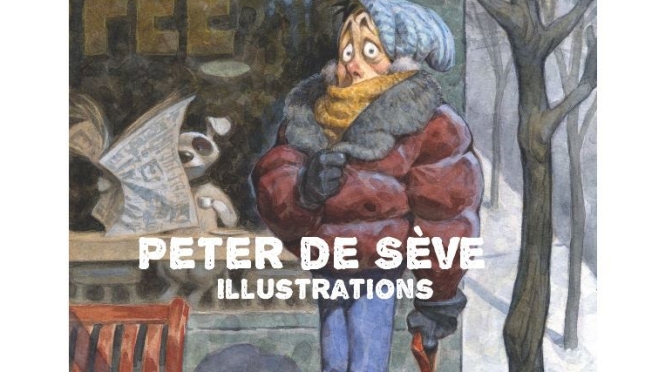
Though Peter de Sève is a regular contributor to the magazine, his most recognizable work comes from his career as a character designer. De Sève has helped create some of the most cherished animation characters of the past few decades, including those in “A Bug’s Life,” “Finding Nemo,” “Robots,” “The Little Prince,” and the “Ice Age” films. We recently talked to the artist about his work and about some of his favorite Christmas traditions.
Do you have any favorite depictions of Christmas? Artists who captured it especially well?
It’s funny, but only clichés come to mind: “It’s a Wonderful Life,” “A Charlie Brown Christmas.” But there is a song that transports me immediately to the season, that I can’t hear without feeling chills: “Charlie Freak,” by Steely Dan. It kills me every time.
Adams’ ‘visualisation’ strategy marked a shift away from Pictorialism, a much more manipulated photographic style, which had influenced his early work. His desire for sharper focus and deeper tone and contrast (he called it ‘an austere and blazing poetry of the real’) led to him becoming a leading figure in pure — or straight — photography.
Arguably no other photographer of his era knew more about photography than Adams. He wrote ten technical manuals on the discipline, and even advised major figures like Strand and Edward Weston, his friend and fellow West Coast photographer.
He also consulted for Polaroid and Hasselblad. Without such technical mastery he would not have been able to react with such immediacy to the quickly changing conditions of landscape.
One of his most famous works, Moonrise, Hernandez, New Mexico, 1941, needed snap judgements of immense sophistication to capture the momentary effect of sunset light on the foreground, and establish a balanced tone and focus with the distant peaks, evanescent clouds and darkening sky.
Fifty-five years after co-founding the rock band The Who, Pete Townshend is still at it. The lead lyricist and guitarist says he actually doesn’t enjoy performing but views it as an “easy” job necessary to finance his lifestyle and support his family and staff. Economics correspondent Paul Solman sits down with Townshend to discuss aging, surviving child abuse and art’s ability to inspire hope.
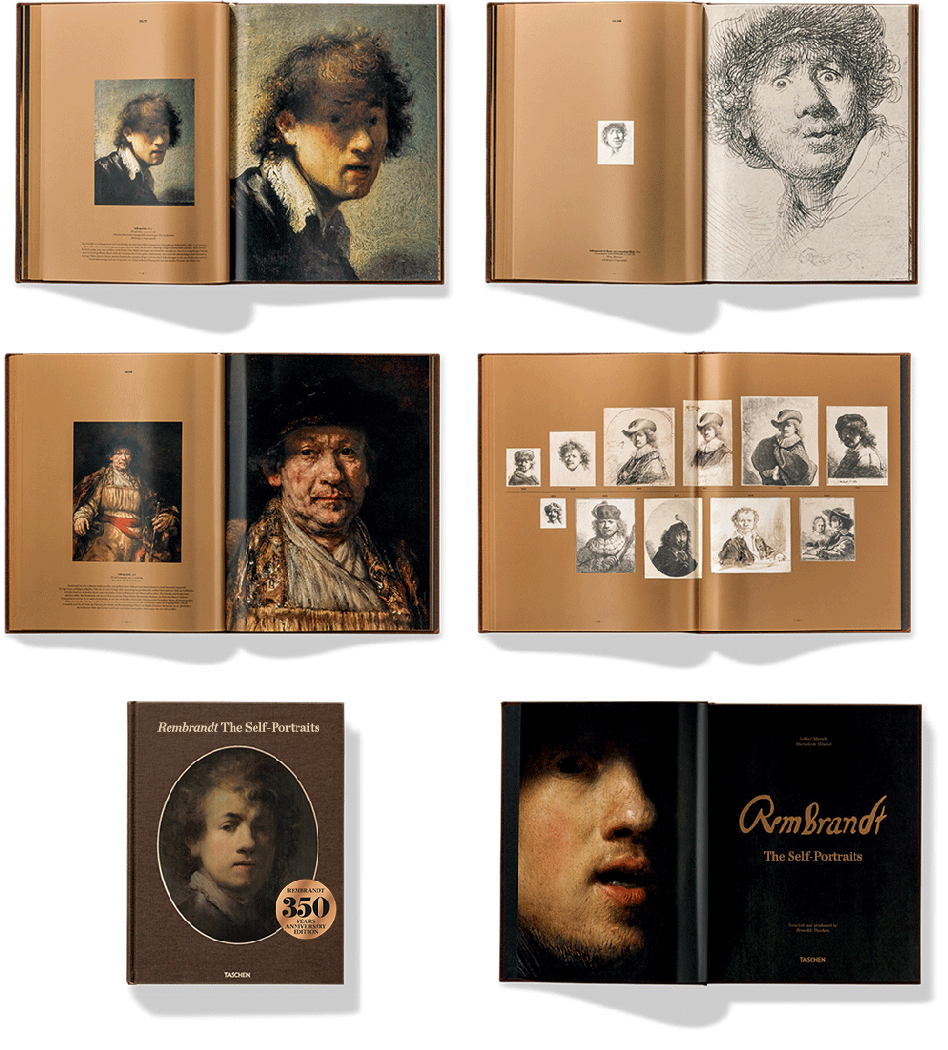
With more than 80 works spanning paintings, etchings, and drawings, the Dutchman’s lifelong practice of self-portraiture functions as a means of concretizing that which is fleeting, be it individual moments of development set against the inexorable passage of time, or the facial contortions of emotion that are gone, without a trace, as swiftly as they arrive.
Across the four decades in which they were painted, one constant is particularly striking across media and styles―Rembrandt’s dedication to presenting himself from multiple perspectives, celebrating the multiplicity of the individual and championing the unfiltered portrayal of emotional expression.
Hokusai’s landscapes revolutionized Japanese printmaking and became icons of world art within a few decades of the artist’s death. Hokusai’s Landscapes focuses exclusively on this pivotal body of the artist’s work, the first book to do so. Featuring stunning color reproductions of works from the incomparable Japanese art collection at the Museum of Fine Arts, Boston (the largest collection of Japanese prints outside Japan), Hokusai’s Landscapes examines the magnetic appeal of Hokusai’s designs and the circumstances of their creation.
The best known of all Japanese artists, Katsushika Hokusai was active as a painter, book illustrator and print designer throughout his 90-year lifespan. Yet his most famous works―the color woodblock landscape prints issued in series―were produced within a relatively short time, in an amazing burst of creative energy that lasted from about 1830 to 1836.
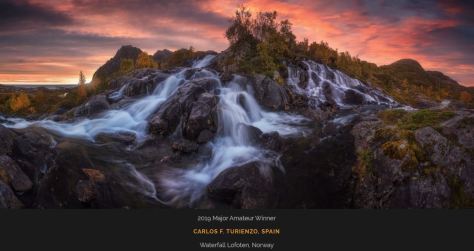
The 10th EPSON International Pano Awards is dedicated to the craft and art of panoramic photography. Advances in digital photography and editing software have resulted in an ever-increasing rise in the popularity of image stitching, especially in the panoramic format. VR ‘immersive’ photography also continues to excite and develop at a rapid pace, and panoramic film photography remains alive and well.
The EPSON International Pano Awards showcases the work of panoramic photographers worldwide and is the largest competition for panoramic photography.
He shot the Beatles in a St John’s Wood back garden before they had even broken the Top 10 (‘I didn’t know how to work with a group, but because I was a musician myself and the youngest on staff by a decade, I was always the one they’d ask’), and within a few months was kitting out the Rolling Stones with suitcases to look like a travelling band in a series of candid street shots.
His portraits, in grainy 35mm black-and-white, are a veritable roll call of the 1960s youthquake – Michael Caine, Terence Stamp, David Hemmings, Marianne Faithfull, Jean Shrimpton (walking barefoot on a rain-slicked King’s Road, or posing with the porcelain inmates of a dolls’ hospital) – and of the other stars of the age, from the Rat Pack to Muhammad Ali. He photographed Churchill being carried from hospital in an armchair, a potentate on a palanquin; shot Peter Cook and Dudley Moore floating on lilos in raincoats; and extensively documented the early career of Elton John – including a remarkable shot where he plays an upright piano with his legs floating up towards the ceiling, as if performing on the International Space Station.
I chose to call myself a portrait photographer because labels were always being thrown on me. When I was at Rolling Stone I was a ‘rock-and-roll photographer’, at Vanity Fair I was a ‘celebrity photographer’. You know, I’m just a photographer. I realised I wasn’t really a journalist. I have a point of view and, while these photographs that I call portraits can be conceptual or illustrative, that keeps me on the straight and narrow. So I settled on this brand called ‘portraits’ because it had a lot of leeway. But I don’t think of myself that way now: I think of myself as a conceptual artist using photography.
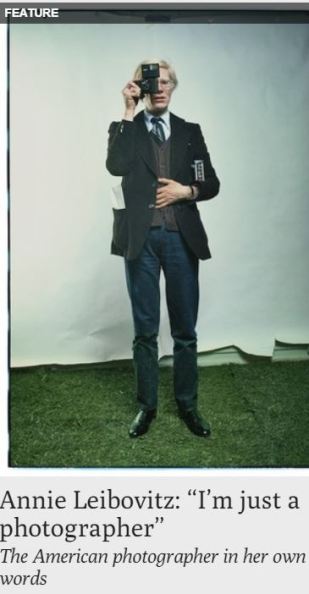
I remember going to the Factory in 1976 and watching Andy Warhol work. I’d been there before, earlier in the 70s, photographing Joe Dallesandro and Holly Woodlawn, and then Paul Morrissey. Warhol was a fixture of New York. It was just shocking when he died, because he was everywhere. I don’t know how he did it, but he was out at everything. You felt that if he was at a place you were at, then you were at the right place.
Warhol had things everywhere in the Factory – silkscreens all over the place, and tables of artwork – and things were always going on. I think Fran Lebowitz was there for Interview magazine, and [Warhol] was photographing the sisters from Grey Gardens [1975]. I was just a fly on the wall: there were people milling around doing all kinds of things, it was a pretty active place.

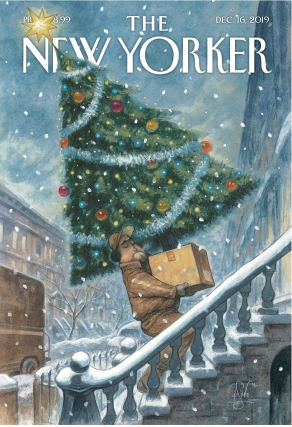 Though Peter de Sève is a regular contributor to the magazine, his most recognizable work comes from his career as a character designer. De Sève has helped create some of the most cherished animation characters of the past few decades, including those in “A Bug’s Life,” “Finding Nemo,” “Robots,” “The Little Prince,” and the “Ice Age” films. We recently talked to the artist about his work and about some of his favorite Christmas traditions.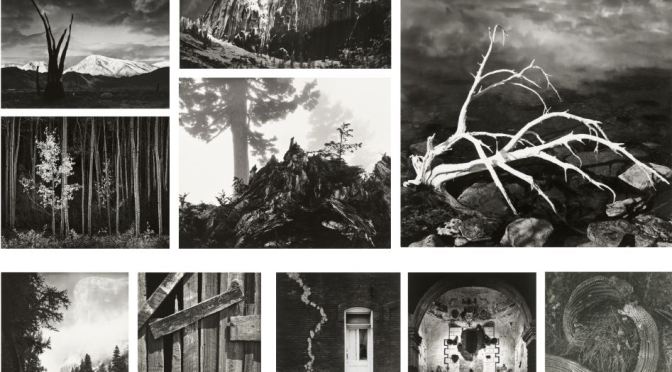
 Adams’ ‘visualisation’ strategy marked a shift away from Pictorialism, a much more manipulated photographic style, which had influenced his early work. His desire for sharper focus and deeper tone and contrast (he called it ‘an austere and blazing poetry of the real’) led to him becoming a leading figure in pure — or straight — photography.
 Fifty-five years after co-founding the rock band The Who, Pete Townshend is still at it. The lead lyricist and guitarist says he actually doesn’t enjoy performing but views it as an “easy” job necessary to finance his lifestyle and support his family and staff. Economics correspondent Paul Solman sits down with Townshend to discuss aging, surviving child abuse and art’s ability to inspire hope.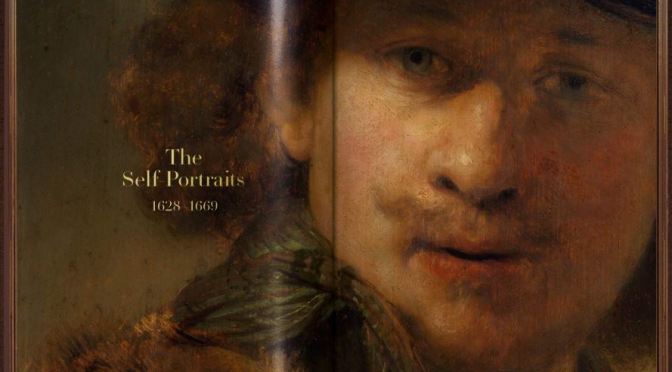
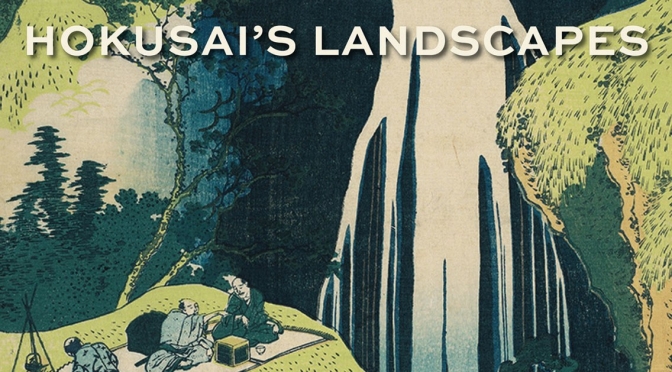
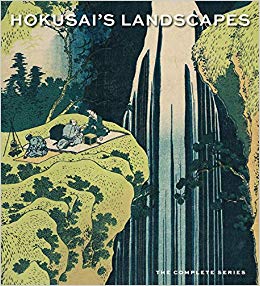 Hokusai’s landscapes revolutionized Japanese printmaking and became icons of world art within a few decades of the artist’s death. Hokusai’s Landscapes focuses exclusively on this pivotal body of the artist’s work, the first book to do so. Featuring stunning color reproductions of works from the incomparable Japanese art collection at the Museum of Fine Arts, Boston (the largest collection of Japanese prints outside Japan), Hokusai’s Landscapes examines the magnetic appeal of Hokusai’s designs and the circumstances of their creation.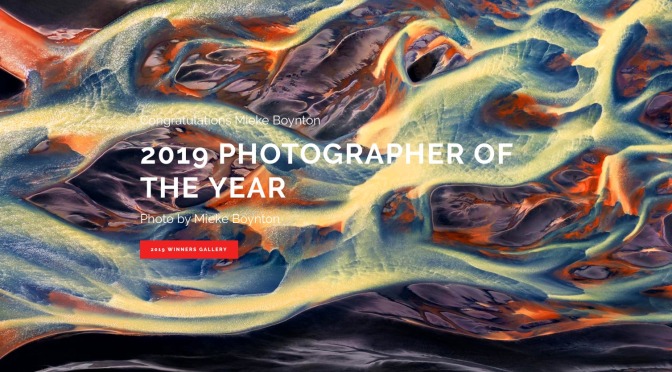
 The 10th EPSON International Pano Awards is dedicated to the craft and art of panoramic photography. Advances in digital photography and editing software have resulted in an ever-increasing rise in the popularity of image stitching, especially in the panoramic format. VR ‘immersive’ photography also continues to excite and develop at a rapid pace, and panoramic film photography remains alive and well.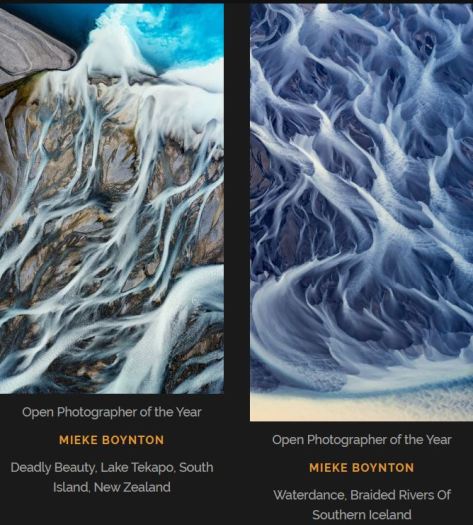
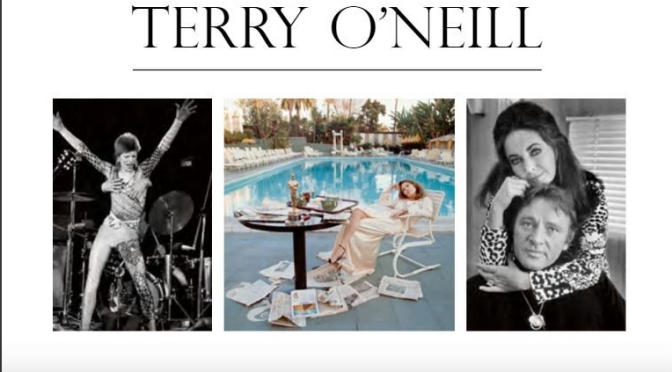
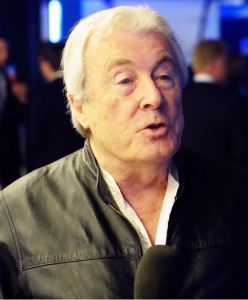
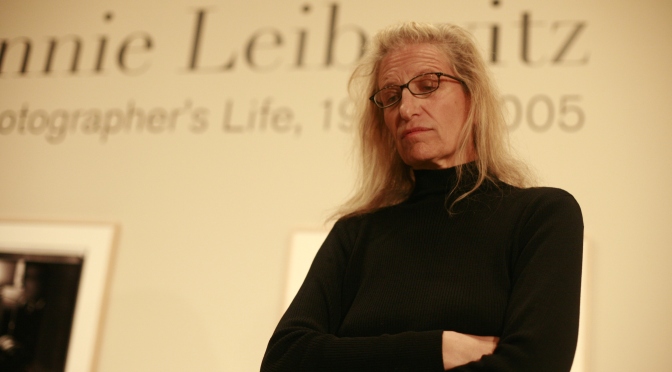
 I chose to call myself a portrait photographer because labels were always being thrown on me. When I was at Rolling Stone I was a ‘rock-and-roll photographer’, at Vanity Fair I was a ‘celebrity photographer’. You know, I’m just a photographer. I realised I wasn’t really a journalist. I have a point of view and, while these photographs that I call portraits can be conceptual or illustrative, that keeps me on the straight and narrow. So I settled on this brand called ‘portraits’ because it had a lot of leeway. But I don’t think of myself that way now: I think of myself as a conceptual artist using photography.
 I remember going to the Factory in 1976 and watching Andy Warhol work. I’d been there before, earlier in the 70s, photographing Joe Dallesandro and Holly Woodlawn, and then Paul Morrissey. Warhol was a fixture of New York. It was just shocking when he died, because he was everywhere. I don’t know how he did it, but he was out at everything. You felt that if he was at a place you were at, then you were at the right place.
 Boomers Daily