
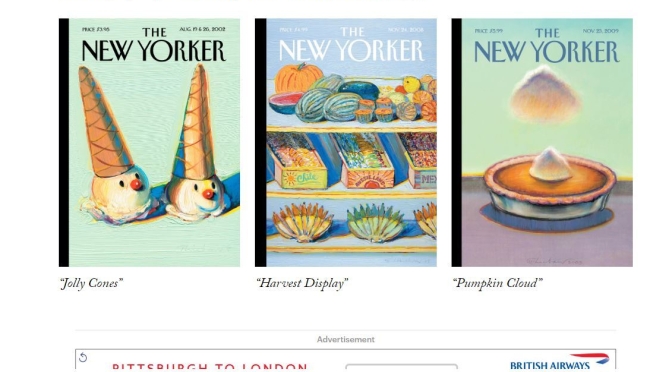
From New Yorker article:
 Since all of my paintings—almost every single one except for the figure paintings—are done from memory, I rely specifically on the memory of working in restaurants, or of visiting farms on which I worked as a young person. I try to recall the look and feel and love of what I have experienced.
At ninety-nine, Wayne Thiebaud—one of America’s greatest painters, and certainly its premier painter of food—is still going strong. This is Thiebaud’s ninth cover for the magazine, and it riffs on one of his previous paintings, an image of a turkey that he started in 2009. A sharp viewer might pick out the added details and embellishments, but more striking, perhaps, are the Thiebaud hallmarks that remain the same: soft light, clear color, a blue shadow pooling around a plate. We recently called Thiebaud at his home, in Sacramento, to talk about his work.
To read more: https://www.newyorker.com/culture/cover-story/cover-story-2019-11-25

 The artist incorporates an array of art historical scenes such as John Martin’s English-Romantic apocalypses and Edouard Manet’s Luncheon on the Grass with ubiquitous imagery sourced from the Internet. The highly rendered areas in her paintings resemble a cascade of Google image search results where cellphone photos of skylines and gardens slide past gestural marks.
  Shulamit Nazarian is pleased to present Strange Little Beast, a solo exhibition of new works by Los Angeles-based painter Annie Lapin. This will be the artist’s first solo exhibition with the gallery.
 The Denver Art Museum will celebrate famed French Impressionist Claude Monet’s birthday on November 14, 2019, in conjunction with the exhibition



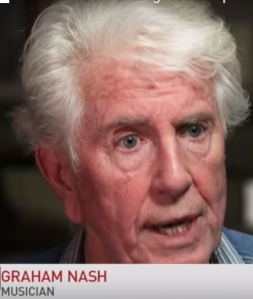 Two-time Rock and Roll Hall of Fame inductee Graham Nash has hits aplenty spanning his nearly six-decade career. But the 77-year-old singer-songwriter recently chose to perform a special run of shows featuring his lesser-known first two solo albums in their entirety, which together describe a crucial chapter in his personal and artistic life. Tom Casciato recently spoke to Nash to learn more.
 We conclude that Pollock avoided the appearance of the hydrodynamic instabilities, contrary to what was argued by previous studies. Pollock selected the physical properties of the paint to prevent filament fragmentation before deposition, and applied it while moving his hand sufficiently fast and at certain heights to avoid fluid filaments from coiling into themselves. An understanding of the physical conditions at which these patterns were created is important to further art research and it can be used as a tool in the authentication of paintings.
 Considered one of the most prominent American painters of the 20th century, the life and work of Jackson Pollock have been the subject of books, movies, and documentaries [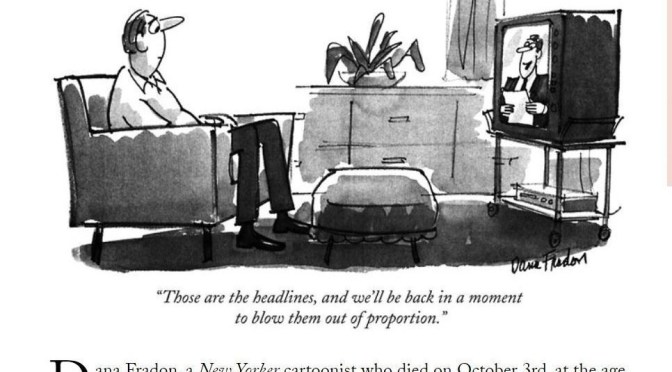
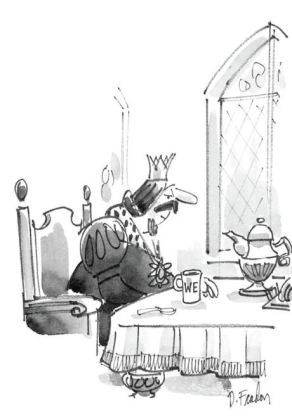 Fradon’s elaborate drawings were generous masterpieces of compressed fun. One carefully detailed illustration, published in 1987, depicts a chauffeured convertible making its way up a manicured, tree-lined drive, toward an extravagant hilltop mansion. The self-satisfied owner, seated in the rear seat, says to his companion, “It’s my one indulgence.”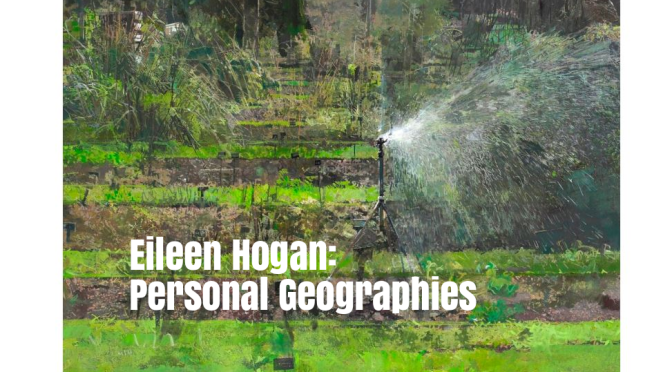
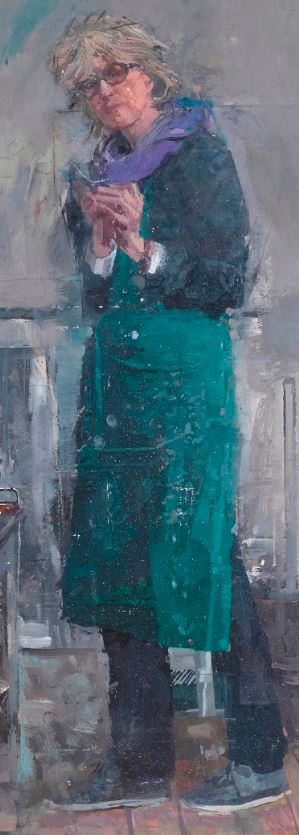 I describe myself as an urban-based painter who is interested in green spaces. Painting and drawing have been seen as profoundly unfashionable for most of my working life, and I have felt sometimes that it was quite eccentric to be a figurative painter with conventional subject matter. Looking back, my insistence on maintaining my practice as a figurative painter now seems more radical than conventional.
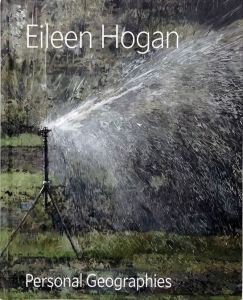 I was very blessed to have the opportunity to catch up with Hogan ahead of her Mayfair exhibition. I find myself entranced by her vibrant paintings that are dense with detail, filling the canvas from edge to edge with layers upon layers of paint. She has also established portraiture practice, her commissions including HRH The Prince of Wales. In a unique style, Hogan paints her sitters whilst they are deep in conversation, capturing unguarded gestures and expressions to create intricate portraits of both honesty and intimacy.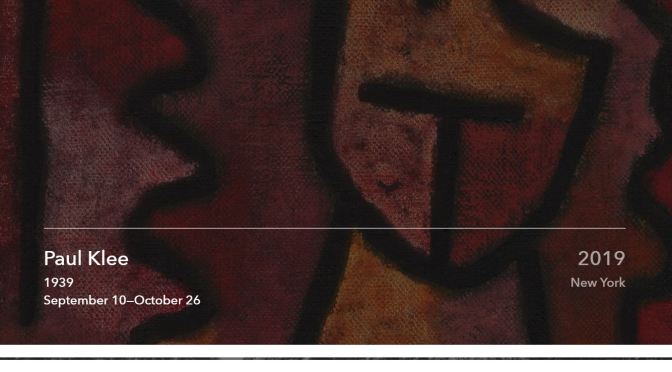
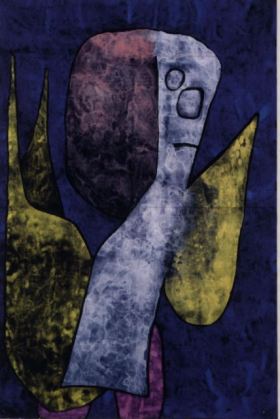 The works on view illustrate how Klee responded to his personal difficulties and the broader social realities of the time through imagery that is at turns political, solemn, playful, humorous, and poetic. Ranging in subject matter, the works all testify to Klee’s restless drive to experiment with his forms and materials, which include adhesive, grease, oil, chalk, and watercolor, among others, resulting in surfaces that are not only visually striking, but also highly tactile and original. The novelty and ingenuity of Klee’s late works informed the art of the generation of artists that emerged after World War II, and they continue to hold relevance and allure for artists and viewers alike today.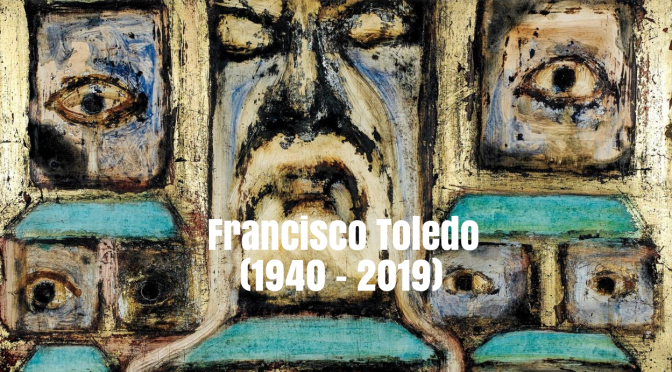
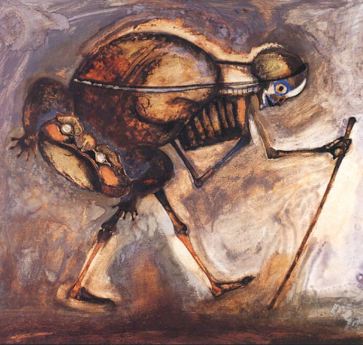 Though his paintings and sculptures sell all over the world for fabulous prices, he has not enriched himself. He lives simply, with his wife, Trine Ellitsgaard Lopez, an accomplished weaver, in a traditional house in the middle of Oaxaca, and has used his considerable profits to found art centers and museums, an ethnobotanical garden and at least three libraries.
 Toledo, whose origins were obscure and inauspicious, was the son of a leatherworker—shoemaker and tanner. He was born in Mexico City, but the family soon after moved to their ancestral village near Juchitán de Zaragoza in the Isthmus of Tehuantepec, nearer to Guatemala than to Mexico City—and being ethnically Zapotec, nearer culturally to the ancient pieties of the hinterland too.
 Boomers Daily