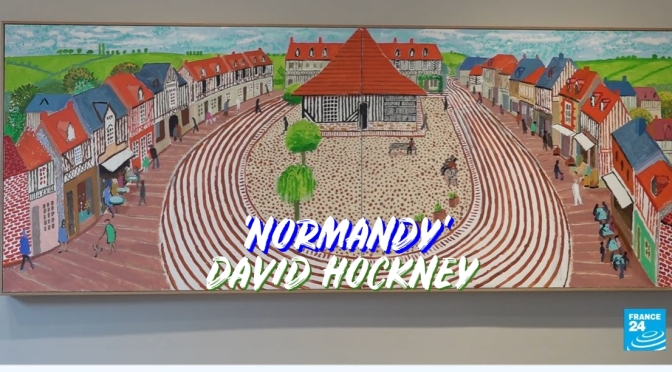
While museums in France are shut due to Covid-19 restrictions, private galleries are allowed to remain open and have become a haven for art enthusiasts. British artist David Hockney’s “Ma Normandie” (“My Normandy) show, which opened at a Paris gallery last year, has been the sensation of the season.
David Hockney, OM, CH, RA is an English painter, draftsman, printmaker, stage designer, and photographer. As an important contributor to the pop art movement of the 1960s, he is considered one of the most influential British artists of the 20th century.
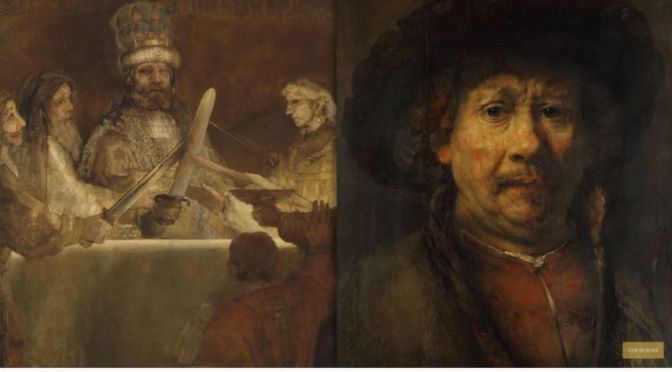
Arguably the greatest master of the Dutch Golden Age, Rembrandt is famed for several types of works: his monumental history paintings, his self-portraits and, as beautifully exemplified by the transcendent Abraham and the Angels, his intimate biblical scenes.
Rembrandt Harmenszoon van Rijn was a Dutch draughtsman, painter, and printmaker. An innovative and prolific master in three media, he is generally considered one of the greatest visual artists in the history of art and the most important in Dutch art history.
The Dutch Golden Age was a period in the history of the Netherlands, roughly spanning the era from 1581 to 1672, in which Dutch trade, science, and art and the Dutch military were among the most acclaimed in the world. The first section is characterized by the Eighty Years’ War, which ended in 1648.
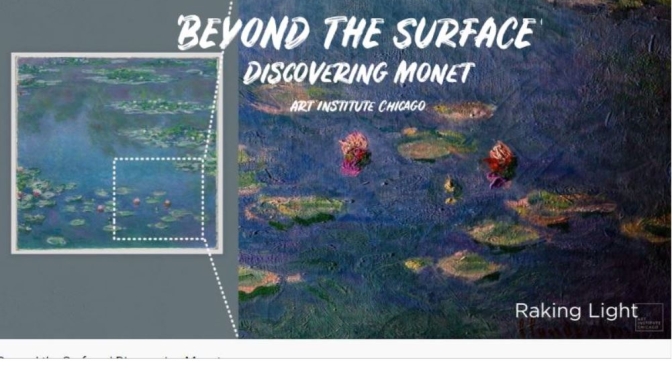
This video takes an in-depth look at Monet’s approach to painting in series, an approach that consumed his later years. From stacks of wheat in the French countryside to sites of foggy London to water lilies at his home garden in Giverny, Monet painted beloved subjects again and again, depicting changing light and atmospheric conditions in works that captivate us still today. New scientific discoveries, however, reveal that Monet’s genius goes well beyond what we see on the surface.
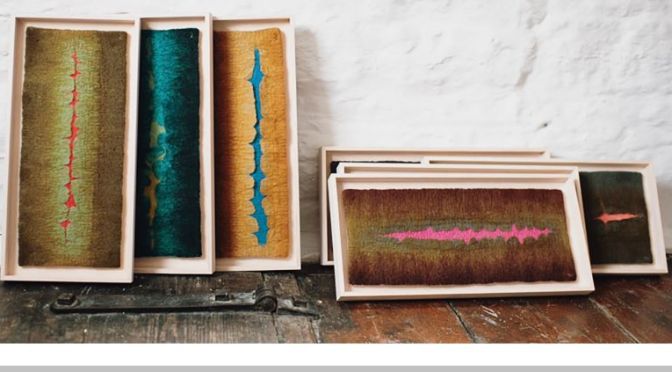
My main fascination lies within the manipulation of fibres and textiles as an expressive art form. Taking the rural environment as my inspiration,I explore long-term interests of texture, colour, layering and process to create contemplative and ethereal artworks.
My primary technique is wet felting; a traditional craft technique using wool tops, hot water, soapsuds and friction to interlock the fibres together. The making is muscular and rhythmic as I lay, pour, roll and squeeze again and again. It seems repetition nudges me into a semi-meditative space – it invites me to trust myself, and let the haptic connections sinuously paint a new space for the viewer to contemplate.
The compositions are built in layers, hinting at what may lie beneath, and use translucency and light to create absorbing moods. These are highly textured felt pieces in which cloth is embedded, prints disguised, and threads unravelled as a painter with her brush. The analogy with painting is significant throughout, making the viewing inquisitive, and challenging people’s perception.
Brought up in France and French Polynesia, I originally came to the UK to study textile design and am now a widely exhibited artist working and living in West Yorkshire. In 2015, I was awarded the Embroidery Magazine’s Best Emerging Textile Artist at SIT Select Showcase, as well as Best Picture in Show at theGreat North Art Show.
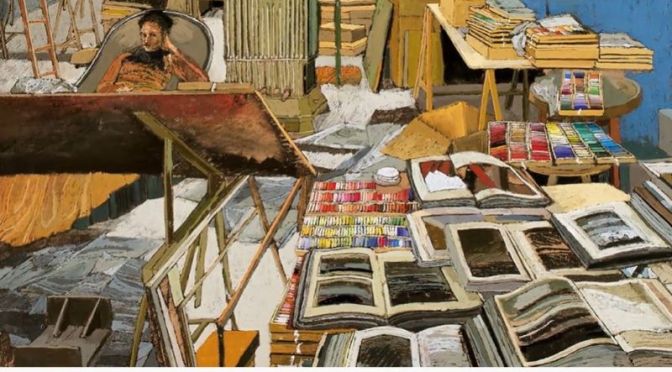
Contemporary artist Sam Szafran created truly dizzying perspectives in all of his art. In this episode of Expert Voices, discover how his extensive oeuvre often featured the same themes focusing on staircases, his studios and plants. ‘Staircase with a Blue Window’ and ‘Plants with Skylights’ perfectly depict his skill at capturing vertiginous aspects and ‘Atelier de la rue de Crussol’ shows a multitude of hidden details in this captivating work.
Sam Szafran (19 November 1934 – 14 September 2019) was a French artist. He has been buried in the cimetière parisien de Bagneux.
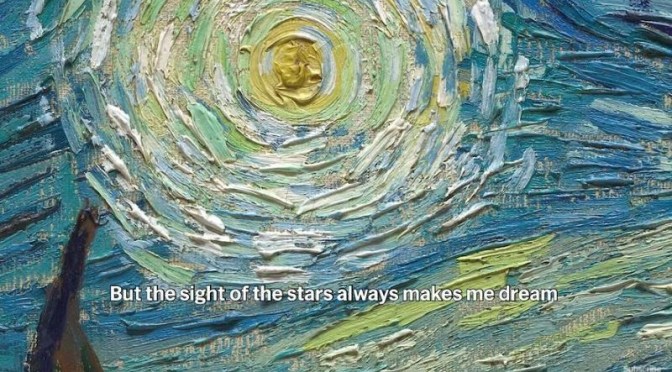
Vincent van Gogh’s “The Starry Night” has been a visitor favorite at MoMA since it first appeared in our Van Gogh retrospective in 1935 and then was acquired in 1939. To become acquainted with the heart and mind of its maker, there is no better source than his letters. Those to his brother Theo, in particular, reveal his deepest aims and convictions, and his pleasures and anxieties, especially during the last year-and-a-half of his life, working in near-isolation from an asylum in St.-Remy.
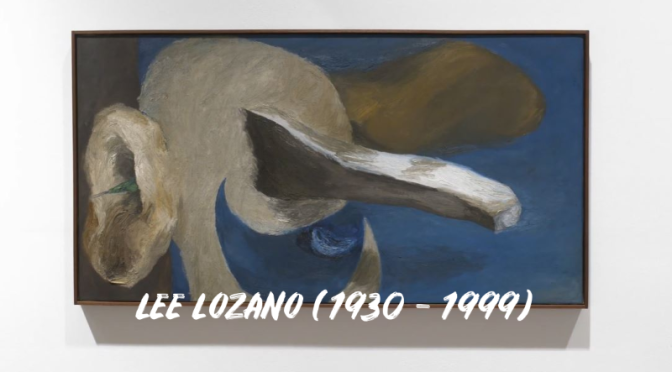
Jo Applin gives an insight into both Lee Lozano’s life and her work, contextualizing her practice and highlighting her response to the constraints of constitutional systems, gender dynamics, power, money, and politics.
Created in 1962–1963, the early paintings and drawings on view at Hauser & Wirth Somerset use airplanes as a central image and can be considered as examples of the artist’s passionate exploration of creative energy in its purist form. This focused body of early work exposes a complex and deeply intimate inner life grappling with one-sided gender and societal dichotomies, while other works display a form of ferocious humour and playfulness, exploiting the rhetoric of exaggeration to its most cogent effect.
Her raw expressionist brush strokes create powerful works imbued with a very personal iconography, including genitals, religious symbols, tools and body parts. Lozano’s short lived but influential career remains a source of fascination, lauded by Lucy Lippard as the foremost female conceptual artist of her era in New York. Jo Applin is author of ‘Lee Lozano: Not Working’ and ‘Eccentric Objects: Rethinking Sculpture.’ She teaches modern and contemporary art at The Courtauld Institute of Art in London.
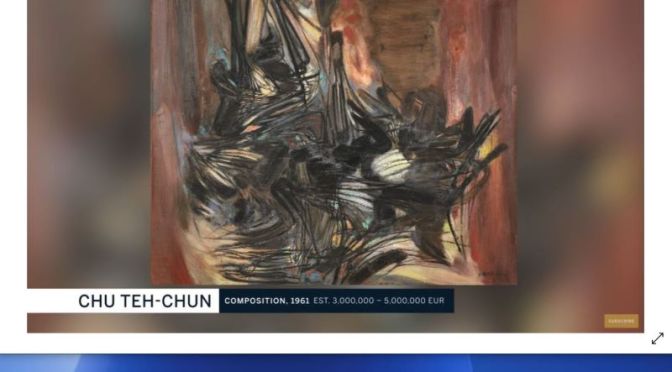
The 1960s were a turning point for Master Chinese Artist Chu Teh-Chun. In this latest Sotheby’s video, discover how he abandoned his traditional figurative style of painting in favour of abstraction. Learn how his painting ‘Composition’, created in 1961, perfectly executes the concept of Chinese painting whilst meeting the style of Western abstraction.
Chu Teh-Chun or Zhu Dequn was a Chinese-French abstract painter acclaimed for his pioneering style integrating traditional Chinese painting techniques with Western abstract art. Chu Teh-Chun enrolled in the National School of Fine Arts, where he studied under Fang Ganmin and Wu Dayu.
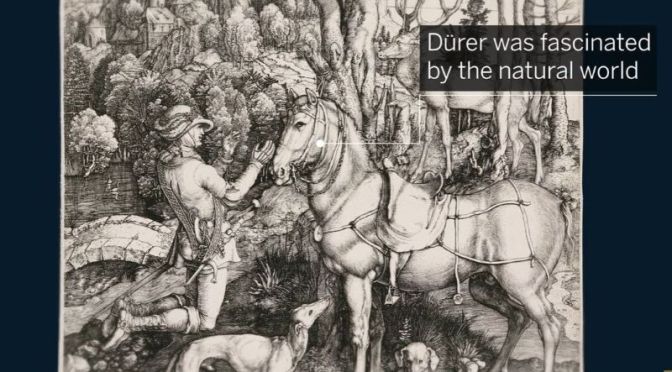
‘Saint Eustace’ by Albrecht Dürer depicts the popular medieval legend of a Roman General becoming a saint. In this episode of Anatomy of an Artwork, discover how Dürer captured the intricate detail of the story through the arduous medium of engraving.
Albrecht Dürer (1471 -1528), sometimes spelt in English as Durer or Duerer, was a German painter, printmaker, and theorist of the German Renaissance. Born in Nuremberg, Dürer established his reputation and influence across Europe when he was in his twenties due to his high-quality woodcut prints.
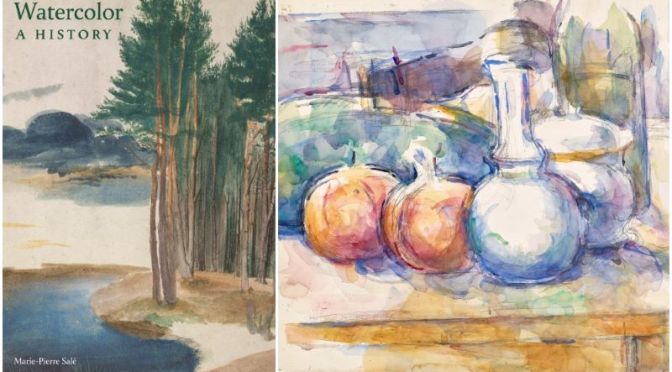
The most comprehensive and best-illustrated history of watercolor painting ever published.
The term watercolor calls to mind atmosphere, luminosity, and immediacy―qualities that derive directly from the quick-drying, translucent nature of water-based pigments. In Watercolor: A History, Louvre curator Marie-Pierre Salé provides an authoritative and beautifully illustrated account of this versatile and widely beloved artistic medium.
Salé’s incisive text traces the development of watercolor from the thirteenth to the twentieth century in Europe and the United States, encompassing every type of work―from plein-air sketches to finished studio pieces―and a wide variety of artists. Here are Dürer’s detailed animal studies, Turner’s landscapes, Cézanne’s tireless explorations, Sargent’s light-dappled sketches, O’Keeffe’s pioneering abstractions.
This handsome volume features more than three hundred full-color illustrations, specially printed on Munken paper to capture the vibrancy and texture of the original works. It is sure to be welcomed by art historians and art lovers alike.



 Boomers Daily