
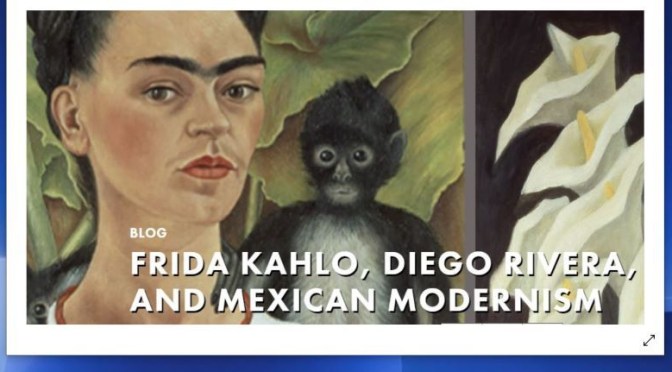
“Frida Kahlo, Diego Rivera, and Mexican Modernism from the Jacques and Natasha Gelman Collection” is on view at the Denver Art Museum through January 24, 2021.
Tag Archives: Artists

Art: ‘Dazzling’ Matchstick Replicas Of The World’s Wonders By Egyptian Man

Sixty-two-year-old Ahmed Hassan creates dazzling replicas of ancient and modern wonders of the world using matchsticks.

Artwork: Claude Monet’s ‘Japanese Footbridge And Water Lily Pool, Giverny’
Often called the Father of Impressionism, Claude Monet inspired the term that defined this movement. Born in Paris, Monet would later live in Giverny, where he purchased a property, planted sprawling gardens, and painted his famous water lilies. https://www.philamuseum.org/collectio…
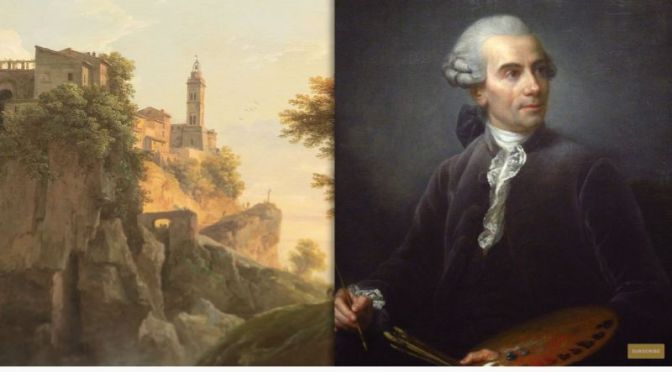
Artist Profile: French Landscape Painter Joseph Vernet – ‘View Of Tivoli’
In the 18th century, Joseph Vernet was uncontestably the greatest landscape painter of his generation. In this episode of Anatomy of an Artwork, discover how the ambitious and poetic landscape of ‘View of Tivoli’ pays tribute to the Italy Vernet loved so dearly.
Claude-Joseph Vernet was the leading French landscape painter (with Hubert Robert) of the later 18th century. He achieved great celebrity with his topographical paintings and serene landscapes. He was also one of the century’s most accomplished painters of tempests and moonlight scenes.
Vernet was born at Avignon and trained there with his father, Antoine, and with the history painter Philippe Sauvan. He spent the years 1734 to 1752 in Rome, where he studied classical landscapes in the tradition of Claude and Gaspard Dughet, as well as the dramatic paintings of Salvator Rosa. In Rome he was influenced by the contemporary Roman topographical painter Giovanni Paolo Panini. He had many English clients and admirers in Rome, including Richard Wilson, whom Vernet is thought to have encouraged as a landscape painter.
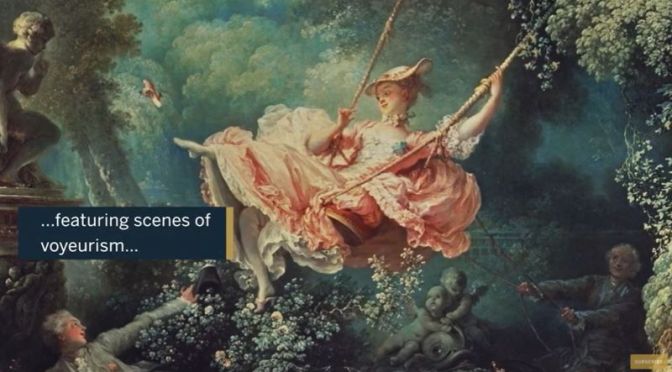
Art History: ‘Fragonard’s Painted Portraits’ (Video)
Jean-Honoré Fragonard delighted in painting fascinating portraits. In this episode of Sotheby’s Stories, learn how he captured the true essence of character, through his mastery of observation and light.
Jean-Honoré Fragonard was a French painter and printmaker whose late Rococo manner was distinguished by remarkable facility, exuberance, and hedonism. One of the most prolific artists active in the last decades of the Ancien Régime, Fragonard produced more than 550 paintings, of which only five are dated.
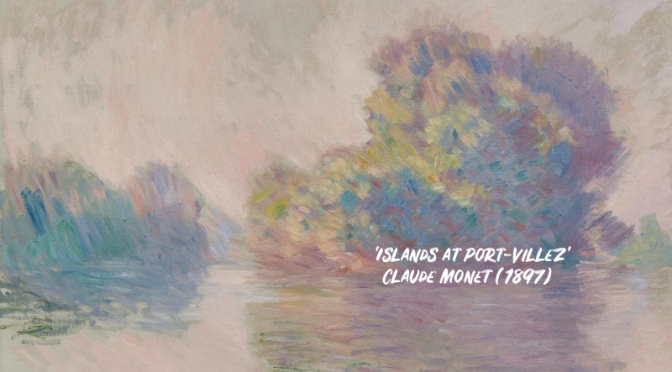
Art: Monet’s ‘Islands At Port-Villez, 1897’ (Video)
“I want to paint like a bird sings,” Claude Monet once stated. In this episode of Expert Voices, Simon Shaw describes Monet’s direct and unmediated response to his subject matter. In The Islands in Port-Villez, one can feel just that – Monet sitting on his boat on the seine, absorbing his surroundings.
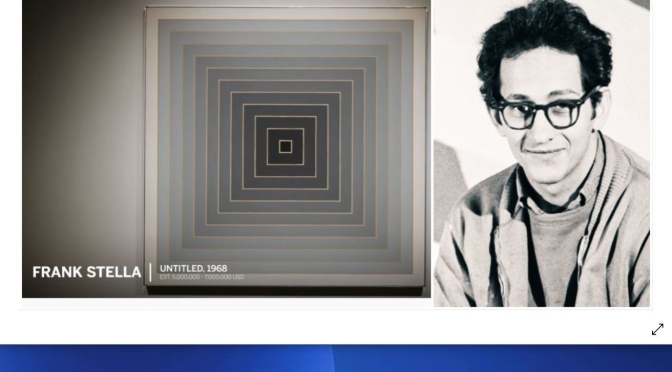
Artist Profiles: 84-Year Old American Minimalist Frank Stella (Video)
In this episode of Expert Voices, Lisa Dennison discusses a masterful painting created by Frank Stella in the early part of his career. In the 1950s, Stella left Princeton and moved to New York at the height of Abstract Expressionism. Despite being a progenitor of Minimalism, Stella’s gestural hand is visible in the concentric squares – most likely influenced by the Abstract Expressionists.
Frank Philip Stella is an American painter, sculptor and printmaker, noted for his work in the areas of minimalism and post-painterly abstraction. Stella lives and works in New York City.
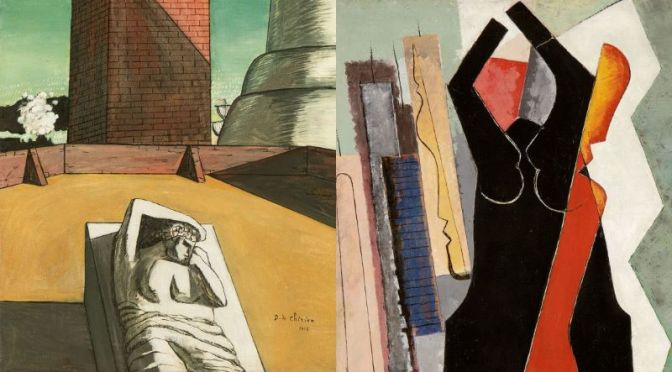
Art History Video: ‘De Chirico & Man Ray’s Pre-WWI ‘New Modernity’
In this video, join essayist and New Yorker staff writer Adam Gopnik in an exploration of two masterpieces from the early twentieth century: Georgio De Chirico’s “Il Pomeriggio di Arianna (Ariadne’s Afternoon)”and Man Ray’s “Black Widow (Nativity).” Both painted near the outset of the first world war, these works not only capture the effusive zeitgeist of their age but prefigure the aesthetic movements that would come to characterize modern art.
Making their auction debut, “Il Pomeriggio di Arianna (Ariadne’s Afternoon)”and “Black Widow (Nativity)”will be offered as highlights of Sotheby’s Impressionist & Modern Art Evening Sale in New York. (28 October | New York) Learn more: https://www.sothebys.com/en/series/to…
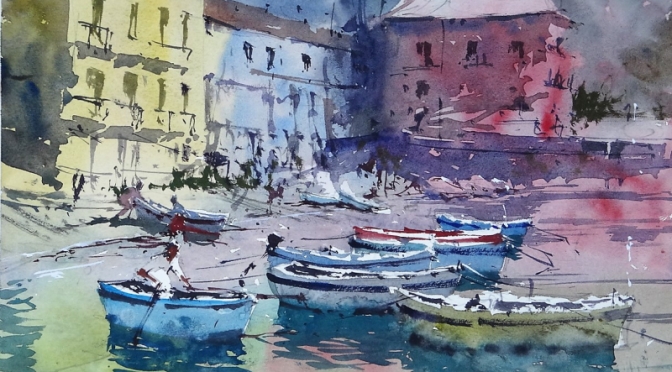
Top Artist Profile: British Watercolorist Tim Wilmot
Tim Wilmot is an artist from Bristol in the South-west of the UK, specialising in vibrant watercolours, using tone and light to bring out the best in the medium. Tim, self-taught, paints in a loose, impressionistic style and, while having dabbled with portraits and still lifes, he is inexorably drawn to landscapes.



He says: “I’m an outdoor person rather than an indoor person. For many years I’ve taken a sketch book on my travels and I quickly scribble scenes in a shorthand sort of way. Then, returning home, I recreate those memories with paint and brush. Watercolour is also an ideal medium for those quick impressions when you’re limited in time.”
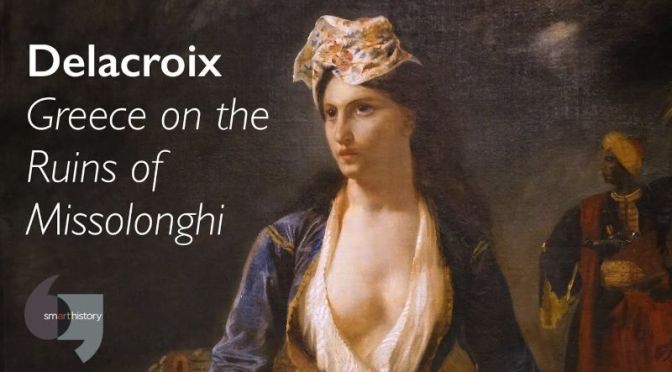
Artists: French Romantic Painter Eugène Delacroix – ‘Greece On The Ruins Of Missolonghi, 1826’ (Video)
Eugène Delacroix, Greece on the Ruins of Missolonghi, 1826, oil on canvas, 208 cm × 147 cm (Musée des Beaux-Arts de Bordeaux). Speakers: Dr. Steven Zucker and Dr. Beth Harris.
Ferdinand Victor Eugène Delacroix was a French Romantic artist regarded from the outset of his career as the leader of the French Romantic school.
 Boomers Daily