
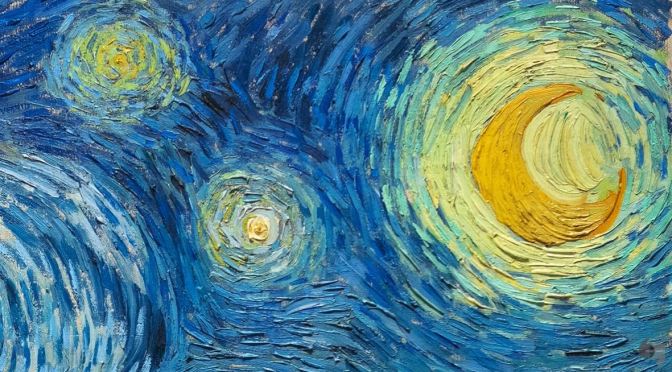
Vincent van Gogh, The Starry Night, 1889 (June, Saint Rémy), oil on canvas, 73.7 x 92.1 cm (The Museum of Modern Art) Speakers: Dr. Beth Harris and Dr. Steven Zucker
Tag Archives: Art History
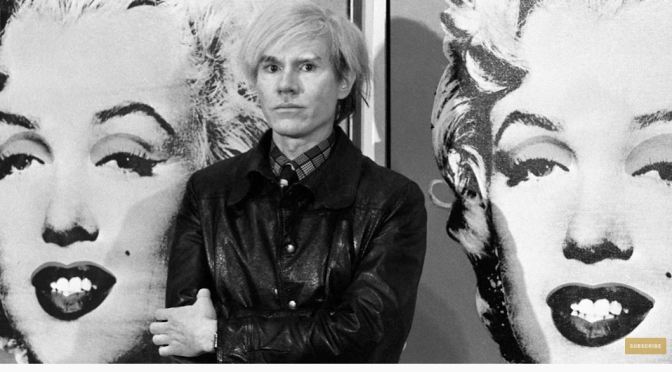
Artworks: Andy Warhol’s ‘Marilyn Monroe’ Of 1962
Andy Warhol created his first painting of Marilyn Monroe in 1962, in the wake of the American movie star’s sudden death at the age of 36. Tragedy, and its portrayal in modern mass media, fascinated Warhol; at the time of Monroe’s death, the artist was enmeshed in his Death and Disaster series, an exploration of gruesome images found in newspapers and magazines. Monroe’s death pushed the narrative of tragedy and celebrity one step further, and in it Warhol found inspiration for arguably the most important suite in his oeuvre. Dating from 1967, Marilyn Monroe is a complete portfolio of ten screen prints, each produced in a different combination of intense, flat colors. This portfolio, which comes from the estate of Barbara Spiegel Linhart, who purchased the works from David Whitney in 1969, is the best possible example of this important set of screenprints, and is a highlight of Sotheby’s Contemporary Art Evening Sale this May.
Art: ‘Jeune Fille en Bleu’ By Amedeo Modigliani (1919)
Painted in 1919 after the artist fled Paris for the south of France, ‘Jeune Fille en Bleu’ is one of the finest works from the penultimate year of Amedeo Modigliani’s life. In this episode of Expert Voices, Sotheby’s Senior Specialist Simon Stock explains how the search for new subjects in this new location saw Modigliani depicting informal models found in local bars and shops. This portrait captures the serenity of the young girl sitter and we see all the recognisable traits of Modigliani’s late work: the simplified human form, the elongated neck and the vacant eyes.
Amedeo Clemente Modigliani was an Italian Jewish painter and sculptor who worked mainly in France. He is known for portraits and nudes in a modern style characterized by a surreal elongation of faces, necks, and figures that were not received well during his lifetime, but later became much sought-after.
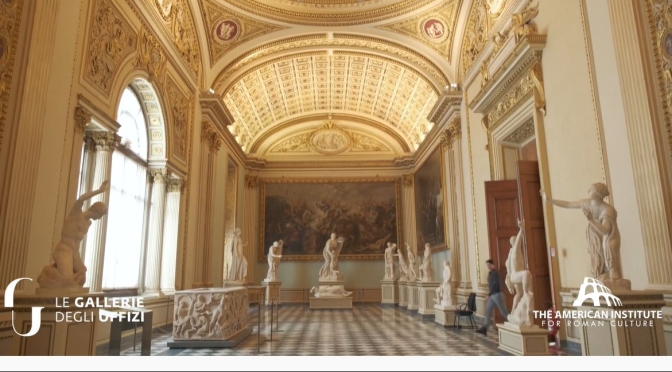
Archaeology: ‘Ancient Rome Live – Episode 1’ – Uffizi Gallery, Florence
Here is the first episode of the series about archaeology at the Uffizi Galleries, realized by the American Institute for Roman Culture. Darius Arya today speaks about some masterpieces of the Uffizi and the Boboli Gardens.
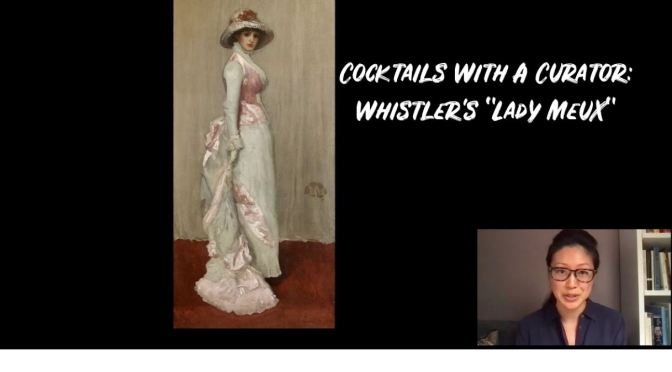
Cocktails with a Curator: Whistler’s “Lady Meux”
In this week’s episode of “Cocktails with a Curator,” Curator Aimee Ng explores the turbulent life of the woman portrayed in James McNeill Whistler’s serene “Harmony in Pink and Gray: Portrait of Lady Meux,” currently on view on the fourth floor of Frick Madison. A former bartender and actress, Lady Meux was shunned by London polite society even after she married Sir Henry Bruce Meux, heir to a huge brewery fortune. This week’s complementary cocktail is a refreshing Mummy, a nod to her extensive collection of some 1,800 Egyptian and Assyrian objects, including an infamous mummy of Nesmin.
To view this painting in detail, please visit our website: https://www.frick.org/ladymeux

Cocktails With A Curator: Francesco da Sangallo’s ‘St. John Baptizing’ (Video)
In this week’s episode of “Cocktails with a Curator,” Deputy Director and Peter Jay Sharp Chief Curator Xavier F. Salomon focuses on Francesco da Sangallo’s “St. John Baptizing,” which can be found at the very center of the third floor of Frick Madison. Commissioned in the 16th century for a church in the Tuscan town of Prato, the bronze statuette has been installed atop a facsimile of the marble holy water font on which it was originally displayed, allowing visitors to see it as it was meant to be viewed. This week’s complementary cocktail is the White Negroni, a modern twist on a classic Florentine cocktail.
To view this painting in detail, please visit our website: https://www.frick.org/sangallobaptizing

Cocktails With A Curator: ‘Saint-Porchaire Ware’
In this week’s episode of “Cocktails with a Curator,” join Deputy Director and Peter Jay Sharp Chief Curator Xavier F. Salomon as he delves into the mystery of three rare Saint-Porchaire objects currently on view in a room featuring enamels and clocks on the third floor of Frick Madison. Much remains unknown about 16th-century Saint-Porchaire ware—exquisite pieces inlaid with colored clay and embellished with three-dimensional reliefs—but an ongoing Frick research project recently identified an exciting potential link between the great French ceramicist Bernard Palissy and a lizard on one of the ewers at the Frick. This week’s complementary cocktail is a classic French American drink, the Boulevardier.
To view this painting in detail, please visit our website: https://www.frick.org/stporchaireware
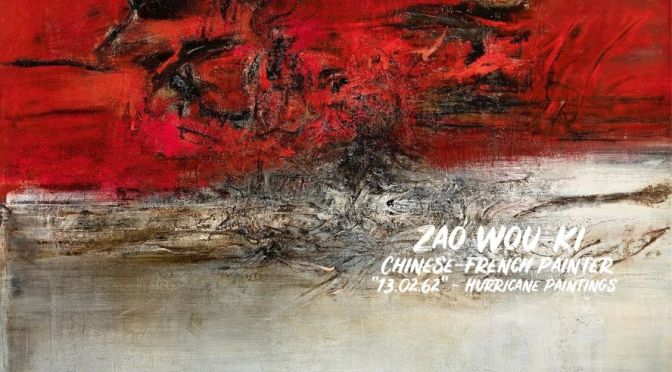
Art: ‘Hurricane Paintings’ Of Chinese-French Painter Zao Wou-Ki (1921 – 2013)
Zao Wou-Ki was a Chinese-French painter. He was a member of the Académie des Beaux-Arts in Paris. Zao Wou-Ki graduated from the China Academy of Art in Hangzhou, where he studied under Fang Ganmin and Wu Dayu.
Master artist Zao Wou-Ki was one of the titans of Chinese art in the post- war period. His energetic painting ‘13.02.62’, offered in our upcoming auction Beyond Legends: Modern Art Evening Sale (18 April | Hong Kong), is from the artist’s powerful ‘Hurricane Period’ when he arrived at the pinnacle of his career. Discover how Zao perfectly fused Eastern culture with Western modernism, bringing dynamic inspiration to this work.
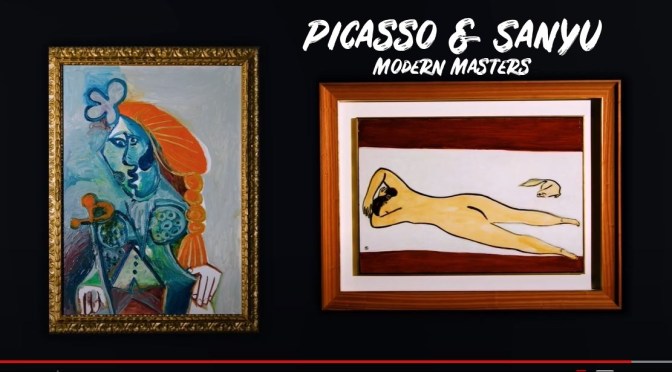
Art History: ‘Picasso & Sanyu – Modern Masters’
Pablo Picasso is perhaps the Modern master most admired by Asian artists. His commitment to breaking with tradition resonated deeply with Chinese modernist pioneer Sanyu. In this episode of Expert Voices, our Head of Modern Art in Asia, Felix Kwok, introduces masterworks by both artists, which will headline our upcoming Beyond Legends: Modern Art Evening Sale (18 April | Hong Kong). ‘Nu Avec un Pékinois’ is a masterpiece from Sanyu’s post-war period that reflects themes of love and perseverance and ‘Buste de Matador’ from the 1970s is the first painting in Picasso’s final Matador and reflects an urgency in the face of mortality.
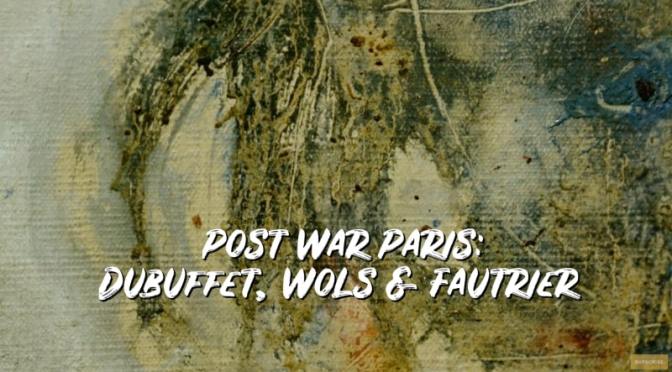
Art: ‘Dubuffet, Wols & Fautrier In Post-War Paris’
Dubuffet, Fautrier and Wols created powerful cathartic works in the aftermath of the Second World War. In this latest episode of Expert Voices, Sotheby’s specialist Haleigh Stoddard explores how all three artists translated their personal experiences on to canvas, from Fautrier’s abstract ‘Corps d’otage’ and ‘Tête d‘otage N. 15’, to Wols’ powerfully evocative ‘La Turquoise’, and Dubuffet’s vision of hope in ‘La Cavalière au Diamant’.
Jean Philippe Arthur Dubuffet was a French painter and sculptor. His idealistic approach to aesthetics embraced so-called “low art” and eschewed traditional standards of beauty in favor of what he believed to be a more authentic and humanistic approach to image-making.
Jean Fautrier was a French painter, illustrator, printmaker, and sculptor. He was one of the most important practitioners of Tachisme.
Wols was the pseudonym of Alfred Otto Wolfgang Schulze, a German painter and photographer predominantly active in France. Though broadly unrecognized in his lifetime, he is considered a pioneer of lyrical abstraction, one of the most influential artists of the Tachisme movement.
 Boomers Daily