The all new MODE 4×4™ is built on the rugged Mercedes-Benz Sprinter 144 4×4 platform. Authentically designed with daily drivers, weekend warriors, full time vanlifers, and long-range overlanders in mind… with an infinitely adaptive floor plan.
The MODE 4×4™ is equipped with a forward thinking, user friendly feature set that includes the industry first LiveFree™ OTG sustainable, automotive grade energy management system (powered by Volta).
With this 12kw clean energy lithium battery system you will have all the power you need to enjoy life on the road and off the grid without the noise, inconvenience, and fumes that accompany the fossil fuel generator setups of traditional RVs.
A restaurant funded solely by female investors, The Riddler is a New York City champagne bar from owner Jen Pelka.
The Riddler is a Champagne bar with locations in the heart of New York’s West Village and San Francisco’s Hayes Valley. We have over 150 Champagnes by the bottle and dozens of sparkling wines by the glass to choose from: old and new, traditional classics and unusual discoveries, by the glass and by the bottle (or magnum or 9L). At the center of each space is an old wooden backbar that we’ve lined with a collection of vintage Champagne buckets and glassware that we’ve picked up at flea markets and estate sales over the last decade.
We’re a women-led team: 100% of our investors are women and most of our management team happens to be led by a crew of women. We love serious wines but don’t take ourselves too seriously: we pair our Champagne with French-inspired seasonal comforts, serve our caviar with potato chips, and offer free popcorn all day and all night.
We visit a Kengo Kuma-designed art museum in Eskisehir that’s set to become Turkey’s new cultural hotspot.
Odunpazarı Modern Museum is designed by the internationally acclaimed Japanese architecture firm Kengo Kuma and Associates.
Kengo Kuma and Associates describes its philosophy as “Amalgamating nature and architecture in a manner that creates a strong bond between the ‘building’ and its ‘location’.” In his design of the OMM building, the architect thus reinterprets the historic fabric of the Odunpazarı district with a contemporary perspective. Paying homage to the local architecture of Odunpazarı, Ottoman dome architecture, and traditional Japanese architecture, OMM’s design is highlighted by four major components: geometry, light, stacking, and timber. Breaking away from conventional design through the transformation of simple geometric lines into complex images, the high-quality light entering the building, and the non-linear forms, the architectural stacking and the timber construction system alluding to the historic fabric of Odunpazarı constitute the sources of inspiration for the architecture of the museum building.
OMM – Odunpazarı Modern Art Foundation was founded in 2019 with the aim of contributing towards the development of cultural, social, and artistic life through events and activities centered on the familiarization and popularization of culture and arts in society, the advancement of art education, the support for artistic and cultural production, and the transmission of cultural values to future generations. OMM – Odunpazarı Modern Museum operates under the auspices of this foundation.
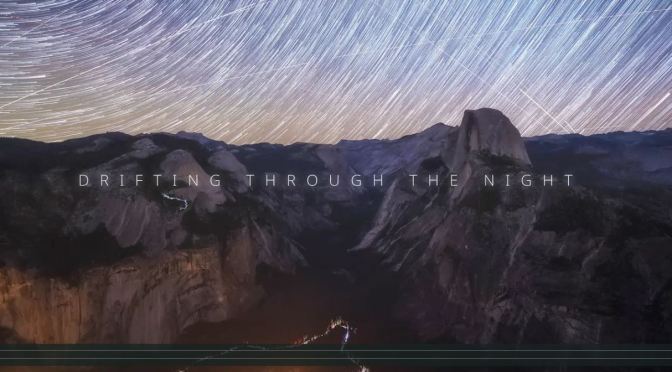
I am excited to share my new collection of night sky, startrail timelapses. These trails were created by blending hundreds of long exposure images for each individual timelapse.
Locations: Lone Pine, California; San Jose, California; Dolomites, Italy; Kauai, Hawaii; Malibu, California; Anza Borrego, California;Yosemite National Park, California; Bristlecone Pines, California; Sparks Lake, Oregon; Point Reyes, California
Painting Edo— the largest exhibition ever presented at the Harvard Art Museums — offers a window onto the supremely rich visual culture of Japan’s early modern era. Selected from the unparalleled collection of Robert S. and Betsy G. Feinberg, the more than 120 works in the exhibition connect visitors with a seminal moment in the history of Japan, as the country settled into an era of peace under the warrior government of the shoguns and opened its doors to greater engagement with the outside world. The dizzying array of artistic lineages and studios active during the Edo period (1615–1868) fueled an immense expansion of Japanese pictorial culture that reverberated not only at home, but subsequently in the history of painting in the West.
By the early 18th century, the new shogunal capital of Edo (present-day Tokyo) was the largest city in the world. After centuries of conflict and unrest, the growing stability and affluence of the period encouraged an efflorescence in the arts. Artists creatively juxtaposed past and present, eternal and contingent, elegant and vulgar in a wide range of formats and styles, from brilliant polychrome compositions to monochromatic inkwork. Painting Edo explores how the period, and the city, articulated itself by showcasing paintings in all the major formats—including hanging scrolls, folding screens, sliding doors, fan paintings, and woodblock-printed books—from virtually every stylistic lineage of the era, to tell a comprehensive story of Edo painting on its own terms.
From a New Yorker online review (February 11, 2020):
Wes Anderson’s new movie, “The French Dispatch,” which will open this summer, is about the doings of a fictional weekly magazine that looks an awful lot like—and was, in fact, inspired by—The New Yorker. The editor and writers of this fictional magazine, and the stories it publishes—three of which are dramatized in the film—are also loosely inspired by The New Yorker. Anderson has been a New Yorker devotee since he was a teen-ager, and has even amassed a vast collection of bound volumes of the magazine, going back to the nineteen-forties. That he has placed his fictional magazine in a made-up French metropolis (it’s called Ennui-sur-Blasé), at some point midway through the last century, only makes connecting the dots between “The French Dispatch” and The New Yorker that much more delightful.
Directed by: Wes Anderson
Screenplay by: Wes Anderson
Produced by: Wes Anderson, Steven Rales and Jeremy Dawson
Cast: Benicio del Toro, Adrien Brody, Tilda Swinton, Léa Seydoux, Frances McDormand, Timothée Chalamet, Lyna Khoudri, Jeffrey Wright, Mathieu Amalric, Stephen Park, Bill Murray and Owen Wilson
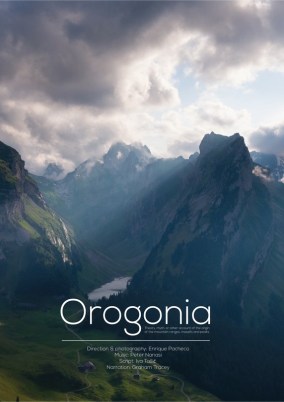
Script: Iva Tasic
Music: Peter Nanasi
Narration: Graham Tracey
A philosophical journey passing through the stunning scenery of boundless European highlands, and leading to the heart of the deepest yearning of humankind.
Official selection in the following festivals: Maine Outdoor Film Festival, International Festival of Outdoor Films, Premio Leggimontagna – Cortomontagna, Nuovi Mondi Mountain Film Festival, Festival Gollut. Won 2nd prize in Short Documentary category at Finisterra Arrabida Film Festival.
While We All Know That You Shouldn’t Judge a Book by Its Cover, This is One Case in Which Evaluating Something on Its Appearance is Not Only Accepted, but Encouraged, These Libraries Are Known for Noteworthy Exteriors—think Soaring Architecture With Inspiring Interiors, and That’s Nothing Compared to the Millions of Books Housed Within Their Walls. So Whether You’re a Bookworm or an Architecture Lover, Start Adding These Beautiful Libraries to Your Must-visit List.
The Library of El Escorial, San Lorenzo De El Escorial, Spain Not Only is This Spanish Library a Work of Art, It’s Also Part of a Unesco World Heritage Site. Originally Commissioned by King Philip II, the Library’s Most Dazzling Feature is a Series of Seven Frescoes That Depict the Liberal Arts (Music, Rhetoric, Astronomy, and So on). The Town of San Lorenzo De El Escorial, Which is About 45 Minutes Outside of Madrid, Has Long Been a Favorite of Spanish Royals, and There’s Plenty More to See Here Beyond the Library, Including a Monastery, Gardens, and the Pantheons of Former Princes and Kings.
Austrian National Library, Vienna, Austria The Austrian National Library is the Largest Library in Austria, With More Than 12 Million Items in Its Various Collections. The Library is Located in the Neue Burg Wing of the Hofburg in Center of Vienna, One of the Austrian National Library’s Most Jaw-dropping Features is the Huge Fresco on the Ceiling, Which Was Created by Painter Daniel Gran. The Dome is Also Decorated With Statues by Sculptor Paul Strudel That Pay Tribute to the Habsburg Rulers, Among the Exhibits Are Two Exquisite Venetian Baroque Globes: One for the Earth and One for the Sky, Each With a Diameter of More Than One Meter.
George Peabody Library, Baltimore, Maryland The George Peabody Library (Part of Johns Hopkins University) Contains Over 300,000 Volumes Stacked in Five Decorative Tiers. The Books Are Impressive, Sure, but the Cathedral Like-atrium, Marble Floors, and Wrought-iron Details Are the Main Draw Here. Is It Any Wonder the Library Has Become One of the Most Popular Wedding Venues in Baltimore?
Strahov Monastery Library, Prague, Czech Republic The Strahov Monastery in Prague Was Originally Founded in 1143. Despite Wars, Fires, and Other Disasters, the Order Endured and Built Its Library in 1679. The Library’s Best-known Features Are Its Remarkable Ceiling, Which is Covered in Biblical Frescoes, and the “Compilation Wheel” That Can Turn and Rotate Shelves in Order to Make Books Easier to Find Without Knocking Any of Them Over.
Library of Alexandria (Bibliotheca Alexandrina), Egypt Alexandria Was Once Home to the Most Famous Library in the World. Now, Egypt Pays Homage to Its Biblio-heritage With This Sleek Granite Building. The Circular Structure, Designed by Norwegian Firm Snøhetta, is Covered in Carvings Done by Local Artists and Sits Next to a Large Reflecting Pool. Although There Are Plenty of Books in Three Languages (Arabic, French, and English), There Are Also Museums, a Planetarium, and a Lab Dedicated to Restoring and Preserving Ancient Manuscripts.
Tough to beat! Head #InsideTheOR with S. Christopher Malaisrie, MD, and witness open heart surgery by one of the best cardiology and heart surgery programs in the nation as ranked by US News and World Report.
Doing good is increasingly about more than giving away money. Living kidney donations are rising and a new movement is pushing altruistically minded people to choose careers in fields, such as AI, that will shape the world’s future.
News, Views and Reviews For The Intellectually Curious


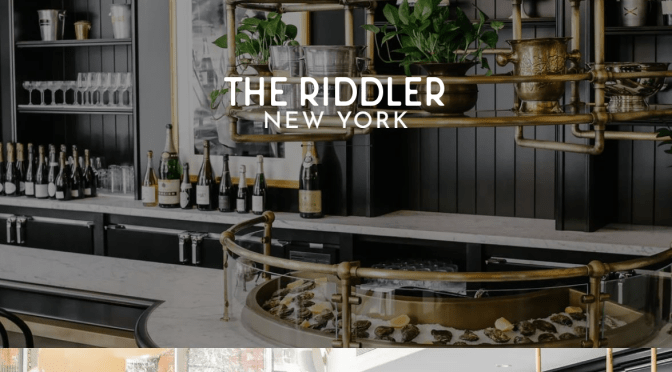
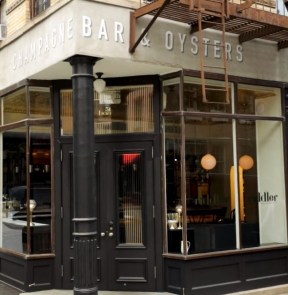 A restaurant funded solely by female investors, The Riddler is a New York City champagne bar from owner Jen Pelka.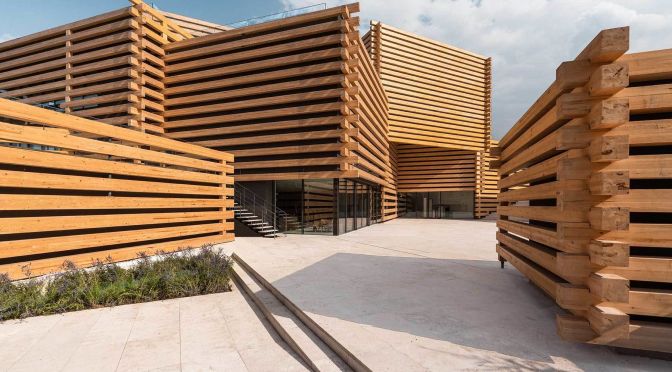
 We visit a Kengo Kuma-designed art museum in Eskisehir that’s set to become Turkey’s new cultural hotspot.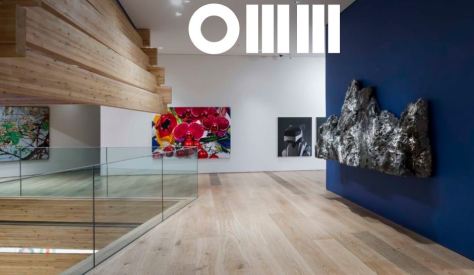


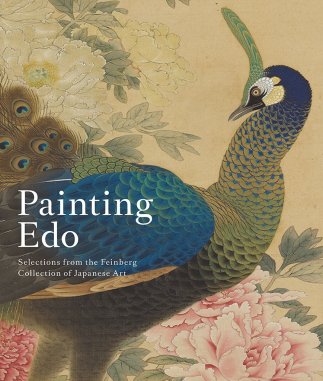 Painting Edo — the largest exhibition ever presented at the Harvard Art Museums — offers a window onto the supremely rich visual culture of Japan’s early modern era. Selected from the unparalleled collection of Robert S. and Betsy G. Feinberg, the more than 120 works in the exhibition connect visitors with a seminal moment in the history of Japan, as the country settled into an era of peace under the warrior government of the shoguns and opened its doors to greater engagement with the outside world. The dizzying array of artistic lineages and studios active during the Edo period (1615–1868) fueled an immense expansion of Japanese pictorial culture that reverberated not only at home, but subsequently in the history of painting in the West.
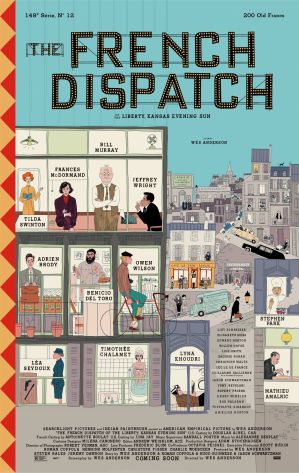 Wes Anderson’s new movie, “The French Dispatch,” which will open this summer, is about the doings of a fictional weekly magazine that looks an awful lot like—and was, in fact, inspired by—The New Yorker. The editor and writers of this fictional magazine, and the stories it publishes—three of which are dramatized in the film—are also loosely inspired by The New Yorker. Anderson has been a New Yorker devotee since he was a teen-ager, and has even amassed a vast collection of bound volumes of the magazine, going back to the nineteen-forties. That he has placed his fictional magazine in a made-up French metropolis (it’s called Ennui-sur-Blasé), at some point midway through the last century, only makes connecting the dots between “The French Dispatch” and The New Yorker that much more delightful.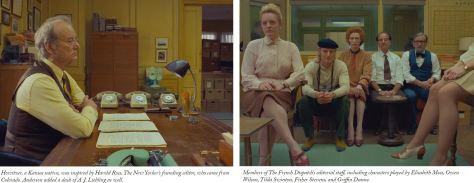

 Script: Iva Tasic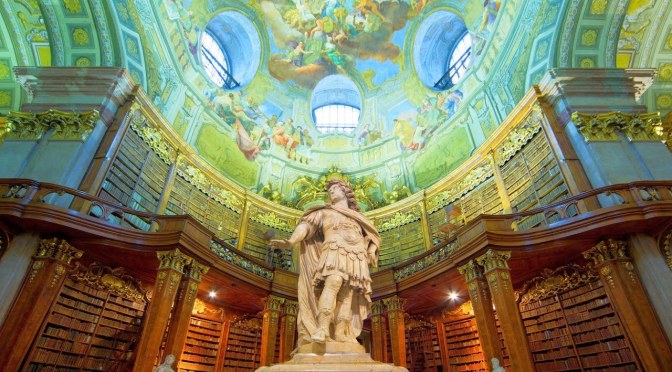



 Boomers Daily