Category Archives: Travel

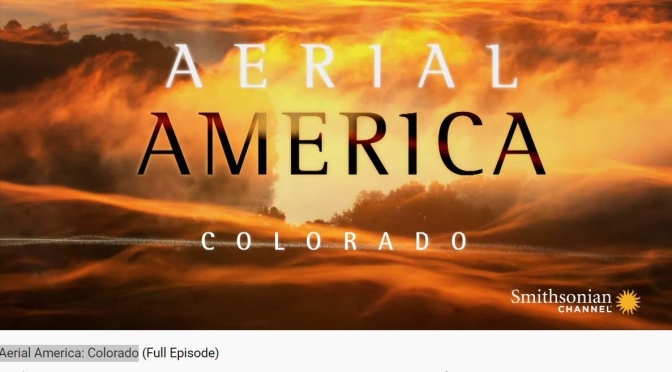
Top Travel Videos: “Aerial America – Colorado” (Smithsonian Channel)

Get ready for a Rocky Mountain adventure over the state that boasts some of the highest peaks, tallest sand dunes and largest single-site brewery in America. Every year Colorado attracts music lovers, ski buffs, and sports fans drawn to its Red Rocks, Aspen slopes and the Broncos’ Mile High Stadium. But it is also a state with a history, marked by war, a gold rush and legendary bank robberies. Through it all, Colorado remains a feast for the eyes.

Website

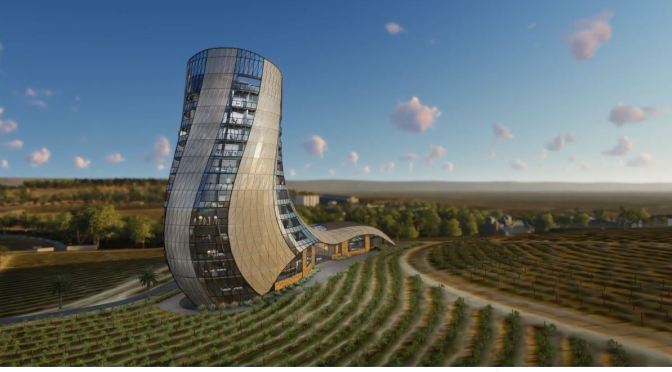
Future Architecture: “Oscar Seppeltsfield Hotel” At Barossa Winery In South Australia In 2022

The 12-storey Oscar Seppeltsfield hotel will have 70 rooms, each with a private balcony. The design of the building, which was conceived by Intro Architecture, is said to be inspired by the history of the winery and the wine barrels in its Centennial Cellar, which contains barrels of fortified wine dating back to 1878.

It will be constructed in the middle of Seppeltsfield’s Great Terraced Vineyard, which contains 60 to 80-year-old Grenache bush vines.

The hotel is named after winemaker and viticulturalist Oscar Benno Seppelt (1873-1963), a member of the family that founded the winery.

Read more

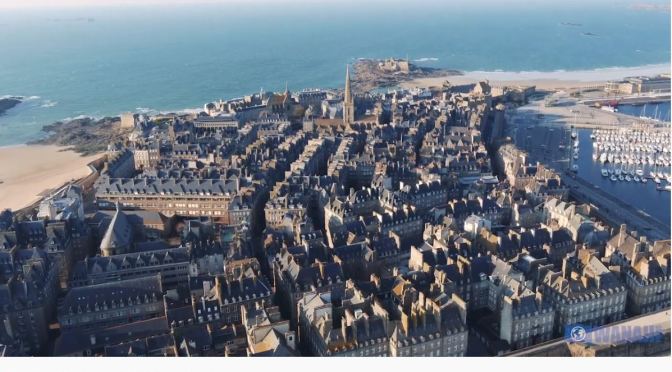
Travel Videos: “Saint Malo” In Northern France (2020)

Filmed and Edited by: JÉRÉMIE ELOY, Wanali Films

Filmed on April 1, 2020

Saint-Malo is a historic French port in Ille-et-Vilaine, Brittany on the English Channel coast.

The walled city had a long history of piracy, earning much wealth from local extortion and overseas adventures. In 1944, the Allies heavily bombarded Saint-Malo, which was garrisoned by German troops. The city changed into a popular tourist centre, with a ferry terminal serving the Channel Islands of Jersey and Guernsey, as well as the Southern English settlements of Portsmouth, Hampshire and Poole, Dorset.

Founded by Gauls in the 1st century BC, the ancient town on the site of Saint-Malo was known as the Roman Reginca or Aletum. By the late 4th century AD, the Saint-Servan district was the site of a major Saxon Shore promontory fort that protected the Rance estuary from seaborne raiders from beyond the frontiers. According to the Notitia Dignitatum, the fort was garrisoned by the militum Martensium under a dux (commander) of the Tractus Armoricanus and Nervicanus section of the litus Saxonicum. During the decline of the Western Roman Empire, Armorica (modern-day Brittany) rebelled from Roman rule under the Bagaudae and in the 5th and 6th centuries received many Celtic Britons fleeing instability across the Channel. The modern Saint-Malo traces its origins to a monastic settlement founded by Saint Aaron and Saint Brendan early in the sixth century. Its name is derived from a man said to have been a follower of Brendan the Navigator, Saint Malo or Maclou, an immigrant from what is now Wales.

Saint-Malo is the setting of Marie de France’s poem “Laüstic,” an 11th-century love story. The city had a tradition of asserting its autonomy in dealings with the French authorities and even with the local Breton authorities. From 1590 to 1593, Saint-Malo declared itself to be an independent republic, taking the motto “not French, not Breton, but Malouin.

From Wikipedia

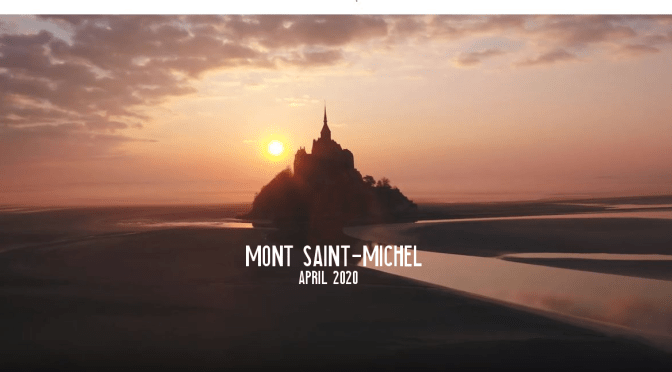
Top New Travel Videos: “Mont Saint-Michel” In France (April 3, 2020)

Filmed and Edited by: JÉRÉMIE ELOY, Wanali Films

“It is a magical experience to find yourself two days in the empty, silent Mont.”

Filmed on April 3, 2020

Website

Le Mont-Saint-Michel is a tidal island and mainland commune in Normandy, France. The island is located about one kilometer off the country’s northwestern coast, at the mouth of the Couesnon River near Avranches and is 7 hectares in area.

The original site was founded by an Irish hermit, who gathered a following from the local community. Mont-Saint-Michel was used in the sixth and seventh centuries as an Armorican stronghold of Gallo-Roman culture and power until it was ransacked by the Franks, thus ending the trans-channel culture that had stood since the departure of the Romans in 460. From roughly the fifth to the eighth century, Mont Saint-Michel belonged to the territory of Neustria and, in the early ninth century, was an important place in the marches of Neustria.

When Louis XI of France founded the Order of Saint Michael in 1469, he intended that the abbey church of Mont Saint-Michel become the chapel for the Order, but because of its great distance from Paris, his intention could never be realised.

The wealth and influence of the abbey extended to many daughter foundations, including St. Michael’s Mount in Cornwall. However, its popularity and prestige as a centre of pilgrimage waned with the Reformation, and by the time of the French Revolution there were scarcely any monks in residence. The abbey was closed and converted into a prison, initially to hold clerical opponents of the republican regime. High-profile political prisoners followed, but by 1836, influential figures—including Victor Hugo—had launched a campaign to restore what was seen as a national architectural treasure. The prison was finally closed in 1863, and the mount was declared a historic monument in 1874. Mont Saint-Michel and its bay were added to the UNESCO list of World Heritage Sites in 1979, and it was listed with criteria such as cultural, historical, and architectural significance, as well as human-created and natural beauty.

From Wikipedia

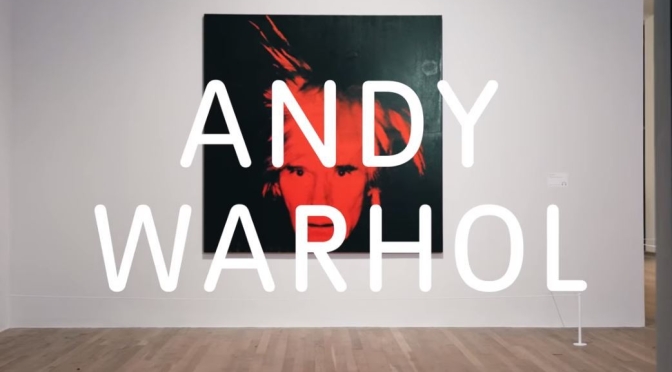
New Museum Exhibitions: “Andy Warhol” At The Tate Modern, London (Video)

Although our galleries are temporarily closed we wanted to share the Andy Warhol exhibition at Tate Modern with you. Join Tate curators Gregor Muir and Fiontán Moran as they discuss Warhol through the lens of the immigrant story, his LGBTQI identity and concerns with death and religion.

Meet the man behind the brand. It’s a Warhol you might not know, with some artworks you may not have seen before.

Find out more about the exhibition here


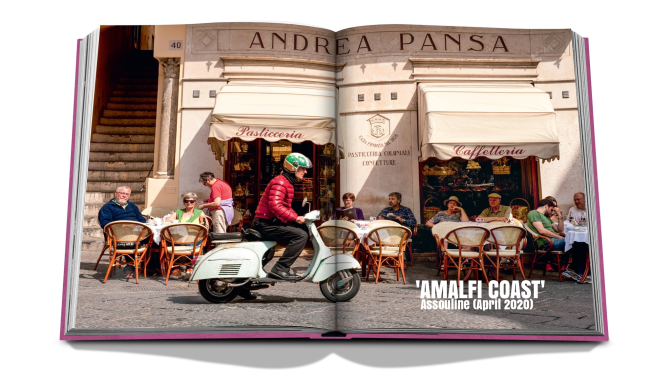
Travel & Photography: “Amalfi Coast” – “Pinnacle Of The Italian Dream” (Assouline, April 2020)

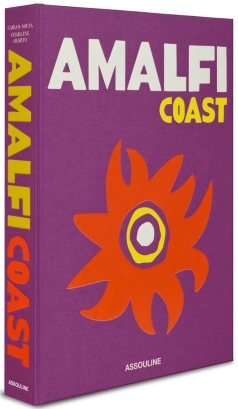
Amalfi Coast by Carlos Souza and Charlene Shorto Assouline April 2020The Amalfi Coast is the pinnacle of the Italian dream. Tucked amongst the lemon blossoms and the bougainvillea is a line of thirteen towns that comprise the Amalfi Coast. Known for its vertical landscape, the villages are only accessible via the Strada Statale 163 — a narrow, winding, cliffside route that while unsettling to traverse, offers unparalleled views.

This magical strip joins the mountains and the Mediterranean Sea below and aesthetes from around the world flock here year after year to enjoy its quaint pebbled beaches, scenic hikes, perfect climate and legendary establishments, which are not limited to storied hotels and restaurants.
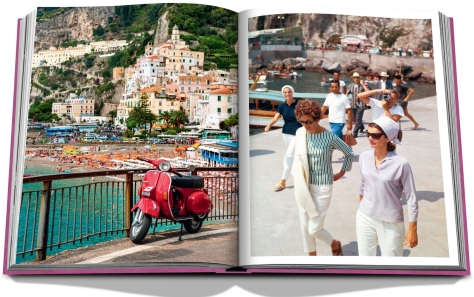
Amalfi Coast by Carlos Souza and Charlene Shorto Assouline 2020

Landmarks from the Cathedral in Amalfi to Villa Rufolo in Ravello, all evoke the culture and the spirit of bygone centuries, and landmarks enjoyed by the likes of Jacqueline Kennedy, John Steinbeck, and Gore Vidal abound. With its signature limoncello, both grown and enjoyed locally, finest villas and breathtaking vistas, the Amalfi Coast is in a class of its own.

Carlos Souza is a global brand ambassador for Valentino and a contributor at Architectural Digest with over forty years of experience in the art and fashion world. His photography career began at the request of Andy Warhol, who asked him to shoot fashion shows for Interview. He has previously worked with Assouline on #Carlos’s Places (2014) and Comporta Bliss (2018).

Charlene Shorto was born in Recife, Brazil, and educated in Switzerland and Great Britain. She is wed to Carlos Souza and has two sons, Sean and Anthony. The family moved to Rome, where Charlene worked tirelessly under the fashion designer Valentino, eventually ascending to the position of director of Oliver by Valentino. Shorto also collaborated with Souza on Comporta Bliss (2018).

Read more or order

Travel & Design: Inside A “Whimsical & Wild” Home In Bangkok, Thailand (AD)

From an Architectural Digest article (April 3, 2020):

Whimsical, wild, and wacky are but a few words that most aptly describe Bill Bensley’s unique design aesthetic and the exceptional hotels born from it. Credited with upping the ante on Southeast Asia’s hospitality design, he is one of the most intriguing artists in the field today.Bill Bensley - Bangkok bungalow in Architectural Digest April 3 2020


Originally from California, Bill has called Asia home since 1984 when he lived in Singapore and Hong Kong before moving to Bangkok and setting up Bensley, a full-service hospitality design atelier made up of architects, landscape architects, interior designers, and artists.

“I can take you around the house and say, ‘The base of this column exists at Capella Ubud, and the top of this bathroom door is Four Seasons Chiang Mai, and this lantern is the prototype for all the lamps that we used at Four Seasons Koh Samui.’ There are still remnants of pieces here from probably 100 different projects,” says Bensley.

Read full article

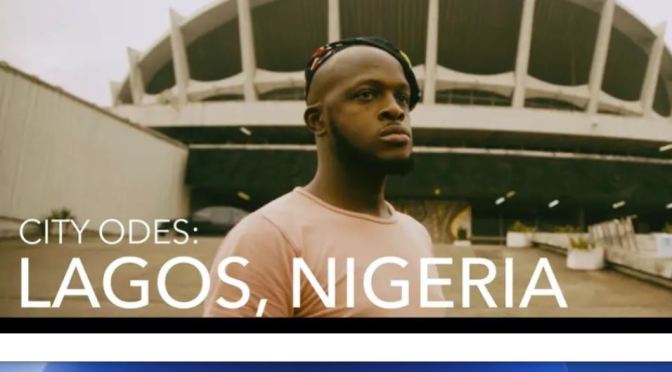
New Travel Videos: “City Odes – Lagos, Nigeria” By Sheldon Chau (2020)

Directed, shot, edited by // Sheldon Chau

Produced by // Ella Utomi, Jide Adewale
Poem by // Ntongha Ekot
Starring, voiceover by // Jide Adewale
Music composed by // John Corlis

“EKO ILE” (CITY ODES) A CINEMATIC POEM SHORT FILM IN LAGOS, NIGERIA BY SHELDON CHAU (2020)

“Eko ile”

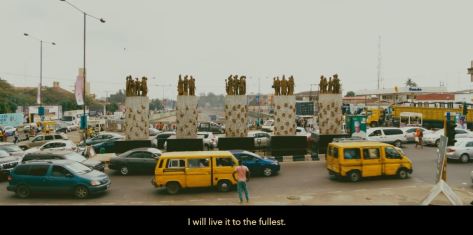
A man straddles a love-hate relationship with Lagos in which he attempts to not only grasp both the intensity and comfort that the city has to offer, but also to embrace it as his home.

—-

The City Odes Project is a passion project in which I collaborate with my composer, a poet and an actor to create a humanist, emotional, and visual story amidst the backdrop of a specific city. “Eko ile” is the second entry into this series and takes place in one of the most intense, vibrant, and overwhelming places I have ever been – Lagos, Nigeria.

The title “Eko ile” translates to “Lagos is home” in Yoruba, one of the primary languages in the country. For this piece, I wanted to capture the city in the language I encountered most when I was there – Pidgin English (which is sort of a local slang) as well as plain English, both of which my lead actor Jide Adewale (who also happens to be one of the producers) speaks as he narrates the poem. I wanted to create a character who personifies the feeling of living in Lagos in which the hustle is as real as it gets and the frenetic pace is nonstop. Lagos truly is one of a kind.

The final result here features the work of Ntongha Ekot – a Nigerian poet – who eloquently captures these push-and-pull feelings through her words, and my frequent collaborator John Corlis – an LA-based musician and composer – who complements the poetry with his emotional piano piece “Into the Atmosphere” from his latest album of the same title. My incredible producers Jide and Ella Utomi made it all happen by finding the locations, security and logistics; they took care of me during my memorable time there.

Website

Travel & History Books: “Great Camps Of The Adirondacks” – Gorgeous Updated 2nd Edition (2020)

The foremost guide to the historic camps of the Adirondacks―a unique vernacular style of rustic architecture designed to complement the land. Now available in a Great Camps of the Adirondacks Harvey H Kaiser 2020second and enlarged edition, here is the foremost guide to the historic camps within America’s spectacular forest preserve, the six million acre Adirondack Park.

When first published in 1982, Great Camps of the Adirondacks launched a campaign for the preservation of these architectural treasures while also sparking a trend in great camp-inspired home design, a cohesive approach to building that author Harvey H. Kaiser named Adirondack Rustic Style.

Great Camps of the Adirondacks - Harvey Kaiser 2020

In this second edition, preservationists will find a success story. Designers and builders will discover page after page of inspiration. All readers will see the history of a region unfold as Americans from the mid-1870s to the late-1930s, including the very wealthiest New Yorkers, sought out the wilderness. The camps they built as private seasonal retreats are distinguished both as architectural responses to the Adirondack environment in the use of logs and stone, and as successful examples of buildings blended into the forest and the natural contours of the mountains and lakes―homes built to serve as beautiful complements to the land itself.

Harvey H. Kaiser served as the Senior Vice President for Facilities Administration and University Architect at Syracuse University between 1972 and 1995. His 1982 book Great Camps of the Adirondacks popularized the term “Great Camps” to refer to the grand summer residences that wealthy families built in the Adirondack Mountains in the nineteenth century, and revitalized interest in these sites. Several studies on western national park architecture culminated in his 2008 book The National Park Architecture Sourcebook.


Steven Engelhart is the executive director of Adirondack Architectural Heritage (AARCH) located in Keeseville, New York. AARCH is a private, nonprofit. historic preservation organization for New York State’s Adirondack Park, whose mission is to promote better public understanding, appreciation, and stewardship of the region’s architecture, communities, and historic sites.

Read more or purchase