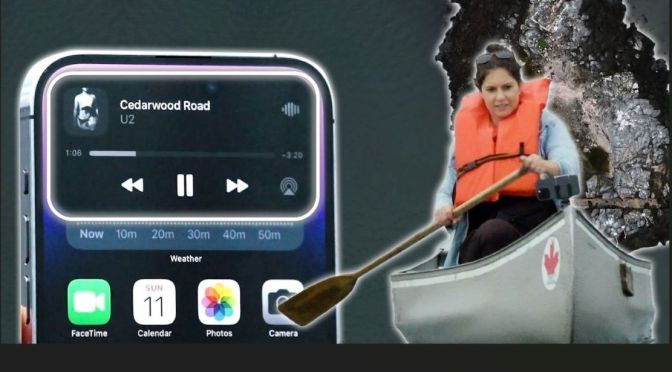
Apple’s iPhone 14 Pros have a new multitasking feature called the “dynamic island.” WSJ’s Joanna Stern went out to a real island to test the Pros’ new always-on screen cameras, including the new 48-megapixel main camera and the new action mode.
She also compares them to the more affordable iPhone 14. 0:00 Welcome to Joanna’s dynamic island 1:07 iPhone 14 screen size and tests: always-on and dynamic island 3:41 iPhone 14 camera specs and tests 4:58 iPhone 14 action mode tests 5:35 Emergency SOS and crash detection: the iPhone 14 features Joanna couldn’t test
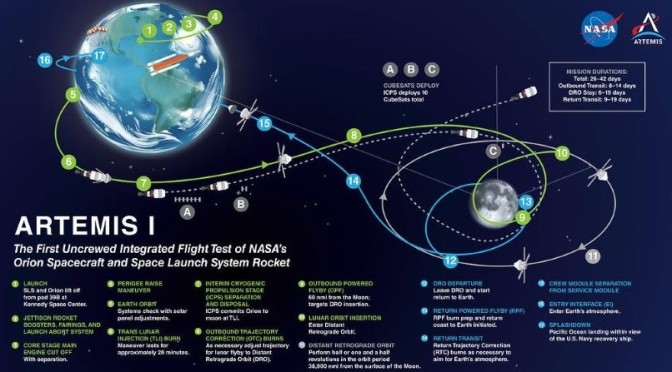
People are about to go back to the moon for the first time in 50 years. It isn’t just a race to get there, but a whole new era of lunar exploration and exploitation.
We will shortly see people walking on the moon again, mining precious resources and setting up lasting bases on the dusty, grey world. As NASA prepares to return to the moon, we take a look back at some of the key milestones in our history with our lunar neighbour.
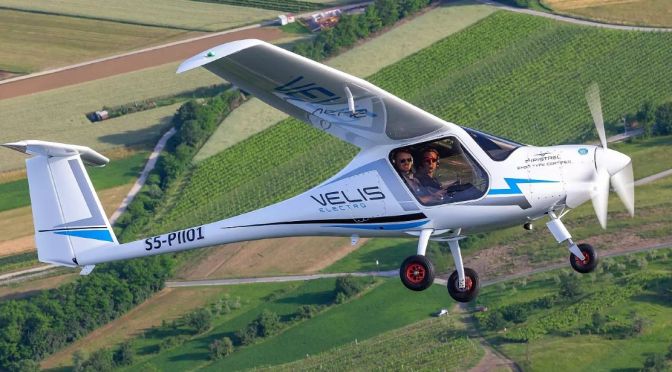
A new electric flight school in Sweden is inspiring a future of emission-free aviation. Monocle takes to the sky, tries out the first fully electric plane to be approved for use in Europe and hears how Skellefteå has become a hotbed of green start-ups.
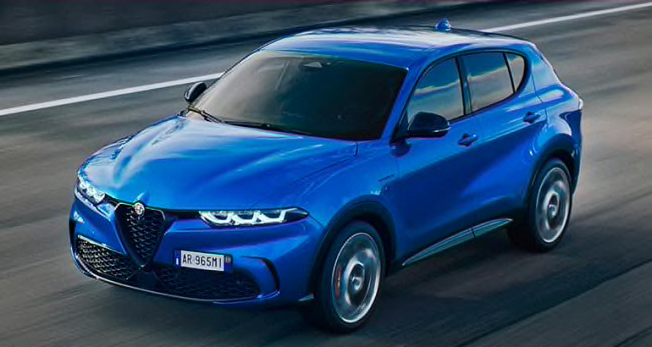
The Tonale rounds out the trio of cars in Alfa Romeo’s small, stylish lineup, bringing small-SUV utility and a plug-in hybrid electric vehicle (PHEV) powertrain into the fold. Both the PHEV and the more conventional turbocharged, 2.0-liter gasoline versions of the Tonale will be all-wheel drive, showcasing an interior and exterior aesthetic that will be familiar to Alfa aficionados.
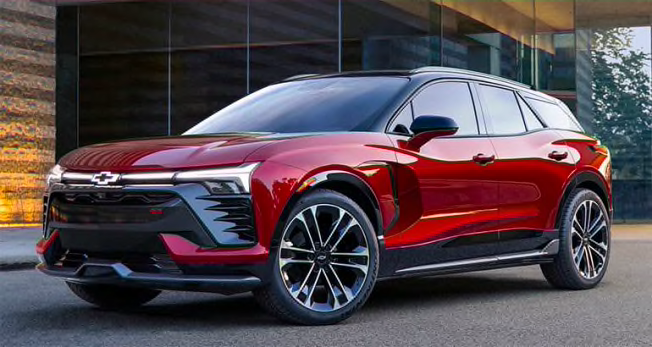
Chevrolet Blazer EV (2023)
The Blazer EV is based on GM’s Ultium platform that underpins the latest automaker’s electric models. This midsized SUV will meet the competition, notably the Ford Mustang Mach-E, Volkswagen ID.4, and Hyundai-Kia pair in terms of price, functionality, and range. It will be offered in several trims, initially starting with the 2LT trim for $47,595 with a 293-mile estimated range.
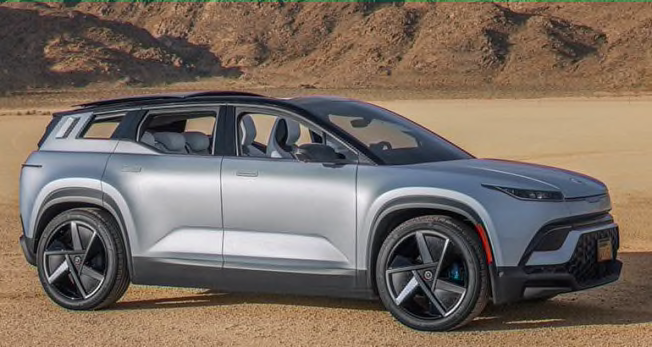
Fisker Ocean (2023)
The Fisker Ocean pure-electric SUV features a solar roof and a 17-inch center touchscreen that can be rotated 90 degrees for either a horizontal or vertical display layout. The interior, which features recycled materials throughout, seats five passengers.
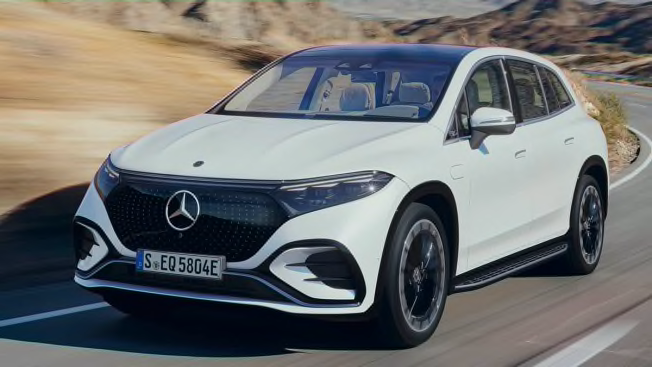
Mercedes-Benz EQS SUV (2023)
The EQS SUV takes all the opulence and engineering marvel long associated with the Mercedes-Benz EQS sedan and applies these concepts to a large, three-row electric SUV. It comes standard in a rear-drive, one-motor configuration, with the 4Matic upgrade granting it all-wheel and two motors.
The World Economic Forum ‘Stories of the Week include:
0:18 Pakistan’s Flooding – Due to flash floods triggered by a ‘monster monsoon’, more than 1,100 people have died in Pakistan 01:30 First smartphone made in the Ivory Coast – The Open G smartphone went on sale in July 2022 in the Ivory Coast and has sold several thousand units 02:41 Brazil is building the world’s biggest urban garden – The garden is a collaboration between the City of Rio de Janeiro and the favelas – or informal settlements – that surround it 04:09 Drinking Black Tea could help you live longer – People who drink 2 or more cups of black tea a day are 9-13% less likely to die from any cause, according to a study by the US National Institutes of Health.
The UN’s World Food Programme has described 2022 as “a year of unprecedented hunger”, with millions of people in dozens of countries facing famine. At the same time, significant amounts of farmland are being used to produce so-called biofuels. But could a global food crisis change that?
Biofuels are liquid fuels produced from renewable biological sources, including plants and algae. Biofuels offer a solution to one of the challenges of solar, wind, and other alternative energy sources. These energy sources have incredible potential to reduce our dependence on fossil fuels and yield environmental and economic benefits. But many of these sources have a limitation: they can’t replace liquid fuels such as jet fuel, gasoline, and diesel fuel that are critical to our transportation needs. That’s where biofuels could help.
The ocean’s waves are immensely powerful. Harnessing that energy for grid-scale electricity production would be a major boon to the clean energy industry, but building durable, powerful, and cost-effective wave energy converters has proven difficult.
Chapters:1:46 The challenges 4:05 Wave energy in the U.S. 4:49 (Subchapter) CalWave 6:05 (Subchapter) Oscilla Power 7:34 (Subchapter) C-Power 9:00 Wave energy in Europe 11:51 The future
Now though, an influx of federal funding is helping many U.S. companies gear up to test their latest wave energy technologies, giving many in the industry hope that wave power will see massive growth over the next few decades.
This week’s top stories of the week include: 0:16 This teenager’s invention could change the world of electric cars 02:59 France is paying it’s drivers to get on their bikes 04:22 The psychological phenomenon that is hampering our response to climate change 05:33 Paris’s Riverside Booksellers are thriving once more
The World Economic Forum is the International Organization for Public-Private Cooperation. The Forum engages the foremost political, business, cultural and other leaders of society to shape global, regional and industry agendas. We believe that progress happens by bringing together people from all walks of life who have the drive and the influence to make positive change.
Silicon Valley venture capital is feeding a budding business in fermented, animal-free proteins, creating bacon, turkey and egg white from yeasts and fungus. San Francisco correspondent Dave Lee considers its potential over a few slices of fungus salami.
News, Views and Reviews For The Intellectually Curious